
Montserrat Hiking Trail - The Serrated Mountain of Catalonia
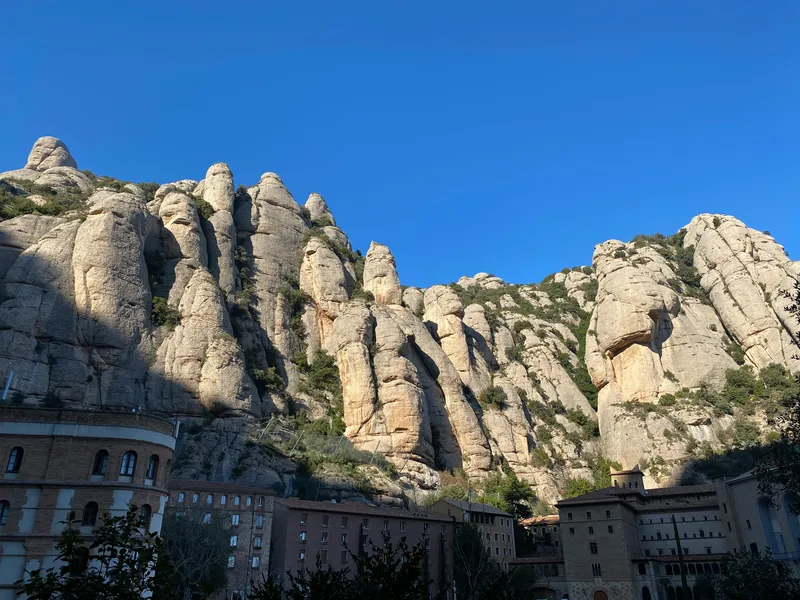
Rising abruptly from the Catalan hinterland, Montserrat is a geological marvel and a spiritual beacon that has defined the landscape of north-eastern Spain for millennia. Located just 50 kilometres northwest of Barcelona, this multi-peaked mountain range—whose name literally translates to "Serrated Mountain" in Catalan—reaches its zenith at the summit of Sant Jeroni, standing 1,236 metres above the Llobregat River valley. The Montserrat Hiking Trail is not merely a physical challenge; it is a journey through a landscape of surreal conglomerate rock formations, ancient hermitages, and a Benedictine monastery that has served as a sanctuary for over a thousand years. The trail weaves through narrow needles of stone, Mediterranean evergreen forests, and steep limestone stairways, offering hikers a profound sense of isolation despite its proximity to one of Europe's busiest metropolitan centres. This is a landscape where nature and culture are inextricably linked, where every turn reveals a new perspective on the unique "fingers" of rock that have inspired artists, poets, and pilgrims for generations.
- Distance: 10.0 km loop (standard Sant Jeroni route)
- Duration: 4–6 hours
- Difficulty: Moderate (significant elevation gain and steep sections)
- Highest point: Sant Jeroni (1,236 m)
- Elevation Gain: 700 m
- Best Time: Spring (April–June) and Autumn (September–October)
- Trailhead: Montserrat Monastery (accessible via rack railway or cable car)
Overview
The Montserrat Hiking Trail offers one of the most distinctive trekking experiences in the Mediterranean. Unlike the jagged granite of the Pyrenees or the limestone cliffs of the Picos de Europa, Montserrat is composed of a unique conglomerate—a "natural concrete" of rounded pebbles cemented together by a calcareous matrix. Over millions of years, erosion has sculpted these rocks into the iconic rounded pillars and deep chimneys that give the mountain its otherworldly appearance. The primary hiking route to the summit of Sant Jeroni is a masterclass in vertical landscape design, transitioning from the bustling, culturally rich environment of the Santa Maria de Montserrat Abbey to the silent, wind-swept ridges of the high peaks.
The hike typically begins at the Monastery, situated at 720 metres. From here, the trail ascends through the "Cami de Sant Jeroni," a well-maintained path that provides a comprehensive overview of the mountain's diverse ecosystems. Hikers move from the humid, shaded microclimates of the northern gullies, where holm oaks and boxwood thrive, to the exposed, sun-drenched southern faces dominated by aromatic herbs like rosemary and thyme. The ascent is punctuated by views of the "needles"—individual rock formations with evocative names like Cavall Bernat, El Moro, and Les Gorres—which are world-renowned among the rock-climbing community.
Reaching the summit of Sant Jeroni provides a 360-degree panorama that is arguably the finest in Catalonia. On a clear day, the view stretches from the snow-capped peaks of the Pyrenees to the north, across the rolling vineyards of the Penedès wine region, to the Mediterranean Sea and the distant silhouette of the Balearic Islands to the east. The trail is a physical manifestation of the Catalan spirit, combining rigorous outdoor activity with a deep respect for the historical and religious heritage that permeates every crevice of the mountain. Whether you are seeking a strenuous workout, a photographic odyssey, or a moment of quiet reflection, the Montserrat Hiking Trail delivers an experience that is both humbling and exhilarating.
History and Cultural Context
The history of Montserrat is as layered and complex as the conglomerate rock that forms its peaks. For the people of Catalonia, Montserrat is more than a mountain; it is a national symbol and the spiritual heart of their identity. The religious significance of the site dates back to at least 880 AD, when, according to legend, a group of shepherd children saw a bright light and heard celestial music emanating from a cave on the mountain. Inside, they discovered the "Mare de Déu de Montserrat" (the Virgin of Montserrat), a Romanesque wooden statue of the Madonna and Child. Because of its dark hue, likely caused by the aging of the wood and centuries of candle smoke, she became affectionately known as "La Moreneta" (the Black Madonna).
The Benedictine monastery was officially founded in 1025 by Abbot Oliba, the Bishop of Vic. Over the centuries, it grew into a major pilgrimage site, attracting figures as diverse as Christopher Columbus and Ignatius of Loyola, who laid down his sword at the feet of the Black Madonna before founding the Jesuit order. The mountain also served as a retreat for hermits; the ruins of their small stone dwellings (ermites) are still visible along the hiking trails, particularly around the Sant Joan funicular area. These hermits sought the "desert" of the mountain, living in total isolation to dedicate their lives to prayer and contemplation.
Montserrat's history has also been marked by conflict. During the Napoleonic Wars in the early 19th century, French troops twice occupied and destroyed much of the monastery, viewing it as a symbol of Spanish resistance. The current buildings largely date from the late 19th and early 20th centuries, reflecting a period of Catalan "Renaixença" (Renaissance) where the mountain became a focal point for the revival of Catalan language and culture. During the Franco dictatorship, the monastery remained a rare bastion where the Catalan language was used in liturgy and where democratic intellectuals found refuge. Today, the monastery is home to approximately 70 monks and the Escolania de Montserrat, one of the oldest boys' choirs in Europe, whose daily performances in the Basilica continue to draw thousands of visitors from around the globe.
Want more background? Read extended notes on history and cultural context → Learn more
Seasonal Highlights and Weather Reality
Montserrat experiences a typical Mediterranean mountain climate, but its unique topography creates several distinct microclimates that hikers must be aware of. The weather can change with surprising speed, with coastal mists (known locally as "boira") often rolling in from the Mediterranean to shroud the peaks in a thick, damp blanket within minutes.
Spring (April to June): This is arguably the best time to hike Montserrat. The temperatures are mild, typically ranging between 15°C and 22°C, and the mountain is at its most vibrant. Wildflowers, including the endemic Montserrat saxifrage, bloom in the rocky crevices, and the air is filled with the scent of flowering herbs. However, spring can also bring occasional heavy rain showers, making the conglomerate rock slippery.
Summer (July to August): Summer can be punishingly hot. Temperatures frequently exceed 30°C, and the white rock of the mountain reflects the sun's heat, creating a furnace-like effect on exposed sections of the trail. If hiking in summer, an early start (before 8:00 AM) is essential to reach the summit before the midday heat. Water sources on the trail are non-existent, so carrying 2–3 litres per person is mandatory.
Autumn (September to October): Similar to spring, autumn offers excellent hiking conditions. The heat of summer dissipates, and the air becomes exceptionally clear, providing the best visibility for the Pyrenees and the sea. The deciduous trees in the gullies turn shades of gold and ochre, providing a beautiful contrast to the grey stone.
Winter (November to March): Winter is generally dry and sunny, but it can be surprisingly cold. Temperatures at the summit of Sant Jeroni can drop below freezing, and the "Tramuntana" wind from the north can create a significant wind-chill factor. While snow is rare, it does occur occasionally, transforming the mountain into a spectacular, if treacherous, winter landscape. Hikers should be prepared with warm layers and windproof gear.
Recommended Itinerary
Sant Jeroni Summit Loop (Standard Route)
Early Morning: Arrival and Monastery Exploration
- 08:30 – 09:00: Arrive at the Montserrat Monastery via the Cremallera (rack railway) or Aeri (cable car).
- Take a few moments to visit the Plaça de Santa Maria and admire the facade of the Basilica.
- Fill water bottles at the public fountains near the entrance (this is your last chance for water).
- Locate the trailhead near the "Abat Oliba" statue, following signs for "Sant Jeroni."
Morning: The Ascent through the Valley
- 09:00 – 10:30: Begin the climb up the "Escales dels Pobres" (Stairway of the Poor). This section involves several hundred stone steps through a shaded ravine.
- Pass through the "Pas dels Francesos," a narrow gap in the rock named after the Napoleonic troops.
- The trail levels out slightly as you enter the valley of Santa Maria, surrounded by towering rock needles.
- Follow the well-marked path towards the Pla dels Ocells (Plain of the Birds), a small forested plateau where several trails intersect.
- Distance covered: ~3 km; Elevation gain: ~300 m.
Midday: Reaching the Summit of Sant Jeroni
- 10:30 – 12:00: The final push to the summit. The trail becomes more exposed as you leave the forest behind.
- Pass the Ermita de Sant Jeroni (a small chapel) and the nearby weather station.
- The final ascent to the peak is via a modern concrete staircase with handrails, designed to protect the fragile summit vegetation.
- Arrive at the Sant Jeroni summit (1,236 m). Spend time at the viewing platform identifying the Pyrenees, Barcelona, and the Llobregat River.
- This is the ideal spot for a packed lunch, though be mindful of the wind.
- Distance covered: ~5 km (total); Elevation gain: ~700 m (total).
Afternoon: Descent via the Ridge and Sant Joan
- 12:30 – 14:30: Instead of retracing your steps, follow the ridge trail towards the Sant Joan funicular.
- This route offers spectacular views of the "Gorres" (the rock formations that look like hats) and the southern face of the mountain.
- Pass the ruins of several ancient hermitages, including Sant Onofre and Sant Joan.
- The path is mostly downhill or flat along a wide gravel track.
- Arrive at the upper station of the Sant Joan funicular. You can choose to take the funicular down to the Monastery or continue walking down the "Cami de Sant Miquel."
Late Afternoon: Return to the Monastery
- 14:30 – 15:30: If walking, pass the Creu de Sant Miquel (St. Michael's Cross) for one of the most famous "postcard" views of the Monastery nestled against the rocks.
- Return to the Monastery complex.
- Optional: Visit the Basilica to hear the Escolania (Boys' Choir) at 13:00 or 18:45 (check seasonal schedules).
- Depart via rack railway or cable car back to Monistrol or the Aeri station.
Important Notes:
- The trail is well-signposted with yellow and white markers (PR-C 19).
- The "Escales dels Pobres" section is strenuous on the knees; trekking poles are highly recommended.
- There are no toilets or shops once you leave the Monastery area.
- Mobile signal is generally good on the ridges but can be lost in the deep ravines.
Planning and Bookings
Book Your Trip
Everything you need to plan your journey
Accommodation
Find places to stay near Monistrol de Montserrat
Flights
Search flights to Monistrol de Montserrat
Essential Preparation
Planning a hike at Montserrat is relatively straightforward compared to multi-day treks, but coordination of transport is key. Most hikers base themselves in Barcelona and take the R5 train line from Plaça d'Espanya station. When buying your ticket, you must choose between the "Aeri" (cable car) or the "Cremallera" (rack railway) for the final ascent to the Monastery; tickets are generally not interchangeable. The "Tot Montserrat" combined ticket is a popular option, covering the return train, the rack railway, the funiculars, and a meal at the Monastery restaurant.
Physical fitness is a consideration. While the trails are well-maintained, the 700-metre elevation gain is concentrated in steep sections. Hikers should be comfortable with sustained uphill walking and thousands of stone steps. No technical climbing skills are required for the standard Sant Jeroni route, but a basic level of mountain awareness is necessary.
Trail Accommodation
As Montserrat is primarily a day-hiking destination, there is no overnight accommodation on the trails themselves. However, the Monastery complex offers several options for those wishing to experience the mountain at sunrise or sunset.
Hotel Abat Cisneros: A historic hotel located directly in the Monastery square. It offers comfortable rooms and an on-site restaurant. Booking in advance is essential, especially during peak season and religious festivals.
Cel·les Abat Marcet: These are modern apartments or "cells" designed for pilgrims and families. They provide basic kitchen facilities, allowing for a more self-sufficient stay. They are a more budget-friendly alternative to the hotel.
Alberg de l'Abat Oliba: A hostel-style accommodation offering both private rooms and dormitories. This is the most economical choice for hikers and younger travellers.
Camping: There is no official campsite on the mountain, and wild camping is strictly prohibited within the Natural Park boundaries to protect the environment and prevent forest fires.
Required Gear
- Footwear: Sturdy hiking boots or high-quality trail running shoes with good grip. The conglomerate rock can be abrasive and, when wet, very slippery.
- Clothing: Moisture-wicking base layers. Even in summer, a lightweight windbreaker is recommended for the summit. In winter, a fleece and insulated jacket are necessary.
- Sun Protection: High-factor sunscreen, a wide-brimmed hat, and UV-rated sunglasses. The exposure on the ridges is significant.
- Navigation: A physical map of the Montserrat Natural Park or a reliable offline GPS app (such as AllTrails or Wikiloc). While trails are marked, the network of paths can be confusing.
- Trekking Poles: Highly recommended to save your knees on the "Escales dels Pobres" and the steep descent from Sant Jeroni.
- First Aid: A basic kit including blister plasters, antiseptic wipes, and any personal medications.
What to Bring
- Water: Minimum 2 litres per person (3 litres in summer). There are no water sources on the trail once you leave the Monastery.
- Food: High-energy snacks (nuts, dried fruit, energy bars) and a substantial lunch. While there are restaurants at the Monastery, they are expensive and often crowded.
- Electrolytes: Rehydration salts are useful during the summer months to combat salt loss from sweating.
- Waste Bags: All rubbish, including organic waste like banana skins, must be carried back down to the Monastery for disposal.
- Power Bank: To ensure your phone remains charged for navigation and emergency calls.
- Cash/Card: For transport tickets and any purchases at the Monastery shops.
Permits
One of the great advantages of hiking in Montserrat is that no permits are required to access the trails or the summit of Sant Jeroni. The Montserrat Natural Park is open to the public year-round, and there are no entry fees for the mountain itself. However, there are costs associated with the logistics of reaching the trailhead.
Transport Costs:
- R5 Train (Barcelona to Monistrol): Approximately €12.00 return.
- Cremallera (Rack Railway): Approximately €16.00 return.
- Aeri (Cable Car): Approximately €16.50 return.
- Sant Joan Funicular: Approximately €14.00 return (if you choose to use it to bypass the first 300 m of ascent).
- Parking: If driving, there is a managed car park at the Monastery which costs approximately €7.00 per day. Space is limited and fills up by 10:00 AM on weekends.
Monastery Access: While the mountain is free, the Monastery has recently introduced a ticketing system for the Basilica and the "Cambril de la Mare de Déu" (to see the Black Madonna) to manage crowds. If you wish to include these in your hiking day, it is highly recommended to book a time slot online in advance. Prices range from €6.00 to €18.00 depending on the level of access (Museum, Basilica, etc.).
Group Regulations: Organised groups of more than 20 people may need to notify the Park Office in advance, especially if conducting commercial activities or large-scale events. For the individual hiker, however, you can simply show up and start walking.
Other Activities in the Area
Montserrat is a multi-faceted destination. If you have extra time or are travelling with non-hikers, consider these activities:
- The Montserrat Museum: One of Spain's hidden gems, featuring works by Caravaggio, El Greco, Picasso, Dalí, and Monet. It also houses an impressive collection of ancient Egyptian and Mesopotamian artefacts.
- The Escolania (Boys' Choir): Hearing the choir sing the "Virolai" (the hymn of Montserrat) is a moving experience. Performances usually take place at 13:00 Monday to Friday and during Sunday mass.
- Santa Cova (Holy Cave): A 1.5 km paved walk from the Monastery leads to the cave where the Black Madonna was allegedly found. The path is lined with the "Rosary of Montserrat," featuring sculptures by famous Catalan artists, including Antoni Gaudí.
- Rock Climbing: Montserrat is a world-class climbing destination with over 5,000 routes. The conglomerate rock offers a unique style of "pebble-pulling" climbing. Local guides are available for hire in Monistrol.
- Funicular de Sant Joan: Even if you don't hike, taking this steep funicular provides access to high-altitude viewpoints and the Nature Centre (Aula de Natura), which explains the mountain's geology and wildlife.
- Wine Tasting in Penedès: The nearby Penedès region is the home of Cava (Spanish sparkling wine). Many wineries (cellers) offer tours and tastings just a short drive or train ride from the base of the mountain.
Safety and Conditions
Pre-Departure Checks:
- Check the local weather forecast specifically for "Montserrat" (not just Barcelona, as the mountain creates its own weather).
- Ensure you have downloaded offline maps; while the main trails are clear, the numerous side paths can be confusing in low visibility.
- Inform someone of your planned route and expected return time.
- Check the operating times of the rack railway or cable car to ensure you don't miss the last descent (usually around 18:00–19:00 depending on the season).
Terrain Hazards: The primary danger on Montserrat is the nature of the rock. The conglomerate consists of pebbles that can occasionally come loose, especially after heavy rain or frost. Stay on marked trails to avoid rockfall zones. The "Escales dels Pobres" and the summit stairs can be very slippery when wet or icy. There are several sections with significant exposure (steep drops); while the main trail to Sant Jeroni is wide and safe, those with severe vertigo may find certain viewpoints challenging.
Heat and Hydration: Heat exhaustion is the most common medical issue for hikers on Montserrat. There is very little shade on the upper ridges. Hikers must carry sufficient water and use sun protection. If you begin to feel dizzy or nauseous, find shade immediately and rest.
Emergency Contacts: In the event of an emergency, dial 112 (the standard European emergency number). The "Bombers de la Generalitat" (Catalan Fire Service) are responsible for mountain rescues. Be aware that in Spain, if a rescue is deemed to be the result of negligence (e.g., hiking in a storm without proper gear), you may be billed for the cost of the operation. Travel insurance with mountain search and rescue coverage is strongly advised.
Side Trips and Points of Interest
The Creu de Sant Miquel: A short 15-minute walk from the Monastery, this viewpoint features a large iron cross. It offers the quintessential view of the Monastery complex tucked into the base of the towering rock pillars. It is particularly beautiful at sunrise.
The Hermitages of Tebes: Located near the top of the Sant Joan funicular, this area contains the ruins of several hermitages (Sant Joan, Sant Onofre, and Santa Magdalena). These were built into the rock faces and offer a fascinating glimpse into the ascetic life of the mountain's former residents. The "Gorros" rock formations dominate the skyline here.
Cavall Bernat: While reaching the top of this iconic 1,111-metre needle requires technical climbing, the trail that passes its base (the Cami de les Degotalls) offers incredible perspectives on this monolith. It is the most famous climbing peak in Catalonia and a symbol of the mountain's verticality.
The Stairway to Heaven (Monument a Ramon Llull): Located near the Monastery car park, this controversial sculpture consists of stacked stone blocks representing the hierarchy of being. While it is now fenced off to prevent people from climbing it for photos, it remains a popular landmark and a great spot for photos of the valley below.
Miranda de les Agulles: For those with more time, a detour to the western side of the mountain (the "Agulles" or Needles region) offers a much wilder and less crowded experience. The landscape here is a labyrinth of stone pillars and narrow passes, requiring more careful navigation than the Sant Jeroni route.
Leave No Trace
Montserrat is a protected Natural Park and a site of immense cultural value. With over two million visitors annually, the environmental pressure on the mountain is significant. Hikers have a critical role in preserving this landscape for the future.
Your responsibility as a walker:
- Pack it in, pack it out: Carry all rubbish back to the Monastery. This includes "biodegradable" items like fruit peels, which do not decompose quickly in the dry mountain air and can attract invasive species.
- Stay on the path: The summit of Sant Jeroni and the high ridges are home to fragile alpine flora. Stepping off the trail causes soil erosion and destroys rare plants.
- Respect the silence: Montserrat is a place of pilgrimage and prayer. Avoid loud music or shouting, especially when passing near the Monastery or the hermitages.
- No fires: The risk of forest fire in the Mediterranean is extreme. Smoking is discouraged, and open fires are strictly prohibited.
- Wildlife: Do not feed the wild goats (Ibex) or birds. Observe them from a distance. The Montserrat Ibex has been successfully reintroduced and is a highlight of the hike.
- Toileting: Use the facilities at the Monastery before you start. If you must go on the trail, ensure you are at least 50 metres from any path, bury waste deeply, and pack out your toilet paper in a sealed bag.
By following these principles, you ensure that the "Serrated Mountain" remains a pristine sanctuary for both nature and the human spirit.
 Spain
Spain