
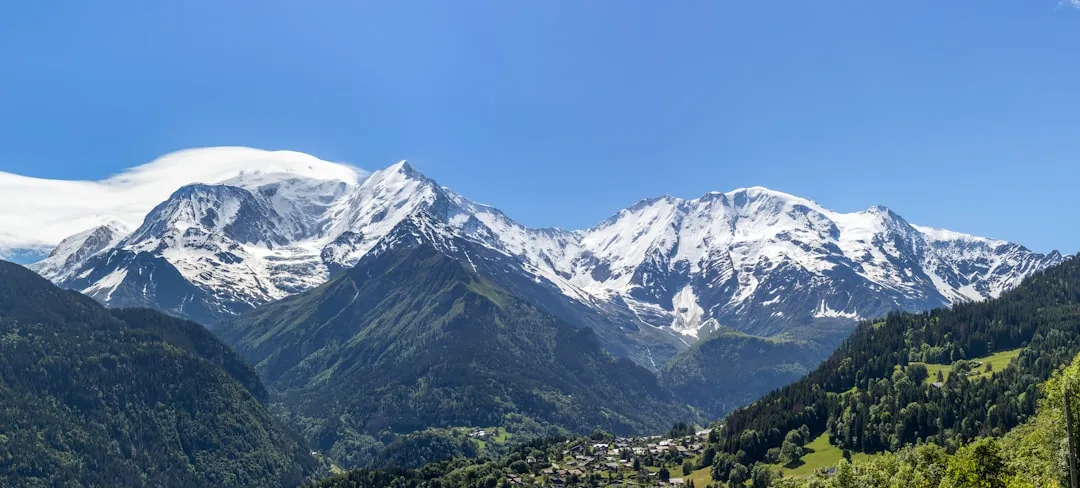
Mont Blanc Ascent - Reaching the Roof of Europe
The ascent of Mont Blanc is not merely a hike; it is a rite of passage for mountaineers and a monumental physical challenge that stands as the pinnacle of European alpine adventure. Rising to a majestic 4,810 metres, Mont Blanc is the highest peak in Western Europe, a shimmering dome of ice and granite that dominates the Graian Alps. The journey to its summit via the Goûter Route—often referred to as the "Voie Royale" or Royal Way—is a 2-day odyssey that demands exceptional physical fitness, mental fortitude, and a deep respect for the volatile high-alpine environment. Starting from the terminus of the historic Tramway du Mont Blanc at Nid d'Aigle, climbers ascend through a vertical world of crumbling rock, exposed ridges, and vast glacial plateaus. This is a landscape where the air thins, the weather dictates every move, and the rewards are unparalleled: a panoramic view that stretches across the French, Swiss, and Italian Alps, offering a perspective of the world that few ever witness.
- Distance: 6.2 km (one-way to summit)
- Elevation Gain: 3,835 m (total cumulative gain from base logistics)
- Duration: 2 days
- Difficulty: Very Challenging (Technical mountaineering skills required)
- Best Time: June to September
- Closest City: Chamonix, France
- Highest Point: 4,810 m (Summit)
Overview
The Mont Blanc ascent via the Goûter Route is the most popular and direct line to the summit, yet its popularity should never be mistaken for ease. This is a serious mountaineering undertaking that involves traversing the notorious Grand Couloir, scrambling up the steep Aiguille du Goûter, and navigating the narrow, wind-swept Bosses Ridge. The route is a masterclass in alpine progression, transitioning from the rocky, arid slopes of the lower mountain to the pristine, eternal snows of the upper massif. Unlike many lower-altitude treks, the Mont Blanc ascent is defined by its verticality and the physiological impact of altitude. Climbers must contend with reduced oxygen levels, which make every step above 4,000 metres a test of willpower.
The experience is divided into two distinct phases. The first day is a gruelling scramble from the Nid d'Aigle (2,372 m) to the Refuge du Goûter (3,835 m), a futuristic hut perched precariously on the edge of a cliff. This section includes the crossing of the Grand Couloir, a site infamous for rockfall, requiring speed and precise timing. The second day is the "summit push," typically beginning in the dark hours of the early morning. Under the glow of head torches, climbers ascend the Dôme du Goûter and the final aesthetic ridges to reach the summit at dawn. The descent is equally demanding, requiring concentration on tired legs to safely navigate back down the technical rock sections. This is a journey that requires not just strong legs, but an ability to move efficiently with crampons and an ice axe, often while roped to a partner or guide.
Environmental conditions on Mont Blanc are notoriously fickle. Even in the height of summer, temperatures on the summit can plummet well below -15 degrees Celsius, and winds can reach hurricane force. The mountain creates its own weather system, often trapping clouds and generating sudden storms that can reduce visibility to zero. Success on Mont Blanc is never guaranteed; it is a gift granted by the mountain when the weather, conditions, and the climber's preparation align perfectly. For those who succeed, the experience of standing on the "Roof of Europe" is a life-defining moment, a blend of exhaustion, relief, and profound awe at the scale of the natural world.
History and Cultural Context
The history of Mont Blanc is inextricably linked to the birth of modern mountaineering. For centuries, the "Montagne Maudite" (Cursed Mountain) was avoided by locals, who believed it was inhabited by demons and dragons. This changed in 1760 when Horace-Bénédict de Saussure, a wealthy Genevese aristocrat and scientist, offered a prize to the first person to find a route to the summit. He was driven by a desire to conduct scientific experiments at high altitude, but his offer sparked a competitive spirit that would eventually lead to the summit's conquest.
On 8 August 1786, Jacques Balmat, a local crystal hunter, and Michel-Gabriel Paccard, a doctor from Chamonix, achieved the impossible. They reached the summit using rudimentary equipment—long wooden poles and iron-shod boots—marking a pivotal moment in human history. This first ascent is widely considered the beginning of alpinism. De Saussure himself reached the summit a year later, accompanied by a large entourage of guides carrying scientific instruments. The 19th century saw a "Golden Age" of alpinism, with various routes being pioneered by British, French, and Italian explorers, each seeking to claim a piece of the mountain's legend.
The Goûter Route, which modern climbers follow, was developed later as a more direct alternative to the original "Grands Mulets" route. The construction of the Tramway du Mont Blanc in the early 20th century further democratised access, bringing climbers to the Nid d'Aigle and shortening the approach. Today, Mont Blanc remains a symbol of national pride for France and a central pillar of the Chamonix community. The town itself has evolved from a quiet farming village into the world's premier mountain sports hub, where the legacy of the early pioneers is celebrated in statues, museums, and the daily rhythm of mountain life. The mountain is also a site of significant scientific research, particularly regarding glacier retreat and the impacts of climate change on high-alpine ecosystems.
Want more background? Read extended notes on history and cultural context → Learn more
Seasonal Highlights and Weather Reality
The climbing season for Mont Blanc is strictly limited to the summer months, typically from June to September. Outside of this window, the mountain is the domain of extreme winter alpinists and ski mountaineers, as the huts are closed, the tramway is non-operational, and the avalanche risk is extreme.
June and Early July: This is often considered the prime time for the ascent. The snow cover is usually still thick, which makes the glaciers safer by bridging crevasses and stabilising the loose rock in the Grand Couloir. The days are long, providing ample light for the long descent. However, early-season storms can still bring heavy snowfall, and temperatures remain very low.
Late July and August: This is the peak of the season. The weather is generally more stable, but the mountain becomes significantly busier. As the summer heat persists, the snow melts, exposing more rock. This increases the danger in the Grand Couloir, as melting permafrost releases stones, leading to more frequent rockfall. During heatwaves, the mountain can become too dangerous to climb, leading to temporary closures of the huts.
September: The crowds begin to thin, and the air becomes crisper. September can offer beautiful, stable "Indian Summer" conditions. However, the glaciers are at their most "open" and dry, meaning crevasses are more exposed and difficult to cross. The first autumn storms can arrive late in the month, effectively ending the season with a fresh blanket of snow and high winds.
Regardless of the month, weather on Mont Blanc is the ultimate arbiter. A clear morning in Chamonix does not guarantee clear conditions at 4,000 metres. Climbers must be prepared for "whiteout" conditions, where the sky and snow blend into a disorienting void, and for the "Vent du Nord" (North Wind), which can make the Bosses Ridge impassable. Monitoring the Office de Haute Montagne (OHM) reports and the specialised mountain forecasts is a daily necessity for anyone on the mountain.
Recommended Itinerary
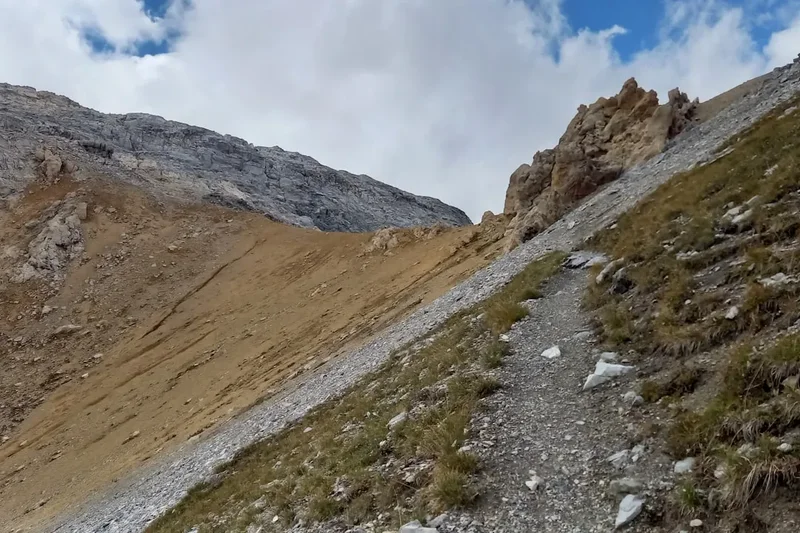
2-Day Mont Blanc Goûter Route Itinerary
Day 1: Nid d'Aigle to Refuge du Goûter
- Distance: 3.5 km
- Elevation gain: 1,463 m
- Time: 5–6 hours
- Take the first Tramway du Mont Blanc from Le Fayet or Saint-Gervais to the terminus at Nid d'Aigle (2,372 m).
- Begin the ascent on a well-defined rocky path towards the Refuge de la Tête Rousse (3,167 m). This section takes approximately 2 hours and offers views of the Bionnassay Glacier.
- Pause at Tête Rousse to gear up: put on harness, helmet, and prepare for the technical section ahead.
- Cross the Grand Couloir (the "Bowling Alley"). This is the most dangerous part of the route due to frequent rockfall. Cross quickly and individually, ideally before the midday sun melts the ice holding the rocks.
- Begin the long scramble up the Aiguille du Goûter. This is a steep, sustained section of rock (Grade II) with some fixed cables for security. It requires steady hands and sure footing.
- Arrive at the old Goûter Hut and continue a few hundred metres to the new, ultra-modern Refuge du Goûter (3,835 m).
- Evening: Early dinner and "alpine start" preparation. Hydration is critical at this altitude to mitigate symptoms of Acute Mountain Sickness (AMS).
Day 2: Refuge du Goûter to Summit and Descent
- Distance: 2.7 km (to summit) + 6.2 km (descent)
- Elevation: 975 m gain to summit, 2,438 m descent to Nid d'Aigle
- Time: 10–12 hours total
- Wake up at 2:00 AM for a 3:00 AM departure. This "alpine start" ensures you reach the summit at dawn and descend before the afternoon sun increases rockfall risk.
- Rope up and put on crampons immediately outside the hut. The route begins with a steady climb up the snowy slopes of the Dôme du Goûter.
- Pass the Vallot Hut (4,362 m), an emergency shelter only. This is a common spot to pause for a quick drink and to check for frostbite or altitude issues.
- Ascend the Arête des Bosses (Bosses Ridge). This is a spectacular, narrow snow ridge that requires precise crampon work and steady nerves. The exposure is significant on both the French and Italian sides.
- Reach the summit of Mont Blanc (4,810 m). The summit is a broad, snowy ridge. Spend limited time here (15–20 minutes) to avoid prolonged exposure to thin air.
- Begin the long descent back down the same route. The descent of the Aiguille du Goûter is often more taxing than the ascent, as fatigue sets in.
- Recross the Grand Couloir with extreme caution.
- Continue down to Nid d'Aigle to catch the afternoon tramway back to the valley.
- Return to Chamonix for a well-earned celebration meal.
Important Notes:
- The itinerary is highly weather-dependent; if winds exceed 50 km/h on the ridge, the summit attempt should be abandoned.
- Acclimatisation is mandatory. Most successful climbers spend 3–5 days on lower peaks (like Gran Paradiso or Aiguille du Tour) before attempting Mont Blanc.
- The Grand Couloir should be crossed as early as possible to minimise rockfall risk.
- Water is expensive at the huts; carry sufficient capacity or be prepared to pay high prices for bottled water.
- Crampon technique is vital on the Bosses Ridge; a "trip" here can be fatal for the entire rope team.
Planning and Bookings
Book Your Trip
Everything you need to plan your journey
Accommodation
Find places to stay near Chamonix
Flights
Search flights to Chamonix
Essential Preparation
Preparation for Mont Blanc begins months before you set foot in France. The physical requirements are immense; you should be capable of 10–12 hours of sustained aerobic activity with a 10 kg pack. Training should focus on hill walking with weight, stair climbing, and general cardiovascular endurance. Beyond fitness, technical preparation is key. If you are not an experienced mountaineer, hiring a UIAGM-certified mountain guide is strongly recommended. Guides provide not only safety and navigation but also handle the complex hut booking process.
Logistically, Chamonix is your base. It is easily accessible from Geneva Airport (GVA) via numerous shuttle services (approx. 1 hour 15 minutes). Chamonix offers everything from high-end hotels to mountain hostels. It is essential to arrive in the valley at least 4–5 days before your climb to begin an acclimatisation programme. This usually involves sleeping at altitude (e.g., at the Refuge des Cosmiques) and climbing peaks between 3,500 m and 4,000 m to trigger the production of red blood cells.
Trail Accommodation
Accommodation on the Goûter Route is strictly regulated. Wild camping is prohibited on the Mont Blanc massif, and violators face heavy fines. You must have a confirmed reservation to stay in the huts.
Refuge du Goûter (3,835 m): The primary hut for the summit push. It is a remarkable piece of engineering, designed to be eco-friendly and aerodynamic. It sleeps 120 people in dormitory-style bunks. Facilities include a large dining area, basic toilets, and a drying room. There are no showers, and water is not potable (bottled water must be purchased). Cost is approximately €60–€75 per night for the bed, with half-board (dinner and breakfast) adding another €50–€60.
Refuge de la Tête Rousse (3,167 m): Often used as a base for Day 1 or as an alternative if the Goûter is full. It is smaller and more traditional. Staying here makes Day 2 much longer (an extra 700 m of ascent), but it allows for a safer, earlier crossing of the Grand Couloir.
Nid d'Aigle (2,372 m): A small refuge near the tramway terminus, useful for those wanting an early start on Day 1 without taking the first train.
Booking Requirements: Bookings for the Goûter Hut open in waves (usually starting in March) and sell out almost instantly. There is a specific quota for independent climbers and another for guides. You must provide the names of all climbers at the time of booking, and these are non-transferable. You will receive a booking confirmation which acts as your "permit" to be on the mountain.
Required Gear
- Boots: B3-rated mountaineering boots (stiff-soled, insulated, and crampon-compatible).
- Crampons: 12-point steel mountaineering crampons with anti-balling plates.
- Ice Axe: A classic walking axe (50–70 cm) for self-arrest and stability.
- Harness: Lightweight alpine harness with adjustable leg loops to fit over layers.
- Helmet: Essential for protection against rockfall in the Grand Couloir and Aiguille du Goûter.
- Rope: 30–50 m dry-treated climbing rope (if climbing unguided).
- Clothing: A technical layering system including merino base layers, a heavy fleece or softshell, a waterproof Gore-Tex shell, and a high-loft down parka for the summit.
- Gloves: At least three pairs: thin liners, medium-weight waterproof gloves, and heavy summit mittens.
- Navigation: Map, compass, and GPS with offline maps. Altimeters are particularly useful here.
What to Bring
- High-Energy Food: Energy gels, bars, nuts, and chocolate. You need food that is easy to eat at altitude when appetite diminishes.
- Hydration: 2–3 litres of water capacity. Insulated bottle covers are essential to prevent freezing. Hydration bladders are discouraged as the tubes freeze easily.
- Sun Protection: Category 4 glacier sunglasses (essential to prevent snow blindness), SPF 50+ sunblock, and lip balm with UV protection.
- Head Torch: High-lumen LED torch with spare batteries for the 3:00 AM start.
- Personal First Aid: Blister kits (Compeed), ibuprofen/paracetamol, and any personal medications. Diamox (for altitude) should only be used after consultation with a doctor.
- Sleeping Bag Liner: Mandatory for hut use (silk or cotton). Blankets are provided, but liners are required for hygiene.
- Toiletries: Minimalist kit—toothbrush, small paste, and wet wipes (as there are no showers).
- Cash: Euros for hut purchases (drinks, snacks), as card machines often fail at high altitude.
Permits
While there is no "permit" in the traditional sense of a national park entry fee, the French authorities introduced a "Public Order Decree" in 2019 to manage the overcrowding and safety issues on Mont Blanc. This decree effectively makes a hut reservation mandatory for anyone climbing the Goûter Route. If you are caught on the mountain without a valid hut booking for that specific night, you can be fined up to €38,000 and face imprisonment. This strict measure was implemented to stop "illegal" camping and to ensure that climbers have a safe place to stay.
The Booking Process:
- Reservations must be made through the official FFCAM (Fédération Française des Clubs Alpins et de Montagne) website.
- The system is notorious for being difficult to navigate and for crashing during peak booking times.
- You must carry a printed or digital copy of your booking confirmation at all times. The PGHM (Mountain Police) frequently conduct checks at the Nid d'Aigle and near the Tête Rousse.
- If you are using a guide, they will typically handle this process for you, but you must ensure they are officially registered.
Costs: The cost of the "permit" is essentially the cost of the hut. Expect to pay around €130–€150 per day for hut fees and food. The Tramway du Mont Blanc costs approximately €40–€50 for a return ticket. If you hire a guide, the cost for a 2-day summit attempt is usually between €1,000 and €1,500 per person, depending on the ratio (maximum 1:2).
Other Activities in the Area
Chamonix is the adventure capital of the world, and there is plenty to do while acclimatising or celebrating your ascent:
- Aiguille du Midi: Take the world-famous cable car to 3,842 m for stunning views of Mont Blanc and the "Step into the Void" glass skywalk.
- Mer de Glace and Grotte de Glace: Visit France's largest glacier via the Montenvers rack railway and explore the ice caves carved into the heart of the glacier.
- Paragliding: Experience the valley from the air. Tandem flights depart from Planpraz or Les Grands Montets, offering a bird's-eye view of the massif.
- Rock Climbing: The valley is home to world-class granite climbing, from the easy crags of Les Gaillands to the high-alpine spires of the Aiguilles Rouges.
- Spa and Wellness: After your climb, visit QC Terme Chamonix for an outdoor heated pool with views of the very peaks you just conquered.
- Hiking: The Grand Balcon Sud offers one of the best panoramic views of the Mont Blanc range without the technical difficulty of a summit climb.
Safety and Conditions
The Grand Couloir: This is the single most dangerous section of the route. It is a natural funnel for falling rocks. The danger increases as the day warms up. The golden rule is to cross as early as possible and to move one by one while the rest of the team watches for falling debris. Never stop in the middle of the couloir to adjust gear.
Altitude Sickness (AMS): At 4,810 m, the air has only about 55% of the oxygen available at sea level. Symptoms include headache, nausea, and dizziness. If these symptoms worsen into a persistent cough or loss of coordination (HAPE or HACE), the only cure is immediate descent. Do not "push through" severe altitude sickness; it can be fatal within hours.
Weather and Exposure: The Bosses Ridge is extremely exposed. In high winds, it is easy to be blown off balance. Furthermore, the ridge is a lightning magnet during summer afternoon storms. If you see clouds building or feel static in the air (your ice axe might "hum"), descend immediately.
Crevasses: While the Goûter Route is less crevassed than the Trois Monts route, the Dôme du Goûter still has significant cracks. Always remain roped together on the snow sections and maintain proper rope tension to ensure a fall can be arrested.
Rescue: In the event of an emergency, the PGHM (Peloton de Gendarmerie de Haute Montagne) provides world-class helicopter rescue. However, rescue is only possible if weather conditions allow the helicopter to fly. Carry a mobile phone (European emergency number 112) but be aware that signal is intermittent.
Side Trips and Points of Interest
The Vallot Hut (4,362 m): This small aluminium shack is not a place for a comfortable night's sleep; it is an emergency shelter. However, it is a vital landmark and a place to seek refuge if the weather turns suddenly. It serves as a grim reminder of the mountain's power, often filled with exhausted climbers huddled together for warmth.
The Bosses Ridge: Named after the "bosses" (humps) of snow that form the ridge, this is one of the most aesthetic sections of the climb. Walking this narrow line between France and Italy, with thousands of metres of air on either side, is the highlight of the trip for many.
Aiguille du Goûter: The scramble up this 600 m rock face is a classic alpine experience. While the rock can be loose, the climbing is engaging and the views back down towards the Tête Rousse glacier are spectacular.
The Summit Plateau: Reaching the summit is often an emotional experience. The plateau is larger than many expect, allowing space for several rope teams to stand together. On a clear day, you can see the Matterhorn, Monte Rosa, and even the Mediterranean Sea in the far distance.
Leave No Trace
Mont Blanc is under immense environmental pressure. With over 20,000 people attempting the summit each year, the impact on the fragile alpine ecosystem is significant. The "Clean Mountain" initiative is in full force here, and climbers are expected to be stewards of the landscape.
Your responsibility as a climber:
- Waste Management: You must pack out everything. This includes "human waste" in areas where toilets are not available. The huts provide "poop bags" which must be used and carried down to the valley.
- No Wild Camping: Respect the ban on camping. Tents destroy the thin alpine soil and disturb local wildlife like the Alpine Ibex.
- Litter: Even a tiny piece of plastic or an orange peel can take years to decompose at this altitude. Check your pockets frequently to ensure nothing has fallen out.
- Noise: Keep noise to a minimum in the huts and on the mountain. The silence of the high Alps is a resource that should be respected.
- Water: Do not use soap in alpine streams or meltwater pools. Even biodegradable soap can harm the delicate micro-organisms that live in these cold environments.
 France