
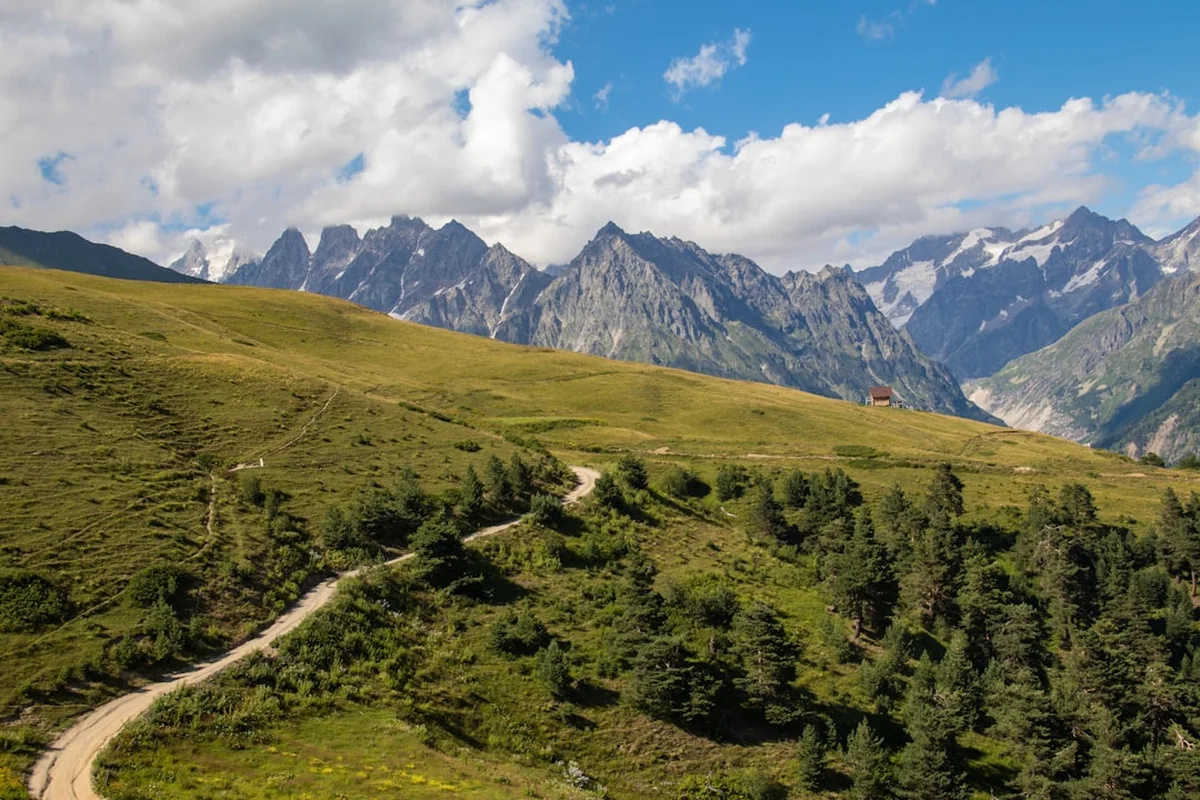
Mestia to Ushguli Trek - A Journey Through the Land of a Thousand Towers
The Mestia to Ushguli trek is Georgia's most iconic alpine journey, a 54-kilometre odyssey through the heart of Upper Svaneti in the Greater Caucasus Mountains. This four-day expedition traverses a landscape where time appears to have stood still for centuries, connecting ancient stone villages guarded by medieval defensive towers (koshki) that have survived avalanches, invasions, and the relentless passage of time. Starting in the regional centre of Mestia and culminating in Ushguli—one of the highest continuously inhabited settlements in Europe—the route offers a profound immersion into Svan culture, a distinct ethnic subgroup of Georgians with their own unwritten language and unique traditions. The trek is defined by its dramatic transitions: from lush, flower-strewn meadows and dense temperate forests to the raw, glacial majesty of the Chkhunderi Pass and the towering 5,068-metre massif of Mount Shkhara. This is not merely a hike; it is a pilgrimage through a UNESCO World Heritage landscape where the hospitality of the Svan people is as legendary as the peaks that surround them.
- Distance: 54.0 km point-to-point
- Duration: 4 days
- Season: June to September (peak alpine summer)
- Accommodation: Local village guesthouses (homestays)
- Highest point: Chkhunderi Pass (2,655 m)
- Total Elevation Gain: 3,700 m
- Difficulty: Moderate (requires good fitness for steep ascents and descents)
- Direction: West to East (Mestia to Ushguli is the standard route)
Overview
The Mestia to Ushguli trek has rapidly ascended the ranks of global hiking bucket lists, yet it retains an air of rugged authenticity that is increasingly rare in the European Alps. Located in the Svaneti region of northwestern Georgia, the trail follows the Enguri River valley and its tributaries, weaving through four distinct sub-valleys. Each day presents a new geographical character: the rolling hills and pastoral charm of the Mulakhi Valley on Day 1; the steep, forested ascent toward the Tetnuldi massif on Day 2; the high-alpine drama of the Adishi Glacier and Chkhunderi Pass on Day 3; and the final, expansive trek into the high-altitude plateau of Ushguli on Day 4.
What distinguishes this trek from other mountain routes is the seamless integration of natural beauty and human history. The Svan towers, built primarily between the 9th and 12th centuries, are ever-present sentinels on the horizon. These structures served as family fortresses during times of blood feuds and foreign incursions, and today they provide a silhouette unlike any other mountain range on Earth. The backdrop to these ancient villages is the "Wall of Svaneti," a series of peaks exceeding 4,000 and 5,000 metres, including the double-headed peak of Mount Ushba and the sprawling glaciers of Mount Tetnuldi.
The physical challenge is significant but accessible to most hikers with a reasonable level of fitness. While the distances are manageable, the elevation gain is concentrated in steep bursts, particularly the climb to the Chkhunderi Pass. The terrain varies from well-trodden dirt paths and 4x4 tracks to narrow alpine ridges and rocky glacial moraines. One of the most memorable aspects of the trek is the lack of traditional mountain huts; instead, walkers stay in the homes of local families. This "guesthouse" system provides a unique window into Svan life, featuring communal dinners of Khachapuri (cheese bread), Kubdari (meat-filled bread), and homemade wine or Chacha (grape brandy). It is a trek that nourishes both the body and the soul, offering a rare balance of physical exertion and cultural enrichment.
History and Cultural Context
The history of Svaneti is a saga of isolation and resilience. For millennia, the high mountain passes of the Greater Caucasus acted as both a barrier and a sanctuary. The Svan people, mentioned by the Greek geographer Strabo in the 1st century BC, were known as fierce warriors and skilled gold miners—legend has it that the "Golden Fleece" of Greek mythology refers to the Svan practice of using sheepskins to trap gold particles in mountain streams, a technique still practiced by some locals today.
During the Middle Ages, Svaneti became a cultural storehouse for the Georgian Kingdom. When invaders like the Mongols or Persians threatened the lowlands, the nation's most precious icons, manuscripts, and treasures were carried up the narrow mountain tracks to the safety of the Svan towers. This history has left the region with an incredible density of medieval art and architecture. The towers themselves are architectural marvels, typically three to five storeys high, designed with a single elevated entrance that could be defended by a small family for weeks. They are symbols of the Svan spirit—unyielding and independent.
The region remained largely autonomous and cut off from the outside world until the Soviet era, and even then, the traditional Svan laws and social structures remained dominant. It was only in the last two decades that the road to Mestia was modernised, opening the region to international tourism. In 1996, Upper Svaneti was inscribed as a UNESCO World Heritage site, recognising the exceptional preservation of its medieval villages and the harmonious relationship between the mountain environment and traditional human land use. Walking from Mestia to Ushguli is, in many ways, a walk through a living museum where the language spoken (Svan) predates many modern European tongues and the customs of hospitality are considered a sacred duty.
Want more background? Read extended notes on history and cultural context → Learn more
Seasonal Highlights and Weather Reality
The trekking season in Svaneti is relatively short due to the high altitude and heavy winter snowfall. The window typically opens in early June and closes by late September or early October. Outside of these months, the high passes—particularly Chkhunderi—are blocked by deep snow, and the risk of avalanches is high.
June and July: This is the peak of the alpine spring. The meadows are an explosion of wildflowers, including endemic Caucasian rhododendrons and lilies. The days are long, and the glaciers are at their most brilliant white. However, June can still see lingering snow patches on the passes, and afternoon thunderstorms are common. The Adishistskali River, which must be crossed on Day 3, is at its highest volume due to snowmelt, often requiring a horse for a safe crossing.
August: The most stable weather month, with warm temperatures and the lowest probability of rain. This is also the busiest time on the trail. The heat in the valleys can be intense, reaching 25-30° Celsius, though it remains cool at higher elevations. The river levels begin to drop, making crossings slightly easier.
September: Many experienced hikers consider this the best time to visit. The air is crisp and clear, providing the best visibility for photography. The summer crowds have thinned, and the autumn colours begin to turn the birch forests into shades of gold and copper. By late September, the first dustings of snow may appear on the peaks, and night-time temperatures in the villages can drop toward freezing.
Winter (October to May): The trek is not recommended for standard hikers. Svaneti receives some of the highest snowfall in the Caucasus. While Mestia and Ushguli are accessible by 4x4 vehicles (weather permitting), the trail between them becomes a serious mountaineering undertaking requiring specialised equipment and local knowledge of avalanche paths.
Recommended Itinerary
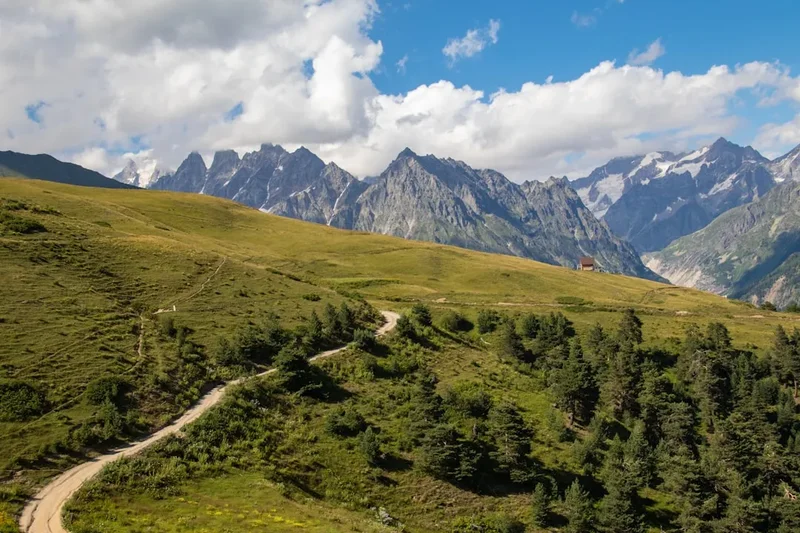
4-Day Mestia to Ushguli Itinerary
Day 1: Mestia to Zhabeshi
- Distance: 16 km
- Elevation gain: 760 m
- Elevation loss: 520 m
- Time: 5–7 hours
- Start in Mestia (1,500 m) and climb toward the Dechili Pass
- Pass through the villages of Mulakhi community, including Lakhiri
- Spectacular views of Mount Ushba's twin peaks behind you
- Walk through alpine meadows and hazelnut groves
- Arrive in Zhabeshi (1,600 m), a quiet village at the foot of the Tetnuldi massif
- The first day is a perfect introduction, offering a mix of forest trails and village paths with moderate climbing
Day 2: Zhabeshi to Adishi
- Distance: 10 km
- Elevation gain: 900 m
- Elevation loss: 450 m
- Time: 4–6 hours
- A steep, sustained climb from Zhabeshi up the slopes of Mount Tetnuldi
- Pass the Tetnuldi ski resort area (the trail skirts the lower lifts)
- Reach a high ridge with panoramic views of the Chanieri Glacier
- Descend through ancient birch forests into the hidden valley of Adishi
- Arrive in Adishi (2,040 m), perhaps the most authentic and remote village on the trek
- Adishi has no road access in winter and feels like a step back into the 12th century
Day 3: Adishi to Iprali via Chkhunderi Pass
- Distance: 17 km
- Elevation gain: 860 m
- Elevation loss: 1,080 m
- Time: 7–9 hours
- The "Queen Stage" of the trek and the most physically demanding day
- Follow the Adishistskali River upstream toward the massive Adishi Glacier
- Mandatory river crossing (usually requires hiring a horse from local villagers in the morning)
- Steep zigzag climb to the summit of Chkhunderi Pass (2,655 m)
- Unrivalled views of the icefall and the surrounding 5,000-metre peaks
- Long descent into the Khaldechala Valley, passing the ruins of Khalde (a village destroyed during a 19th-century uprising)
- Arrive in Iprali (1,890 m) for the final night's stay
Day 4: Iprali to Ushguli
- Distance: 12 km
- Elevation gain: 650 m
- Elevation loss: 400 m
- Time: 4–5 hours
- The final push to the UNESCO-listed village of Ushguli
- The trail follows a high track above the main road, offering better views and avoiding vehicle dust
- Pass through the village of Davberi before climbing toward the final ridge
- First sight of Ushguli's towers against the backdrop of Mount Shkhara (5,068 m)
- Explore the four hamlets of Ushguli: Zhibiani, Chvibiani, Chazhashi, and Murqmeli
- Celebrate the finish with a meal overlooking the highest peak in Georgia
- Return to Mestia by shared marshrutka (minibus) in the late afternoon (2-3 hours)
Important Notes:
- The river crossing on Day 3 is dangerous to attempt on foot before mid-August; always check with your guesthouse host about hiring a horse
- Guesthouses should be booked in advance during July and August, though "walk-ins" are often possible in the shoulder season
- The trail is generally well-marked with red and white blazes, but a GPS offline map is highly recommended
- Carry enough cash (Georgian Lari) for the entire trek, as there are no ATMs between Mestia and Ushguli
- Water is plentiful from springs, but should be treated due to livestock presence
Planning and Bookings
Book Your Trip
Everything you need to plan your journey
Accommodation
Find places to stay near Mestia
Flights
Search flights to Mestia
Essential Preparation
The Mestia to Ushguli trek requires moderate physical preparation. You should be comfortable walking 15-20 kilometres per day with a 7-10 kg pack. The most important logistical hurdle is reaching Mestia. Most international travellers fly into Kutaisi International Airport (KUT), which is the closest major hub. From Kutaisi, a marshrutka (minibus) takes approximately 5 hours to reach Mestia. Alternatively, you can travel from Tbilisi (9-10 hours) or take a domestic flight from Natakhtari Airfield to Mestia (though these are frequently cancelled due to weather).
Mestia is a well-equipped base town. It has several supermarkets, outdoor gear shops (for fuel canisters and basic supplies), pharmacies, and numerous ATMs. It is highly recommended to spend at least one full day in Mestia before starting the trek to acclimatise and organise your transport back from Ushguli. Ensure you have downloaded offline maps (such as Maps.me or Gaia GPS) as mobile signal is intermittent in the deep valleys.
Trail Accommodation
Accommodation on this trek is provided by local Svan families in their guesthouses. This is a cultural highlight but requires an understanding of local norms. There are no "huts" in the Western European sense.
Guesthouse Facilities:
- Private or shared rooms with basic beds and linens (sleeping bags are generally not required but a liner is a good idea)
- Hot showers (usually reliable, though sometimes limited by solar capacity)
- Flush toilets (shared)
- Massive communal meals (breakfast and dinner included in the price)
- Packed lunches can be provided upon request for an extra fee
- Electricity for charging devices (standard European two-pin plugs)
- WiFi is increasingly common but often slow or non-functional in Adishi and Iprali
What Guesthouses Don't Provide:
- Toiletries (bring your own soap and shampoo)
- Towels (some provide them, but a travel towel is safer)
- Laundry services (though you can often hand-wash items)
- Heating (rooms can be chilly in June and September)
Booking and Costs:
- Costs typically range from 60 to 100 Georgian Lari (GEL) per person, per night, including dinner and breakfast
- During peak season (July-August), it is wise to book via platforms like Booking.com or by phone a few days in advance
- In smaller villages like Adishi, options are limited; if you arrive late without a booking, you may have to sleep on a sofa or floor
Required Gear
- Hiking boots - Mid-cut with good tread and waterproof lining (essential for mud and stream crossings)
- Rain jacket - High-quality hardshell (the Caucasus can produce intense, sudden downpours)
- Backpack - 30-40L is sufficient if staying in guesthouses; ensure it has a rain cover
- Trekking poles - Highly recommended for the steep descent from Chkhunderi Pass and for stability during river crossings
- Warm layers - A fleece or down jacket for evenings, as temperatures drop significantly after sunset
- Sun protection - High SPF sunscreen, sunglasses, and a wide-brimmed hat (the alpine sun is exceptionally strong)
- First aid kit - Focus on blister care (Compeed), rehydration salts, and basic painkillers
- Head torch - For navigating dim guesthouse hallways or early starts
What to Bring
- Cash (GEL) - Essential. Carry enough for all accommodation, horses, and the return transport (approx. 500-600 GEL per person for 4 days to be safe)
- Water treatment - Purification tablets or a filter (Sawyer Squeeze or similar) to treat water from village taps or springs
- Snacks - High-energy bars, nuts, or dried fruit (village shops have limited selection)
- Power bank - To ensure your phone/GPS remains charged for navigation
- Personal hygiene - Hand sanitiser, biodegradable wet wipes, and a small roll of toilet paper
- Flip-flops or crocs - For wearing inside guesthouses to give your feet a break from boots
- Georgian SIM card - Magti is generally considered to have the best coverage in Svaneti
Permits
One of the great appeals of the Mestia to Ushguli trek is the lack of bureaucracy. Currently, no permits are required for independent hikers to walk this route. There are no national park entry fees or restricted zone passes needed for the standard four-day itinerary.
Border Zone Awareness:
- The trek takes place close to the border with the Russian Federation (specifically the Kabardino-Balkaria region). While the main trail is safe and well away from the actual border line, you should avoid wandering too far north of the Chkhunderi Pass or the Shkhara Glacier without local advice.
- Always carry your passport. While unlikely to be checked on the trail, Georgian border police do patrol the region, and you will need it for check-ins at guesthouses and for any unforeseen interactions with authorities.
- If you plan to do side trips closer to the border (such as the climb toward Mount Ushba or certain glacial approaches), check in Mestia at the Tourist Information Centre to see if temporary permits are required for those specific zones.
Transport Logistics:
- Return from Ushguli: Shared marshrutkas depart from the centre of Ushguli between 12:00 and 16:00 daily. The cost is approximately 40-50 GEL per person. You can also hire a private 4x4 for around 200-250 GEL if you have a group.
- Luggage Transfer: If you prefer to walk with a daypack, many guesthouses can arrange for your main luggage to be transported to the next village by 4x4 for a fee (usually 50-80 GEL per bag, per day).
Other Activities in the Area
Svaneti is a world-class destination for outdoor enthusiasts and culture seekers. Consider adding these experiences to your itinerary:
- Koruldi Lakes: A challenging day hike from Mestia that leads to a series of alpine tarns reflecting the jagged peaks of Mount Ushba. The views from the ridge above the lakes are arguably the best in the region.
- Chalaadi Glacier: A popular half-day walk from Mestia that takes you to the snout of a powerful glacier. It is a relatively flat and easy trail through beautiful forest.
- Svaneti Museum of History and Ethnography: Located in Mestia, this is one of the best museums in Georgia. It houses an incredible collection of medieval icons, gold jewellery, and ancient manuscripts saved from invaders.
- Makhuntseti Waterfall and Bridge: If you are travelling via Batumi, this is a spectacular side trip in the Adjara region.
- Hatsvali Ski Resort: Take the cable car from Mestia up to the Zuruldi ridge for a coffee with a view of the entire Caucasus range. In winter, this is a burgeoning destination for off-piste skiing.
- Shkhara Glacier Walk: From Ushguli, you can walk or take a horse 8 km to the base of the Shkhara Glacier, the source of the Enguri River.
Safety and Conditions
River Crossings: The most significant objective hazard on the trek is the Adishistskali River crossing on Day 3. The river is fed by the Adishi Glacier and its volume fluctuates based on temperature and time of day. In the morning (08:00-09:00), the water is usually knee-deep and manageable for experienced hikers. By afternoon, it can become a raging torrent of grey glacial meltwater. Do not attempt to cross on foot if the water is above mid-thigh or if you cannot see the bottom. Local villagers from Adishi wait at the crossing with horses every morning; paying 20-30 GEL for a horse crossing is a wise investment in your safety.
Weather Volatility: The Greater Caucasus creates its own weather systems. Even on a clear morning, clouds can roll in rapidly, dropping temperatures by 10-15 degrees and reducing visibility to a few metres. The Chkhunderi Pass is particularly exposed. If you hear thunder or see lightning, descend immediately. Hypothermia is a risk even in summer if you are caught in a cold rain without proper layers.
Shepherd Dogs: You will likely encounter large Caucasian Shepherd dogs (known as Nagazi) guarding livestock. These dogs are bred to fight off wolves and bears and can be very territorial. Safety protocol: Never approach a flock of sheep or cattle if a dog is present. If a dog approaches you barking, stop, stay calm, do not run, and wait for the shepherd to intervene. Carrying trekking poles can help keep a distance, but do not swing them aggressively unless absolutely necessary.
Trail Conditions: While the trail is generally good, some sections are prone to landslides after heavy rain, particularly between Iprali and Ushguli. Always ask your guesthouse host about "the state of the road" or "the path" before setting off. The descent from Chkhunderi Pass is steep and can be slippery when wet; take your time to avoid ankle injuries.
Emergency Services: Georgia has a national emergency number (112). However, mountain rescue in Svaneti is not as developed as in the Alps. Response times can be long, and helicopter evacuation is not guaranteed. Ensure you have comprehensive travel insurance that covers "hiking up to 3,000 metres."
Side Trips and Points of Interest
The Ruins of Khalde: On Day 3, after descending from the pass, you will encounter the village of Khalde. In 1876, this village was the site of a famous uprising against the Russian Empire. The village was eventually bombarded and razed to the ground, with a decree that it should never be rebuilt. Today, a few families have returned to run a small guesthouse, but the ruins remain a poignant reminder of Svaneti's history of resistance.
Lamaria Church, Ushguli: Located at the highest point of the Ushguli community, this 10th-century church is dedicated to the Virgin Mary (Lamaria in Svan). It is surrounded by a low stone wall and features ancient frescoes. The church sits against the backdrop of Mount Shkhara and is one of the most spiritual and photographed spots in Georgia.
The Tower of Love: Located on the road between Iprali and Ushguli, this solitary tower sits on a rock in the middle of the river. Local legend tells of a young woman who waited there for her lover to return from war; when he didn't, she stayed until her death. It is a popular spot for a quick break and a photo.
Adishi Glacier Snout: On Day 3, before you begin the climb to the pass, you can take a short 20-minute detour to get closer to the base of the Adishi Glacier. The scale of the icefall is staggering, and you can hear the groans and cracks of the moving ice. Be careful of falling rocks near the glacial face.
Leave No Trace
The surge in tourism in Svaneti has put significant pressure on the local environment and waste management systems. As a visitor, your impact is magnified in these remote valleys.
Responsible Trekking Principles:
- Waste Management: There is no formal rubbish collection in villages like Adishi. Anything you bring in (plastic bottles, wrappers, cigarette butts), you must carry out back to Mestia. Do not leave trash in guesthouse bins if you can avoid it, as it is often burned or buried locally.
- Water Protection: Svaneti's rivers are the lifeblood of the valleys. Avoid using soap or detergent directly in streams. Even biodegradable soap should be used at least 30 metres from the water's edge.
- Respect Private Property: While the mountains feel open, much of the land around villages is used for hay-making or grazing. Stick to the paths and close any gates you pass through.
- Cultural Sensitivity: Svaneti is a traditional and religious region. Dress modestly when entering churches (women should cover their heads and wear a skirt; many churches provide wraps at the entrance). Ask permission before taking photos of locals, especially the elderly.
- Flora and Fauna: Do not pick wildflowers, many of which are rare or endemic to the Caucasus. Stay on the trail to prevent erosion on steep slopes.
 Spain
Spain