
Matanuska Glacier Trek - Alaska's Accessible Ice Giant
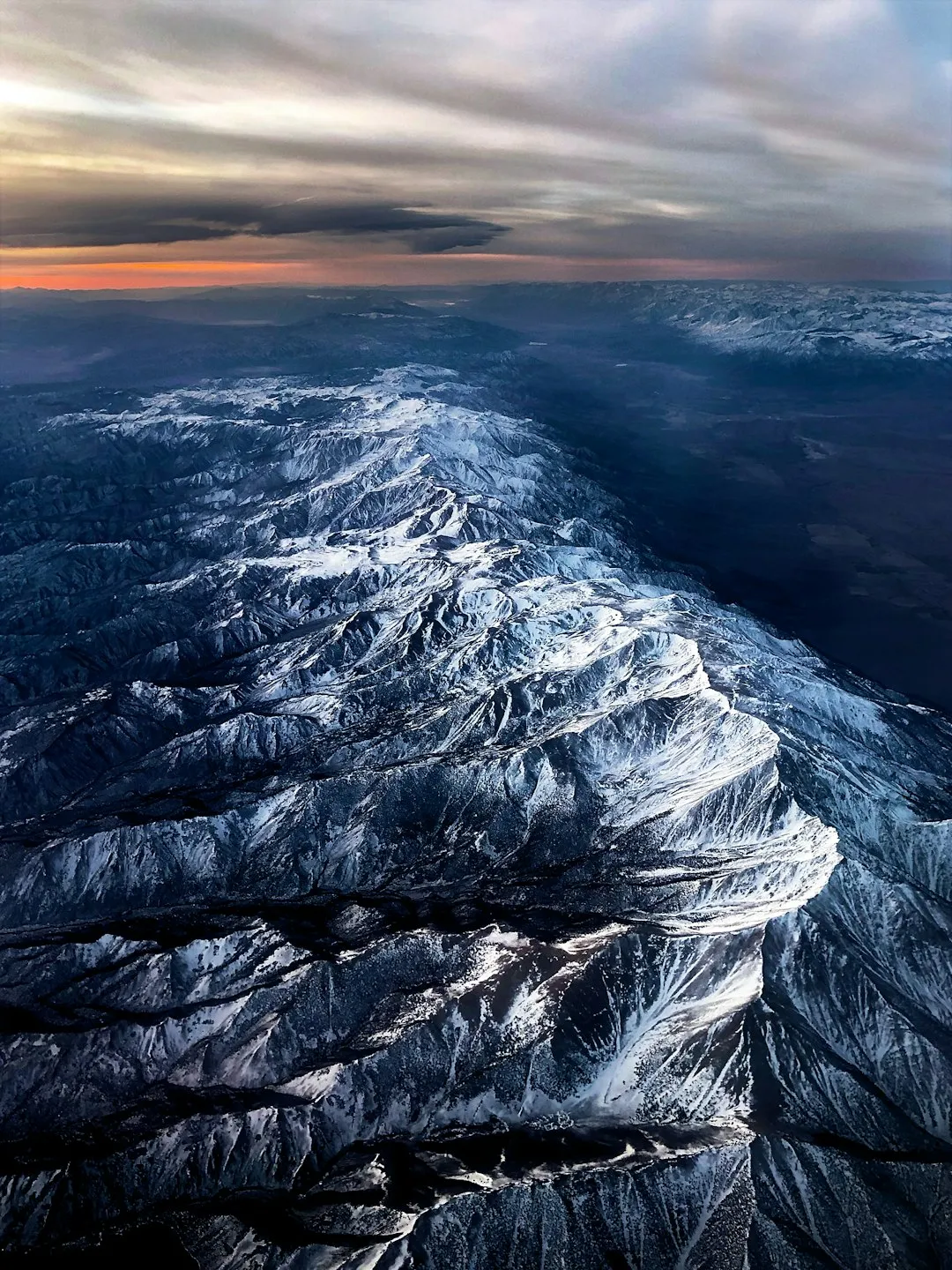
The Matanuska Glacier Trek offers a unique and accessible day-hike experience into the heart of one of Alaska's most impressive glacial formations. Located just a scenic drive from Anchorage, this trek allows visitors to walk directly onto a living glacier, exploring its icy landscapes, deep crevasses, and towering ice walls. Unlike many remote glaciers, the Matanuska Glacier is easily reachable by road, making it a popular destination for those seeking an adventure without the need for extensive backcountry travel or multi-day commitments. The trek provides a tangible connection to the immense power of glacial forces, showcasing the dynamic and ever-changing nature of ice.
- Category: Day Walk
- Distance: 6.4 km (round trip to glacier access point and exploration)
- Elevation Gain: 150 m (to glacier access point)
- Duration: 2-4 hours (including exploration time)
- Difficulty: Moderate
- Best Time: May to September
- Closest City: Palmer, Alaska
- Trailhead Access: Via AK-1 N from Anchorage, then follow signs to Matanuska Glacier State Recreation Area. Paved road access. Parking available.
Overview
The Matanuska Glacier is a testament to Alaska's wild and untamed beauty. As one of the state's most accessible glaciers, it draws visitors eager to witness the raw power of ice up close. The journey to the glacier itself is part of the experience, with the drive north from Anchorage offering increasingly dramatic mountain scenery. Upon arrival at the designated access point, a short, moderate hike leads you to the glacier's terminus. Here, the landscape transforms into a world of ice, sculpted by millennia of movement and melt. Walkers can explore the surface of the glacier, observing its intricate formations, including seracs, moulins (vertical shafts carved by meltwater), and deep blue ice caves (conditions permitting and with caution).
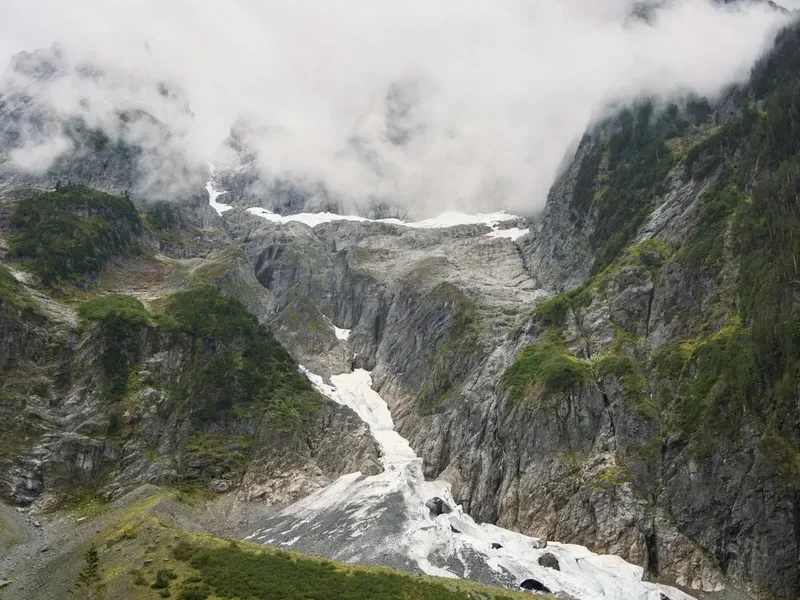
The glacier's surface is a mosaic of textures and colours, from the pristine white of fresh snow to the deep, almost black, ice where volcanic ash has been trapped over centuries. The sheer scale of the glacier is awe-inspiring, with ice walls rising dozens of metres high in places. The sounds of the glacier are equally captivating: the creaking and groaning of shifting ice, the trickle of meltwater carving new paths, and the distant roar of icefalls. While the main trek to the glacier's edge is relatively straightforward, venturing onto the ice requires careful attention and, ideally, guidance from a local expert due to the inherent risks of crevasses and unstable terrain.
The Matanuska Glacier is a "valley glacier," meaning it flows down a pre-existing river valley. Its current size is a result of past ice ages, though like many glaciers worldwide, it is currently receding. This recession means the landscape around the glacier is constantly changing, with new moraines (ridges of debris deposited by the glacier) and meltwater streams appearing regularly. The trek offers a unique opportunity to witness these geological processes in action, providing a profound appreciation for the forces that shape our planet.
History and Cultural Context
The Matanuska Glacier has a long history, deeply intertwined with the indigenous peoples of Alaska and the later arrival of explorers and settlers. For millennia, the Ahtna Athabaskan people have inhabited the Matanuska Valley region. Their traditional territories encompassed the lands surrounding the glacier, and they possessed an intimate knowledge of its cycles, its resources, and its dangers. Glaciers were not just geological features but integral parts of their environment, influencing hunting grounds, travel routes, and spiritual beliefs. While specific historical accounts of direct interaction with the Matanuska Glacier by the Ahtna are scarce in readily available public records, their presence and deep connection to the land are undeniable.
European exploration of the Matanuska Valley began in earnest in the late 19th and early 20th centuries. The discovery of coal in the valley in 1910 spurred significant interest and led to the establishment of mining towns. The construction of the Alaska Railroad in the early 1920s further opened up the region, making it more accessible to prospectors, surveyors, and eventually, tourists. The Matanuska Glacier, with its imposing presence, would have been a notable landmark for those travelling through the valley.
In the mid-20th century, as interest in outdoor recreation grew, the Matanuska Glacier began to gain recognition as a destination for adventurers. Its accessibility by road, a rarity for such a large glacier, made it an attractive spot for day trips. Local guides and outfitters emerged, offering tours and equipment to help visitors safely explore the ice. The establishment of the Matanuska Glacier State Recreation Area further solidified its status as a protected natural attraction, ensuring its preservation for public enjoyment while managing visitor impact.
Today, the Matanuska Glacier stands as a symbol of Alaska's glacial heritage, a place where the ancient power of ice meets modern accessibility, offering a glimpse into a landscape shaped by both natural forces and human history.
Seasonal Highlights and Weather Reality
The Matanuska Glacier Trek is primarily a summer and early autumn activity, with the best conditions typically occurring between May and September. During these months, the weather is generally milder, and the ice is more stable for exploration.
Spring (May - Early June): As the snow begins to melt, the glacier starts to reveal its more dramatic features. Meltwater streams become more active, carving channels across the ice. The surrounding vegetation begins to green, offering a beautiful contrast to the stark white and blue of the glacier. Temperatures are cool, and daylight hours are increasing rapidly. This is a good time to visit for fewer crowds, but ice conditions can still be unpredictable.
Summer (Mid-June - August): This is the peak season for the Matanuska Glacier. The weather is typically at its warmest, with average temperatures ranging from 10°C to 20°C. The glacier is fully accessible, and meltwater features are at their most dynamic. However, this is also the busiest time, and sandflies can be prevalent, especially during warmer, stiller periods. Longer daylight hours allow for extended exploration.
Autumn (September - Early October): The autumn months offer a different kind of beauty. The surrounding forests turn vibrant shades of red, orange, and yellow, creating a stunning backdrop for the glacier. The crowds thin out, and the air becomes crisp and cool. Temperatures can drop below freezing, especially at night, and early snowfalls are possible. Ice formations may become more stable as meltwater activity decreases, but access can be affected by early winter weather.
Weather Reality: Alaska's weather is notoriously unpredictable, even during the summer months. Visitors should always be prepared for rapid changes. Rain is common, and temperatures can fluctuate significantly. Wind can also be a factor, especially on the exposed glacier surface. It is crucial to check the local weather forecast before your visit and to pack layers of clothing suitable for a range of conditions, including waterproof and windproof outer shells.
Recommended Itinerary
Matanuska Glacier Day Trek
Early Morning: Travel to Trailhead
- Depart from Anchorage or your accommodation in the Matanuska Valley.
- Drive north on AK-1 N towards Palmer. The journey takes approximately 1.5 hours from Anchorage.
- Enjoy the scenic drive as the landscape transitions from urban to rural and then to mountainous terrain.
- Follow signs for the Matanuska Glacier State Recreation Area or specific glacier access points.
- The final approach road to the glacier access point may be gravel and can be rough in places; a vehicle with decent clearance is recommended, though most standard cars can manage with care.
Morning: Arrival and Glacier Access Hike
- Arrive at the designated parking area near the Matanuska Glacier.
- Pay any applicable access fees or check-in with tour operators if you have booked a guided tour.
- Begin the hike towards the glacier's terminus. This initial approach is typically 1.5-2 km one-way.
- The trail is generally well-defined but can be uneven, with some rocky and muddy sections depending on recent weather.
- Gain approximately 150 metres in elevation as you ascend towards the glacier's edge.
- Allow 30-60 minutes for this initial hike, depending on your pace and the trail conditions.
Midday: Glacier Exploration
- Reach the edge of the Matanuska Glacier.
- If you have booked a guided tour, this is where you will meet your guide and receive safety instructions and equipment (crampons, ice axe if needed).
- If exploring independently, exercise extreme caution. Only venture onto the ice if you have appropriate gear (sturdy, waterproof boots; crampons are highly recommended) and a thorough understanding of glacier safety. It is strongly advised to go with a guide.
- Explore the glacier's surface, observing ice formations, crevasses, moulins, and ice caves (if accessible and safe).
- Spend 1-2 hours exploring the glacier, taking photographs, and appreciating the unique environment.
- Be mindful of your surroundings and always stay aware of potential hazards.
Afternoon: Return Journey
- Begin the hike back from the glacier to the parking area.
- Allow 30-60 minutes for the return hike.
- Reflect on your glacial adventure as you retrace your steps.
- Begin the drive back to Anchorage or your next destination.
Important Notes:
- Guided tours are highly recommended for safety and to enhance the experience.
- Wear sturdy, waterproof hiking boots.
- Dress in layers, including waterproof and windproof outer gear.
- Bring plenty of water and snacks.
- Sun protection (sunglasses, sunscreen, hat) is essential, as sunlight reflects intensely off the ice.
- Be aware of the weather; conditions can change rapidly.
Planning and Bookings
Book Your Trip
Everything you need to plan your journey
Accommodation
Find places to stay near Palmer
Flights
Search flights to Palmer
Essential Preparation
The Matanuska Glacier Trek is a day trip, but proper preparation is still key to a safe and enjoyable experience. The closest major city with comprehensive services is Anchorage, which is about a 1.5-hour drive from the glacier. Palmer, a smaller city closer to the glacier, offers more immediate amenities like grocery stores and some lodging options. It is advisable to book any guided tours well in advance, especially during the peak summer season (June-August), as popular operators can fill up quickly. Ensure your vehicle is in good condition for the drive, as the final approach road can be unpaved and rough. Familiarise yourself with the weather forecast for the Matanuska Valley region immediately before your trip.
Trail Accommodation
This is a day hike requiring no overnight accommodation. Visitors typically travel from Anchorage or nearby towns for a single-day excursion to the Matanuska Glacier.
Required Gear
- Sturdy, waterproof hiking boots: Essential for navigating uneven terrain and potentially wet or icy surfaces on and around the glacier. Ensure they are well broken-in to prevent blisters.
- Waterproof and windproof jacket: Alaska's weather can change rapidly. A good quality outer shell is crucial for staying dry and protected from the wind, especially on the exposed glacier.
- Waterproof overtrousers: Highly recommended to keep your lower body dry during rain or when crossing wet areas.
- Warm layers: Including fleece or down mid-layers and thermal base layers. Temperatures can be significantly cooler on the glacier than in the surrounding valley.
- Hat and gloves: Even in summer, temperatures on the glacier can be cool, and wind can make it feel colder.
- Sunglasses: The glare from the ice and snow can be intense, even on cloudy days.
- Sunscreen: High SPF sunscreen is recommended due to the strong reflection off the ice.
- Backpack: A daypack (20-30 litres) to carry water, snacks, extra layers, and personal items.
- Head torch: While not typically needed for the main trek, it's always a good idea to have one in case of unexpected delays or for exploring ice caves (with a guide).
- First-aid kit: A basic kit with essentials like plasters, antiseptic wipes, pain relievers, and any personal medications.
- Insect repellent: Especially important during the summer months when sandflies can be prevalent.
What to Bring
- Food: Pack plenty of snacks and a packed lunch. There are no food services available at the glacier.
- Water: Carry at least 1-2 litres of water per person. While there is meltwater, it should be treated before consumption.
- Water treatment: A water filter or purification tablets are recommended if you plan to refill from glacier melt streams.
- Camera: To capture the stunning glacial landscapes.
- Binoculars: For observing distant ice formations or wildlife.
- Trekking poles: Optional, but can provide extra stability on uneven terrain.
- Cash: For potential access fees or small purchases in Palmer.
- Personal identification and emergency contact information.
Permits
Access to the Matanuska Glacier area typically involves a fee, often managed by private landowners or a state recreation area. It is essential to check the current requirements for access and any associated fees before your visit. These fees usually contribute to the maintenance of the access road, parking facilities, and trail upkeep.
Access Fees:
- Fees are generally per vehicle or per person and are payable at a designated kiosk or through an online booking system.
- The exact cost can vary, but expect it to be in the range of $10-$30 USD per vehicle for day use.
- It is advisable to have cash on hand, as some payment points may not accept credit cards.
Guided Tours:
- If you opt for a guided tour, the access fee is often included in the tour price.
- Booking a guided tour is highly recommended for safety, especially if you plan to venture onto the glacier itself. Guides provide necessary safety equipment such as crampons and ice axes, and possess the expertise to navigate the glacier safely.
- Popular tour operators include MICA Guides, Glacier Treks, and Alaska Glacier Adventures. It is wise to book these tours several weeks or even months in advance, particularly for the peak summer season.
State Recreation Area:
- The Matanuska Glacier is part of the Matanuska Glacier State Recreation Area. Information regarding specific regulations, fees, and operating hours can usually be found on the Alaska State Parks website or by contacting local visitor information centres.
Independent Exploration:
- While independent exploration is possible to the glacier's edge, venturing onto the ice without a guide or proper equipment is strongly discouraged due to the significant risks of crevasses, unstable ice, and unpredictable conditions.
Other Activities in the Area
The Matanuska Valley and its surroundings offer a variety of activities for visitors:
- Hatcher Pass: A scenic mountain pass offering stunning alpine vistas, hiking trails, and opportunities for photography. It's a popular spot for paragliding and is home to the historic Independence Mine.
- Palmer: Explore the charming town of Palmer, known for its agricultural roots. Visit the Musk Ox Farm to learn about these fascinating Arctic animals, or browse local shops and restaurants.
- Talkeetna: A quirky, historic town that serves as a base for Denali climbers. It offers great views of Denali (Mount McKinley) on clear days and has a unique, laid-back atmosphere.
- Fishing and Kayaking: The Matanuska River and nearby lakes offer opportunities for fishing and kayaking, particularly during the summer months.
- Hiking: Numerous trails exist in the surrounding Chugach State Park and Matanuska Valley, ranging from easy strolls to challenging mountain climbs.
- Wildlife Viewing: Keep an eye out for moose, caribou, Dall sheep, and various bird species in the region.
Safety and Conditions
Glacier Safety:
- Crevasses: The most significant hazard on any glacier. These are deep cracks in the ice that can be hidden by snow bridges. Never venture onto the glacier without a knowledgeable guide and appropriate safety equipment (ropes, harnesses, crampons).
- Ice Stability: Glacier ice can be unstable, especially near meltwater streams or edges. Always test the ice before putting your full weight on it.
- Meltwater Streams: These can be powerful and fast-flowing, posing a drowning risk. Avoid crossing them unless absolutely necessary and with extreme caution.
- Ice Caves: While beautiful, ice caves can be dangerous due to potential collapse and flooding. Only enter with a guide who can assess their stability.
- Weather: Conditions on the glacier can change rapidly. Be prepared for sudden drops in temperature, increased wind, and precipitation. Hypothermia is a risk even in summer.
Trail Conditions:
- The hike to the glacier's edge can be muddy, rocky, and uneven, especially after rain. Wear appropriate footwear.
- The final approach road to the glacier parking area can be rough and may require a vehicle with higher clearance. Check road conditions before you go.
General Safety:
- Inform someone of your plans: Let a friend or family member know where you are going and when you expect to return.
- Carry a fully charged mobile phone: While reception can be spotty, it's essential for emergencies. Consider a satellite communication device for remote areas.
- Stay hydrated and nourished: Bring plenty of water and snacks.
- Respect wildlife: Maintain a safe distance from any animals you encounter.
- Leave No Trace: Pack out everything you pack in.
Recommended: Always book a guided tour for glacier exploration. Guides are trained in glacier safety, carry essential equipment, and have knowledge of the safest routes and current conditions.
Side Trips and Points of Interest
Matanuska Glacier Ice Caves: During certain times of the year and under specific conditions, stunning ice caves can form within the glacier. These are natural formations carved by meltwater and can feature breathtaking shades of blue ice. Access to ice caves is strictly dependent on safety and guide availability. They are a highlight for many visitors, offering a surreal and otherworldly experience. Always explore these with a certified guide.
Moulins: These are vertical shafts or sinkholes in the glacier, formed by meltwater streams that bore through the ice. They can be incredibly deep and are a fascinating geological feature to observe from a safe distance. Their presence highlights the dynamic nature of glacial erosion.
Moraines: The edges of the glacier are lined with moraines – ridges of rock and debris deposited by the ice as it advanced and retreated. These offer a glimpse into the glacier's past movements and provide interesting geological features to examine on the hike to the glacier's edge.
Volcanic Ash Layers: Within the glacier's ice, you can often see distinct dark bands. These are layers of volcanic ash from past eruptions, trapped in the ice over hundreds or even thousands of years. They serve as a historical record of volcanic activity in the region.
Scenic Drive to the Glacier: The drive itself, particularly the section north of Palmer, offers spectacular views of the Chugach Mountains and the surrounding valley. Pull-offs provide opportunities to admire the landscape and take photographs.
Leave No Trace
The Matanuska Glacier is a fragile environment, and it is crucial for all visitors to practice Leave No Trace principles to minimise their impact. The glacier's surface is constantly changing, and the surrounding ecosystem is delicate.
Pack It In, Pack It Out: This is the golden rule. Carry out all trash, including food scraps, wrappers, and any other waste you generate. Do not bury or burn trash. If you bring it to the glacier, take it back with you.
Stay on Marked Trails and Established Routes: When hiking to the glacier, stick to the designated paths. On the glacier itself, always follow your guide's instructions and stay within the marked safe zones. Venturing off-trail can damage fragile vegetation and increase the risk of encountering hidden hazards.
Respect Wildlife: Observe animals from a distance. Never feed wildlife, as it can alter their natural behaviours and diets, and can be harmful to their health. Keep pets under control if they are permitted in the area.
Dispose of Waste Properly: Use designated toilet facilities where available. If no facilities are present, dig a cathole at least 60 metres away from water sources, trails, and campsites. Pack out all toilet paper.
Leave What You Find: Do not take rocks, ice, or any natural objects from the glacier or its surroundings. These are part of the natural environment and should be left for others to enjoy.
Minimise Campfire Impacts: Campfires are generally not permitted on or near the glacier. If camping in designated areas nearby, use established fire rings and ensure fires are completely extinguished.
Be Considerate of Other Visitors: Keep noise levels down and respect the experience of others. Share the trail and the glacier responsibly.
By adhering to these principles, you help preserve the Matanuska Glacier for future generations to experience its awe-inspiring beauty.
 USA
USA