
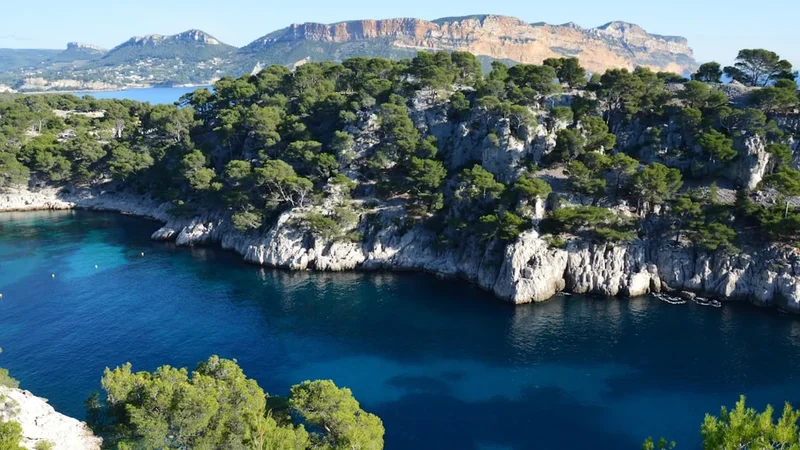
Les Lacs d'Ayous - The Mirror of the Pyrenees
The Les Lacs d'Ayous circuit is arguably the most iconic day hike in the French Pyrenees, offering a quintessential alpine experience that captures the rugged soul of the Béarn region. Located within the heart of the Parc National des Pyrénées, this 11-kilometre loop traverses a high-altitude landscape of glacial lakes, verdant summer pastures, and dramatic volcanic peaks. The centrepiece of the journey is the constant, shifting perspective of the Pic du Midi d'Ossau (2,884 metres), an ancient volcanic plug that stands isolated from the main chain, its jagged silhouette reflecting perfectly in the crystalline waters of the Ayous lakes. This is a trail where the deep-rooted traditions of Pyrenean pastoralism meet world-class natural beauty, providing hikers with a profound sense of the geological and cultural history of south-western France.
- Distance: 11.0 km loop
- Elevation Gain: 750 m
- Duration: 5–6 hours
- Difficulty: Moderate
- Highest Point: Lac Bersau (2,082 m)
- Best Time: June to October (snow-free period)
- Location: Vallée d'Ossau, Pyrénées-Atlantiques, France
- Trailhead: Lac de Bious-Artigues (1,422 m)
Overview
The Les Lacs d'Ayous circuit is a masterclass in Pyrenean geography. Starting from the emerald-green reservoir of Lac de Bious-Artigues, the trail ascends through ancient beech and fir forests before emerging into the vast, open cirques that define the high mountains. The route is famous for its "staircase" of lakes—Roumassot, Miey, and Gentau—each perched at a different elevation, culminating in the high-altitude plateau of Lac Bersau. The landscape is a vibrant tapestry of colours: the deep blue of the glacial water, the bright green of the summer "estives" (high pastures), and the stark, iron-grey of the surrounding limestone and volcanic rock.
What sets this hike apart is its accessibility combined with its immense visual reward. While the ascent requires a steady level of fitness, the paths are well-maintained and the gradients are manageable for most regular walkers. The trail is part of the GR10 (the great trans-Pyrenean route), meaning it is well-marked with the characteristic red and white blazes. Beyond the scenery, the hike offers a front-row seat to the biodiversity of the Pyrenees. It is common to see marmots sunning themselves on granite boulders, Griffon vultures soaring on thermals above the ridges, and the iconic "Patou" (Pyrenean Mountain Dogs) guarding flocks of sheep and goats. The presence of the Refuge d'Ayous, situated on a rocky promontory overlooking Lac Gentau, provides a welcome midpoint for rest and a chance to sample local mountain hospitality.
The geological significance of the area cannot be overstated. The Pic du Midi d'Ossau, which dominates every vista, is the remnant of a collapsed volcanic caldera from the Hercynian orogeny. Its unique shape and isolation make it a beacon for mountaineers and photographers alike. Walking the Ayous circuit is not just a physical exercise; it is a journey through a landscape that has been shaped by millions of years of tectonic activity and thousands of years of human transhumance, where the rhythm of the seasons still dictates the movement of life.
History and Cultural Context
The history of the Ayous region is inextricably linked to the practice of transhumance—the seasonal movement of livestock between lowland winter pastures and high-altitude summer grazing lands. For centuries, shepherds from the Ossau Valley have driven their flocks of Basco-Béarnaise sheep up these slopes as the snow melts in June. This tradition has shaped the very landscape hikers see today; the open, treeless plateaus around the lakes are the result of generations of grazing and careful management. The small stone huts, or "cayolars," dotted throughout the valley are testament to this enduring pastoral culture, where the production of Ossau-Iraty cheese remains a vital part of the local economy and identity.
The Pic du Midi d'Ossau itself holds a legendary status in Béarnais folklore. Known affectionately as "Jean-Pierre," the peak's twin summits are said to represent two brothers, Jean and Pierre, who were turned to stone while defending their valley against invaders. The first recorded ascent of the peak was in 1787 by a shepherd, though it wasn't until the 19th century that the mountain became a focal point for the "Pyreneism" movement—a uniquely French philosophy that combined mountaineering with scientific exploration and romantic literature. Explorers like Henry Russell and Count Roger de Bouillé frequented these valleys, documenting the flora, fauna, and geology of the range.
The lower trailhead at Lac de Bious-Artigues also has a more modern history. The lake is actually a reservoir, created by a dam built between 1953 and 1957 to harness the hydroelectric power of the Gave de Bious. While the dam is a feat of mid-century engineering, the area was incorporated into the Parc National des Pyrénées upon its creation in 1967, ensuring that the wilderness above the reservoir remains protected from further industrial development. Today, the park serves as a sanctuary for endangered species and a bastion of traditional mountain life, balancing the needs of modern tourism with the preservation of ancient customs.
Want more background? Read extended notes on history and cultural context → Learn more
Seasonal Highlights and Weather Reality
The hiking season for Les Lacs d'Ayous is relatively short, dictated by the heavy snowfall that blankets the Pyrenees in winter. Generally, the trail is accessible from early June until late October. Outside of this window, the route becomes a serious winter mountaineering undertaking requiring snowshoes, crampons, and an intimate knowledge of avalanche terrain.
Spring (June): This is a season of dramatic transition. While the lower sections are lush and blooming with rhododendrons and wild lilies, the upper lakes (Bersau and Castérau) may still be partially frozen or surrounded by snowfields. The waterfalls are at their most powerful due to snowmelt, and the air is crisp. Hikers should be prepared for soft snow crossings on the higher passes.
Summer (July and August): This is the peak season. The weather is generally stable, though afternoon thunderstorms (orages) are a frequent and serious hazard. The pastures are filled with livestock, and the Refuge d'Ayous is in full operation. This is also the busiest time; the trailhead parking can fill up by 8:00 AM, and the trail itself can feel crowded. The benefit is the vibrant social atmosphere and the guaranteed availability of services.
Autumn (September and October): Many locals consider this the best time to hike. The crowds thin out significantly, the air becomes exceptionally clear, and the bilberry bushes turn a deep crimson, contrasting with the golden grasses. The first dustings of snow often appear on the high peaks in October, providing a stunning contrast against the blue lakes. However, days are shorter and temperatures can drop rapidly once the sun dips behind the ridges.
Weather Reality: The Pyrenees are notorious for rapid weather shifts. A clear morning can transform into a violent thunderstorm within an hour. The "Vent de Sud" (South Wind) can bring warm, dry air but also extreme gusts that make ridge walking dangerous. Always check the "Météo France" mountain forecast specifically for the Ossau Valley before setting out.
Recommended Itinerary
Les Lacs d'Ayous Loop Itinerary
Phase 1: Lac de Bious-Artigues to the Plaine de Bious
- Distance: 2.5 km
- Elevation gain: 100 m
- Time: 45 minutes
- Start at the parking area of Lac de Bious-Artigues (1,422 m).
- Follow the paved road around the western shore of the lake, passing the equestrian centre.
- Enter the forest (Bois de Bious) on a wide, well-graded track.
- The trail emerges onto the vast, flat Plaine de Bious, a glacial valley floor where the Gave de Bious meanders through peat bogs.
- This section is an easy warm-up with spectacular views of the Pic du Midi d'Ossau directly ahead.
Phase 2: The Ascent to Lac Roumassot and Lac du Miey
- Distance: 2 km
- Elevation gain: 400 m
- Time: 1 hour 15 minutes
- At the end of the Plaine de Bious, cross the bridge and begin the steady climb to the right (west), following the GR10 markings.
- The path zigzags up a steep slope through a mix of forest and open pasture.
- Arrive at Lac Roumassot (1,845 m), the first of the Ayous lakes. The lake is often surrounded by grazing horses and sheep.
- Continue a short distance further to the smaller, more intimate Lac du Miey (1,914 m).
- The gradient is consistent but the views of the Ossau massif become increasingly dramatic with every metre of elevation gained.
Phase 3: Lac Gentau and the Refuge d'Ayous
- Distance: 1 km
- Elevation gain: 50 m
- Time: 20 minutes
- A short, final climb leads to the basin of Lac Gentau (1,947 m).
- The Refuge d'Ayous sits on a rocky outcrop above the lake, offering the most famous view in the Pyrenees: the Pic du Midi d'Ossau reflected in the water.
- This is the ideal spot for a long lunch break. The refuge serves drinks, snacks, and hot meals during the summer season.
- Explore the shoreline of Lac Gentau, which is often warm enough for a very brief, bracing swim in mid-summer.
Phase 4: The High Point - Lac Bersau
- Distance: 1.5 km
- Elevation gain: 150 m
- Time: 45 minutes
- From the refuge, follow the trail climbing steeply to the south-west.
- Reach the Col d'Ayous (optional detour) or continue to Lac Bersau (2,082 m), the highest and largest lake on the circuit.
- The landscape here is more austere and mineral, with less vegetation and more exposed rock.
- Lac Bersau often holds ice later into the season than the lower lakes.
Phase 5: Descent via Lac Castérau and the Gave de Bious
- Distance: 4 km
- Elevation loss: 650 m
- Time: 1.5–2 hours
- From Lac Bersau, the trail begins a long, scenic descent towards the south-east.
- Pass the smaller Lac Castérau (1,943 m), nestled under the impressive cliffs of the Pic de Castérau.
- The path drops steeply via a series of switchbacks back down to the Plaine de Bious.
- Rejoin the main track along the Gave de Bious and retrace your steps through the forest to the Lac de Bious-Artigues trailhead.
Important Notes:
- The loop can be walked in either direction, but clockwise (as described) is preferred for the best views of the Pic du Midi d'Ossau.
- Water is available at the Refuge d'Ayous, but carry at least 2 litres per person.
- The descent from Lac Castérau is steep and can be slippery after rain; trekking poles are highly recommended.
- Allow extra time for photography—the reflections at Lac Gentau are world-class.
Planning and Bookings
Book Your Trip
Everything you need to plan your journey
Accommodation
Find places to stay near Laruns
Flights
Search flights to Laruns
Essential Preparation
While Les Lacs d'Ayous is a day hike, it requires thoughtful preparation due to its high-altitude environment and popularity. The most critical logistical factor is arrival time. During July and August, the upper parking lot at Lac de Bious-Artigues fills up by 8:00 AM. Once full, the access road is closed at the lower gate, and hikers must park in the lower lots and take a shuttle bus (navette) or walk an additional 3 kilometres uphill to the trailhead. Check the local tourism office website for shuttle schedules and parking fees.
Physical fitness is important; while the trail is not technically difficult, 750 metres of elevation gain is a significant effort for those not used to mountain walking. Ensure you are acclimatised if travelling from sea level. The nearest base town is Laruns, which offers full services including supermarkets, pharmacies, and outdoor gear shops. It is a 20-minute drive from Laruns to the trailhead.
Trail Accommodation
As this is a day hike, most visitors do not require overnight accommodation on the trail. However, for those wishing to experience the sunrise over the Pic du Midi d'Ossau, the Refuge d'Ayous is the only option.
Refuge d'Ayous:
- Capacity: 47 people in dormitory-style bunks.
- Booking: Mandatory and must be done months in advance for summer weekends via the FFCAM (French Alpine Club) website.
- Facilities: Blankets provided (bring a silk liner), shared toilets, cold water sinks, common dining area.
- Food: Half-board (dinner and breakfast) is the standard booking. Packed lunches can be purchased.
- Seasonal Availability: Generally open from mid-June to late September. Outside these dates, a small "winter room" remains open for emergency use only.
- Cost: Approximately €55–€65 for half-board.
Camping/Bivouac: Camping is strictly regulated within the National Park. Bivouacking (setting up a small tent for one night) is permitted between 7:00 PM and 9:00 AM, provided the tent is more than one hour's walk from a road access point. The area around Lac Gentau is a popular bivouac spot, but you must pack up early and leave no trace.
Required Gear
- Trekking boots: Sturdy boots with good ankle support and vibram-style soles are essential for the rocky sections.
- Waterproof jacket: A high-quality hardshell (Gore-Tex or similar) is non-negotiable, even if the forecast is clear.
- Insulating layer: A fleece or lightweight down jacket, as temperatures at 2,000 metres are significantly lower than in the valley.
- Trekking poles: Highly recommended to save knees on the 750-metre descent.
- Backpack: A 20–30 litre daypack with a rain cover.
- Sun protection: High SPF sunscreen, sunglasses (Category 3 or 4), and a wide-brimmed hat. The alpine sun is intense.
- Navigation: A physical map (IGN 1547 OT - Ossau/Vallée d'Aspe) and a compass or GPS app with offline maps.
What to Bring
- Water: At least 2 litres per person. While there are streams, they are often contaminated by livestock; use a filter or purification tablets if refilling.
- High-energy food: Sandwiches, nuts, dried fruit, and chocolate. The climb to Lac Roumassot is calorie-intensive.
- First aid kit: Including blister plasters (Compeed), antiseptic wipes, and any personal medications.
- Whistle and emergency blanket: Standard safety items for mountain environments.
- Cash: Small denominations for the Refuge d'Ayous (they may not accept cards for small purchases) and for parking fees.
- Identification: Always carry ID and insurance details.
Permits
No permits are required to hike the Les Lacs d'Ayous circuit. The trail is open to the public year-round. However, there are specific regulations and fees associated with access and conservation that hikers must be aware of.
Parking Fees and Access:
- During the summer season (June to September), the upper parking lot at Lac de Bious-Artigues is a paid lot. The fee is typically around €6–€7 per day.
- If the upper lot is full, you must use the lower lots, which are free but require a shuttle bus (navette) ride or a 30-45 minute walk to reach the trailhead. The shuttle usually costs a few euros.
- The access road is narrow and can be closed to private vehicles once the upper lot reaches capacity.
National Park Regulations:
- The trail lies within the "Zone Coeur" (Core Zone) of the Parc National des Pyrénées. Regulations are strictly enforced by park rangers.
- Dogs are strictly forbidden, even on a lead. This is to protect wildlife and prevent conflicts with livestock and guard dogs.
- Drones are prohibited throughout the National Park.
- Picking flowers, taking rocks, or disturbing wildlife is illegal.
- Mountain biking is restricted to specific tracks and is generally not permitted on the Ayous loop.
Group Sizes: While there is no formal limit on group size for day hikers, commercial groups or large organised clubs should contact the National Park office in Laruns if they exceed 15-20 people to ensure they are not impacting the trail's capacity or other users' experience.
Other Activities in the Area
The Vallée d'Ossau is a hub for outdoor adventure and Béarnais culture. Consider these activities to complement your hike:
- Petit Train d'Artouste: Located nearby, this is the highest narrow-gauge railway in Europe. Originally built for dam construction, it now takes tourists on a spectacular 10-kilometre journey along a cliff edge at 2,000 metres elevation.
- Climbing Pic du Midi d'Ossau: For experienced mountaineers, the "Voie Normale" (Normal Route) to the summit of the Ossau is a classic scramble (Grade II/III). It requires a helmet, rope, and mountain sense.
- Laruns Market: Every Saturday morning, the town of Laruns hosts a vibrant market. It is the best place to buy authentic Ossau-Iraty cheese, local honey, and "Gâteau Basque."
- Thermal Spas at Eaux-Bonnes: After a strenuous hike, visit the historic thermal village of Eaux-Bonnes to soak in the medicinal waters that have been famous since the 19th century.
- Canyoning and Rafting: The Gave d'Ossau offers excellent white-water opportunities, with several professional guiding outfits based in Laruns and Gabas.
- Col d'Aubisque: Cycle or drive up this legendary Tour de France climb for panoramic views across the Pyrenean chain towards the Cirque de Gavarnie.
Safety and Conditions
Mountain Weather: The primary safety concern in the Pyrenees is the weather. Afternoon thunderstorms are common in July and August. These storms bring lightning, heavy rain, and sudden temperature drops. If you see dark, towering cumulus clouds forming, begin your descent immediately. Do not stay on the high ridges or near the lakes during a storm.
Livestock and Guard Dogs: You will encounter large flocks of sheep and herds of cattle. These are often protected by "Patous" (Great Pyrenean Dogs). These dogs are not pets; their job is to protect the flock from predators. If you encounter a Patou, stop, stay calm, and do not make eye contact. Speak in a low, soothing voice and walk in a wide circle around the flock. Never try to pet the dog or feed the livestock.
Terrain Hazards: The section between Lac Bersau and Lac Castérau involves steep, rocky terrain. In wet weather, the limestone can become extremely slippery. Ensure you have footwear with excellent grip. The trail is well-marked, but in heavy mist (the "brouillard" common in the Pyrenees), it is easy to lose the red and white blazes. Always carry a map and compass.
Hydration and Altitude: While 2,000 metres is not high enough for acute mountain sickness for most, the combination of physical exertion and the dry alpine air can lead to rapid dehydration. Drink frequently and use sun protection to avoid heatstroke.
Emergency Contacts: The European emergency number is 112. Note that mobile signal is very spotty in the Ayous basin; you may need to reach the Refuge d'Ayous to use their radio or landline in an emergency.
Side Trips and Points of Interest
Pic d'Ayous (2,288 m): For those with extra energy, a detour from the Col d'Ayous to the summit of Pic d'Ayous adds about 45 minutes to the hike. The summit provides an even more expansive 360-degree view, looking west towards the Vallée d'Aspe and north towards the plains of Pau. The final ridge is narrow but not technically difficult in dry conditions.
The Waterfall of Lac Roumassot: Just below the outlet of Lac Roumassot, the water plunges over a rocky lip into the valley below. There is a small, unofficial path that leads to a viewpoint where you can see the falls framed by the Pic du Midi d'Ossau—a favourite spot for landscape photographers.
The Peat Bogs of Plaine de Bious: The flat valley floor at the start of the hike is a fragile and fascinating ecosystem. These peat bogs (tourbières) are home to rare plants like the carnivorous Sundew (Rossolis). Stay on the main track to avoid damaging this sensitive environment, but take a moment to observe the unique flora and the meandering path of the Gave de Bious.
Gabas: On your drive back down the valley, stop in the tiny hamlet of Gabas. It is famous for its "saloirs" (cheese aging cellars). You can often buy cheese directly from the producers here, which has been aged in the cool, humid mountain air.
Leave No Trace
The Parc National des Pyrénées is one of France's most precious natural assets. With over 100,000 visitors a year to the Ayous region, the cumulative impact can be devastating if Leave No Trace principles are not followed strictly.
Your responsibility as a walker:
- Pack out all trash: This includes organic waste like orange peels and banana skins, which decompose very slowly at high altitudes and can be harmful to local wildlife.
- Respect the water: Do not use soap (even biodegradable) in the lakes. The lakes are closed ecosystems, and chemicals can disrupt the delicate balance of aquatic life, including the rare Pyrenean Brook Newt.
- Stay on the trail: Short-cutting switchbacks causes severe erosion, especially during the spring snowmelt. Stick to the marked GR10 path.
- No fires: Wildfires are a genuine risk in the mountains. Use a lightweight camping stove if you are bivouacking.
- Observe wildlife from a distance: Do not approach marmots or vultures. Use binoculars for a better view without causing stress to the animals.
- Human waste: Use the facilities at the Refuge d'Ayous or the trailhead. If you must go on the trail, dig a "cathole" at least 15 cm deep and 60 metres away from water sources. Pack out your toilet paper.
By following these rules, you ensure that the "Mirror of the Pyrenees" remains clear and pristine for the next generation of hikers. The beauty of Ayous is a shared heritage that requires collective respect.
 France