

Kumano Kodo Iseji - The Pilgrimage of Sea and Stone
The Kumano Kodo Iseji is a profound spiritual and physical journey spanning 170 kilometres along the eastern coast of Japan's Kii Peninsula. Connecting the two most sacred sites in the nation—the Ise Grand Shrine (Ise Jingu) in Mie Prefecture and the Kumano Sanzan (the three grand shrines of Kumano) in Wakayama Prefecture—this route is often referred to as the "Eastern Pilgrimage." Unlike the more famous Nakahechi route which cuts through the rugged interior mountains, the Iseji offers a unique juxtaposition of steep, ancient stone-paved mountain passes (toge) and long, meditative stretches along the Pacific coastline. It is a trail where the rhythmic sound of crashing waves meets the silent, moss-covered history of the Edo period, providing a diverse landscape that has challenged and inspired pilgrims for over a millennium.
- Distance: 170.0 km total (can be section-hiked)
- Duration: 6–7 days for the full route
- Difficulty: Moderate (involves multiple steep mountain passes)
- Elevation Gain: Approximately 6,000 m total
- Best Time: Spring (April–May) and Autumn (October–November)
- Highest Point: Obiki-zaka / Me-zaka (approx. 600 m)
- Key Landmarks: Ise Jingu, Magose-toge, Matsumoto-toge, Hana-no-Iwaya, Kumano Hayatama Taisha
- UNESCO Status: Part of the "Sacred Sites and Pilgrimage Routes in the Kii Mountain Range"
Overview
The Kumano Kodo Iseji is a masterclass in Japanese coastal and mountain geography. For centuries, it served as the primary artery for pilgrims who, after paying their respects at the Ise Grand Shrine, sought the spiritual purification offered by the Kumano mountains. The route is characterised by its "toge" or mountain passes. Because the Kii Peninsula's mountains drop precipitously into the sea, the trail must constantly climb over these ridges and descend back into small, isolated fishing villages. This creates a rhythmic hiking experience: a steep ascent through dense cypress and cedar forests, a crossing of a historic stone-paved pass, and a descent into a coastal town where the smell of salt air replaces the scent of pine.
One of the most defining features of the Iseji is the "Shishi-gaki" or boar walls—extensive stone structures built by farmers centuries ago to protect their crops from wild animals. These walls, along with the "Owase-hinoki" (cypress) forests, create a landscape that feels frozen in time. The trail also includes the Hama-kaido, a 22-kilometre stretch of gravel beach along Shichiri-mihama, which is the longest gravel beach in Japan. Walking this section requires a different kind of mental fortitude, as the horizon remains fixed while the pilgrim treads over millions of smooth, colourful "Mihama stones."
While the Nakahechi route is often crowded with international tourists, the Iseji remains a quieter, more contemplative alternative. It offers a deeper look into the rural life of Mie Prefecture, passing through terraced rice fields (tanada), citrus groves, and quiet ports. The infrastructure is excellent, with well-marked signs in both Japanese and English, yet the trail retains an air of rugged authenticity. Whether you are seeking a physical challenge or a spiritual retreat, the Iseji provides a comprehensive experience of Japan’s natural beauty and religious heritage.
History and Cultural Context
The history of the Iseji is inextricably linked to the "Ise-mairi, Kumano-mairi" tradition of the Edo period (1603–1868). During this era of relative peace and increasing mobility, it became a lifelong dream for many Japanese commoners to visit the Ise Grand Shrine. Once they had reached Ise, many chose to continue southward along the Iseji to Kumano, a journey that was seen as a transition from the "shrine of the sun" (Ise) to the "land of the dead and rebirth" (Kumano). This 170-kilometre trek was a formidable undertaking, often taking ten days or more for the average traveller of the time.
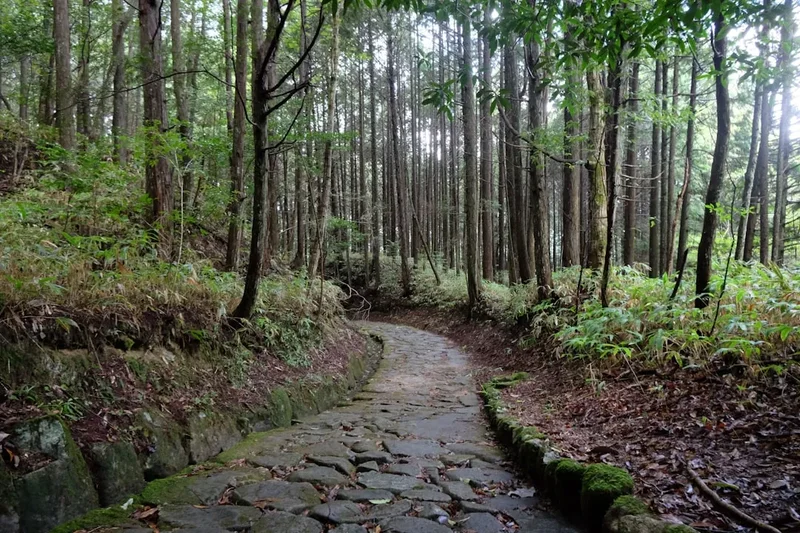
The trail's physical construction is a testament to ancient Japanese engineering. The "Ishi-tami" or stone paving found on passes like Magose-toge was meticulously laid to prevent erosion from the region's heavy rainfall. Owase, a city the trail passes through, is one of the wettest places in Japan, receiving over 4,000 mm of rain annually. Without these stone paths, the trail would have washed away centuries ago. The stones were often laid by local villagers as an act of religious devotion or as part of community labour projects mandated by the local lords (daimyo).
Culturally, the Iseji is a "living" trail. It passes by Hana-no-Iwaya, which is considered the oldest shrine in Japan and the burial site of Izanami-no-Mikoto, the mother goddess of the Japanese archipelago. Unlike typical shrines with ornate wooden buildings, Hana-no-Iwaya is a massive 45-metre-high rock face, reflecting the ancient nature-worship (animism) that predates modern Shintoism. Walking the Iseji is not just a hike; it is a journey through the evolution of Japanese spirituality, from the worship of giant rocks and waterfalls to the sophisticated architectural grandeur of the Kumano Sanzan.
Want more background? Read extended notes on history and cultural context → Learn more
Seasonal Highlights and Weather Reality
The Kii Peninsula has a humid subtropical climate, meaning weather plays a significant role in the hiking experience. The best times to walk the Iseji are Spring and Autumn, when temperatures are mild and the humidity is manageable.
Spring (April–May): This is perhaps the most beautiful time to visit. The cherry blossoms (sakura) bloom in early April, followed by the vibrant green of new leaves (shinryoku). The mountain passes are cool, and the coastal breezes are refreshing. However, this is also a popular time for domestic travel, particularly during "Golden Week" (late April to early May), so accommodation should be booked well in advance.
Autumn (October–November): The humidity of summer breaks in late September, giving way to crisp air and clear skies. The autumn colours (koyo) usually peak in the mountains in November. This season offers the most stable weather for crossing the higher passes and walking the long beach sections. The visibility from the coastal viewpoints is often at its best during these months.
Summer (June–August): Hiking the Iseji in summer is a significant challenge. June is the "Tsuyu" or rainy season, which can bring days of relentless downpours, making the ancient stone paths extremely slippery and dangerous. July and August are characterised by intense heat (often exceeding 30°C) and high humidity, along with the risk of typhoons. If travelling in summer, early starts are essential, and hikers must be vigilant about hydration and heatstroke.
Winter (December–March): Unlike the inland Kohechi route, the Iseji rarely sees heavy snow due to its coastal location. Winter days are often sunny and dry, making it a viable option for experienced hikers who prefer solitude. However, daylight hours are short, and many smaller minshuku (guesthouses) may close for the season. Temperatures can drop to near freezing at night, especially in the mountain valleys.
Recommended Itinerary
7-Day Kumano Kodo Iseji Itinerary
Day 1: Ise Jingu to Tamaki
- Distance: 18 km
- Elevation gain: 150 m
- Time: 5–6 hours
- Start at Ise Jingu (Geku then Naiku)
- Walk through the historic streets of Ise and Oharai-machi
- Follow the Miya River southward
- Mostly flat terrain on paved roads and village paths
- Arrive in Tamaki, known for its castle ruins
- A gentle introduction to the pilgrimage, focusing on the transition from the city to the countryside
Day 2: Tamaki to Meki-toge Pass to Ouchiyama
- Distance: 24 km
- Elevation gain: 450 m
- Time: 7–8 hours
- First major mountain pass: Meki-toge
- Walk through rural farmland and citrus groves
- The trail begins to show its historic character with the first sections of stone paving
- Descent into the Ouchiyama valley, famous for its dairy products
- Long day requiring good stamina
Day 3: Ouchiyama to Kii-Nagashima (Nisaka-toge)
- Distance: 22 km
- Elevation gain: 400 m
- Time: 6–7 hours
- Cross the Nisaka-toge pass, offering the first views of the Kumano Sea
- The descent features beautiful "Ishi-tami" stone paths
- Arrive in the fishing port of Kii-Nagashima
- Excellent opportunity to try local seafood (sushi and dried fish)
- The transition from inland valley to coastal scenery is a highlight of this day
Day 4: Kii-Nagashima to Owase (Magose-toge)
- Distance: 15 km
- Elevation gain: 350 m
- Time: 5–6 hours
- The most famous section of the Iseji: Magose-toge
- Stunning cypress forests and perfectly preserved Edo-period stone paving
- Optional side trip to Mt. Tengura for a panoramic view of Owase Bay
- Descent into Owase, a city known for its deep-sea fishing and timber
- Shorter distance but the terrain is steep and requires careful footwork
Day 5: Owase to Miki-sato (Hachikoyama-goe)
- Distance: 18 km
- Elevation gain: 800 m
- Time: 7–8 hours
- One of the most physically demanding days
- Cross the Obiki-zaka and Me-zaka passes (the "Big Slope" and "Female Slope")
- Dense forest trails with significant elevation changes
- Arrive at the beautiful white sand beach of Miki-sato
- The contrast between the dark forest and the bright blue bay is spectacular
Day 6: Miki-sato to Kumano City (Matsumoto-toge)
- Distance: 20 km
- Elevation gain: 600 m
- Time: 7–8 hours
- Cross the Nigishima-toge and Okasaka-toge passes
- Final mountain pass: Matsumoto-toge, featuring a famous bamboo grove and a Jizo statue
- View the "Onigajo" (Ogre's Castle) rock formations from the trail
- Arrive in Kumano City
- Visit Hana-no-Iwaya Shrine, the oldest in Japan
Day 7: Kumano City to Shingu (Hama-kaido)
- Distance: 28 km (or 22 km via beach)
- Elevation gain: Minimal (mostly flat)
- Time: 7–9 hours
- Walk the Hama-kaido along the Shichiri-mihama gravel beach
- The sound of the Pacific Ocean accompanies every step
- Pass through the town of Kiho and cross the Kumano River
- Finish at Kumano Hayatama Taisha in Shingu
- Celebrate the completion of the 170 km pilgrimage
Important Notes:
- The Iseji is well-served by the JR Kisei Main Line, allowing hikers to skip sections or transport luggage via train if needed
- Water is available in towns, but mountain passes have no facilities
- Stone paths are extremely slippery when wet; trekking poles are highly recommended
- The Hama-kaido beach walk is strenuous on the ankles; some hikers prefer the parallel paved road
Planning and Bookings
Book Your Trip
Everything you need to plan your journey
Accommodation
Find places to stay near Ise
Flights
Search flights to Ise
Essential Preparation
The Kumano Kodo Iseji requires more logistical planning than the Nakahechi because it passes through less tourist-centric areas. Fitness is a key requirement; while the maximum elevation is not extreme, the cumulative gain over multiple days of steep "toge" passes is significant. Hikers should be comfortable walking 20+ kilometres per day on varied terrain, including uneven stone steps and loose gravel.
Logistically, the journey begins in Ise. The closest international gateway is Chubu Centrair International Airport (NGO) near Nagoya. From the airport, the "Meitetsu" train to Nagoya Station followed by the "JR Mie" rapid train or the "Kintetsu" limited express will get you to Ise-shi Station in about two hours. It is highly recommended to spend at least one full day in Ise before starting the hike to visit the Geku (Outer Shrine) and Naiku (Inner Shrine) properly.
Language can be a barrier in the smaller villages along the Iseji. While trail signs are bilingual, many guesthouse owners speak limited English. Carrying a translation app and learning basic Japanese phrases for "check-in," "dinner," and "thank you" will greatly enhance the experience. Additionally, Japan remains a cash-heavy society in rural areas; ensure you have enough Japanese Yen for small inns, local buses, and vending machines, as credit cards are often not accepted outside major hotels.
Trail Accommodation
Accommodation on the Iseji is a mix of traditional Japanese inns (Ryokan), family-run guesthouses (Minshuku), and modern business hotels in larger towns like Owase and Kumano City.
Minshuku and Ryokan: These offer the most authentic experience. You will typically sleep on futons on tatami mats. Most provide "two meals" (half-pension), which includes a multi-course Japanese dinner and breakfast, often featuring local specialities like Owase tuna or Mehari-zushi (rice balls wrapped in pickled mustard leaves).
Facilities Provided:
- Yukata (light cotton robes) for lounging
- Shared or private "Ofuro" (Japanese bath)
- Basic toiletries (soap, shampoo, towels)
- Bedding (futon and pillows)
What's NOT Provided:
- Western-style beds (rare in minshuku)
- Laundry facilities (available in some, but not all)
- Vegetarian/Vegan meals (must be requested well in advance and may not be possible in remote areas)
Booking Requirements: Unlike the Nakahechi, there is no centralised booking bureau for the Iseji. Hikers must book each accommodation individually via websites like Booking.com, Agoda, or the local tourism association websites (Mie Kumano Kodo). During peak seasons (April, May, October, November), bookings should be made 3–4 months in advance. Costs typically range from 8,000 to 12,000 JPY per person per night including meals.
Required Gear
- Footwear: Sturdy hiking boots with excellent grip. The ancient stone paths (Ishi-tami) are notoriously slippery, especially when mossy or wet. Ankle support is vital for the uneven descents.
- Trekking Poles: Highly recommended to save your knees on the steep stone steps and to provide stability on slippery sections. Ensure they have rubber tips to protect the historic stones.
- Rain Gear: A high-quality waterproof jacket and overtrousers are essential. This region is one of the wettest in Japan. A pack cover is also mandatory.
- Clothing: Moisture-wicking base layers (merino wool or synthetic). Avoid cotton. Bring a lightweight insulating layer (fleece or down) as temperatures can drop quickly in the forest.
- Navigation: While the trail is well-marked, an offline GPS map (like Gaia GPS or AllTrails) and the official Kumano Kodo Iseji map (available at Ise-shi Station) are necessary.
- Backpack: A 30–40L pack is usually sufficient if you are staying in inns. If carrying all your gear, 50L+ may be needed.
What to Bring
- Cash (Japanese Yen): Essential for minshuku, small shops, and buses. Carry at least 10,000–15,000 JPY per day of your trip to be safe.
- Portable Power Bank: To keep your phone/GPS charged, as some older inns have limited power outlets.
- First Aid Kit: Include blister pads (Compeed), antiseptic cream, and anti-inflammatory medication. The stone steps are hard on the feet.
- Sun Protection: Sunscreen, hat, and sunglasses, especially for the 22 km beach walk (Hama-kaido) where there is no shade.
- Snacks: While there are vending machines in villages, there are no shops on the mountain passes. Bring energy bars, nuts, and dried fruit.
- Water Treatment: While tap water in Japan is safe, a reusable bottle is essential. There are few water sources on the actual mountain trails.
- Stamp Book: Purchase a "Kumano Kodo Stamp Book" at the start. Collecting stamps at the various passes and shrines is a cherished tradition.
Permits
One of the great advantages of the Kumano Kodo Iseji is that no official permits or fees are required to walk the trail. It is a public route that passes through national parks, private forests, and local villages. However, there are several administrative and cultural "registrations" that hikers should consider to enhance their journey and support the trail's maintenance.
Dual Pilgrim Program: If you have previously walked the Camino de Santiago in Spain, you can register for the "Dual Pilgrim" program. Upon completing a qualifying section of the Kumano Kodo (including the Iseji), you can receive a special certificate and a limited-edition pin. Registration can be done at the Kumano Hongu Heritage Centre or the Tanabe City Kumano Tourism Bureau.
Stamp Books (O-shuin and Kodo Stamps): While not a permit, the stamp book is the "passport" of the trail. There are two types:
- Kodo Stamps: Free stamps located in wooden boxes at the top of mountain passes and key landmarks. These are for your own record and for the Dual Pilgrim certification.
- O-shuin: Formal calligraphy stamps provided by monks at shrines and temples for a small fee (usually 300–500 JPY). These are beautiful works of art and require a specific "Goshuin-cho" book.
Voluntary Contributions: At many of the major passes, you may see small boxes for "Trail Maintenance Donations." These funds are used by local volunteer groups to repair the stone paths and clear fallen trees after typhoons. Contributing a few hundred yen is a great way to show respect for the trail.
Luggage Shuttle Services: While not a permit, this is a vital logistical "booking." Unlike the Nakahechi, there is no unified luggage shuttle service for the Iseji. Some individual minshuku may offer to drop your bags at the next station, or you can use the "Takkyubin" (Yamato Transport) service to send bags between major hotels in Ise, Owase, Kumano City, and Shingu. This must be organised at least 24 hours in advance.
Other Activities in the Area
The Kii Peninsula is a treasure trove of Japanese culture and natural wonders. Consider adding these experiences to your itinerary:
- Ise Jingu Exploration: Spend time in the "Geku" and "Naiku" shrines. Visit the Sengu Museum to learn about the "Shikinen Sengu" tradition, where the shrines are completely rebuilt every 20 years.
- Onsen Relaxation: After finishing in Shingu, take a short bus ride to Yunomine Onsen (the oldest in Japan) or Katsuura Onsen, where you can soak in baths overlooking the Pacific Ocean.
- Nachi Falls: Located near the end of the trail, this is Japan's tallest single-drop waterfall (133 m). The sight of the three-story pagoda of Seiganto-ji temple with the falls in the background is iconic.
- Maruyama Senman-da: A short detour from Kumano City takes you to one of Japan's most beautiful terraced rice fields, featuring over 1,300 small paddies carved into the hillside.
- Sea Kayaking in Owase: Experience the rugged coastline from the water. The calm bays around Owase are perfect for exploring sea caves and hidden beaches.
- Ama Diver Experience: In the nearby Toba/Shima area, you can meet the "Ama"—traditional female divers who forage for pearls and seafood without breathing apparatus.
Safety and Conditions
Pre-Departure Checks:
- Check the Japan Meteorological Agency (JMA) website for typhoon warnings and heavy rain alerts.
- Review the "Mie Kumano Kodo" official website for track alerts, especially regarding landslides after heavy rain.
- Ensure you have the contact details for your nightly accommodation saved offline.
- Inform someone of your daily itinerary, as mobile signal can be spotty in the deep valleys.
Terrain Hazards: The primary danger on the Iseji is the "Ishi-tami" (stone paving). These stones are centuries old and have been polished smooth by millions of footsteps and heavy rain. When wet, they become as slippery as ice. Walk slowly, use trekking poles, and try to step on the edges of the stones or on dirt patches where possible. The descents from passes like Magose-toge and Obiki-zaka are particularly taxing on the knees and ankles.
Wildlife:
- Mamushi: A small, venomous pit viper found in Japan. They are generally shy but can strike if stepped on. Watch your step in long grass or near stone walls.
- Japanese Hornets (Suzumebachi): Large, aggressive hornets that nest in the ground or in hollow trees. If you see one, move away slowly and quietly. Do not swat at them.
- Wild Boar and Bears: While black bears exist on the Kii Peninsula, they are rare on the Iseji. Wild boars are more common. Carrying a small "bear bell" is a common practice among local hikers to alert animals of your presence.
- Leeches: During the rainy season (June/July), mountain leeches can be an issue in damp, forested areas. Wear long trousers and use salt or repellent if necessary.
Heat and Hydration: In summer and the shoulder months, humidity can lead to rapid dehydration. There are no water sources on the mountain passes. Always carry at least 2 litres of water. Fortunately, Japan's famous vending machines are found in almost every village the trail passes through, allowing for frequent restocking of sports drinks (like Pocari Sweat).
Emergency Services: The emergency number in Japan is 119 for fire and ambulance, and 110 for police. Most dispatchers in urban areas speak some English, but in rural Mie, it may be limited. Having your location coordinates ready on your phone is vital.
Side Trips and Points of Interest
Mt. Tengura (Side Trip from Magose-toge): This is the most rewarding detour on the Iseji. From the top of the Magose-toge pass, a steep 30-minute climb leads to the summit of Mt. Tengura (522 m). The summit is marked by a massive rock platform that offers an unobstructed 360-degree view of Owase Bay, the Pacific Ocean, and the deep ridges of the Kii Mountains. It is the perfect spot for a lunch break.
Onigajo (The Ogre's Castle): Located on the coast just before Kumano City, this UNESCO World Heritage site is a series of dramatic rock formations and sea caves carved by centuries of erosion and seismic uplift. The trail passes right along the cliff edge, providing a spectacular, if slightly dizzying, coastal experience. The "Lion Rock" (Shishi-iwa) nearby is another natural formation that resembles a giant lion roaring at the sea.
Hana-no-Iwaya Shrine: Do not rush past this site. As the oldest shrine in Japan, it represents the "Iwakura" tradition of rock worship. Twice a year (February and October), a 170-metre-long rope made of woven rice straw is replaced in a sacred ceremony, stretched from the top of the 45-metre cliff to a sacred pine tree. The atmosphere here is heavy with ancient spiritual energy.
The Shishi-gaki (Boar Walls): Throughout the Iseji, particularly around the Yakiyama and Miki-sato sections, you will see extensive stone walls. These are not just ruins; they are a sophisticated agricultural defence system built in the 17th and 18th centuries. Some walls stretch for kilometres, following the contours of the mountains. They are a testament to the resilience of the local farmers who lived in this rugged landscape.
Doro-kyo Gorge: For those with an extra day, a bus trip from Shingu into the mountains leads to Doro-kyo, a stunning gorge with emerald-green water and sheer cliffs. You can take a traditional jet boat or a smaller wooden boat through the gorge, offering a different perspective on the Kii Peninsula's water-carved landscape.
Leave No Trace
The Kumano Kodo Iseji is a sacred landscape that has been preserved for over a thousand years. As a pilgrim and a hiker, you have a responsibility to maintain its integrity. The Japanese concept of "Mottainai" (regret over waste) and "Kyosei" (living together with nature) are central to the trail's ethos.
Your responsibility as a walker:
- Carry Out All Trash: There are no public bins on the trail or at the mountain passes. You must carry all your rubbish (including fruit peels and tissues) back to your accommodation or a convenience store in town.
- Respect the Stones: The "Ishi-tami" are historic monuments. Do not remove any stones, and ensure your trekking poles have rubber tips to prevent scratching and chipping the ancient surfaces.
- Stay on the Path: The forests of the Kii Peninsula are home to rare mosses and ferns. Stepping off the trail causes erosion and destroys these fragile micro-ecosystems.
- No Wild Camping: Camping is strictly prohibited along the Iseji. The trail passes through private land and protected national forest. Use the local minshuku and ryokan—your stay supports the local economy and the trail's survival.
- Respect Sacred Spaces: When passing through shrines, bow slightly at the "Torii" gate. Do not take photos of the inner sanctums unless explicitly permitted. Keep your voice low in these areas.
- Protect Water Sources: Do not wash yourself or your gear in the mountain streams. Use the facilities provided at your accommodation.
By following these principles, you ensure that the "Eastern Pilgrimage" remains a pristine and spiritual experience for the next thousand years of travellers.
 Japan
Japan