
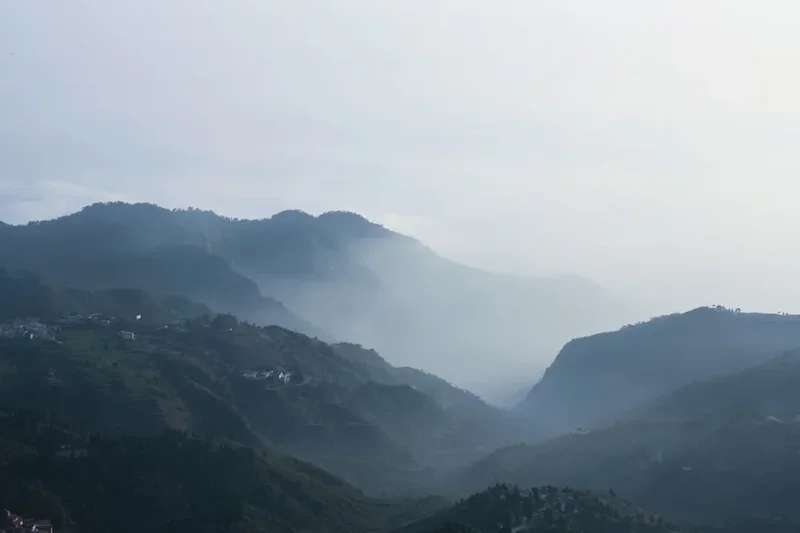
Kuari Pass Trek - A Himalayan Gem
The Kuari Pass Trek is a captivating journey through the Garhwal Himalayas in Uttarakhand, India, offering a moderate challenge with spectacular rewards. This trek is renowned for its panoramic views of some of the highest peaks in the Indian Himalayas, including Nanda Devi, Trisul, and Kamet. The trail winds through diverse landscapes, from dense oak and rhododendron forests to alpine meadows and rocky passes, providing a rich tapestry of flora, fauna, and breathtaking vistas. It's an ideal trek for those seeking a taste of the high Himalayas without extreme technical difficulty, making it accessible to a wide range of trekkers.
- Distance: 33.0 km
- Elevation Gain: 2000 m
- Duration: 5-6 days
- Difficulty: Moderate
- Best Time: Mid-April to June and September to mid-November
- Closest City: Joshimath
- Trailhead Access: Nearest airport: Dehradun (DED). Take a taxi or bus to Joshimath (approx. 10-12 hours). Road conditions can be variable, especially during monsoon. Limited parking available in Joshimath. Check local authorities for permits required. GPS: 30.5667, 79.5667 (Joshimath)
- Coordinates: 30.4556, 79.7167
Overview
The Kuari Pass Trek, often referred to as the "Curzon Trail," offers an unparalleled trekking experience in the heart of the Garhwal Himalayas. Named after Lord Curzon, the former Viceroy of India, who was an avid trekker and explored this region extensively, the trail provides access to some of the most awe-inspiring mountain panoramas in India. The trek typically begins from the town of Joshimath, a significant pilgrimage centre and gateway to many Himalayan expeditions.
The journey unfolds gradually, starting with ascents through charming villages and dense forests of oak, pine, and vibrant rhododendrons. As you gain altitude, the vegetation transitions, and the views begin to open up. The highlight of the trek is undoubtedly reaching Kuari Pass (also known as Kuari Top), situated at an elevation of approximately 4,200 metres. From this vantage point, trekkers are treated to a 360-degree spectacle of the mighty Himalayan giants. The majestic Nanda Devi, India's second-highest peak, dominates the skyline, accompanied by the formidable Trisul massif, Kamet, and Dhaulagiri. The sheer scale and grandeur of these peaks are humbling and provide a profound sense of accomplishment.
The trek is typically completed over 5 to 6 days, allowing ample time for acclimatisation and exploration. The moderate difficulty level makes it suitable for individuals with a reasonable level of fitness and prior trekking experience. The trail is well-defined in most sections, though some parts can be steep and rocky, especially as you approach the pass. The best times to undertake this trek are during the spring (mid-April to June) and autumn (September to mid-November) months, when the weather is generally stable, and the skies are clear, offering optimal mountain views. During these periods, the meadows are carpeted with wildflowers, and the air is crisp and invigorating.
Beyond the stunning mountain vistas, the Kuari Pass Trek also offers insights into the local culture and way of life in the remote Himalayan villages. Encounters with local communities, their traditional architecture, and their warm hospitality add another enriching dimension to the trekking experience. The trek is a perfect blend of natural beauty, physical challenge, and cultural immersion, making it a highly sought-after destination for trekkers in India.
History and Cultural Context
The region through which the Kuari Pass Trek traverses has a rich history intertwined with ancient trade routes, pilgrimage paths, and the exploration of the Himalayas. For centuries, these valleys and passes were used by local communities for trade, migration, and as routes to sacred sites. The Garhwal region, in general, has been a cradle of spiritual and cultural development, with numerous temples and monasteries dotting the landscape.
The specific trail that leads to Kuari Pass gained prominence in the early 20th century, largely due to the efforts of Lord Curzon. As Viceroy of India from 1899 to 1905, Curzon was deeply fascinated by the Himalayas and undertook several expeditions to explore their remote corners. He recognised the immense beauty and strategic importance of the region and actively promoted trekking and mountaineering. The trail that now bears his name, the "Curzon Trail," was one he frequently traversed, appreciating its accessibility and the unparalleled views it offered. His expeditions helped to map and popularise these routes, making them accessible to a wider audience of explorers and adventurers.
The pass itself, Kuari, is believed to have been a traditional route for shepherds and traders moving between different valleys. The name "Kuari" might have local origins, possibly relating to a geographical feature or a local deity. The trek also passes through areas that are significant for local Hindu pilgrimage, with proximity to Badrinath and Kedarnath, two of the Char Dham pilgrimage sites. This spiritual significance adds a layer of cultural depth to the trekking experience, as trekkers often pass by ancient temples and encounter pilgrims on their journeys.
In more recent times, the Kuari Pass Trek has become a popular choice for both Indian and international trekkers, drawn by its accessibility, moderate difficulty, and the spectacular mountain scenery. Efforts have been made to preserve the natural beauty and cultural heritage of the region, ensuring that the trek remains a sustainable and enriching experience for generations to come. The trek is a testament to the enduring allure of the Himalayas, a region that has captivated explorers and spiritual seekers for millennia.
Seasonal Highlights and Weather Reality
The Kuari Pass Trek experiences distinct seasons, each offering a unique trekking environment and visual spectacle. Understanding these seasonal variations is crucial for planning a successful and enjoyable trek.
Spring (Mid-April to June): This is one of the most popular times to trek the Kuari Pass. The snow from winter begins to melt, revealing lush green meadows carpeted with a riot of wildflowers, including vibrant rhododendrons in bloom. The weather is generally pleasant, with clear skies and moderate temperatures during the day. However, evenings can still be cool, and occasional rain showers are possible. The mountain views are typically excellent during this period, offering crisp panoramas of the snow-capped peaks.
Monsoon (July to August): This period is generally not recommended for trekking in the Garhwal Himalayas due to heavy rainfall. The trails can become muddy and slippery, and visibility is often poor due to cloud cover, obscuring the mountain views. Landslides can also be a concern on the access roads and some sections of the trail. While the landscape is incredibly verdant during the monsoon, the trekking experience is significantly compromised.
Autumn (September to Mid-November): This is another prime trekking season for the Kuari Pass. After the monsoon, the skies clear up, offering exceptionally crisp and clear views of the Himalayan giants. The air is dry and cool, making for comfortable trekking conditions. The autumn foliage can add a beautiful golden hue to the forests. Temperatures start to drop, especially at higher altitudes, and by mid-November, it can get quite cold, with the possibility of early snowfall.
Winter (December to March): The Kuari Pass is typically covered in heavy snow during winter, making it inaccessible for standard trekking. Temperatures drop significantly, and extreme cold conditions prevail. While experienced mountaineers with appropriate winter gear and expertise might attempt parts of the route, it is generally considered off-season for regular trekkers. The landscape transforms into a serene, snow-covered wonderland, but the challenges are substantial.
Weather Considerations: Regardless of the season, mountain weather is notoriously unpredictable. Even during the best trekking months, trekkers should be prepared for sudden changes, including rain, wind, and a drop in temperature, especially at higher altitudes like Kuari Pass. Layering clothing is essential to adapt to varying conditions.
Recommended Itinerary
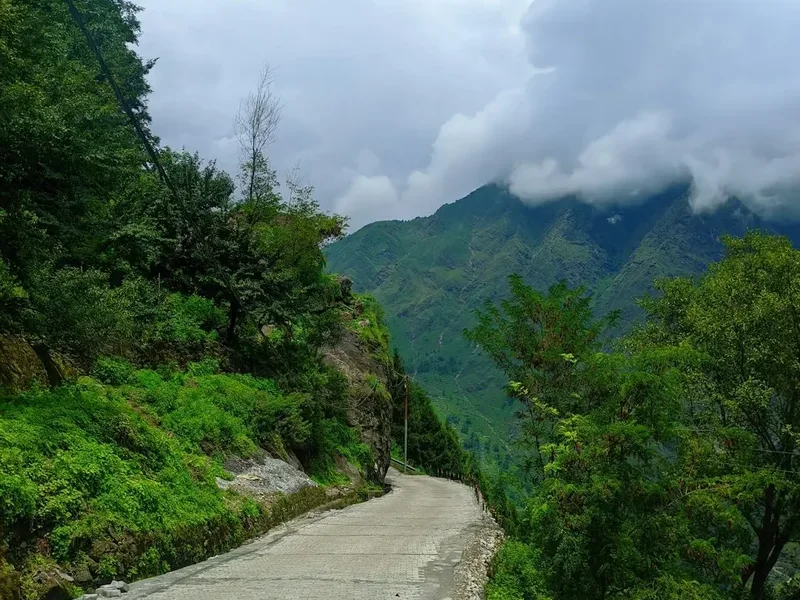
5-Day Kuari Pass Trek Itinerary
Day 1: Arrival in Joshimath & Acclimatisation
- Distance: N/A (local travel)
- Elevation gain: Minimal
- Time: Full day
- Arrive in Joshimath (approx. 1890 m).
- Check into your accommodation and rest.
- Spend the day acclimatising to the altitude.
- Explore Joshimath town, visit the Narsingh Temple and the Kalpavriksha.
- Briefing with your trekking guide about the upcoming trek.
- Final gear check and packing.
- This day is crucial for ensuring your body adjusts to the altitude before commencing the trek.
Day 2: Joshimath to Dhak Village & Trek to Guling
- Distance: 12 km (road to Dhak) + 6 km (trek)
- Elevation gain: Approx. 600 m
- Time: 6-7 hours (including drive and trek)
- Morning drive from Joshimath to Dhak village (approx. 1850 m).
- Begin the trek from Dhak. The trail is initially a gradual ascent through terraced fields and small villages.
- Pass through the village of Tugasi.
- The trail gradually enters oak and rhododendron forests.
- Reach Guling (approx. 2450 m), a scenic campsite.
- Set up camp and enjoy the surrounding views.
- This day introduces you to the forest trails and the initial climb.
Day 3: Guling to Khullara
- Distance: 8 km
- Elevation gain: Approx. 700 m
- Time: 5-6 hours
- Continue the ascent from Guling.
- The trail becomes steeper as you climb higher into the forests.
- Pass through beautiful meadows and enjoy occasional glimpses of the peaks.
- Reach Khullara (approx. 3150 m), a popular camping ground.
- Khullara offers excellent views of the surrounding mountains.
- Set up camp and relax.
- This day is about gaining significant altitude and immersing yourself in the alpine environment.
Day 4: Khullara to Kuari Pass and back to Khullara
- Distance: 10 km (round trip)
- Elevation gain: Approx. 1050 m (to pass)
- Time: 7-8 hours
- Early morning start for the summit attempt.
- Trek towards Kuari Pass (approx. 4200 m).
- The trail is a steady climb, becoming rockier as you approach the pass.
- Reach Kuari Pass and be rewarded with breathtaking panoramic views of Nanda Devi, Trisul, Kamet, Dhaulagiri, and other prominent peaks.
- Spend time at the pass, taking photographs and soaking in the magnificent scenery.
- Descend back to Khullara for the night.
- This is the most challenging and rewarding day of the trek, culminating in the spectacular summit views.
Day 5: Khullara to Dhak & Drive to Joshimath
- Distance: 14 km (trek) + 12 km (drive)
- Elevation loss: Approx. 1300 m
- Time: 5-6 hours (trek) + drive
- Begin the descent from Khullara.
- Retrace your steps back through the forests towards Dhak village.
- The descent is generally easier but can be steep in places.
- Reach Dhak village where your vehicle will be waiting.
- Drive back to Joshimath.
- Celebrate the completion of your trek.
- Overnight in Joshimath.
Optional Day 6: Joshimath to Rishikesh/Dehradun
- Distance: N/A (road travel)
- Time: Full day
- After breakfast, depart from Joshimath for your onward journey to Rishikesh or Dehradun.
- This allows for a more relaxed departure and avoids a very long travel day immediately after the trek.
Important Notes:
- This itinerary is a suggestion and can be modified based on group fitness, weather conditions, and acclimatisation needs.
- Acclimatisation is key; do not rush the ascent.
- Carry sufficient water or a purification method.
- Always trek with a local guide or a reputable trekking agency.
Planning and Bookings
Book Your Trip
Everything you need to plan your journey
Accommodation
Find places to stay near Joshimath
Flights
Search flights to Joshimath
Essential Preparation
The Kuari Pass Trek, while moderate, requires careful planning to ensure a safe and enjoyable experience. The primary gateway town is Joshimath, which is accessible by road from major cities like Dehradun and Rishikesh. The journey to Joshimath itself can take 10-12 hours by bus or taxi, so it's advisable to break the journey if necessary. Upon arrival in Joshimath, it's essential to spend at least one full day acclimatising to the altitude (around 1890 metres) before commencing the trek. This helps in preventing altitude sickness. Booking accommodation in Joshimath in advance, especially during peak seasons, is recommended. For the trek itself, hiring a local guide is highly advisable, as they possess invaluable knowledge of the terrain, weather patterns, and local culture, and can ensure your safety. If you plan to camp, ensure you have all necessary camping equipment. For those opting for teahouses or guesthouses along the route (if available and suitable), booking might be possible on arrival, but it's safer to confirm with your trekking agency.
Trail Accommodation
Accommodation on the Kuari Pass Trek varies depending on the chosen itinerary and the season. The most common and recommended approach for this trek is camping, which offers flexibility and allows access to remote campsites with stunning views.
Camping:
- Campsites: Designated camping spots are typically found at Guling (approx. 2450 m) and Khullara (approx. 3150 m). These sites are usually open meadows suitable for pitching tents.
- Booking Requirements: No formal booking is required for these campsites, but it's good practice to inform your guide or trekking agency about your intended camping locations.
- Facilities Provided: Basic facilities are usually limited to the natural environment. Your trekking agency will typically provide tents, sleeping bags, sleeping mats, and a dining tent.
- What's NOT Provided: No permanent structures, toilets, or running water are available at these campsites. You will need to carry all your supplies and manage waste responsibly.
- Seasonal Availability: Campsites are generally accessible from mid-April to June and September to mid-November. During winter, they are covered in snow.
- Costs: If you are arranging your own camping, the cost is minimal, primarily for campsite usage if any local fees apply. If booked through an agency, the cost is inclusive of the overall trekking package.
Teahouses/Guesthouses (Limited Availability):
- Locations: While not as prevalent as on some other Himalayan treks, basic guesthouses or homestays might be available in villages like Dhak and potentially near Guling. Khullara is primarily a camping spot.
- Booking Requirements: It is advisable to confirm availability and book in advance, especially during peak season, through your trekking agency or by contacting local contacts.
- Facilities Provided: Basic rooms with beds, often shared bathrooms, and simple meals (dal, rice, vegetables, chapati).
- What's NOT Provided: Hot water may be limited, and amenities are basic. Expect a rustic experience.
- Seasonal Availability: Generally available during the main trekking seasons.
- Costs: Typically range from ₹800 to ₹2000 per night, depending on the location and facilities.
Joshimath Accommodation:
- Type: A range of guesthouses, hotels, and budget lodges are available in Joshimath.
- Booking Requirements: Recommended to book in advance, especially during peak trekking seasons.
- Facilities: Vary from basic to comfortable, with attached bathrooms, hot water, and dining facilities.
- Costs: Range from ₹1000 to ₹4000 per night.
Note: The Kuari Pass itself is a high-altitude pass and does not have any accommodation. The trek involves camping or staying in basic guesthouses in the villages and meadows below the pass.
Required Gear
- Trekking Boots: Waterproof, sturdy, ankle-supporting trekking boots that are well broken-in.
- Backpack: A comfortable trekking backpack (40-60 litres) with a rain cover.
- Sleeping Bag: A 3-season sleeping bag rated for temperatures down to -5°C to 0°C.
- Clothing Layers:
- Base Layers: Thermal innerwear (merino wool or synthetic).
- Mid Layers: Fleece jacket or down jacket for insulation.
- Outer Layer: Waterproof and windproof jacket (Gore-Tex or similar).
- Trousers: Trekking trousers (quick-drying, comfortable). Waterproof overtrousers are also recommended.
- Headwear: Warm beanie or woollen cap, and a sun hat or cap for sun protection.
- Gloves: Warm, waterproof gloves.
- Socks: Woollen or synthetic trekking socks (carry multiple pairs).
- Headlamp/Torch: With extra batteries.
- Sun Protection: Sunglasses (UV protection), sunscreen (SPF 30+), lip balm with SPF.
- First-Aid Kit: Personal medications, blister treatment, antiseptic wipes, bandages, pain relievers, medication for altitude sickness (consult your doctor).
- Water Bottles/Hydration Pack: At least 2 litres capacity.
- Trekking Poles: Highly recommended for stability and reducing strain on knees.
- Navigation: Map of the area and a compass (or GPS device). Your guide will handle primary navigation.
What to Bring
- Food: While guides often arrange meals, carry high-energy snacks like nuts, dried fruits, energy bars, and chocolates for personal consumption during the trek.
- Water Purification: Water filter or purification tablets, as stream water needs to be treated.
- Toiletries: Biodegradable soap, toothbrush, toothpaste, wet wipes, hand sanitiser.
- Personal Items: Camera, power bank for charging devices, a small towel, insect repellent (especially for lower altitudes).
- Documents: Identification (ID card/passport), permits (if required), and any necessary travel documents.
- Cash: Sufficient Indian Rupees for personal expenses, tips for guides and porters, and any unforeseen costs. ATMs are scarce in trekking regions.
- Small Backpack: For day hikes and carrying essentials during the trek.
- Duffel Bag: For porters to carry your main luggage (if using porters).
- Plastic Bags/Dry Bags: To keep clothes and gear dry and organised.
Permits
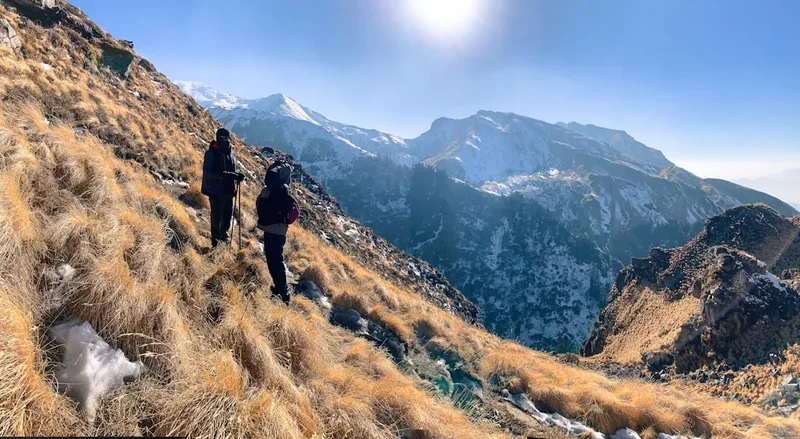
For the Kuari Pass Trek, specific permits are generally not required for Indian nationals for the standard route starting from Joshimath and camping at Guling and Khullara. However, regulations can change, and it is always advisable to confirm the latest requirements with local authorities or your trekking agency before your trip.
Forest Department Fees: There might be nominal entry fees levied by the Forest Department for trekking in protected areas. These are usually collected at entry points or by the local administration in Joshimath.
Inner Line Permit (ILP): For foreign nationals, an Inner Line Permit (ILP) might be required to enter certain restricted areas in Uttarakhand. While the standard Kuari Pass route is generally accessible without an ILP, it's crucial for foreign trekkers to verify this requirement with the Uttarakhand Tourism Development Board or their trekking operator well in advance. The process for obtaining an ILP can take a few days.
Permit Acquisition:
- Local Authorities: If any permits are required, they can typically be obtained from the District Magistrate's office or the Forest Department office in Joshimath or the nearest major town.
- Trekking Agencies: Reputable trekking agencies usually handle all necessary permit arrangements as part of their package. This is often the most convenient option, especially for foreign trekkers.
- Online Applications: Some permits in Uttarakhand can now be applied for online through the official tourism or government portals. Check the Uttarakhand Tourism Development Board website for current procedures.
Important Considerations:
- Verification: Always double-check the latest permit regulations closer to your travel date, as rules can be updated.
- Documentation: Carry multiple copies of your identification documents (ID card, passport, visa) and permit papers if obtained.
- Guide Requirement: In many parts of Uttarakhand, trekking without a registered local guide is discouraged or even prohibited for safety reasons, especially on less-trafficked routes. Hiring a guide often simplifies permit acquisition.
Other Activities in the Area
The region around Joshimath and the Kuari Pass offers several other attractions and activities for trekkers to enjoy, either before or after their trek:
- Auli: Famous for its ski slopes during winter, Auli is a beautiful hill station offering stunning panoramic views of the Himalayas. It's accessible by a scenic cable car ride from Joshimath. During the trekking season, it's a pleasant place to visit for its meadows and views.
- Tapovan: Located a short drive from Joshimath, Tapovan is known for its hot springs, which are believed to have medicinal properties. It also offers excellent views of the surrounding peaks.
- Badrinath Temple: One of the most important pilgrimage sites in India, Badrinath is dedicated to Lord Vishnu. It's a significant religious destination and can be visited as a day trip from Joshimath, though it requires a longer drive.
- Vasudhara Falls: A beautiful waterfall located a few kilometres from Badrinath, accessible via a moderate trek.
- Valley of Flowers National Park & Hemkund Sahib: While a separate trek, these popular destinations are in the vicinity and can be combined with a trip to the Garhwal region, though they require additional time and planning.
- Joshimath Ropeway: The longest ropeway in India, connecting Joshimath to Auli, offers spectacular aerial views of the valley and the snow-capped mountains.
- Local Villages Exploration: Spend time exploring the charming villages like Dhak and Tugasi, interacting with the local communities, and understanding their unique culture and way of life.
Safety and Conditions
Altitude Sickness (AMS): The Kuari Pass reaches an altitude of approximately 4200 metres. Altitude sickness is a significant risk. Symptoms include headache, nausea, dizziness, and fatigue. The best prevention is gradual ascent and adequate acclimatisation. Spend sufficient time in Joshimath and ascend slowly. If symptoms worsen, descend immediately. Your guide will monitor your condition.
Weather: Mountain weather is unpredictable. Be prepared for sudden changes, including rain, snow, strong winds, and temperature drops, even during the trekking season. Always carry appropriate waterproof and warm clothing.
Trail Conditions: The trail is generally well-defined but can be steep and rocky, especially near the pass. During and after rain, sections can become slippery and muddy. Snowfall can obscure the trail, making navigation difficult. Trekking poles are highly recommended for stability.
Water Sources: Clean drinking water is available from streams along the trail. However, it is essential to treat all water using a filter or purification tablets to prevent waterborne diseases.
Communication: Mobile phone connectivity is limited and often non-existent once you leave Joshimath. Consider carrying a satellite phone or a Personal Locator Beacon (PLB) for emergencies, especially if trekking independently.
Guides and Porters: Hiring a registered local guide is strongly recommended for safety, navigation, and local insights. Porters can carry heavier gear, making the trek more comfortable.
Emergency Evacuation: In case of a serious medical emergency, evacuation might be necessary. This can be arranged via helicopter, but it is expensive and weather-dependent. Ensure you have adequate travel insurance that covers high-altitude trekking and emergency evacuation.
Pre-Trek Health Check: It is advisable to consult your doctor before undertaking the trek, especially if you have any pre-existing medical conditions. They can advise on necessary vaccinations and medications, including those for altitude sickness.
Side Trips and Points of Interest
Kuari Pass Summit: The primary objective of the trek, the Kuari Pass (approx. 4200 m), offers unparalleled 360-degree panoramic views of the Garhwal Himalayas. The sight of Nanda Devi, Trisul, Kamet, Dhaulagiri, and other majestic peaks from this vantage point is a truly unforgettable experience. The pass itself is a broad, windswept saddle, often adorned with prayer flags left by pilgrims and trekkers.
Rhododendron Forests: During the spring season (mid-April to June), the trails are lined with vibrant rhododendron trees in full bloom. The colours range from deep red to pink and white, creating a spectacular visual display against the backdrop of the mountains.
Oak and Pine Forests: The lower and middle sections of the trek pass through dense forests of oak and pine, offering a serene and shaded walking experience. These forests are home to diverse flora and fauna, and the air is often filled with the scent of pine needles.
Alpine Meadows: As you ascend, the forests give way to expansive alpine meadows. These meadows, especially in spring and early summer, are carpeted with wildflowers, providing a picturesque setting for camping and resting.
Villages of Dhak and Tugasi: These traditional villages offer a glimpse into the rural life of the Garhwal region. You can observe the local architecture, farming practices, and interact with the friendly inhabitants, gaining insight into their unique culture and traditions.
Views of Nanda Devi: The trek offers some of the most iconic and unobstructed views of Nanda Devi, India's second-highest peak. Its distinctive double-peak silhouette is a constant and awe-inspiring presence throughout much of the trek.
Trisul Massif: The three-peaked summit of Trisul is another prominent feature of the skyline, appearing particularly majestic from the higher reaches of the trail and the pass itself.
Leave No Trace
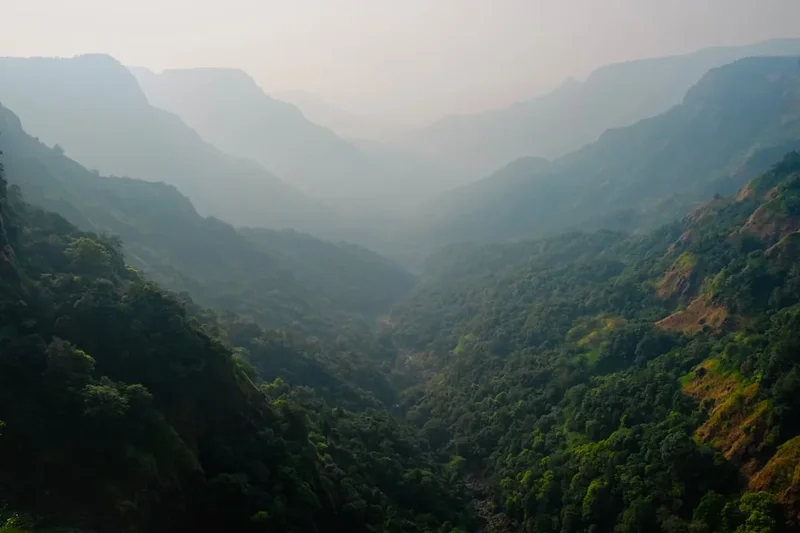
The Kuari Pass Trek traverses pristine natural environments, and it is imperative that all trekkers adhere to the principles of Leave No Trace (LNT) to preserve the beauty and ecological integrity of the region for future generations. The Himalayas are a fragile ecosystem, and responsible trekking is crucial.
Plan Ahead and Prepare: Research the trek, understand the conditions, and pack appropriately. Inform yourself about local regulations and customs. Hiring a local guide is part of responsible preparation.
Travel and Camp on Durable Surfaces: Stick to the established trails to avoid damaging vegetation. Camp in designated areas or on durable surfaces like rock or dry grass, away from water sources.
Dispose of Waste Properly: Pack out everything you pack in, including all food scraps, wrappers, and any other litter. Use designated toilets where available, or dig catholes at least 60 metres away from water sources, trails, and campsites. Pack out used toilet paper.
Leave What You Find: Do not disturb or remove any natural objects, plants, or cultural artifacts. Take only photographs and memories.
Minimise Campfire Impacts: Campfires are generally discouraged in high-altitude areas due to the scarcity of firewood and the risk of wildfires. Use portable stoves for cooking.
Respect Wildlife: Observe wildlife from a distance. Never feed animals, as it can disrupt their natural behaviours and diets. Store food securely to prevent attracting animals.
Be Considerate of Other Visitors: Keep noise levels down, yield to other trekkers on narrow trails, and maintain a respectful attitude towards local communities and their culture.
By following these principles, you contribute to the conservation of the magnificent Himalayan landscape and ensure that the Kuari Pass Trek remains a sustainable and enriching experience for all.