
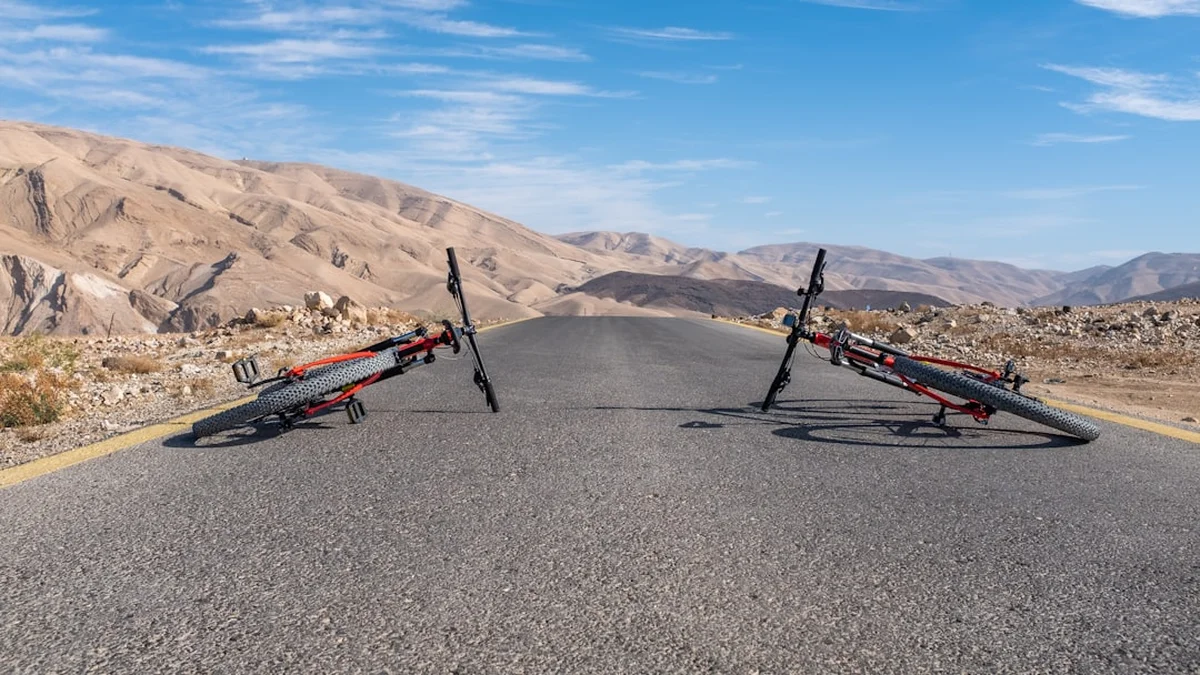
Jordan Trail - A Journey Through the Heart of the Levant
The Jordan Trail is a monumental 675-kilometre thru-hike that traverses the entire length of the Hashemite Kingdom of Jordan, from the lush, forested hills of Umm Qais in the north to the crystal-clear waters of the Red Sea in the south. This is not merely a hiking route; it is a profound cultural odyssey that connects the diverse landscapes, ancient civilisations, and legendary hospitality of the Middle East. Over the course of 30 to 40 days, walkers journey through eight distinct regions, crossing the dramatic canyons of the Great Rift Valley, the limestone plateaus of the north, the rose-red city of Petra, and the otherworldly desert expanses of Wadi Rum. With over 18,000 metres of elevation gain, the trail demands physical resilience and mental fortitude, rewarding those who undertake it with a perspective on Jordan that few travellers ever experience. It is a path where history is etched into every stone and where the warmth of the local communities provides a constant, welcoming presence in a rugged and challenging environment.
- Distance: 675.0 km one-way
- Duration: 30–40 days
- Season: Spring (March–May) or Autumn (September–November)
- Accommodation: Homestays, wild camping, Bedouin camps, and eco-lodges
- Highest point: Jabal Umm ad Dami (1,854 m - optional side trip) or high passes near Petra (~1,200 m)
- Difficulty: Challenging (requires high fitness and navigation skills)
- Direction: North to South (Umm Qais to Aqaba) is the standard direction
Overview
The Jordan Trail is a masterclass in geographical and cultural diversity. Established formally in 2015 by the Jordan Trail Association, the route follows ancient trade paths and nomadic tracks that have been used for millennia. The journey begins in the north, where the landscape is surprisingly green, characterised by rolling hills, olive groves, and the ruins of the Decapolis city of Gadara. As the trail moves south, the terrain transforms dramatically. The Mediterranean climate gives way to the arid beauty of the Jordan Rift Valley, where deep wadis (canyons) cut through the landscape, offering challenging descents and gruelling climbs. These canyons, such as Wadi Mujib and Wadi Hasa, are geological wonders, featuring towering sandstone walls and, in some seasons, flowing water that provides a stark contrast to the surrounding desert.
The central section of the trail takes hikers through the Dana Biosphere Reserve, a crown jewel of Jordan’s natural heritage. Here, the trail descends from the high plateau of the Sharah Mountains into the desert floor of Wadi Araba, showcasing four distinct bio-geographical zones in a single day’s walk. The transition from alpine-like forests to sand dunes is a highlight of the trek. Following this, the "Back Door" route into Petra offers a spectacular entrance to the Nabataean capital, avoiding the tourist crowds and providing a sense of discovery akin to that of early explorers. The final stages of the trail lead through the vast, silent wilderness of Wadi Rum—the "Valley of the Moon"—where massive sandstone massifs rise from the red sand, before a final descent to the coastal city of Aqaba.
Walking the Jordan Trail is as much about the people as it is about the scenery. The trail passes through dozens of villages and Bedouin encampments. The concept of "Karam" (generosity) is central to Jordanian culture, and hikers are frequently invited for tea or a meal by locals. This interaction is the heartbeat of the trail, turning a physical challenge into a deeply moving human experience. However, the trail is not to be underestimated. It is a remote, backcountry experience where water management is critical, navigation can be complex, and the physical toll of consecutive high-mileage days in a desert environment is significant. For those prepared for the challenge, it is arguably the most rewarding long-distance hike in the Middle East.
History and Cultural Context
The Jordan Trail is a tapestry woven from thousands of years of human history. The route follows segments of the King’s Highway, an ancient trade route mentioned in the Bible that connected Egypt with the Levant and Mesopotamia. For centuries, this corridor was the lifeblood of the region, used by Nabataean spice caravans, Roman legions, Byzantine pilgrims, and Crusader knights. As you walk, you are literally stepping on history—from the basalt paving stones of Roman roads in the north to the 12th-century Crusader castles of Ajloun and Kerak that still dominate the ridgelines.
The cultural significance of the trail is most visible in the Nabataean ruins of Petra. The Nabataeans were masters of water management and desert survival, skills that are still reflected in the traditional lifestyles of the Bedouin tribes who inhabit the southern reaches of the trail. The Bedouin, or "Bedu" (dwellers of the desert), have a history of nomadism that predates modern borders. Their knowledge of the land, its hidden springs, and its seasonal rhythms is what made life possible in these arid regions. The Jordan Trail Association has worked closely with these communities to ensure the trail provides sustainable economic opportunities through homestays and guiding, preserving traditional knowledge while sharing it with the world.
In the north, the history is more agrarian. The villages around Ajloun and Salt have been inhabited for generations, with families tending to olive trees that are hundreds of years old. The trail passes through the site of Pella, another Decapolis city, where layers of history from the Stone Age to the Islamic period are visible in the archaeological strata. Walking the trail is a chronological journey through the rise and fall of empires, offering a tangible connection to the civilizations that have shaped the modern Middle East.
Want more background? Read extended notes on history and cultural context → Learn more
Seasonal Highlights and Weather Reality
Timing is the most critical factor when planning a Jordan Trail thru-hike. Because the trail spans the entire country, weather conditions can vary wildly between the northern highlands and the southern deserts. There are two primary windows for a successful thru-hike: Spring and Autumn.
Spring (March to May): This is widely considered the best time to hike. The northern hills are vibrant green and carpeted with wildflowers, including the rare Black Iris, Jordan’s national flower. Temperatures are generally mild, though the high plateaus can still be chilly. Water sources are at their most reliable during this period. However, spring also brings the risk of "Khamsin" winds—hot, dusty sandstorms that can last for several days and significantly reduce visibility and comfort.
Autumn (September to November): As the summer heat fades, the autumn window opens. The landscape is much drier and more "classic desert" in appearance. The temperatures are stable and pleasant for walking, and the Mediterranean Sea and Red Sea remain warm enough for swimming at either end of the trip. The primary challenge in autumn is water scarcity, as many seasonal springs will have dried up after the long summer. Hikers must be more diligent with water planning during this season.
Winter (December to February): Hiking the full trail in winter is not recommended for most. While the southern deserts can be pleasant during the day, the northern highlands and central canyons experience heavy rain, freezing temperatures, and even snow. Flash flooding in the wadis is a lethal risk during winter storms. Many homestays may be less accessible, and the physical toll of being wet and cold in a desert environment is high.
Summer (June to August): A thru-hike in summer is dangerously hot. Temperatures in the Jordan Valley and Wadi Rum regularly exceed 40°C. There is almost no shade on many sections of the trail, and the risk of heatstroke and severe dehydration is extreme. Most local guides will not lead trips during these months, and the Jordan Trail Association strongly advises against trekking the full route in the summer heat.
Recommended Itinerary
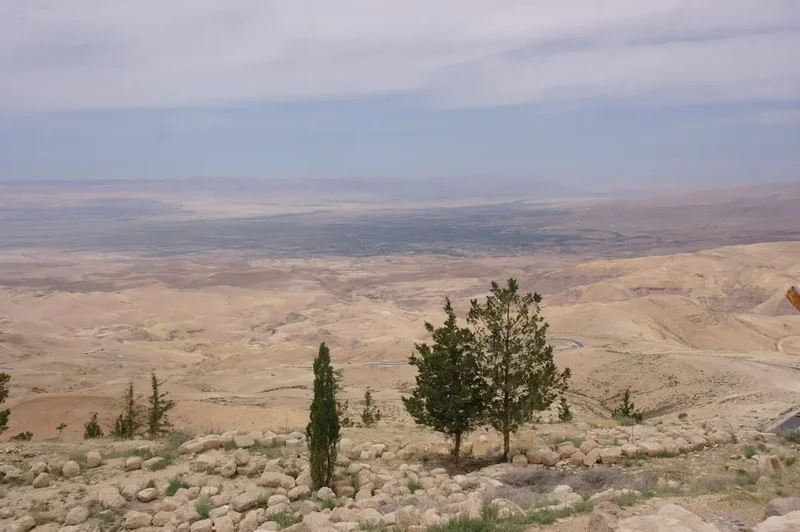
The 8 Regions of the Jordan Trail
Region 1: Umm Qais to Ajloun (Northern Highlands)
- Distance: 80 km
- Duration: 4–5 days
- Key Features: Roman ruins of Gadara, oak forests, olive groves, Ajloun Castle.
- Terrain: Rolling hills and agricultural land. This is the greenest part of the trail.
- Accommodation: Homestays in local villages are highly recommended here.
Region 2: Ajloun to Fuheis
- Distance: 60 km
- Duration: 3–4 days
- Key Features: King Talal Dam, remote farmland, the town of Salt (UNESCO site).
- Terrain: Significant elevation changes as the trail crosses several deep valleys.
- Note: This section provides a deep dive into rural Jordanian life.
Region 3: Fuheis to Wadi Zarqa Ma’in
- Distance: 75 km
- Duration: 4–5 days
- Key Features: Iraq al-Amir (Hellenistic palace), Dead Sea panoramas, Mount Nebo views.
- Terrain: Transitioning from the highlands down towards the Dead Sea canyons.
- Challenge: Steep descents into the wadi systems.
Region 4: Wadi Zarqa Ma’in to Kerak
- Distance: 85 km
- Duration: 5–6 days
- Key Features: Wadi Mujib (the "Grand Canyon of Jordan"), Kerak Crusader Castle.
- Terrain: Some of the most physically demanding terrain on the trail, with massive canyon crossings.
- Note: Requires careful water planning and high fitness.
Region 5: Kerak to Dana
- Distance: 85 km
- Duration: 5–6 days
- Key Features: Wadi Hasa (spectacular limestone canyon), Afra Hot Springs, Dana Biosphere Reserve.
- Terrain: High plateaus followed by deep wadi descents.
- Highlight: Entering the Dana village, perched on the edge of a massive canyon.
Region 6: Dana to Petra
- Distance: 75 km
- Duration: 4–5 days
- Key Features: Feynan Eco-lodge, Little Petra, the "Back Door" to the Monastery in Petra.
- Terrain: Desert floor of Wadi Araba followed by a climb back into the mountains.
- Note: Often cited as the most beautiful section of the entire trail.
Region 7: Petra to Wadi Rum
- Distance: 90 km
- Duration: 5–6 days
- Key Features: Humeima (Abbasid ruins), sandstone desert, Jabal Kharazeh.
- Terrain: Vast, open desert landscapes. Navigation becomes more challenging here.
- Accommodation: Wild camping under the stars is the norm.
Region 8: Wadi Rum to Aqaba (The Red Sea)
- Distance: 75 km
- Duration: 4–5 days
- Key Features: Wadi Rum massifs, Titem Canyon, the Red Sea finish.
- Terrain: Deep sand and granite mountains.
- Final Goal: Reaching the Gulf of Aqaba for a celebratory swim.
Important Notes:
- The trail is not always marked; GPS is essential.
- Water caches may be required in the southern sections.
- Homestays should be booked at least 48 hours in advance.
- Friday is a day of rest in Jordan; some shops may be closed.
- Respect local customs by dressing modestly, especially in rural villages.
Planning and Bookings
Book Your Trip
Everything you need to plan your journey
Accommodation
Find places to stay near Amman
Flights
Search flights to Amman
Essential Preparation
Preparation for the Jordan Trail begins months before you arrive in Amman. Physical fitness is paramount; you should be comfortable walking 20–25 kilometres per day with a weighted pack over rugged, uneven terrain. Training should include significant elevation gain and loss to prepare your knees for the wadi crossings. Logistics are the next hurdle. While the Jordan Trail Association (JTA) provides excellent GPS files and maps, the trail is a "living" route, and conditions can change. It is highly recommended to join the Jordan Trail community groups online to get real-time updates on water sources and trail conditions.
Amman serves as the primary base for all hikers. It is where you will purchase fuel for stoves (available at outdoor shops like Treks or camping sections of large supermarkets), stock up on specialised food, and perhaps meet other hikers. From Amman, you can take a JETT bus or a private taxi to the trailhead at Umm Qais. If you are doing a thru-hike, consider how you will resupply. Most hikers use a combination of village shops and pre-arranged drops or support from local logistics companies.
Trail Accommodation
The Jordan Trail offers a unique mix of accommodation that reflects the country's geography and culture. Unlike European trails with a network of huts, the Jordan Trail relies on local hospitality and wild camping.
Homestays: In the northern and central regions, homestays are a highlight. You stay with a local family, usually in a spare room.
- Facilities: A bed (often a mattress on the floor), shared bathroom, and incredible home-cooked meals (dinner and breakfast).
- Cost: Typically 25–35 JOD per person, including meals.
- Booking: Must be arranged in advance via the JTA website or by calling the hosts directly.
Bedouin Camps: In Dana, Petra, and Wadi Rum, you will find established Bedouin-style camps.
- Facilities: Goat-hair tents or small cabins, communal dining areas, and basic shower facilities.
- Seasonal Availability: Most are open year-round but can be very cold in winter.
Wild Camping: In the remote sections (especially Regions 4, 7, and 8), wild camping is the only option.
- Requirements: You must be fully self-sufficient. There are no facilities, no water, and no toilets.
- LNT: Strict adherence to Leave No Trace principles is required to protect the desert environment.
Eco-lodges: Notable lodges like Feynan Eco-lodge offer a high-end, sustainable experience but require early booking and a higher budget.
Required Gear
- Footwear: Sturdy, well-broken-in hiking boots or high-quality trail runners. The terrain is rocky and abrasive; thin soles will lead to foot fatigue.
- Navigation: A dedicated GPS device (like a Garmin) and a smartphone with the Gaia GPS or Wikiloc app. Spare power banks (at least 20,000mAh) are essential.
- Shelter: A lightweight, wind-resistant tent. Even in the desert, wind can be fierce, and nights can be cold.
- Sleeping System: A 3-season sleeping bag (comfort rating 0°C to 5°C) and a high-R-value sleeping pad.
- Clothing: Moisture-wicking base layers, a lightweight fleece, a down jacket for cold desert nights, and a waterproof shell.
- Sun Protection: A wide-brimmed hat, high-quality sunglasses, and a "shemagh" (traditional scarf) to protect your neck and face from sun and dust.
- First Aid: Comprehensive kit including blister care (Compeed), rehydration salts, broad-spectrum antibiotics (consult your doctor), and tweezers for thorns.
What to Bring
- Water Treatment: A reliable filter (like a Sawyer Squeeze) plus purification tablets as a backup. Some water sources are stagnant or used by livestock.
- Food: High-calorie, lightweight meals. While you can buy staples (bread, tuna, halva, nuts) in villages, you should bring dehydrated meals from home for the remote sections.
- Cooking: A multi-fuel stove is ideal, but gas canisters (screw-top) are available in Amman. Bring a lightweight pot and spork.
- Hygiene: Biodegradable soap, wet wipes (for "desert showers"), and a trowel for waste.
- Documents: A printed copy of your Jordan Pass, passport, and emergency contact numbers.
- Cash: Jordanian Dinars (JOD) in small denominations. Credit cards are rarely accepted outside of Amman and major hotels.
Permits
One of the great appeals of the Jordan Trail is its accessibility. Currently, there is no formal "hiking permit" required to walk the trail itself. However, there are several administrative and entry requirements that every hiker must manage.
The Jordan Pass: This is the most important document for any traveller. It is a pre-paid package that covers the cost of your entry visa (if you stay at least three nights) and provides free entry to over 40 attractions, including Petra, Wadi Rum, and the Crusader castles. It must be purchased online before you arrive in Jordan. For a thru-hiker, the "Jordan Wanderer" or "Jordan Explorer" pass is essential, as it includes the entry fee for Petra, which is otherwise 50 JOD.
Entry Visas: Most nationalities can obtain a visa on arrival at Queen Alia International Airport, but the Jordan Pass waives this fee. Ensure your passport has at least six months of validity remaining.
Local Permissions: While the trail is public, it passes through several protected areas.
- Dana Biosphere Reserve: You must pay a small entrance fee (usually included if staying at the campsite or lodge).
- Petra: Your Jordan Pass covers entry. You must enter through a designated gate (the main entrance or the Little Petra "Back Door" if you have a guide/valid ticket).
- Wadi Rum: There is an entry fee for the protected area, also covered by the Jordan Pass.
Registration: It is highly recommended to register your trek with the Jordan Trail Association. While not a legal requirement, it helps them track trail usage and allows them to provide you with the most up-to-date safety information. Additionally, always leave your itinerary with your embassy and a trusted contact at home.
Other Activities in the Area
Jordan is a small country with a high density of world-class sites. If you have extra time before or after your hike, consider these experiences:
- The Dead Sea: Floating in the hyper-saline waters at the lowest point on Earth (430 metres below sea level) is the ultimate post-hike recovery. The mineral-rich mud is excellent for tired muscles.
- Wadi Mujib Canyoning: If you haven't had enough wadis, the "Siq Trail" in Wadi Mujib is a water-filled canyoning adventure that involves swimming and climbing up waterfalls.
- Amman Citadel and Roman Theatre: Spend a day exploring the capital’s history, then head to Rainbow Street for some of the best falafel and hummus in the world.
- Scuba Diving in Aqaba: The Red Sea is famous for its coral reefs and shipwrecks. It’s a perfect way to wash off the desert dust at the end of the trail.
- Mount Nebo and Madaba: Visit the site where Moses is said to have seen the Promised Land and see the famous 6th-century mosaic map of the Holy Land in Madaba.
Safety and Conditions
Water Management: This is the single greatest safety challenge on the Jordan Trail. In the southern sections, you may go two or three days without a reliable water source. You must be able to carry 6–8 litres of water if necessary. Never pass a reliable water source without topping up. Use the JTA water notes, but always verify with locals if possible.
Flash Floods: Jordan’s wadis are beautiful but can be deadly. A rainstorm kilometres away can send a wall of water down a narrow canyon with no warning. Never camp in the bottom of a wadi. If rain is forecast, stay out of the canyon systems entirely. Flash flood season typically runs from October to April.
Heat and Exposure: Heatstroke can come on quickly. Walk during the early morning and late afternoon, and rest in the shade during the midday heat. Wear loose, light-coloured clothing and stay hydrated with electrolytes, not just plain water.
Navigation: The trail is not a "beaten path" like the Appalachian Trail. It involves cross-country navigation, following goat tracks, and crossing rocky plateaus where the trail disappears. A GPS with the official track is mandatory. Do not rely on your phone alone; have a backup device.
Wildlife: While generally safe, be aware of scorpions and snakes (especially the Arabian Horned Viper). Always check your boots before putting them on and avoid reaching into dark crevices. Stray dogs and shepherd dogs can be aggressive; carrying trekking poles can help keep them at a distance. Usually, a firm "No" or the motion of picking up a stone is enough to deter them.
Cultural Safety: Jordan is a very safe country for foreigners, but it is conservative. Dress modestly (shoulders and knees covered) to avoid unwanted attention and to show respect for local communities. Solo female hikers should take extra precautions and may feel more comfortable hiking with a partner or a guide in the more remote southern sections.
Side Trips and Points of Interest
Jabal Umm ad Dami: Located near the Saudi border in the far south, this is the highest peak in Jordan (1,854 m). The climb is a non-technical scramble and offers views that stretch across the desert of Wadi Rum and deep into Saudi Arabia. It is a spectacular detour for those with an extra day in the Wadi Rum region.
The Siq of Petra: While the Jordan Trail enters Petra via the "Back Door," you should take the time to walk the traditional entrance through the Siq—a narrow, winding canyon that leads to the Treasury (Al-Khazneh). Seeing the Treasury for the first time through the narrow gap in the rocks is a quintessential Jordan experience.
Wadi Hasa: Often called the "Grand Canyon of Jordan," this wadi features hanging gardens, hot springs, and towering limestone walls. The trail follows the riverbed for a significant distance, providing a unique "wet hike" experience in the middle of the desert.
Iraq al-Amir: A fascinating archaeological site featuring a partially restored Hellenistic palace (Qasr al-Abad) and a series of caves that have been used since the Copper Age. It is located in a beautiful, fertile valley just a day's walk from Amman.
Leave No Trace
The Jordan Trail passes through fragile desert ecosystems and ancient archaeological sites that are easily damaged. As the trail grows in popularity, the impact of hikers becomes more visible. It is our collective responsibility to ensure the trail remains pristine.
Specific LNT Guidelines for Jordan:
- Waste Management: Pack out all trash, including fruit peels and nut shells, which do not decompose quickly in the arid climate. In the desert, you must pack out your toilet paper. Use a "poop tube" or sealable bags.
- Water Sources: Do not wash yourself or your clothes directly in springs or communal water troughs. Collect water and move at least 30 metres away to wash using biodegradable soap.
- Archaeological Integrity: Never move stones from ruins, do not climb on ancient walls, and never take "souvenirs" like pottery shards or flint tools. These are part of Jordan's national heritage.
- Fire: Wood is extremely scarce in the desert. Do not build campfires; use a stove for cooking. If you must have a small fire, use only fallen wood and keep it contained.
- Respecting Wildlife: Do not feed wild animals or livestock. Feeding animals disrupts their natural foraging habits and can make them aggressive toward future hikers.