
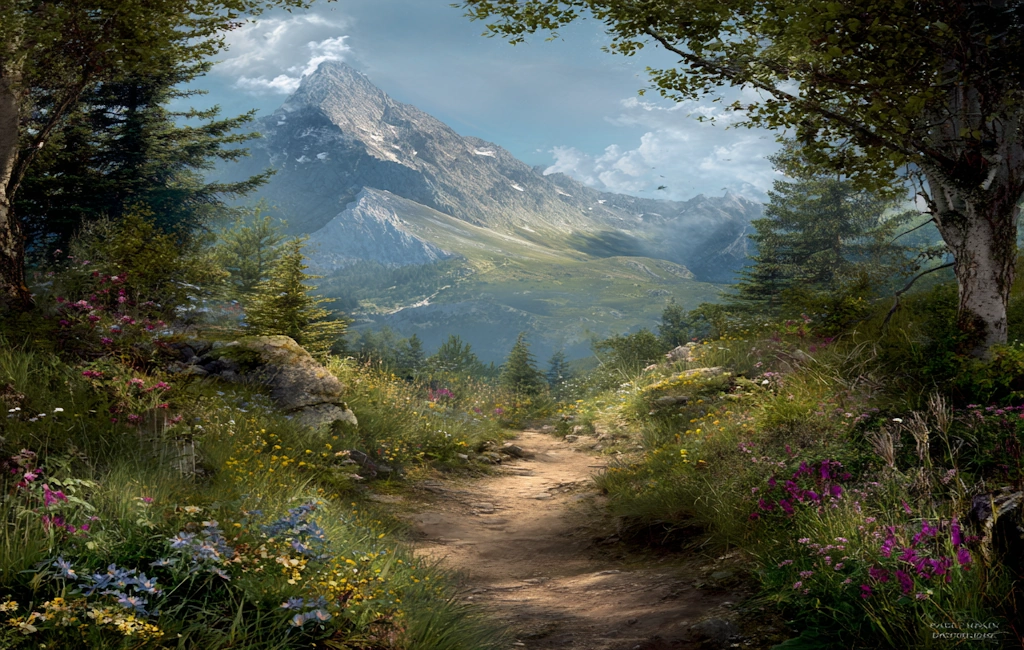
Johnston Canyon to Ink Pots Trail
The Johnston Canyon to Ink Pots trail, located in the heart of Banff National Park, Canada, offers a captivating day hike through a dramatic glacial canyon, culminating in a series of unique mineral springs. This popular route winds its way along catwalks suspended over Johnston Canyon, revealing stunning waterfalls and vibrant turquoise pools. The journey continues beyond the main canyon to the serene Ink Pots, a series of small, colourful, mineral-rich pools set against a backdrop of alpine meadows. It's a relatively accessible trail that provides a significant visual reward for moderate effort, making it a must-do for visitors to the Banff area.
- Distance: 11.7 km one-way
- Duration: 3-4 hours
- Elevation Gain: 215 m
- Difficulty: Moderate
- Best Time: May to October
- Closest City: Banff
- Trailhead Access: Via Trans-Canada Highway (Highway 1) west from Banff, exit at Johnston Canyon.
Overview
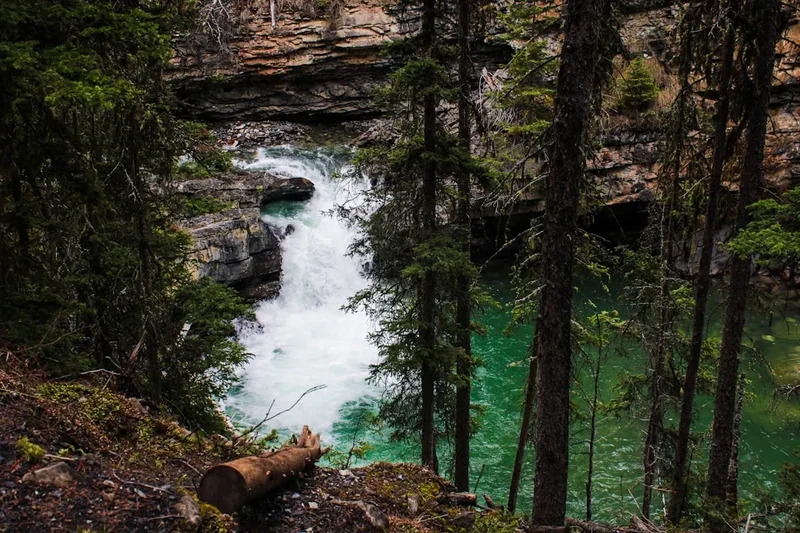
The Johnston Canyon to Ink Pots trail is a classic Banff National Park experience, renowned for its accessibility and spectacular natural features. The initial section of the trail, leading to the Lower and Upper Falls of Johnston Canyon, is paved and features a series of suspended catwalks that hug the canyon walls. These catwalks provide an unparalleled perspective of the powerful turquoise waters of Johnston Creek as it carves its way through the limestone bedrock. The Lower Falls are easily accessible and impressive, while the Upper Falls, a much larger cascade, requires a slightly longer walk. Beyond the Upper Falls, the trail transitions from the constructed catwalks to a more natural forest path, gradually ascending towards the Ink Pots. This section offers a different kind of beauty, with the forest opening up to reveal meadows and the distinctive, colourful mineral springs. The Ink Pots themselves are a geological marvel, with their vibrant hues of green, blue, and yellow, created by the deposition of minerals from the underground springs. The contrast between the enclosed, dramatic canyon and the open, serene meadows with the Ink Pots makes this hike a diverse and memorable experience.
The trail's popularity means it can be very busy, especially during the summer months. Arriving early in the morning or later in the afternoon can help avoid the peak crowds. The well-maintained paths and clear signage make it suitable for a wide range of hikers, though the elevation gain and the distance to the Ink Pots classify it as a moderate hike. The surrounding environment is typical of the Canadian Rockies, with dense coniferous forests, abundant wildlife, and the ever-present majestic mountain scenery. The trail is a fantastic introduction to the geological wonders and natural beauty that Banff National Park has to offer.
History and Cultural Context
Johnston Canyon has a history intertwined with the development of Banff National Park and the exploration of the Canadian Rockies. The canyon itself was carved over thousands of years by the erosive power of Johnston Creek, a process that continues to shape its dramatic features. The creek is named after James Johnston, a prospector who explored the area in the late 19th century. His explorations, along with those of other early settlers and surveyors, helped to map and understand the vast wilderness of the Bow Valley.
The development of the catwalks within Johnston Canyon began in the early 20th century, a testament to the growing interest in tourism and outdoor recreation in Banff. These engineering marvels were constructed to allow visitors to safely access and appreciate the canyon's beauty, transforming a rugged natural feature into a more accessible attraction. The catwalks are a significant part of the trail's identity, allowing hikers to walk directly over the rushing water and through narrow passages that would otherwise be impassable.
The Ink Pots, while less developed historically, have always been a point of natural curiosity. Their unique mineral composition and vibrant colours have likely been observed by Indigenous peoples for centuries, though specific historical records are scarce. The area's designation as part of Banff National Park in 1885, Canada's first national park, ensured its protection and preservation for future generations. The trail's evolution from a rough prospector's route to a well-managed hiking path reflects the broader history of conservation and public access in the Canadian Rockies.
Seasonal Highlights and Weather Reality
The Johnston Canyon to Ink Pots trail is best enjoyed during the warmer months, typically from May to October. During this period, the weather is generally more favourable for hiking, and the trail is usually free of snow and ice.
Spring (May-June): As the snow melts, Johnston Creek swells, making the waterfalls particularly powerful and dramatic. The surrounding forests begin to green, and wildflowers start to bloom in the meadows leading to the Ink Pots. However, early spring can still see lingering snow at higher elevations, and the catwalks can be wet and slippery. The Ink Pots area may still be partially snow-covered in early May.
Summer (July-August): This is the peak season for the trail. The weather is typically warm and sunny, ideal for hiking. The Ink Pots are at their most vibrant, and the meadows are in full bloom. However, this is also the busiest time, and the trail can be very crowded. Sandflies can be present, especially in shaded or damp areas, so insect repellent is recommended.
Autumn (September-October): Autumn offers a beautiful display of fall colours, with the aspens and larches turning golden. The crowds thin out considerably, offering a more peaceful hiking experience. The air is crisp, and the light can be spectacular. However, the weather can become unpredictable, with the possibility of early snowfalls, especially in October. The Ink Pots may begin to freeze over later in October.
Winter (November-April): While the trail is technically accessible in winter, it is not recommended for casual hikers. The catwalks can become extremely icy and dangerous, and the trail beyond the Upper Falls may be covered in deep snow. Ice cleats or microspikes are essential if attempting this hike in winter, and caution is paramount. The Ink Pots may be frozen and less visually striking.
Recommended Itinerary
Johnston Canyon to Ink Pots Day Hike Itinerary
Early Morning (Approx. 8:00 AM - 9:00 AM): Arrival and Trailhead Start
- Arrive at the Johnston Canyon parking area. Aim to arrive early to secure parking, especially during peak season.
- Begin the hike from the trailhead, heading towards the Johnston Canyon Lower Falls.
- The initial section is a paved path leading to the start of the catwalks.
Morning (Approx. 9:00 AM - 10:30 AM): Johnston Canyon Exploration
- Walk along the suspended catwalks through Johnston Canyon.
- Lower Falls: A short spur trail leads to an observation deck directly in front of the Lower Falls. This is a powerful, short cascade.
- Continue on the catwalks, ascending through the narrow canyon.
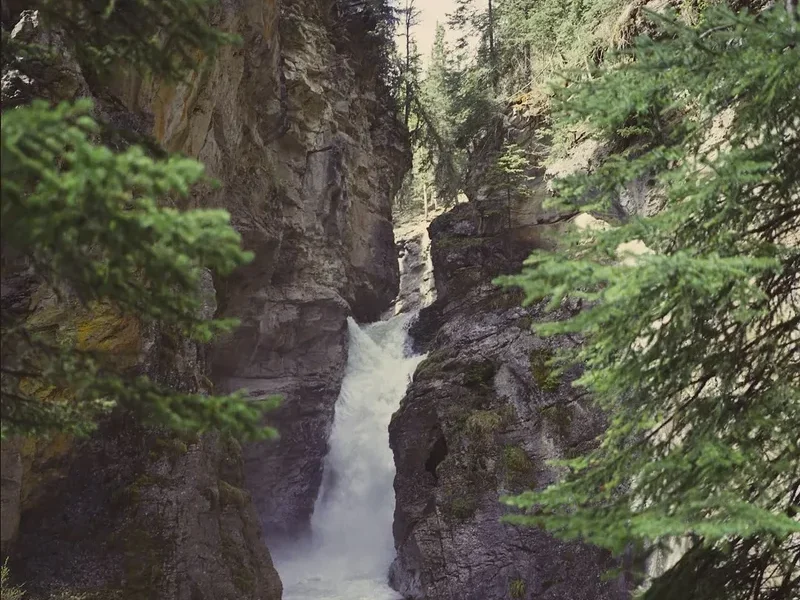
- Upper Falls: The main trail leads to the Upper Falls, a much larger and more impressive waterfall that plunges into a deep pool. There is a tunnel that allows you to walk right up to the base of the falls.
- Spend time admiring the falls and the unique canyon environment.
Midday (Approx. 10:30 AM - 12:30 PM): Ascent to the Ink Pots
- From the Upper Falls, the trail transitions to a more natural, unpaved path.
- The trail begins a steady, moderate ascent through the forest.
- Enjoy the changing scenery as you move away from the immediate canyon environment.
- The path is well-defined and marked.
- Waypoint: Look for signs indicating the direction to the Ink Pots.
Afternoon (Approx. 12:30 PM - 2:00 PM): Ink Pots and Return Journey
- Arrive at the Ink Pots area.
- Explore the series of colourful mineral springs. Take photos and appreciate the unique geological formations.
- Enjoy a packed lunch or snack amidst the scenic meadows.
- Begin the return journey, retracing your steps back down the trail.
- The descent is generally quicker and easier than the ascent.
- Allow time to re-examine the falls and canyon from a different perspective on the way down.
Late Afternoon (Approx. 2:00 PM onwards): Trail End
- Return to the Johnston Canyon parking area.
- Consider visiting the Johnston Canyon Lodge for refreshments or souvenirs.
Important Notes:
- This is a day hike; no overnight accommodation is required.
- The trail can be very busy; start early or hike late to avoid crowds.
- Wear sturdy, comfortable footwear.
- Carry water and snacks, especially for the section to the Ink Pots.
- Be prepared for changing weather conditions.
- Insect repellent is recommended, particularly in summer.
Planning and Bookings
Book Your Trip
Everything you need to plan your journey
Accommodation
Find places to stay near Banff
Flights
Search flights to Banff
Essential Preparation
The Johnston Canyon to Ink Pots trail is a popular day hike within Banff National Park. No advance bookings are required for the trail itself, but it is essential to be aware of park entry requirements. All visitors to Banff National Park require a Parks Canada Discovery Pass, which can be purchased online in advance or at park gates. Parking at the Johnston Canyon trailhead is limited and fills up very quickly, especially during peak season (June-September) and on weekends. It is highly recommended to arrive as early in the morning as possible (before 9:00 AM) or later in the afternoon to secure a parking spot. Alternatively, consider using the Roam Public Transit system, which offers bus service to Johnston Canyon from Banff townsite, providing a convenient and stress-free option.
The closest major city and logistical hub is Banff. Banff townsite offers a wide range of accommodation, dining, and shopping options. It's also the primary location for purchasing park passes and gathering last-minute supplies. Ensure you have adequate water and snacks, as facilities are limited along the trail itself, particularly beyond the main canyon area.
Trail Accommodation
This is a day hike requiring no overnight accommodation.
Required Gear
- Footwear: Sturdy, closed-toe hiking shoes or boots with good ankle support and non-slip soles are essential. The catwalks can be wet and slippery, and the trail to the Ink Pots is uneven.
- Clothing: Wear layers of moisture-wicking clothing. A base layer (synthetic or merino wool), an insulating mid-layer (fleece or down jacket), and a waterproof and windproof outer shell are recommended. Weather in the Rockies can change rapidly.
- Rain Gear: A waterproof jacket and trousers are highly recommended, even if the forecast is clear. The canyon can be misty, and rain is common in the mountains.
- Navigation: While the trail is well-marked, a map of Banff National Park or a reliable GPS device/app with downloaded maps is advisable.
- Safety Gear: A basic first-aid kit, including blister treatment, pain relievers, and any personal medications. A headlamp or flashlight is useful if you plan to hike in the early morning or late afternoon, as the canyon can be dark.
- Sun Protection: Sunglasses, a wide-brimmed hat, and sunscreen are important, especially for the open sections of the trail and at higher elevations.
What to Bring
- Water: Carry at least 1-2 litres of water per person. There are no water refill stations on the trail.
- Food: Pack high-energy snacks such as trail mix, energy bars, fruit, and sandwiches. There are no food services along the trail beyond the trailhead area.
- Insect Repellent: Especially important during the summer months to ward off mosquitoes and sandflies.
- Camera: To capture the stunning scenery, waterfalls, and colourful Ink Pots.
- Binoculars: For wildlife viewing in the surrounding forests and meadows.
- Trekking Poles: Optional, but can be helpful for stability on the catwalks and during the ascent to the Ink Pots.
- Small Backpack: To carry all your essentials comfortably.
Permits
A Parks Canada Discovery Pass is required for all visitors entering Banff National Park. This pass covers entry to all national parks in Canada for a year. Passes can be purchased online through the Parks Canada website or at park entry gates. There are no specific permits required for hiking the Johnston Canyon to Ink Pots trail itself, as it is a day hike within the national park. However, it is crucial to ensure your park pass is valid and displayed appropriately if required.
Discovery Pass Options:
- Discovery Pass: Valid for one year at all Parks Canada places. Available for individuals or families.
- Daily Pass: Valid for 24 hours.
Where to Purchase:
- Online via the Parks Canada website before your visit.
- At park entry gates upon arrival.
- At Parks Canada visitor centres.
Important Considerations:
- Ensure you have your pass readily available, as park staff may conduct checks.
- The parking lot at Johnston Canyon is extremely popular and often full. Arriving early is the best strategy.
- Consider using public transit (Roam Transit) from Banff townsite to Johnston Canyon to avoid parking issues.
Other Activities in the Area
Banff National Park offers a wealth of activities beyond the Johnston Canyon to Ink Pots hike:
- Banff Gondola: Ride to the summit of Sulphur Mountain for panoramic views of six mountain ranges, the Bow Valley, and Banff townsite.
- Lake Louise: Visit the iconic turquoise lake, rent a canoe, or hike to Lake Agnes Tea House or Plain of Six Glaciers Tea House.
- Moraine Lake: Another stunningly beautiful lake, famous for its vibrant blue colour and the Valley of the Ten Peaks. (Note: Access is restricted to shuttle buses, Roam Transit, or cycling during peak season).
- Banff Upper Hot Springs: Relax in the natural mineral hot springs with views of the surrounding mountains.
- Wildlife Viewing: Keep an eye out for elk, deer, bighorn sheep, and potentially bears in the park. Always maintain a safe distance and never feed wildlife.
- Hiking: Banff National Park boasts an extensive network of hiking trails for all skill levels, from short interpretive walks to challenging multi-day treks.
- Canoeing and Kayaking: Explore the Bow River or the lakes of Banff.
- Banff Townsite: Enjoy the shops, restaurants, museums, and galleries in the charming mountain town.
Safety and Conditions
Trail Conditions: The Johnston Canyon trail, particularly the catwalks, can be wet and slippery due to mist from the waterfalls and general moisture. In spring and autumn, ice can form on the catwalks, making them hazardous. Always wear appropriate footwear with good grip. The trail beyond the Upper Falls to the Ink Pots is a natural path and can be muddy or uneven.
Weather: Mountain weather is unpredictable. Be prepared for rapid changes, including sudden rain, wind, or even snow, especially at higher elevations. Check the forecast before you go and dress in layers. Hypothermia is a risk even in summer if you get wet and cold.
Wildlife: Banff National Park is home to a variety of wildlife, including bears, elk, deer, and bighorn sheep. While encounters are not guaranteed, it's important to be aware of your surroundings. Carry bear spray and know how to use it, especially when hiking in less crowded areas or on trails beyond the main canyon. Make noise as you hike to alert animals to your presence. Never feed wildlife, as it can be harmful to them and dangerous for humans.
Crowds: Johnston Canyon is one of the most popular attractions in Banff National Park. During peak season and on weekends, the trail can be extremely crowded, especially the catwalk sections. This can slow down your progress and reduce the sense of wilderness. Arriving early in the morning or later in the afternoon is highly recommended to avoid the busiest times. If you encounter large groups, be patient and courteous.
Water Safety: The water in Johnston Creek is cold and fast-moving. Do not attempt to swim or play in the creek, especially near the waterfalls, as the currents are dangerous.
Emergency: In case of an emergency, dial 911. Cell service can be spotty in the canyon, so be prepared for this. It is advisable to carry a fully charged mobile phone.
Side Trips and Points of Interest
Lower Falls: A short, easily accessible spur trail from the main catwalk leads to an observation platform directly in front of the Lower Falls. This impressive cascade tumbles over a ledge into a clear pool, offering a dramatic introduction to the canyon's power.
Upper Falls: The main trail continues to the Upper Falls, a much larger and more spectacular waterfall. A unique feature here is a tunnel that allows hikers to walk right up to the base of the falls, experiencing the full force and spray of the water. This is a prime photo opportunity.
Ink Pots: Located approximately 3.4 km beyond the Upper Falls, the Ink Pots are a series of small, colourful mineral springs set in a beautiful alpine meadow. The vibrant hues of green, blue, yellow, and orange are created by the unique mineral composition of the water. The contrast between the enclosed canyon and the open, serene meadow with these natural wonders is striking.
Canyon Meadows: The area surrounding the Ink Pots is a lovely meadow that offers a different perspective of the landscape. It's a great spot for a picnic and to appreciate the alpine environment. Wildflowers are abundant here in the summer months.
Johnston Canyon Lodge: Located at the trailhead, the historic Johnston Canyon Lodge offers a place to rest, grab a meal or snack, and purchase souvenirs. It's a convenient stop before or after your hike.
Leave No Trace
The Johnston Canyon to Ink Pots trail, like all natural areas, requires visitors to practice Leave No Trace principles to minimise their impact and preserve the environment for future generations. Adhering to these principles ensures the long-term health and beauty of Banff National Park.
Plan Ahead and Prepare: Research the trail conditions, weather forecast, and any park regulations before your visit. Understand the popularity of Johnston Canyon and plan your visit to avoid peak times if possible.
Travel and Camp on Durable Surfaces: Stay on the designated trails and catwalks. Do not venture off-trail, as this can damage fragile vegetation, disturb wildlife, and lead to erosion. The catwalks are specifically designed to protect the canyon environment.
Dispose of Waste Properly: Pack out everything you pack in. This includes all food scraps, wrappers, and any other litter. There are no garbage receptacles along the trail. Use the facilities at the trailhead or in Banff townsite for waste disposal.
Leave What You Find: Do not remove any natural objects, such as rocks, plants, or flowers. These are part of the natural ecosystem and should be left for others to enjoy and for the environment to sustain.
Minimise Campfire Impacts: Campfires are not permitted on this trail. If you are visiting other areas of Banff where campfires are allowed, use designated fire rings and ensure fires are completely extinguished.
Respect Wildlife: Observe wildlife from a distance and never feed them. Feeding wildlife can alter their natural behaviour, make them dependent on human food, and increase the risk of dangerous encounters. Carry bear spray and know how to use it.
Be Considerate of Other Visitors: Keep noise levels down, yield to other hikers on narrow sections, and be patient, especially on crowded days. The goal is to enjoy the natural environment without disturbing others.
 Canada