
Jiuzhaigou Valley Trails - The Fairyland on Earth
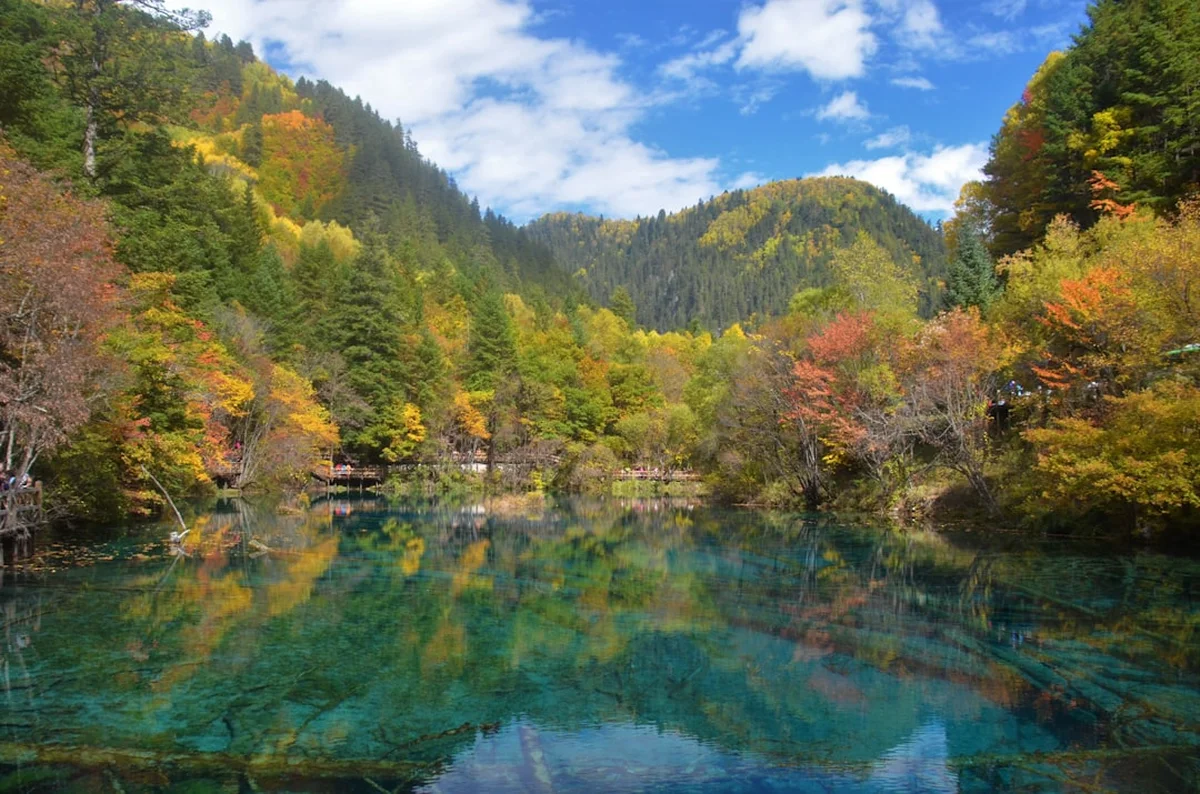
Jiuzhaigou Valley, located in the Aba Tibetan and Qiang Autonomous Prefecture of Sichuan Province, China, is a masterpiece of nature that defies conventional description. Known as the "Fairyland on Earth," this UNESCO World Heritage site is a 72,000-hectare nature reserve and national park situated at the edge of the Tibetan Plateau. The Jiuzhaigou Valley Trails offer a unique opportunity to traverse a landscape defined by high-altitude karst topography, where over 100 multi-coloured lakes—formed by calcium carbonate deposits—glow with ethereal shades of turquoise, emerald, and sapphire. The trails wind through narrow valleys, past thundering multi-tiered waterfalls, and beneath snow-capped peaks that rise over 4,500 metres. This is not merely a hike; it is a journey through a sacred landscape that has been home to Tibetan and Qiang people for centuries, where every lake is a "haizi" (son of the sea) and every mountain peak is a deity. The 7.5 km walking route focuses on the most spectacular sections of the Rize and Shuzheng valleys, providing an intimate encounter with the park's "Six Wonders": its green lakes, layered waterfalls, colourful forests, snow peaks, Tibetan customs, and blue ice.
- Distance: 7.5 km (walking sections)
- Elevation Gain: 200 m
- Duration: 3–5 hours
- Difficulty: Moderate (due to altitude)
- Best Time: April–May and September–October
- Closest City: Chengdu (approx. 450 km)
- Trailhead Access: Park entrance near Zhangzha Town; internal eco-buses provide access to specific trailheads
Overview
The Jiuzhaigou Valley is shaped like a giant "Y," comprising three main valleys: the Rize Valley, the Zechawa Valley, and the Shuzheng Valley. While the park features an extensive network of eco-buses that transport visitors between major landmarks, the true magic of Jiuzhaigou is only revealed to those who step off the buses and onto the well-maintained wooden boardwalks. The 7.5 km of dedicated walking trails described here focus on the most ecologically diverse and visually stunning segments, primarily within the Rize and Shuzheng branches. This route allows walkers to bypass the crowds and experience the profound silence of the ancient coniferous forests, the delicate sound of water trickling over calcified shoals, and the shifting light as it hits the mineral-rich lake beds.
The geology of Jiuzhaigou is its most defining feature. The valley sits on a series of major fault lines at the transition between the Tibetan Plateau and the Sichuan Basin. Over millennia, glacial activity and tectonic shifts created a series of stepped valleys. The water, originating from snowmelt and underground springs, is exceptionally high in calcium carbonate. As this water flows over fallen trees and rocks, the minerals precipitate, forming natural travertine dams and "shoals" that create the park's signature tiered lakes and waterfalls. The clarity of the water is legendary; on a calm day, the bottom of lakes like Five Flower Lake—visible through 30 metres of crystalline water—reveals a complex graveyard of ancient trees, preserved by the mineral content and looking like a submerged forest of white bone.
Walking these trails requires a different mindset than a traditional wilderness trek. The paths are almost entirely constructed of high-quality timber boardwalks designed to protect the fragile karst environment from erosion and human impact. While this makes the footing secure, the altitude (ranging from 2,000 to 3,100 metres) adds a layer of physical challenge. The air is noticeably thinner, and the weather can shift from brilliant sunshine to mountain mist within minutes. For the dedicated walker, the reward is a sensory immersion in a landscape that feels both prehistoric and perfectly preserved—a place where the colours are so vivid they appear almost artificial, yet are entirely the result of complex chemical and biological processes.
History and Cultural Context
The name "Jiuzhaigou" literally translates to "Nine Village Valley," referring to the nine Tibetan villages that have historically inhabited the area. For centuries, these communities lived in relative isolation, practicing a form of Bön Buddhism—a pre-Buddhist spiritual tradition of Tibet that emphasizes the sacredness of natural elements. To the local residents, the lakes and mountains are not just scenery; they are living entities. Legend tells of the goddess Semo, who accidentally dropped a mirror given to her by her lover, the god Dage. The mirror shattered into 108 pieces, which fell into the valley to become the 108 "haizi" or colourful lakes that we see today.
The valley remained largely unknown to the outside world until the 1960s and 70s, when logging operations began to penetrate the region. However, the extraordinary beauty of the landscape quickly led to calls for its protection. In 1978, the Chinese government established Jiuzhaigou as a national park, and logging was strictly prohibited. Its global significance was recognised in 1992 when it was inscribed as a UNESCO World Heritage site, followed by its designation as a World Biosphere Reserve in 1997. These protections have been vital in managing the delicate balance between preserving the ecosystem and accommodating the millions of visitors who travel from across the globe to see the valley.
In recent history, the valley faced its greatest challenge on 8 August 2017, when a 7.0-magnitude earthquake struck the region. The quake caused significant damage to several landmarks, most notably the Nuorilang Waterfall and Sparkling Lake. However, the disaster also demonstrated the dynamic nature of karst landscapes; while some features were lost, new ones were created. The park underwent an extensive and scientifically-led restoration period, reopening fully in 2021. Today, the trails serve as a testament to both the fragility and the resilience of the natural world, offering a glimpse into a landscape that continues to evolve through both geological time and sudden, dramatic events.
Want more background? Read extended notes on history and cultural context → Learn more
Seasonal Highlights and Weather Reality
Jiuzhaigou is a destination of four distinct and dramatic seasons, each offering a completely different aesthetic experience. Because the park is situated at a high altitude, the weather is temperate but highly variable. Understanding the seasonal shifts is crucial for planning a successful walk.
Autumn (September to October): This is widely considered the "Golden Season" and is the most popular time to visit. The deciduous trees—including maples, birches, and rowans—transform into a riot of gold, orange, and crimson. The contrast between the fiery foliage and the deep blue of the lakes is breathtaking. However, this is also the busiest period, particularly during the first week of October (National Day holiday), when the trails can become extremely crowded. Temperatures are cool, ranging from 8°C to 18°C during the day, but can drop significantly at night.
Spring (April to May): As the ice melts, the valley awakens with a flush of new green. This is the season of blossoms, with wild rhododendrons and azaleas flowering along the boardwalks. The water levels in the lakes begin to rise with the snowmelt, and the waterfalls regain their full power. The weather is crisp and clear, though occasional spring showers are common. Daytime temperatures average between 10°C and 20°C.
Summer (June to August): The valley is at its most lush and green during the summer months. This is the rainy season, which brings frequent but often short-lived downpours. The rain serves to replenish the lakes and ensures the waterfalls are at their most thunderous. The mist that often clings to the mountain peaks after a storm adds a mystical quality to the landscape. Temperatures are pleasant, rarely exceeding 25°C, making it a cool escape from the heat of the Chinese lowlands.
Winter (November to March): For those seeking solitude and a surreal landscape, winter is a hidden gem. The park transforms into a world of "Blue Ice." Many of the waterfalls freeze into massive, intricate ice curtains with a distinct blue tint due to the mineral content. The lakes remain unfrozen and strikingly blue against the white snow. While some higher-altitude trails may be closed due to snow, the main boardwalks are usually kept clear. Temperatures frequently drop below 0°C, requiring serious cold-weather gear.
Recommended Itinerary
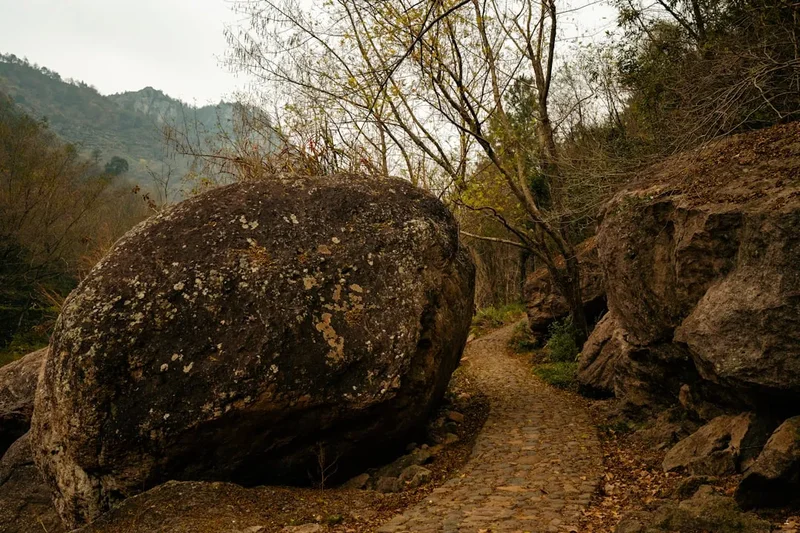
Jiuzhaigou Valley Day Walk Itinerary
Early Morning: The Rize Valley Ascent
- Start: Take the park eco-bus from the entrance directly to the Primeval Forest (the highest point of the Rize Valley).
- Activity: Begin with a short loop through the ancient forest of hemlock and spruce. The air here is rich with oxygen and the scent of pine.
- Descent: Board the bus back down to Grass Lake and Swan Lake. These are the quietest sections of the upper valley, perfect for birdwatching.
- Walking Section 1: Disembark at Arrow Bamboo Lake. Begin the 3 km walk toward Five Flower Lake.
- Key Waypoint: Arrow Bamboo Falls—a wide, curtain-like waterfall that was a filming location for the movie 'Hero'.
- Arrive at Five Flower Lake: Spend significant time here. This is the most famous lake in the park, known for its multi-coloured bottom and fallen ancient trees.
Morning: The Pearl Shoal and Mirror Lake
- Walking Section 2: Continue from Five Flower Lake down to the Pearl Shoal.
- Key Waypoint: Pearl Shoal—a vast, sloping calcified area where thin sheets of water ripple over the surface, looking like thousands of jumping pearls in the sunlight.
- Key Waypoint: Pearl Shoal Waterfall—follow the boardwalk as it wraps around the base of this 310-metre-wide waterfall. The power of the water here is immense.
- Walking Section 3: A gentle 1.5 km walk from the base of the falls to Mirror Lake.
- Key Waypoint: Mirror Lake—best visited before 10:00 AM when the water is perfectly still, reflecting the surrounding mountains and sky with startling clarity.
Midday: Nuorilang Centre and Zechawa Branch
- Transfer: Take the bus to the Nuorilang Tourist Centre, the junction of the "Y" shape.
- Lunch: Utilise the buffet or snack stalls at the centre (the only major food hub in the park).
- Side Trip: Take the bus up the left branch (Zechawa Valley) to Long Lake and Five-Colour Pond.
- Key Waypoint: Long Lake—the highest and deepest lake in the park, surrounded by snow peaks.
- Key Waypoint: Five-Colour Pond—a small but intensely coloured pool that remains blue even in the depths of winter.
Afternoon: The Shuzheng Valley Descent
- Walking Section 4: Return to Nuorilang and begin the final 3 km walking stretch down the Shuzheng Valley.
- Key Waypoint: Nuorilang Waterfall—the widest calcified waterfall in China. Post-earthquake, it has regained its majesty.
- Key Waypoint: Rhinoceros Lake and Tiger Lake—large, deep blue lakes that offer stunning reflections of the Shuzheng Tibetan Village.
- Key Waypoint: Shuzheng Village—stop to admire the traditional Tibetan architecture and prayer flags.
- Key Waypoint: Shuzheng Falls and the Reed Lake—the trail ends with a walk past a series of small, interconnected lakes and a vast reed marsh where a turquoise "Jade Ribbon" of water winds through the golden reeds.
- Finish: Board the bus at the Reed Lake station for the final ride back to the park entrance.
Important Notes:
- The itinerary relies on a combination of walking and the internal bus system to cover the vast distances (over 50 km of road).
- Walking is only permitted on the designated wooden boardwalks.
- The park operates on a strict "one-way" flow during peak times; follow the directions of the park rangers.
- Last buses usually depart from the upper valleys around 5:00 PM or 6:00 PM depending on the season.
- Altitude sickness is a possibility; walk slowly and stay hydrated.
Planning and Bookings
Book Your Trip
Everything you need to plan your journey
Accommodation
Find places to stay near Chengdu
Essential Preparation
Planning a trip to Jiuzhaigou requires careful coordination of transport and timing. The park is located in a remote mountainous region, and the primary gateway is the city of Chengdu. From Chengdu, you have two main options: a 45-minute flight to Jiuzhai Huanglong Airport (followed by a 2-hour bus/taxi ride) or an 8–10 hour bus journey through spectacular but winding mountain roads. Recently, high-speed rail options have begun to connect parts of the route, significantly reducing travel time; check the latest schedules for the Chengdu-Huanglongjiuzhai railway line.
Fitness requirements are moderate. While the boardwalks are flat and well-maintained, the sheer amount of walking (if you choose to skip buses) and the altitude can be taxing. It is highly recommended to spend at least one night in the base town of Zhangzha (just outside the park entrance) to acclimatise before heading into the valley. Ensure you have downloaded a translation app and an offline map, as English signage, while present, can be limited in the surrounding areas.
Trail Accommodation
This is a day hike requiring no overnight accommodation within the park. Staying overnight inside Jiuzhaigou National Park is strictly prohibited for tourists to protect the environment and respect the local Tibetan communities. All visitors must exit the park by the closing time (usually 6:00 PM).
Accommodation Options Outside the Park:
- Zhangzha Town: Located immediately outside the park entrance, this town offers a wide range of options from international luxury hotels (Hilton, InterContinental) to budget-friendly hostels and Tibetan-style guesthouses.
- Facilities: Most hotels in Zhangzha provide oxygen canisters, heated blankets (essential in shoulder seasons), and shuttle services to the park entrance.
- Booking: During the peak autumn season, accommodation must be booked at least 2–3 months in advance. Prices can triple during the October National Day holiday.
- Costs: Budget rooms start around 200 CNY, while luxury resorts can exceed 1,500 CNY per night.
Required Gear
- Footwear: Comfortable walking shoes or light hiking boots with good grip. The boardwalks can become very slippery when wet or icy.
- Clothing: The "layering" system is essential. Even in summer, mornings are cold. Bring a moisture-wicking base layer, a fleece or down mid-layer, and a waterproof/windproof outer shell.
- Sun Protection: At 3,000 metres, the UV radiation is intense. Bring a wide-brimmed hat, high-SPF sunscreen, and UV-rated sunglasses.
- Daypack: A 15–25L pack to carry water, snacks, and extra layers.
- Navigation: While the trails are well-marked, a digital map of the park's bus stops and boardwalks is helpful for timing your day.
What to Bring
- Water: Bring at least 1.5–2 litres of water. While bottled water is sold at the Nuorilang Centre, it is expensive and creates plastic waste.
- Food and Snacks: The only major restaurant is the Nuorilang buffet. It is highly recommended to bring your own lunch (sandwiches, nuts, energy bars, fruit) to avoid wasting time in queues and to enjoy a picnic at one of the designated rest areas.
- Power Bank: Cold temperatures and constant photography will drain phone batteries quickly.
- Personal Medications: Include altitude sickness medication (consult a doctor before use), ibuprofen for headaches, and any personal prescriptions.
- Tissues and Sanitiser: Public toilets are available at most bus stops, but toilet paper is not always provided.
- Identification: Your passport is mandatory for park entry and must match the details on your pre-booked ticket.
Permits
Jiuzhaigou National Park operates on a strict "Total Quality Control" system, meaning there is a daily cap on the number of visitors (currently around 41,000 people per day). Tickets must be booked in advance through the official website or authorised platforms (such as WeChat mini-programs). There are no on-site ticket sales for the same day.
Booking Process:
- Advance Booking: Tickets can be booked up to 15 days in advance. For the peak season (October), tickets often sell out within minutes of being released.
- Passport Requirement: International visitors must provide their passport number at the time of booking. The physical passport must be presented at the park turnstiles for biometric entry.
- Ticket Types: The "Peak Season" (April 1 – Nov 15) ticket costs approximately 190 CNY for entry plus 90 CNY for the mandatory eco-bus ticket. "Off-Season" (Nov 16 – March 31) rates are significantly lower, around 80 CNY for entry and 80 CNY for the bus.
- Eco-Bus Ticket: This is essentially mandatory as the distances between the entrance and the trailheads are too great to walk in a single day. The bus ticket allows for unlimited rides throughout the day.
Important Strategy: If you are visiting during a busy period, aim to be at the park entrance at least 30 minutes before the official opening time (usually 7:30 AM or 8:00 AM). This allows you to catch the first wave of buses to the highest points of the valley, giving you a head start on the crowds and more time for walking the quiet boardwalk sections.
Other Activities in the Area
The region surrounding Jiuzhaigou offers several other world-class natural and cultural experiences that are worth adding to your itinerary:
- Huanglong National Park: Located about 3 hours from Jiuzhaigou, this park is famous for its "Multi-coloured Ponds"—thousands of terraced travertine pools that look like golden dragon scales from above. It is higher in altitude (up to 3,500 m) and offers a more strenuous hike.
- Tibetan Cultural Shows: In Zhangzha Town, several large-scale theatres perform "The Romance of Jiuzhaigou," a spectacular display of Tibetan and Qiang music, dance, and acrobatics that provides context to the local heritage.
- Muni Valley: A quieter alternative to Jiuzhaigou, featuring the Zhaga Waterfall (the largest calcified waterfall in the world) and pristine forest lakes without the massive crowds.
- Fairy Pool (Shenxian Chi): A smaller version of Jiuzhaigou located about 50 km away, combining the features of both Jiuzhaigou and Huanglong in a more intimate setting.
- Tibetan Village Visits: While you can see villages inside the park, visiting a village outside the reserve allows for a more authentic look at local life, including traditional barley wine tasting and yak butter tea.
Safety and Conditions
Altitude Sickness (AMS): This is the primary safety concern in Jiuzhaigou. The park entrance is at 2,000 metres, but the Primeval Forest and Long Lake are over 3,100 metres. Symptoms include headache, nausea, and shortness of breath. To mitigate risk: stay hydrated, avoid alcohol, walk at a steady pace, and consider taking "Hong Jing Tian" (Rhodiola), a local herbal remedy, or Diamox (consult your doctor). Oxygen canisters are widely available for purchase if you feel distressed.
Weather Volatility: Mountain weather is unpredictable. Sudden thunderstorms can occur in summer, and temperatures can plummet if the sun goes behind a cloud. Hypothermia is a risk if you get wet and the temperature drops. Always carry a waterproof layer and an extra warm fleece, regardless of how the morning looks.
Slippery Boardwalks: The wooden paths are beautiful but can be treacherous. Moss growth, rain, and morning frost make them very slick. Wear shoes with excellent traction and use the handrails provided. In winter, be wary of "black ice" on the timber.
Wildlife Encounters: While giant pandas inhabit the remote parts of the reserve, you are unlikely to see them. However, Tibetan macaques (monkeys) are common. Do not feed them; they can be aggressive and are known to snatch bags or food from unsuspecting hikers. Keep a respectful distance.
Earthquake Awareness: The region remains seismically active. While the park is heavily monitored and structures are built to high safety standards, it is wise to be aware of your surroundings. In the event of a tremor, move away from steep cliffs or large trees and follow the instructions of park wardens.
Emergency Services: There are medical stations at the Nuorilang Centre and the park entrance. Park rangers are stationed throughout the valley and can be identified by their uniforms. Mobile signal is generally good along the main roads but can be spotty on the deeper forest boardwalks.
Side Trips and Points of Interest
Five Flower Lake (Wuhua Hai): Often called the "Soul of Jiuzhaigou," this lake is a must-see. The high concentration of calcium carbonate and various algae creates a patchwork of colours—cyan, navy, and light yellow. The fallen trees on the lake bed are encrusted with minerals, making them look like white coral. The best view is from the "Tiger Mouth" overlook on the road above the lake.
Pearl Shoal Falls: This is perhaps the most beautiful waterfall in the park. Unlike a single drop, the water fans out over a wide, curved precipice. The boardwalk allows you to walk right alongside the falling water, providing incredible photographic opportunities and a refreshing mist on warm days.
The Primeval Forest: Located at the very top of the Rize Valley, this area offers a different aesthetic. It is a dense, ancient woodland of Sichuan Red Firs and Dragon Spruces. The trail here is a 2 km loop that feels much more like a traditional forest hike, away from the bright colours of the lakes. It is a great place to experience the "forest bathing" effect.
Nuorilang Waterfall: Standing 24.5 metres high and 270 metres wide, this was once the widest waterfall in China. It suffered a partial collapse during the 2017 earthquake but has since naturally stabilised and remains a powerful symbol of the park's grandeur. It is particularly impressive in winter when it transforms into a wall of blue ice.
Reed Lake (Heiye Hai): A 2 km long marshland filled with reeds. A clear, turquoise stream winds through the centre, earning it the nickname "The Jade Ribbon." This is one of the best places for photography in the late afternoon when the low sun turns the reeds into a sea of gold.
Leave No Trace
Jiuzhaigou is an extremely fragile karst ecosystem. The stunning colours of the lakes are maintained by a delicate chemical balance that can be easily disrupted by human interference. As a visitor, you are a guest in a sacred and protected landscape.
Your responsibility as a walker:
- Stay on the Boardwalks: This is the most important rule. Stepping off the timber paths onto the soil or into the water causes erosion and can damage the rare plants and calcified shoals that take centuries to form.
- No Water Contact: Never touch the water in the lakes or streams. Oils and chemicals from human skin (and sunscreen) can interfere with the calcium carbonate precipitation process, potentially dulling the lakes' colours over time.
- Zero Litter Policy: Pack out everything. Even organic waste like orange peels or nut shells should be carried out, as the high altitude and cold water mean decomposition is very slow.
- No Smoking: Smoking is strictly prohibited throughout the park due to the high risk of forest fires. There are designated smoking areas at the Nuorilang Centre only.
- Respect the Wildlife: Do not feed the birds or monkeys. Feeding animals disrupts their natural foraging habits and can make them aggressive toward humans.
- Quiet Enjoyment: Jiuzhaigou is a place of spiritual significance. Avoid loud music or shouting; let the sounds of the wind and water dominate the experience.
By following these principles, you help ensure that the "Fairyland on Earth" remains pristine for future generations of walkers and for the Tibetan communities who call this valley home.