
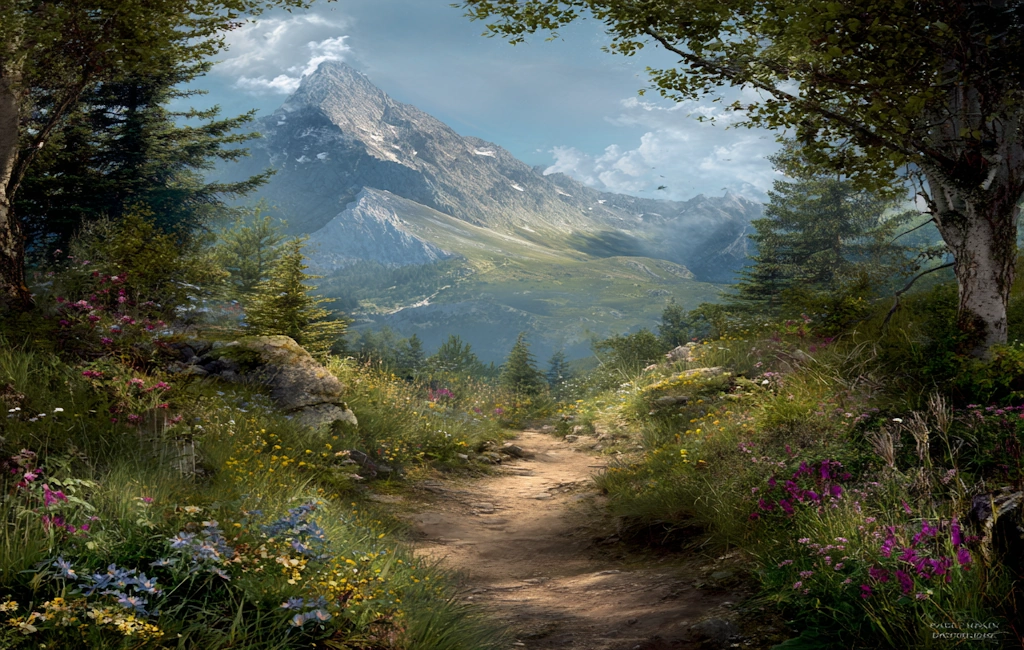
Gunnison National Park Rim Trail - A Journey Along the Abyss
The Gunnison National Park Rim Trail offers one of the most visually arresting walking experiences in the United States. Located within the Black Canyon of the Gunnison National Park in Colorado, this 10.3-kilometre route traces the jagged, precipitous edge of a canyon so deep and narrow that sunlight rarely reaches the bottom, earning it the "Black Canyon" moniker. Unlike the sprawling vistas of the Grand Canyon, the Gunnison National Park Rim Trail provides a sense of verticality that is almost claustrophobic in its intensity. The trail navigates a landscape of ancient Precambrian rock, some of the oldest exposed stone on the planet, carved over two million years by the relentless power of the Gunnison River.
This moderate day walk is designed for those who wish to experience the raw power of geological time without the punishing descent into the canyon floor. With a manageable elevation gain of 305 metres, the trail remains accessible to most walkers with a reasonable level of fitness, yet it offers views that are typically reserved for elite mountaineers. The path weaves through a high-desert ecosystem of pinyon pine, juniper, and mountain mahogany, providing a stark, beautiful contrast to the dark, sheer walls of the canyon that drop over 500 metres to the churning river below. For the modern traveller seeking a profound connection with the earth's ancient history, the Rim Trail is an essential pilgrimage through a landscape defined by shadow, stone, and silence.
- Distance: 10.3 km out-and-back
- Duration: 3-4 hours
- Elevation Gain: 305 m
- Difficulty: Moderate
- Best Time: Late May to early October
- Closest City: Gunnison, Colorado
- Highest Point: Approximately 2,530 m
Overview
The Gunnison National Park Rim Trail is a masterclass in perspective. While many national park trails focus on the climb toward a summit, this route focuses on the edge of the abyss. The Black Canyon is unique because of its narrowness; at its tightest point, the canyon is only 12 metres wide at the river, while the rim stands over 500 metres above. This creates a visual phenomenon where the opposite rim feels close enough to touch, yet the depth is so profound it induces a sense of vertigo. The trail is primarily located on the South Rim, which is the most developed and accessible side of the park, offering the most consistent views of the famous "Painted Wall"—the highest cliff in Colorado at 685 metres.
The walking surface is a mix of packed earth, rocky outcrops, and occasional sandy stretches. Because the trail stays relatively level compared to the inner canyon routes, walkers can focus their energy on the spectacular overlooks. The vegetation along the rim is a resilient community of Gambel oak and serviceberry, which provides vital habitat for local wildlife. It is not uncommon to see mule deer grazing near the path or to hear the piercing cry of a Peregrine falcon as it hunts in the thermals rising from the canyon depths. The air here is thin and dry, characteristic of the Colorado high plateau, and the scent of sun-warmed juniper needles often follows walkers throughout their journey.
Geologically, the trail sits atop the Gunnison Uplift. The rock you walk upon is primarily schist and gneiss, interlaced with pinkish bands of pegmatite. These "dykes" of igneous rock were injected into the darker metamorphic rock billions of years ago, creating the marbled patterns that give the Painted Wall its name. As you traverse the 10.3 kilometres, you are essentially walking on the "basement" of the North American continent. The sheer scale of the canyon, combined with the intimacy of the rim-side forest, makes this trail a sensory experience that balances the humbling vastness of the void with the delicate beauty of the high-altitude flora.
History and Cultural Context
The history of the Gunnison National Park Rim Trail is inextricably linked to the human struggle to understand and navigate this formidable landscape. For centuries, the Ute people inhabited the surrounding plateaus. While they avoided the depths of the canyon—viewing it as a place of great spiritual power and physical danger—they utilised the rim areas for seasonal hunting and gathering. The canyon served as a natural barrier, a "great rent in the earth" that commanded respect and dictated the movement of indigenous groups across the Western Slope of the Rockies.
European exploration of the canyon began in earnest in the mid-19th century. Captain John Williams Gunnison, for whom the river and park are named, passed through the region in 1853 while surveying a route for the transcontinental railroad. However, Gunnison himself never entered the deepest parts of the canyon, describing it as "unfit for any human purpose." It wasn't until the Hayden Survey of 1873-1874 that the true scale of the Black Canyon began to be documented for the wider world. The most legendary feat in the canyon's history occurred in 1901, when Abraham Lincoln Fellows and William Torrence floated the river on rubber mattresses to survey a site for an irrigation tunnel. Their successful "expedition of the lost" led to the construction of the Gunnison Tunnel, a feat of engineering that diverted water to the Uncompahgre Valley and remains in use today.
The area was proclaimed a National Monument in 1933 by President Herbert Hoover, largely due to the advocacy of local communities who realised the unique aesthetic and geological value of the canyon. It was eventually elevated to National Park status in 1999. The Rim Trail itself was developed to allow visitors to experience the canyon's grandeur without the extreme risks associated with the "poison ivy-choked" inner canyon gullies. Today, the trail stands as a testament to the preservation of wilderness, offering a safe but exhilarating way to witness a landscape that was once considered entirely impenetrable.
Want more background? Read extended notes on history and cultural context → Learn more
Seasonal Highlights and Weather Reality
The Gunnison National Park Rim Trail is a seasonal experience, dictated by the harsh winters of the Colorado high country. While the park is technically open year-round, the South Rim Road and the primary trail access are often restricted by heavy snow from November through April. During these months, the trail becomes a destination for snowshoeing and cross-country skiing, though the sheer drops of the canyon rim require extreme caution in icy conditions.
Spring (May to June): This is a period of awakening. As the snow melts, the trail can be muddy in sections, but the reward is the blooming of wildflowers like the lupine and scarlet gilia. The Gunnison River, fed by snowmelt, is at its most thunderous, and the sound of the water crashing through the narrows can be heard clearly from the rim. Temperatures are mild, typically ranging from 10°C to 20°C, though late-season snowstorms are always a possibility.
Summer (July to August): This is the peak visiting season. The weather is generally stable, with daytime temperatures reaching 25°C to 30°C. However, the high altitude means the sun is exceptionally intense. This is also the season of the "North American Monsoon," where afternoon thunderstorms are frequent. These storms can be violent, bringing lightning and sudden temperature drops. Walkers should aim to be off the exposed rim by early afternoon to avoid lightning strikes, which are a genuine hazard in this open landscape.
Autumn (September to October): Many consider this the best time to walk the Rim Trail. The Gambel oaks turn a brilliant copper and gold, contrasting beautifully with the dark canyon walls. The air is crisp and clear, providing the best visibility for photography. Temperatures are cooler, often hovering between 5°C and 15°C, making the physical exertion of the trail more comfortable. By mid-October, the first dusting of winter snow often arrives, signalling the end of the primary hiking season.
Recommended Itinerary
Gunnison Rim Trail Route Progression
Early Morning: Trailhead to Tomichi Point
- Distance: 1.5 km
- Elevation: Minimal gain
- Time: 30–45 minutes
- Start at the South Rim Visitor Centre trailhead shortly after sunrise to catch the first light hitting the North Rim.
- The path is well-defined and relatively flat, winding through pinyon-juniper woodland.
- Arrive at Tomichi Point, which offers the first expansive view of the canyon's depth.
- Observe the transition from the gentle plateau to the vertical drop-off.
Mid-Morning: Tomichi Point to Pulpit Rock
- Distance: 2.5 km
- Elevation: 100 m gain
- Time: 1 hour
- The trail begins to climb slightly as it follows the undulating topography of the rim.
- Pass through sections of dense mountain mahogany and serviceberry.
- Pulpit Rock Overlook provides a 180-degree view of the river's "U-turn" below.
- This is an excellent spot for birdwatching; look for swifts and swallows darting along the cliff faces.
Midday: Pulpit Rock to Cross Canyon and High Point
- Distance: 3.5 km
- Elevation: 150 m gain
- Time: 1.5 hours
- The trail becomes more rugged and rocky as you approach the higher elevations of the South Rim.
- Cross several small drainages that may hold water in early spring but are dry by mid-summer.
- Reach the "High Point" of the trail, which offers a commanding view of the Painted Wall.
- The Painted Wall is the highest cliff in Colorado; look for the intricate pink pegmatite veins.
- Take a break in the shade of a large juniper tree before beginning the return journey.
Afternoon: Return to Visitor Centre
- Distance: 2.8 km (direct return route)
- Elevation: Mostly descent
- Time: 1 hour
- Follow the return path, which often stays slightly further back from the rim for a different perspective of the forest.
- The afternoon light changes the colours of the canyon, turning the grey schist into deep purples and blacks.
- Finish back at the Visitor Centre to explore the geological exhibits and replenish water supplies.
Important Notes:
- There is no water available on the trail; all supplies must be carried from the Visitor Centre.
- The trail is an out-and-back configuration, but several spur trails allow for minor variations.
- Stay behind all railings at overlooks; the rock at the edge can be unstable.
- High altitude (over 2,500 m) means you will tire more easily than at sea level.
- Cell phone service is intermittent and should not be relied upon for navigation.
Planning and Bookings
Book Your Trip
Everything you need to plan your journey
Accommodation
Find places to stay near Gunnison
Flights
Search flights to Gunnison
Essential Preparation
Planning for the Gunnison National Park Rim Trail requires a focus on environmental factors rather than complex logistics. Because this is a day walk, no backcountry permits or hut bookings are required. However, the high-altitude environment of Western Colorado demands respect. Walkers should arrive in the region at least 24 hours before their hike to acclimatise to the elevation, which sits at approximately 2,500 metres. Dehydration and altitude sickness are the most common issues faced by visitors.
The closest major town is Gunnison, located about an hour's drive to the east, while Montrose is closer to the west (about 20 minutes). Both towns offer full services, including supermarkets, outdoor gear shops, and medical facilities. It is highly recommended to check the official National Park Service (NPS) website for any temporary trail closures or alerts regarding wildlife activity (such as bear sightings) before heading to the trailhead.
Trail Accommodation
This is a day hike requiring no overnight accommodation on the trail itself. Camping is strictly prohibited along the Rim Trail to protect the fragile ecosystem and maintain the wilderness character of the canyon edge.
Nearby Options:
- South Rim Campground: Located within the park, near the Visitor Centre. It offers three loops (A, B, and C). Loop B has electric hookups. Reservations are highly recommended during the summer months via Recreation.gov.
- North Rim Campground: A more primitive, first-come, first-served option on the opposite side of the canyon. It is much quieter but requires a long drive to access from the South Rim.
- East Portal: Located at the bottom of the canyon (accessible by a extremely steep road), offering campsites managed by the Bureau of Reclamation.
- Hotels/Motels: A wide range of accommodation is available in Montrose and Gunnison, ranging from budget motels to boutique lodges.
Required Gear
- Footwear: Sturdy hiking boots or trail shoes with good traction. The trail has rocky and uneven sections where ankle support is beneficial.
- Clothing: A layering system is essential. Even in summer, mornings can be chilly (5-10°C), while afternoons can be hot. Include a moisture-wicking base layer, an insulating mid-layer (fleece), and a windproof shell.
- Sun Protection: A wide-brimmed hat, high-SPF sunscreen, and UV-rated sunglasses. The UV radiation at 2,500 metres is significantly stronger than at sea level.
- Navigation: A physical map of the park or a downloaded offline GPS map. While the trail is well-marked, it is easy to become disoriented if you wander off-path.
- Emergency Kit: A basic first aid kit, a whistle, and a multi-tool.
What to Bring
- Water: At least 3 litres per person. There is no water on the trail, and the dry air increases the rate of fluid loss. Electrolyte powders are recommended.
- Food: High-energy snacks (nuts, dried fruit, energy bars) and a light lunch. There are no food services within the park boundaries.
- Backpack: A 15-25 litre daypack with a comfortable hip belt and rain cover.
- Binoculars: Highly recommended for spotting raptors in the canyon or examining the geological features of the opposite rim.
- Trash Bags: To carry out all waste, including organic matter like orange peels or apple cores.
- Personal Items: Hand sanitiser, tissues, and any personal medications (especially for asthma or allergies).
Permits
No specific hiking permits are required for the Gunnison National Park Rim Trail. It is an open-access trail for all park visitors. However, you must pay the National Park entrance fee upon arrival at the South Rim entrance station. As of the current season, the fee is approximately $30 per private vehicle, which is valid for seven consecutive days. Alternatively, the "America the Beautiful" Interagency Pass is accepted and highly recommended for those visiting multiple national parks in a single year.
Important Considerations:
- Inner Canyon Permits: If you decide to deviate from the Rim Trail and attempt to descend into the canyon (via routes like the Gunnison Route), you MUST obtain a free Wilderness Permit from the Visitor Centre. These are limited and often require an early morning arrival.
- Commercial Use: Any organised commercial groups or professional photography shoots require a Special Use Permit obtained in advance from the park administration.
- Parking: During peak summer weekends, the trailhead parking at the Visitor Centre can fill up by 10:00 AM. Arriving early ensures you have a spot and avoids the need for long walks from overflow parking areas.
Other Activities in the Area
The Black Canyon of the Gunnison region offers a variety of experiences beyond the Rim Trail:
- South Rim Drive: A 12-kilometre road with 12 designated overlooks. If you have limited time, driving to spots like Dragon Point and Sunset Point provides spectacular views with minimal walking.
- East Portal Road: A hair-raising drive down a 16% grade to the Gunnison River. This provides access to fishing spots and a closer look at the Gunnison Tunnel diversion. Note: Vehicles over 6.7 metres (6 m) are prohibited.
- Morrow Point Boat Tours: Located in the nearby Curecanti National Recreation Area, these ranger-led tours take you deep into the canyon via the water, providing a completely different perspective on the towering walls.
- Stargazing: The park is a designated International Dark Sky Park. The lack of light pollution makes it one of the best places in Colorado to view the Milky Way. Ranger-led astronomy programmes are common in the summer.
- Rock Climbing: For the highly experienced, the Black Canyon offers some of the most challenging traditional climbing in North America. These are multi-pitch routes on serious, committing terrain.
- Fishing: The Gunnison River is a Gold Medal Trout Water. Accessing the river requires a steep hike or driving to the East Portal, but the rewards for anglers are significant.
Safety and Conditions
Environmental Hazards:
- Lightning: This is the most significant weather-related danger. The rim is highly exposed. If you hear thunder or see dark clouds building, return to your vehicle immediately. Do not seek shelter under isolated trees.
- Dehydration and Heat: The combination of high altitude, low humidity, and intense sun can lead to rapid dehydration. Drink water proactively, even if you do not feel thirsty.
- Altitude Sickness: Symptoms include headache, nausea, and dizziness. If you experience these, stop, rest, and descend to a lower elevation if symptoms persist.
Terrain Risks:
- Sheer Cliffs: The canyon walls are vertical and the edges can be crumbly. Never lean over the edge or bypass safety railings. A fall from the rim is almost certainly fatal.
- Loose Rock: The trail can be slippery with "scree" (small loose stones). Wear footwear with excellent grip and watch your placement on descents.
- Poison Ivy: While more common in the inner canyon, poison ivy does grow in some shaded drainages along the rim. Learn to identify its "leaves of three" and avoid contact.
Wildlife Encounters:
- Black Bears: They are present in the park. Store all food in bear-proof containers or your vehicle. If you encounter a bear, do not run; stand your ground, make yourself look large, and speak in a firm voice.
- Mountain Lions: Though rarely seen, they inhabit the area. Keep children close and avoid hiking alone at dawn or dusk.
- Rattlesnakes: Western Diamondback and Prairie rattlesnakes may sun themselves on the trail. Give them a wide berth and never attempt to touch or move them.
Emergency Contact: In case of an emergency, dial 911 if you have signal, or return to the Visitor Centre to alert a park ranger. Be prepared to provide your exact location and the nature of the incident.
Side Trips and Points of Interest
The Painted Wall: This is the most iconic feature of the park. Located near the end of the Rim Trail's primary stretch, this 685-metre cliff face is adorned with swirling patterns of pink pegmatite. It is the highest vertical cliff in Colorado and is taller than the Empire State Building. The best light for viewing the "paintings" is in the mid-morning when the sun illuminates the textures of the rock.
Warner Point Nature Trail: A 2.4-kilometre return walk located at the very end of the South Rim Road. It offers a different perspective, looking out toward the Uncompahgre Valley and the San Juan Mountains in the distance. It is a great "add-on" for those who finish the Rim Trail early.
Dragon Point: Named for the "dragon-like" patterns in the rock, this overlook provides one of the best views of the narrowest part of the canyon. The sheer drama of the vertical drop here is unparalleled.
Big Island Overlook: A short spur from the main trail leads to a view of a massive rock buttress that stands like an island within the canyon. It demonstrates the complex erosional patterns of the Gunnison River.
The Gunnison River: While you won't reach the water on this trail, take a moment at any overlook to listen. The river drops an average of 18 metres per kilometre through the park—one of the steepest gradients of any major river in North America. This immense energy is what allowed it to cut through the hard Precambrian rock.
Leave No Trace
The Gunnison National Park Rim Trail passes through a fragile high-desert environment. The ecosystem here is slow to recover from human impact due to the limited rainfall and extreme temperatures. Adhering to Leave No Trace principles is essential for the continued health of the park.
Core Principles for the Rim Trail:
- Plan Ahead and Prepare: Ensure you have enough water and are aware of the weather forecast to avoid emergency situations that put rescuers at risk.
- Travel on Durable Surfaces: Stay on the established trail. Stepping off-path can crush "biological soil crusts"—a living carpet of lichens and mosses that prevents erosion and provides nutrients to plants. These crusts can take decades to regrow.
- Dispose of Waste Properly: Pack out all trash. This includes "natural" waste like banana peels, which do not decompose quickly in this dry climate and can attract wildlife to the trail.
- Leave What You Find: Do not collect rocks, plants, or historical artefacts. The pegmatite crystals are beautiful, but they belong in the park for everyone to enjoy.
- Minimise Campfire Impacts: Fires are strictly prohibited on the trail. Use a small stove if you are camping in the designated campground.
- Respect Wildlife: Observe animals from a distance. Never feed wildlife, as this habituates them to humans and often leads to the animal's death.
- Be Considerate of Other Visitors: Keep noise levels low. The "silence of the canyon" is a resource that many people come here to experience. Yield to uphill hikers and keep groups small.
 USA
USA