
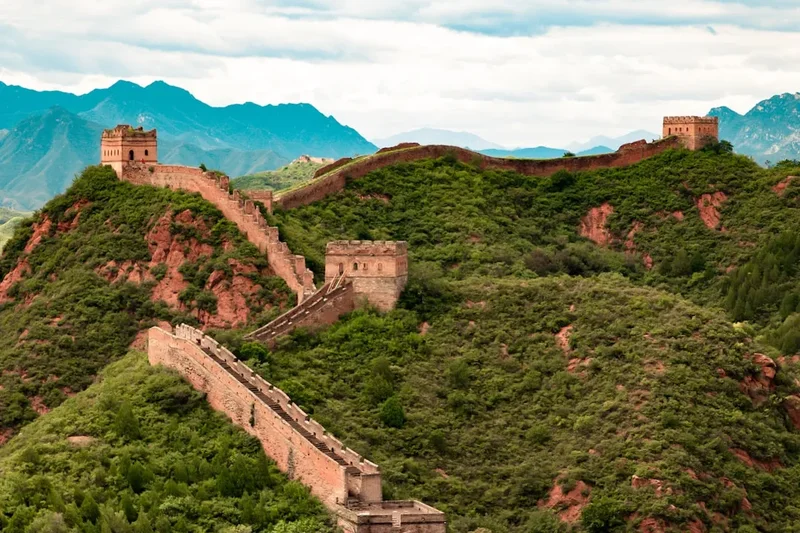
The Great Wall at Jinshanling - The Photographer’s Paradise
The Jinshanling section of the Great Wall of China is widely considered the most beautiful and architecturally diverse stretch of the Ming Dynasty defensive line. Located approximately 130 kilometres northeast of central Beijing, in the mountainous ridges of Luanping County, Hebei Province, Jinshanling offers a profound contrast to the heavily restored and often overcrowded sections like Badaling or Mutianyu. This 10.0 km hike is not merely a walk; it is a journey through a "living museum" of ancient military engineering, where the wall snakes across the undulating "Gold Mountain" (Jinshan) ridges like the spine of a slumbering dragon. Spanning a distance that balances physical challenge with breathtaking rewards, the trail takes hikers through a landscape where the original Ming masonry remains largely intact, showcasing the intricate craftsmanship of a bygone era. With 67 watchtowers, unique barrier walls, and diverse architectural styles, Jinshanling provides an immersive experience that captures the raw, evocative power of the Great Wall in its most authentic form.
- Distance: 10.0 km (point-to-point or partial loop)
- Duration: 4–5 hours
- Elevation Gain: 500 m
- Difficulty: Moderate (steep gradients and uneven steps)
- Best Time: April–May (spring blossoms) and September–October (autumn foliage)
- Closest City: Beijing (approx. 2.5 hours drive)
- Key Feature: The highest density of watchtowers and unique "barrier walls"
Overview
Jinshanling is often described by historians and hikers alike as the "essence of the Great Wall." While other sections have been polished for mass tourism, Jinshanling retains a rugged, "half-restored" charm that allows the visitor to appreciate both the grandeur of the original construction and the poetic decay of time. The name "Jinshanling" translates to "Gold Mountain Ridge," a fitting moniker for a trail that glows with a golden hue during the sunrise and sunset hours, making it a global pilgrimage site for landscape photographers. The hike typically traverses the ridge between the Zhuanduokou Pass and the East Five-Eye Tower, though various entry and exit points allow for customisation based on fitness levels.
What sets Jinshanling apart is its architectural complexity. Unlike the more uniform sections closer to Beijing, the watchtowers here are remarkably varied. Some are square, others rectangular; some feature two storeys, while others have three. The roofs vary from flat to vaulted, and the interiors often contain intricate brick carvings. Perhaps the most distinctive feature of Jinshanling is the "barrier walls"—small, perpendicular walls built atop the main rampart to provide secondary cover for defenders if the main wall was breached. This level of tactical detail is rarely seen elsewhere and speaks to the strategic importance of this mountain pass in protecting the capital.
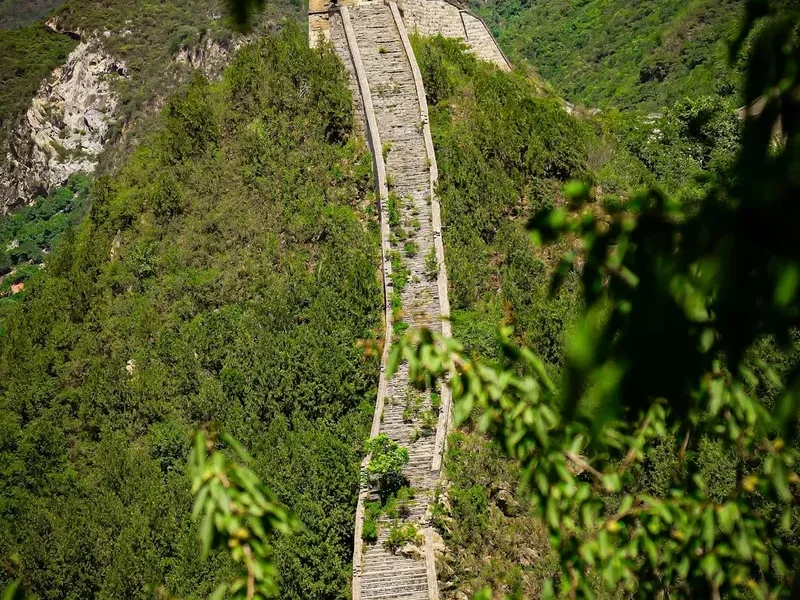
The terrain is undulating and demanding. Hikers will encounter "stairways to heaven"—steep, narrow flights of stone steps that require a steady pace and a head for heights. However, the effort is rewarded at every turn. From the higher vantage points, the wall can be seen stretching into the hazy distance, following the impossible contours of the Yanshan Mountains. In the spring, the surrounding valleys are filled with the pale pink of apricot blossoms, while autumn transforms the landscape into a tapestry of fiery reds and deep ochres. For those seeking a deep connection with Chinese history away from the megaphone-wielding tour groups, Jinshanling offers a sanctuary of silence, wind, and stone.
History and Cultural Context
The story of Jinshanling begins in the early Ming Dynasty (1368), but the structure seen today is largely the result of massive fortification efforts in the late 16th century. Under the supervision of the legendary General Qi Jiguang—a national hero famous for his campaigns against wokou pirates—the Jinshanling section was extensively rebuilt and strengthened starting in 1567. Qi Jiguang was a visionary military strategist who realised that the existing earthen walls were insufficient against the highly mobile Mongol cavalry. He introduced the concept of hollow watchtowers, which served as both defensive bastions and living quarters for soldiers, allowing for a permanent garrison along the ridge.
The construction of the wall at Jinshanling was a monumental feat of logistics and human endurance. Millions of bricks, each weighing approximately 12 to 15 kilograms, had to be transported up near-vertical slopes. Legend has it that goats were used to carry bricks, or that a "human chain" of thousands of workers stretched from the valley floor to the peaks. The bricks themselves are a marvel of ancient chemistry; they were fired in local kilns and bonded using a mortar made of slaked lime and sticky rice flour. This "sticky rice mortar" is incredibly durable and is one of the reasons the wall has survived centuries of earthquakes and harsh northern winters.
Culturally, the Great Wall represents more than just a military barrier; it is a symbol of the enduring strength and unified spirit of the Chinese civilisation. At Jinshanling, you can find "character bricks"—stones stamped with the date they were made and the name of the workshop or the military unit responsible for them. This was an early form of quality control; if a section of the wall failed, the authorities knew exactly who to hold accountable. Walking these ramparts is a lesson in the Ming Dynasty's obsession with security, order, and architectural excellence. The site was rightfully inscribed as a UNESCO World Heritage site in 1987, recognised for its authenticity and its role as a masterpiece of human creative genius.
Want more background? Read extended notes on history and cultural context → Learn more
Seasonal Highlights and Weather Reality
The experience of Jinshanling changes dramatically with the seasons, and choosing the right window is essential for both comfort and photography. The region experiences a continental monsoon climate, characterised by hot, humid summers and cold, dry winters.
Spring (April to May): This is arguably the most beautiful time to visit. The weather is mild, with temperatures ranging from 10°C to 22°C. The highlight of spring is the blooming of the wild apricot and peach trees that blanket the mountainsides. The contrast between the grey stone of the wall and the soft pink blossoms is spectacular. However, spring can occasionally bring dust storms from the Gobi Desert, which can reduce visibility.
Summer (June to August): Summer is the peak of the rainy season. While the landscape is lush and green, the heat can be intense, often exceeding 30°C with high humidity. Thunderstorms are common in the afternoons, and the stone steps can become dangerously slippery when wet. If hiking in summer, an early start is mandatory to avoid the midday sun.
Autumn (September to October): For many, this is the "golden season." The air is crisp and clear, providing the best visibility for long-distance photography. In October, the smoke trees and maples turn vibrant shades of red and gold. Temperatures are perfect for hiking, usually between 12°C and 20°C. This is also the busiest time, particularly during the "Golden Week" national holiday in early October, which should be avoided if possible.
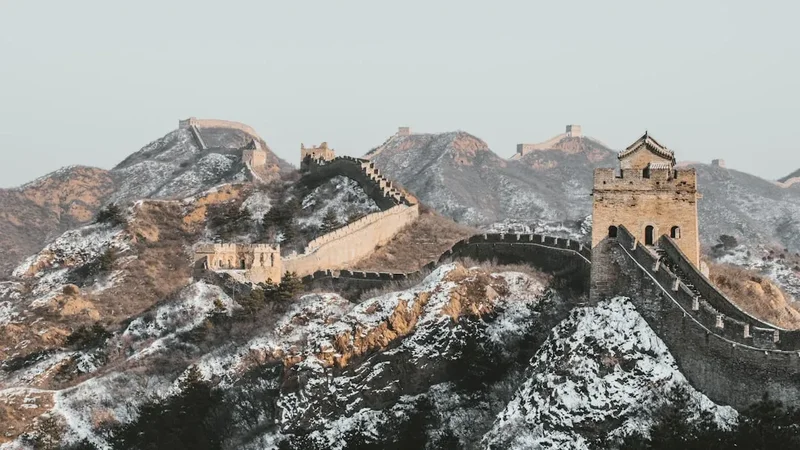
Winter (November to March): Winter is for the hardy. The mountains are brown and barren, but the wall takes on a stark, minimalist beauty. If you are lucky enough to visit after a snowfall, the sight of the white dragon winding through the mountains is unforgettable. However, temperatures frequently drop well below -10°C, and the wind chill on the exposed ridges can be brutal. Proper alpine clothing is essential.
Recommended Itinerary
Jinshanling Day Hike Itinerary
Early Morning: Departure and Arrival
- 07:00 – Depart Beijing. Whether taking a private car or the tourist bus from Dongzhimen, an early start is vital to beat the city traffic and arrive before the heat of the day.
- 09:30 – Arrive at the Jinshanling Main Gate. Purchase tickets and take the short shuttle bus (or 20-minute walk) to the start of the wall access paths.
- 09:45 – Begin the ascent. Most hikers choose to enter via the Zhuanduokou Pass. This involves a steady 15-minute climb on a paved path to reach the ramparts.
Morning: The Western Ridge and Central Section
- 10:00 – Reach Zhuanduokou Tower. This is your first breath-taking view of the wall snaking away to the east. Turn right (east) to begin the main hike.
- 10:30 – Arrive at the General Tower. This is one of the most famous towers, offering a commanding view of the surrounding terrain. It is a perfect spot for a short break and historical reflection.
- 11:00 – Traverse the "Barrier Walls." This section features the unique defensive walls built perpendicular to the main battlements. The path here is undulating, with several steep "staircase" sections.
- 11:30 – Reach Shalingkou. This is a major junction point. If you are feeling tired, you can exit here, but the best is yet to come. Continue east toward the "Big Jinshan Tower."
Midday: The High Points and Photography
- 12:00 – Big Jinshan Tower and Small Jinshan Tower. These are the highest points of the central section. The views here are the "classic" Jinshanling shots seen in travel magazines. The elevation gain here is noticeable, and the steps are uneven.
- 12:30 – Lunch break. Find a shaded spot inside a watchtower to enjoy your packed lunch. Remember to carry all rubbish back out with you.
- 13:15 – Continue toward the Black Tower and the Flower Tower. The wall becomes more "wild" and less restored as you move further east. The masonry is original, and the atmosphere is incredibly evocative.
Afternoon: The Final Stretch and Descent
- 14:00 – Arrive at the East Five-Eye Tower. This marks the traditional end of the Jinshanling managed section. The tower is named for the five arched windows on each side. From here, you can see the Simatai section in the distance.
- 14:30 – Begin the descent. A well-marked trail leads down from the East Five-Eye Tower toward the Kylin (Qilin) Parking Lot. The descent takes about 30–40 minutes through a forested valley.
- 15:15 – Reach the exit gate. Collect any souvenirs and board the shuttle back to the main entrance or meet your driver.
- 15:45 – Depart for Beijing, arriving back in the city by early evening.
Important Notes:
- The route is point-to-point; ensure your transport is coordinated for the correct exit.
- Cable car options are available near Shalingkou for those who wish to skip the initial or final climb.
- The "Wild" section beyond East Five-Eye Tower toward Simatai is technically closed for safety/restoration; do not attempt to cross the boundary.
- Water is sold by local vendors on the wall, but prices are high; bring at least 2 litres.
Planning and Bookings
Book Your Trip
Everything you need to plan your journey
Accommodation
Find places to stay near Beijing
Flights
Search flights to Beijing
Essential Preparation
Planning a trip to Jinshanling requires more logistical thought than a standard city tour. Because it is located 130 km from Beijing, transport is the primary concern. You have three main options: hiring a private driver (most flexible), taking the official tourist bus (seasonal and specific times), or using public transport (requires a transfer in Miyun). If using public transport, be prepared for a long day and ensure you have a translation app, as English is rarely spoken in the Miyun transit hubs.
Physical fitness is a key consideration. While the distance is only 10 km, the "Great Wall kilometres" feel much longer due to the thousands of steps and steep gradients. Hikers should be comfortable with sustained uphill walking and have stable knees for the descent. There are no medical facilities on the wall itself, so self-sufficiency is paramount. Ensure you have downloaded offline maps (such as Maps.me or AMap) as Google Maps is unreliable in China without a VPN and often lacks detail for trail paths.
Trail Accommodation
This is primarily a day hike requiring no overnight accommodation on the trail itself. Camping on the Great Wall is strictly prohibited by law to protect the heritage site and for visitor safety.
Nearby Options:
- Jinshanling Gate Hotels: There are several mid-range hotels and "nongjiale" (farmhouse stays) located right at the entrance to the scenic area. These are excellent for photographers who want to be on the wall for sunrise.
- Gubei Water Town: Located about 20 minutes drive away, this is a large, upscale resort complex designed to look like an ancient water village. It offers luxury hotels, hot springs, and restaurants, though it is significantly more expensive than local stays.
- Beijing: Most visitors stay in Beijing and visit Jinshanling as a long day trip.
Facilities at the Trailhead:
- The main entrance has clean toilets, a small visitor centre, and several restaurants serving local Hebei cuisine.
- There are no lockers for large luggage; it is best to leave heavy bags at your hotel in Beijing or in your private vehicle.
Required Gear
- Hiking boots or sturdy trainers: The stone steps are often polished smooth by centuries of use and can be very slippery. Ankle support is recommended for the uneven "wild" sections.
- Daypack: A 15–25L pack is sufficient for water, snacks, and extra layers.
- Sun protection: The wall is almost entirely exposed. A wide-brimmed hat, high-SPF sunscreen, and UV-rated sunglasses are non-negotiable, even in spring.
- Lightweight layers: Even in summer, the wind on the ridge can be cool. A lightweight windbreaker or a moisture-wicking long-sleeve shirt is useful.
- Trekking poles: Highly recommended for saving your knees on the steep descents. Ensure they have rubber tips to protect the ancient stones.
What to Bring
- Water: Bring at least 2–3 litres per person. While local "wall aunties" sell cold water and Gatorade from baskets on the wall, they charge a significant premium (often 15–20 RMB per bottle).
- High-energy snacks: Trail mix, energy bars, fruit, and chocolate. There are no food vendors once you are up on the ramparts.
- Packed lunch: A simple sandwich or wrap to enjoy in a watchtower.
- Personal First Aid: Plasters (band-aids) for blisters, antiseptic wipes, and any personal medications.
- Power bank: Cold weather or heavy GPS use can drain phone batteries quickly.
- Cash and Digital Payment: While WeChat Pay and Alipay are used everywhere, carry some cash (RMB) for small purchases from local vendors who may have poor signal.
- Passport: You must bring your original passport to purchase tickets and for potential security checks on the highway back to Beijing.
Permits
Access to the Jinshanling Great Wall is managed through a ticketing system. Unlike the Milford Track, there is no "lottery" or limit on daily hikers, but you must purchase an entrance ticket. During the peak season, it is advisable to arrive early to avoid queues at the ticket window.
Ticket Costs (Subject to change):
- Peak Season (April 1 – October 31): 65 RMB per adult.
- Off-Season (November 1 – March 31): 55 RMB per adult.
- Children: Children under 1.2 metres in height are usually free; those between 1.2m and 1.5m receive a 50% discount.
- Seniors: Visitors over 60 (with valid ID/Passport) often receive a discount or free entry, depending on current provincial regulations.
Additional Costs:
- Cable Car: 40 RMB one-way or 80 RMB round-trip. This is useful if you want to reach the ridge quickly to catch the morning light.
- Shuttle Bus: 10 RMB for the round trip from the main gate to the wall access points. It saves about 2 kilometres of walking on a paved road.
Opening Hours:
- Peak Season: 06:00 – 18:00
- Off-Season: 07:00 – 17:00
- Note: If you are staying at a hotel within the scenic area, you can often arrange for earlier access for sunrise photography, but this must be coordinated with your accommodation.
Other Activities in the Area
The region around Jinshanling and the northern Beijing border offers several other cultural and natural attractions:
- Simatai Great Wall: Located immediately to the east of Jinshanling. While the direct hike between the two is currently restricted, Simatai is famous for being the only section open for night tours, with the wall beautifully illuminated.
- Gubei Water Town: A massive recreation of a traditional southern Chinese water village. It features canals, traditional workshops (dyeing, kite making), and a variety of dining options. It is particularly beautiful at night.
- Miyun Reservoir: On the drive back to Beijing, you will pass this enormous reservoir, which is the primary water source for the capital. The surrounding mountains offer several smaller, less-visited hiking trails.
- Wine Tasting: The Chateau Changyu AFIP Global in Miyun offers tours and tastings, showcasing China's growing domestic wine industry in a European-style estate.
- Local Markets: In the nearby town of Luanping, you can visit local markets to see the produce of Hebei province, including the famous chestnuts and hawthorn berries of the region.
Safety and Conditions
Physical Hazards: The primary danger at Jinshanling is the condition of the steps. In the "wild" or unrestored sections, the bricks can be loose, and the gravel (known as "scree" in mountain terms) can act like ball bearings under your boots. Always maintain three points of contact on very steep sections. The "Great Wall Knee" is a real phenomenon—the repetitive high-stepping can cause strain; take frequent breaks.
Weather Extremes: Lightning is a significant risk. The Great Wall is the highest point on the ridge and acts as a lightning rod. If you see a storm approaching or hear thunder, descend from the wall immediately. Do not seek shelter inside the watchtowers, as they are not grounded. In summer, heatstroke is a genuine threat; drink more water than you think you need and use electrolyte powders.
Wildlife: While rare, scorpions and snakes (including the short-tailed mamushi) exist in the brush surrounding the wall. Stay on the stone path and avoid reaching into crevices in the masonry. In the summer, mosquitoes and biting flies can be annoying in the valley sections; bring repellent.
Communication: Mobile signal is surprisingly good along most of the Jinshanling ridge, but there are "dead zones" in the deep valleys. Ensure your phone is fully charged. In an emergency, the international emergency number 112 works on most Chinese networks, or dial 110 for police and 120 for medical emergencies. However, English-speaking operators are not guaranteed.
Travel Insurance: Ensure your policy covers "hiking" and "recreational activities." Some policies exclude "mountaineering," so check the definitions carefully. A medical evacuation from this remote area to a high-quality international hospital in Beijing can be extremely expensive.
Side Trips and Points of Interest
The Flower Tower (Wangjinglou): One of the most ornate towers in the Jinshanling section. It features delicate brick carvings around the windows and doors, depicting floral patterns and traditional Chinese motifs. It serves as a reminder that the wall was not just a grim military structure but also a place where soldiers lived and expressed their culture.
The Big Jinshan Tower: This two-storey tower offers a 360-degree view that is arguably the best on the entire Ming Great Wall. From the upper deck, you can see the wall stretching toward the horizon in both directions. It is the quintessential spot for panoramic photography.
The Window of the World: A specific arched window in one of the central towers that perfectly frames a distant, winding section of the wall. It has become a "must-shot" for Instagrammers and professional photographers alike.
The Kylin (Qilin) Carving: Near the East Five-Eye Tower, look for a rare stone carving of a Qilin—a mythical hooved chimerical creature in Chinese mythology. It was believed to bring protection and good fortune to the guards stationed here.
The Secret Door: There are several "scout doors" or hidden exits along the base of the wall. These were used by Ming scouts to slip out for reconnaissance missions. Finding these small, inconspicuous openings adds a layer of "spy-thriller" intrigue to the hike.
Leave No Trace
The Great Wall is a fragile archaeological site. While it looks indestructible, the pressure of millions of footsteps and the removal of "souvenir" bricks cause irreparable damage. As a visitor, you are a custodian of this history.
Your responsibility as a hiker:
- Never remove stones or bricks: Taking even a small fragment is a criminal offence and robs future generations of the wall's integrity.
- No Graffiti: Carving names into the bricks is an act of vandalism that cannot be easily repaired. Respect the ancient masonry.
- Pack out all trash: There are bins at the main towers, but they are often overflowing. The best practice is to carry your rubbish back to the trailhead. This includes organic waste like orange peels or apple cores, which do not decompose quickly in this dry climate.
- Stay on the wall: Avoid creating "social trails" in the vegetation alongside the wall, which leads to erosion and damages the local flora.
- Respect the "Wall Aunties": The local vendors are often from the nearby villages. While they can be persistent, they are part of the local economy. A polite "Bu yao, xie xie" (I don't want it, thanks) is usually enough.
- Use designated toilets: Use the facilities at the entrance or the composting toilets located near the main passes (Zhuanduokou and Shalingkou).
The Great Wall has stood for centuries; let your visit be invisible so that it may stand for centuries more.