
The Great Trossachs Path
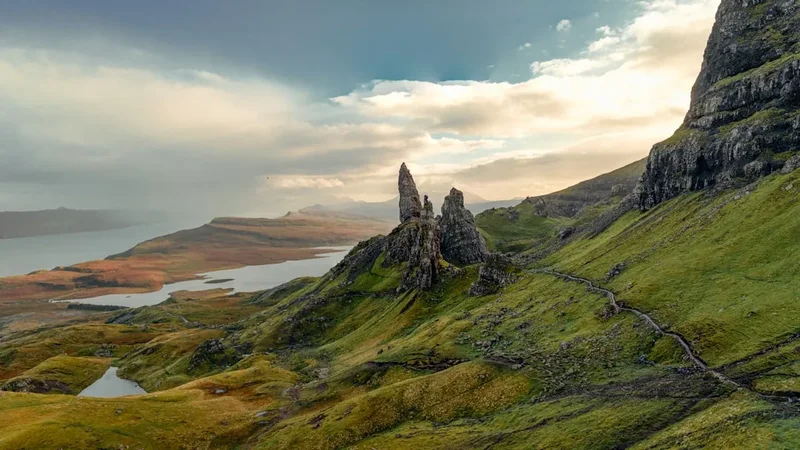
The Great Trossachs Path is a captivating multi-day walk traversing the heart of Scotland's Loch Lomond and The Trossachs National Park. This 48-kilometre route offers a quintessential Scottish Highland experience, winding through ancient Caledonian pine forests, alongside shimmering lochs, and over rolling hills that provide breathtaking vistas. It's a journey that balances accessible wilderness with a rich tapestry of history, from ancient drovers' routes to the romantic landscapes that inspired Sir Walter Scott. The path is designed for walkers seeking a moderate challenge, with opportunities for stunning photography, wildlife spotting, and a deep immersion into the natural beauty of the Scottish glens.
- Distance: 48.0 km one-way
- Duration: 3-4 days
- Season: May to September (avoiding peak midge season)
- Difficulty: Moderate
- Closest City: Glasgow
- Trailhead Access: Nearest airport: Glasgow (GLA). From Glasgow, take a train/bus to Callander (trailhead). Driving: A81 to Callander. Parking in Callander is available. Limited parking at Inversnaid. No permits required for the Great Trossachs Path. Trailhead GPS: 56.2400, -4.2100
- Highest point: Approximately 350 m
- Direction: Generally west to east, but can be walked in either direction
Overview
The Great Trossachs Path is a journey through a landscape sculpted by glaciers and time, a place where the wild beauty of the Scottish Highlands meets accessible walking trails. The route is a delightful blend of lochside paths, forest tracks, and open moorland, offering a diverse walking experience over its 48 kilometres. It's a path that invites contemplation, with its serene lochs reflecting the dramatic skies and its ancient woodlands whispering tales of the past.
The path begins in the charming town of Callander, a gateway to the Trossachs, and heads westwards, gradually immersing the walker in increasingly wilder terrain. Early sections often follow established routes, sometimes shared with cyclists, before venturing onto more remote and rugged tracks. Key highlights include the stunning views across Loch Venachar and Loch Achray, the atmospheric forests of the Trossachs, and the dramatic setting of Loch Lomond, where the path eventually leads to the remote hamlet of Inversnaid.
This walk is particularly appealing for those who appreciate a moderate challenge without the extreme demands of high mountain traverses. The elevation gain is manageable, spread across the days, making it suitable for walkers with a reasonable level of fitness. The path's proximity to Glasgow makes it an ideal escape for a long weekend, offering a profound connection with nature just a short journey from the city.
Wildlife is a common sight, with red squirrels, deer, and a variety of birdlife, including ospreys and golden eagles, often spotted by observant walkers. The changing seasons bring their own unique beauty, from the vibrant greens of spring and summer to the rich hues of autumn. However, walkers should be aware of the potential for midges, particularly during warmer, damp conditions in early to mid-summer, and plan accordingly.
History and Cultural Context
The landscape traversed by the Great Trossachs Path is steeped in history, having been a vital thoroughfare for centuries. Long before it was a designated walking route, these glens and lochs were part of ancient drovers' roads, used to move cattle from the Highlands to markets in the Lowlands. The path often follows sections of these historic routes, allowing walkers to tread in the footsteps of generations past.
The Trossachs region, in particular, gained immense popularity in the 19th century, largely due to the romantic poetry and novels of Sir Walter Scott. His works, such as "The Lady of the Lake," vividly depicted the dramatic scenery of Loch Katrine and its surroundings, drawing visitors and inspiring a romantic idealisation of the Scottish Highlands. This literary fame led to the development of tourism infrastructure, including steamboats on the lochs, and cemented the area's reputation as a place of wild, untamed beauty.
The path also passes through areas with a rich industrial past, including remnants of old forestry operations and the engineering marvels that brought water from the Trossachs to Glasgow. The presence of ancient Caledonian pine forests speaks to the enduring natural heritage of the region, a testament to its resilience and ecological significance.
The establishment of Loch Lomond and The Trossachs National Park in 2002 further protected this landscape, ensuring its preservation for future generations while promoting responsible access and enjoyment. The Great Trossachs Path is a modern manifestation of this long history, offering a way to experience the natural and cultural heritage of this iconic Scottish region.
Seasonal Highlights and Weather Reality
The Great Trossachs Path can be walked year-round, but the most popular and generally most pleasant time is from May to September. During these months, the days are longer, and the vegetation is at its most vibrant.
Spring (April-May): The landscape awakens with fresh greenery. Wildflowers begin to bloom, and birdlife becomes more active. Days are lengthening, offering more daylight for walking. However, early spring can still bring cold snaps and occasional snow at higher elevations, and the infamous Scottish midges may start to appear towards the end of May.
Summer (June-August): This is the peak season for walking. The weather is generally at its warmest, and the Trossachs are at their most lush. However, this is also the period when midges are most prevalent, particularly in damp, still conditions, and can be a significant nuisance. It's essential to come prepared with effective midge repellent and head nets. Long daylight hours are a major advantage.
Autumn (September-October): The Trossachs transform into a spectacle of colour as the leaves change. The air is often crisp and clear, offering excellent visibility and fewer midges. This is a beautiful time to walk, though daylight hours begin to shorten, and the weather can become more unpredictable, with increased chances of rain and wind.
Winter (November-March): While possible for experienced winter walkers, this season presents significant challenges. Days are short, temperatures are low, and snow and ice can make sections of the path treacherous. Navigation skills and appropriate winter gear are essential. Many facilities, such as some accommodation options, may be closed during this period.
Weather: It is crucial to remember that Scottish weather is notoriously changeable. Even in summer, walkers should be prepared for rain, wind, and cooler temperatures. Layering clothing is essential, and waterproofs are a non-negotiable item regardless of the forecast.
Recommended Itinerary
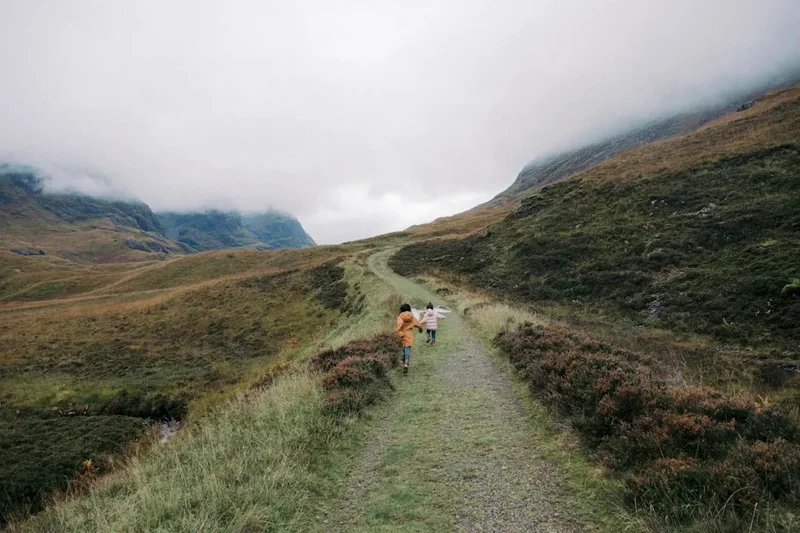
3-Day Great Trossachs Path Itinerary
Day 1: Callander to Loch Achray/Brig o' Turk area
- Distance: Approximately 15 km
- Elevation gain: Approximately 300 m
- Time: 4–5 hours
- Start in Callander, following signs for the Great Trossachs Path
- Walk through woodland and open countryside
- Pass Loch Venachar with scenic views
- Continue towards Loch Achray and the village of Brig o' Turk
- Accommodation options are available in or near Brig o' Turk
- This day offers a gentle introduction to the path, with beautiful lochside scenery
Day 2: Loch Achray/Brig o' Turk to Balmaha (Loch Lomond)
- Distance: Approximately 20 km
- Elevation gain: Approximately 600 m
- Time: 6–7 hours
- A more challenging day with significant elevation gain
- The path climbs through the heart of the Trossachs, offering panoramic views
- Pass through the iconic Trossachs landscape, potentially with views of Loch Katrine
- Descend towards the eastern shores of Loch Lomond
- Arrive in Balmaha, a popular village on Loch Lomond's eastern bank
- Accommodation and amenities are available in Balmaha
- This day is often considered the most scenic, with dramatic views of the lochs and surrounding hills
Day 3: Balmaha to Inversnaid (Loch Lomond)
- Distance: Approximately 13 km
- Elevation gain: Approximately 300 m (with significant ups and downs)
- Time: 4–5 hours
- A day of rugged beauty along the eastern shore of Loch Lomond
- The path is often narrow and rocky, requiring careful footing
- Pass through remote woodland and open sections with stunning loch views
- Arrive at Inversnaid, a small settlement on Loch Lomond
- Limited accommodation and facilities are available at Inversnaid
- From Inversnaid, onward travel is typically via boat service across Loch Lomond to Tarbet or Luss, connecting to public transport
Alternative 4-Day Itinerary:
For a more relaxed pace, consider splitting Day 2 into two shorter days, perhaps with an overnight stop near the northern end of Loch Katrine, allowing more time for exploration and photography.
Important Notes:
- Accommodation must be booked in advance, especially during peak season.
- Public transport options (buses and ferries) should be researched and booked where necessary.
- Carry sufficient food and water, as services can be sparse between settlements.
- Be prepared for varied weather conditions.
Planning and Bookings
Book Your Trip
Everything you need to plan your journey
Accommodation
Find places to stay near Glasgow
Flights
Search flights to Glasgow
Essential Preparation
The Great Trossachs Path is a moderate multi-day walk, but thorough preparation is key to a successful and enjoyable experience. Given its location within a National Park, access to services can be limited, especially on the latter stages of the route. It is advisable to base yourself in or near Callander before starting your walk, as it offers the most comprehensive range of amenities, including accommodation, gear shops, and transport links.
Fitness: While not technically demanding, the path involves sustained walking over three to four days, with some significant ascents and descents. A good level of cardiovascular fitness is recommended. Regular walking, ideally with a loaded backpack, in the weeks leading up to your trip will significantly enhance your comfort and enjoyment.
Logistics: Plan your transport to Callander and your onward travel from Inversnaid. This may involve coordinating train, bus, and ferry services. Consider the timing of ferry departures from Inversnaid, as they are not always frequent and can be weather-dependent. Parking is available in Callander, but arrangements for leaving your vehicle for several days should be made in advance.
Base Town: Callander is the primary gateway town for the Great Trossachs Path. It offers a range of accommodation from budget hostels to comfortable hotels, as well as supermarkets for stocking up on supplies, outdoor gear shops, and several pubs and restaurants. It's the ideal place to finalise your preparations and enjoy a meal before setting off.
Trail Accommodation
Accommodation along the Great Trossachs Path is primarily in established villages and hamlets, with limited options in more remote sections. Booking well in advance is highly recommended, especially during the peak season (May to September).
Callander: Offers a wide range of accommodation, including hotels, guesthouses, B&Bs, and hostels. This is the ideal place to stay before starting your walk.
Brig o' Turk/Loch Achray area: This area typically has a few guesthouses, small hotels, or self-catering cottages. It serves as a good stopping point after the first day's walk from Callander.
Balmaha: A popular village on the eastern shore of Loch Lomond, Balmaha offers several accommodation options, including a hotel, B&Bs, and a campsite. It is a key stopping point on Day 2.
Inversnaid: The endpoint of the typical 3-day route, Inversnaid has very limited accommodation, often consisting of a hotel or lodge. Services here are minimal, and onward travel is usually by boat.
Campsites: Designated campsites are available in some locations, such as Balmaha. Wild camping is permitted in Scotland under the Scottish Outdoor Access Code, but it is essential to follow the principles of responsible camping, including leaving no trace and camping away from roads and buildings.
Booking Requirements: All commercial accommodation should be booked in advance. For wild camping, familiarise yourself with the Scottish Outdoor Access Code.
Facilities Provided: Varies by accommodation type. Hotels and guesthouses will offer standard amenities. Campsites typically provide basic facilities like toilets and water points.
What's NOT Provided: Unless specified by your accommodation, you will need to provide your own food, cooking equipment, and toiletries. Huts or shelters are not a feature of this path in the same way as some other long-distance trails.
Seasonal Availability: Most accommodation options operate from spring through autumn. Some may have reduced hours or be closed during the winter months.
Costs: Costs vary significantly depending on the type of accommodation and the season. Expect to pay from £50-£150+ per night for hotel/guesthouse rooms, and £15-£30 for campsite pitches.
Required Gear
- Waterproof and windproof jacket and trousers: Essential for Scotland's unpredictable weather. Look for breathable materials like Gore-Tex.
- Sturdy walking boots: Waterproof, with good ankle support and a well-worn sole.
- Backpack: A 40-55 litre pack is generally sufficient for a 3-4 day trip. Ensure it has a comfortable hip belt and adjustable straps. A rain cover is highly recommended.
- Sleeping bag: A 3-season bag is advisable, even in summer, as temperatures can drop significantly at night.
- Sleeping mat: For comfort and insulation if camping or staying in basic accommodation.
- Head torch: With spare batteries. Essential for early starts, late finishes, or if staying in basic accommodation.
- Navigation tools: A detailed map of the area (e.g., OS Landranger or Explorer series), a compass, and a GPS device or smartphone with offline mapping capabilities. Know how to use them.
- First-aid kit: Including blister plasters, pain relievers, antiseptic wipes, bandages, and any personal medications.
- Midge repellent: High-DEET content repellent is crucial during midge season (May-September).
- Midge head net: A lifesaver during peak midge activity.
What to Bring
- Food: Lightweight, high-energy food for lunches and snacks for each day. Consider pre-packaged meals or ingredients for simple cooking if staying in self-catering accommodation or camping.
- Water bottles or hydration reservoir: Capacity for at least 2 litres per person.
- Water purification method: A filter or purification tablets are recommended, as water sources may not always be treated.
- Clothing layers:
- Base layers (merino wool or synthetic)
- Mid-layers (fleece or insulated jacket)
- Warm hat and gloves
- Walking socks (wool or synthetic)
- Toiletries: Biodegradable soap, toothbrush, toothpaste, small towel, toilet paper, hand sanitiser.
- Sun protection: Sunscreen, sunglasses, and a sun hat, even on cloudy days.
- Trekking poles: Highly recommended for reducing strain on knees, especially on descents.
- Camera: To capture the stunning scenery.
- Mobile phone: For emergencies, though signal can be intermittent. Consider a power bank.
- Cash: For small purchases or where card facilities are unavailable.
Permits
No specific permits are required to walk the Great Trossachs Path itself. As it traverses public land and passes through Loch Lomond and The Trossachs National Park, access is generally open under the Scottish Outdoor Access Code.
However, it is crucial to be aware of specific regulations and guidelines:
- Camping: While wild camping is permitted in many areas under the Scottish Outdoor Access Code, there are restrictions in place, particularly around Loch Lomond. In the popular 'Loch Lomond Camping Management Zone' (which includes areas near Balmaha and the eastern shore of Loch Lomond), camping is only permitted in designated campsites or by obtaining a permit for specific zones during certain times of the year. Always check the Loch Lomond and The Trossachs National Park Authority website for the most up-to-date information on camping regulations.
- Fires: Open fires are generally discouraged, especially in dry conditions, due to the risk of wildfire. If a fire is absolutely necessary, it must be done responsibly, well away from vegetation and structures, and fully extinguished. Check for any fire bans in place.
- Private Land: While the path is largely on public access land, you may cross private property. Always respect the rights of landowners and keep to the path.
Booking Accommodation: As mentioned in the planning section, booking accommodation in villages like Callander, Brig o' Turk, Balmaha, and Inversnaid is essential, especially during peak season. This is not a permit requirement but a practical necessity.
Transport: If using public transport, such as ferries on Loch Lomond, you will need to purchase tickets. These are not permits but are required for travel.
Other Activities in the Area
The Loch Lomond and The Trossachs National Park offers a wealth of activities beyond walking the Great Trossachs Path:
- Loch Lomond Boat Trips: Numerous boat services operate on Loch Lomond, offering scenic cruises from various points like Tarbet, Luss, and Balloch. These provide a different perspective of the loch and its islands.
- Kayaking and Canoeing: The calm waters of Loch Lomond and Loch Venachar are ideal for kayaking and canoeing. Rentals are available in several locations.
- Cycling: The National Park has an extensive network of cycle routes, including dedicated paths and forest tracks.
- Wildlife Watching: The area is rich in biodiversity. Keep an eye out for red deer, red squirrels, otters, and a variety of birdlife, including ospreys and golden eagles.
- Visiting Villages: Explore charming villages like Luss on Loch Lomond, with its picturesque cottages and historic church, or Aberfoyle, another gateway to the Trossachs.
- Climbing and Hillwalking: For those seeking more challenging ascents, Ben Lomond (974 m) is a popular Munro accessible from the western side of Loch Lomond.
- Visitor Centres: The National Park has several visitor centres that offer information on local history, geology, and wildlife, as well as guided walks and events.
Safety and Conditions
Weather: Scottish weather is notoriously unpredictable. Be prepared for rain, wind, and temperature fluctuations, even in summer. Always check the mountain forecast (e.g., from MWIS or Met Office) before setting out and be ready to adapt your plans.
Navigation: While the Great Trossachs Path is generally well-marked, there can be sections where the path is less distinct, especially in remote areas or in poor visibility. Carry a map and compass and know how to use them. A GPS device or smartphone with offline maps is a valuable backup.
Midges: From late May to September, midges can be a significant nuisance, particularly in damp, still conditions at dawn and dusk. Use a high-DEET repellent and wear a midge head net. Staying on exposed, windy ridges can offer some respite.
Terrain: The path includes a variety of terrain, from forest tracks and lochside paths to rough, rocky, and boggy sections. Sturdy, waterproof walking boots are essential. Trekking poles can help with balance and reduce strain on joints.
Water: While there are many water sources, it is advisable to treat all water from streams and lochs before drinking, using a filter or purification tablets.
Communication: Mobile phone signal can be intermittent, especially in more remote areas. Inform someone of your itinerary and expected return time. Consider carrying a personal locator beacon (PLB) for emergencies.
Emergency Services: In case of emergency, dial 999 or 112 and ask for the relevant service (Police, Ambulance, Mountain Rescue). Be prepared to give your precise location.
Respect the Environment: Follow the Scottish Outdoor Access Code. Leave no trace, take all litter with you, and be mindful of wildlife and livestock.
Side Trips and Points of Interest
Loch Katrine: While the main path may skirt its edges, a detour to explore Loch Katrine is highly recommended. This iconic loch, immortalised by Sir Walter Scott, offers stunning scenery and is accessible by the historic steamship 'Sir Walter Scott'. You can walk along its shores or take a boat trip for a different perspective.
Ben A'an: A relatively short but steep climb, Ben A'an (454 m) offers one of the most rewarding panoramic views in the Trossachs. From its summit, you can see Loch Katrine, Loch Achray, and the surrounding glens spread out below. It's a popular detour for those with extra time and energy.
The Trossachs National Nature Reserve: This area is renowned for its ancient Caledonian pine forests, which are home to a rich diversity of flora and fauna, including red squirrels and a variety of woodland birds. Walking through these forests is a truly atmospheric experience.
Loch Lomond Islands: From Balmaha, you can take boat trips to explore some of the islands on Loch Lomond, such as Inchcailloch, which is a nature reserve and offers excellent walking opportunities and views back to the mainland.
Rob Roy's Cave: Legend has it that the famous outlaw Rob Roy MacGregor used a cave near Inversnaid as a hideout. While its exact location can be debated, the area around Inversnaid is steeped in his history.
The 'Witch's Stone' (Clach na h-Inghine): Located near the eastern end of Loch Venachar, this standing stone is associated with local folklore and legends, adding a touch of mystique to the landscape.
Leave No Trace
The Great Trossachs Path winds through a protected National Park, a landscape of immense natural beauty and ecological importance. Adhering to Leave No Trace principles is vital to preserving this environment for future visitors and for the health of the ecosystem.
Plan Ahead and Prepare: Research your route, understand the terrain, and be aware of potential hazards. Know the regulations regarding camping and fires, especially around Loch Lomond.
Travel and Camp on Durable Surfaces: Stick to the marked paths to avoid damaging fragile vegetation. If wild camping, choose established spots or durable surfaces like rock or dry grass, away from water sources.
Dispose of Waste Properly: Pack out everything you pack in, including all food scraps, wrappers, and toilet paper. Use designated toilet facilities where available. If wild camping, dig a cathole at least 60 metres away from water, trails, and campsites, and bury human waste.
Leave What You Find: Do not disturb or remove plants, rocks, or historical artefacts. Take only photographs and memories.
Minimise Campfire Impacts: Use a stove for cooking. If a campfire is permitted and necessary, keep it small, use existing fire rings, and ensure it is completely extinguished before leaving.
Respect Wildlife: Observe wildlife from a distance. Never feed animals, as it can harm their health and alter their natural behaviour. Store food securely to prevent attracting animals.
Be Considerate of Other Visitors: Keep noise levels down, yield to other walkers and cyclists, and respect the peaceful nature of the environment.