
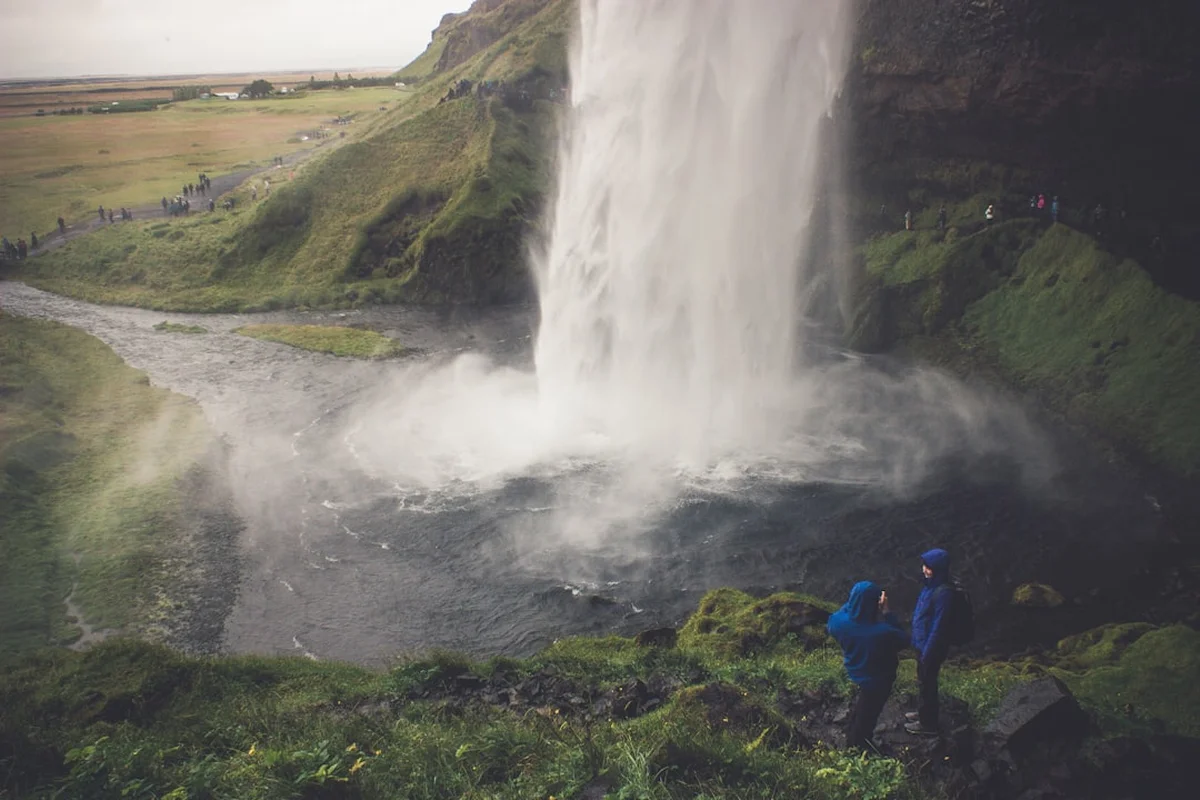
Glymur Waterfall Hike - Iceland's Vertical Wonder
The Glymur Waterfall hike is one of Iceland's most rewarding day excursions, offering a dramatic blend of deep canyons, river crossings, and the sheer majesty of what was long considered the country's highest waterfall. Located in the profound silence of Hvalfjörður (the Whale Fjord), just a short drive from the capital city of Reykjavik, this 7.0-kilometre loop trail ascends 400 metres through a landscape that feels ancient and untouched. Unlike the easily accessible waterfalls along the Ring Road, Glymur requires effort, balance, and a spirit of adventure to witness. The trail leads hikers through a natural cave, across a rushing glacial river via a narrow log bridge, and along the precipitous edges of the Glymsgil canyon, where the Botnsá river plunges 198 metres into a moss-covered abyss. This is not merely a walk to a viewpoint; it is a multi-sensory journey through the geological heart of West Iceland, where the roar of falling water competes with the cries of northern fulmars nesting in the cliff faces.
- Distance: 7.0 km loop
- Duration: 3–4 hours
- Difficulty: Moderate (includes steep sections and a river crossing)
- Elevation Gain: 400 m
- Highest Point: 420 m
- Best Time: June to September (when the river log is in place)
- Location: Hvalfjörður, West Iceland (approx. 1.5 hours from Reykjavik)
Overview
For decades, Glymur held the undisputed title of Iceland’s tallest waterfall. While the discovery of Morsárfoss in the Vatnajökull glacier region in 2007 technically relegated Glymur to second place, it remains the most spectacular and accessible of Iceland’s "giant" falls. The waterfall is fed by the river Botnsá, which flows out of the crystal-clear Hvalvatn lake, situated high on the plateau above. The water drops 198 metres down a narrow, twisting canyon that is so deep and sheer that parts of the waterfall are often obscured from view until you reach the highest vantage points. The surrounding canyon, Glymsgil, is a masterpiece of volcanic erosion, draped in vibrant green mosses and inhabited by thousands of seabirds that find sanctuary in the vertical basalt walls.
The hike itself is a classic Icelandic loop that provides two distinct perspectives of the canyon. Most hikers choose to ascend via the southern side of the canyon, which offers the most direct and dramatic views of the falls, and descend via the northern side. This route involves a famous river crossing at the base of the canyon. During the summer months, a sturdy log with a handrail is placed across the Botnsá river to facilitate the crossing. Without this log, the hike becomes significantly more technical and dangerous. The ascent is steep in places, requiring the use of fixed cables to navigate slippery volcanic rock and loose scree, but the reward is a series of viewpoints that offer a humbling sense of scale. From the top, the view extends back down the length of Hvalfjörður, a fjord that remains largely bypassed by the modern tunnel, preserving its quiet, majestic character.
What sets Glymur apart from other Icelandic landmarks is the lack of commercialisation. There are no visitor centres, gift shops, or paved pathways here. The trail is marked by simple wooden stakes and yellow paint on rocks, maintaining a raw connection to the wilderness. It is a hike that demands respect for the elements—Icelandic weather can shift from brilliant sunshine to horizontal rain in minutes—but for those prepared for the challenge, it offers one of the most profound natural experiences in the North Atlantic.
History and Cultural Context
The area surrounding Glymur and Hvalfjörður is steeped in both geological history and local folklore. Hvalfjörður, or "Whale Fjord," takes its name from the large number of whales that were historically found in its deep waters. During World War II, the fjord served as a critical strategic naval base for the British and American militaries. Because of its depth and the protection offered by the surrounding mountains, it was used as a staging ground for Atlantic convoys. Remnants of this military history, including old piers and foundations, can still be seen along the coastline of the fjord today.
However, the most enduring story associated with Glymur is the legend of Rauðhöfði (Redhead). According to Icelandic folklore, a man broke a promise to a woman of the hidden people (Huldufólk). In revenge, she cursed him, transforming him into a monstrous, red-headed whale that terrorised the waters of Hvalfjörður, sinking ships and drowning locals. An old, blind priest, whose two sons had been killed by the whale, eventually lured the beast into the fjord using his spiritual powers. He guided the whale up the Botnsá river, which was a feat of immense difficulty. As the whale struggled up the narrow canyon and leaped over the waterfall, the earth shook so violently that the sound—the "glymur" (clash or resonance)—gave the waterfall its name. The whale eventually reached Lake Hvalvatn, where it died of exhaustion. To this day, locals claim that whale bones have been found near the lake, and the legend serves as a reminder of the powerful, often vengeful, forces of nature in Icelandic culture.
Geologically, the canyon was carved over millennia by the Botnsá river, which cut through layers of basaltic lava flows. The sheer walls of the canyon provide a vertical timeline of Iceland's volcanic activity, with distinct layers of rock representing different eruptive periods. The presence of the waterfall is a result of the post-glacial rebound and the specific topography of the Hvalvatn plateau, which forces the river to make a dramatic descent to reach the sea level of the fjord.
Want more background? Read extended notes on history and cultural context → Learn more
Seasonal Highlights and Weather Reality
The Glymur hike is strictly a seasonal experience for the majority of hikers. The most critical factor is the presence of the log bridge over the Botnsá river. This log is typically installed by the local hiking club or authorities in late May or early June and removed in late September or early October to prevent it from being swept away by winter floods and ice. Without the log, the river crossing is extremely dangerous, involving wading through fast-moving, freezing glacial water over slippery boulders.
Summer (June to August): This is the peak season for Glymur. The days are long, often with 24 hours of daylight in June, allowing for late-evening hikes in the "midnight sun." The moss in the canyon is at its most vibrant green, and the birdlife is highly active. However, this is also the time when the trail is most crowded. While never as busy as the Golden Circle, the parking lot can fill up by midday. Temperatures typically range from 8°C to 15°C, but the wind chill in the canyon can make it feel much colder.
Shoulder Season (May and September): These months offer a quieter experience, but weather becomes more unpredictable. In May, there may still be snow patches on the upper plateau, and the log bridge might not yet be in place. In September, the autumn colours begin to turn the surrounding heathland into shades of gold and burnt orange. The log is usually removed by the end of September, so hikers visiting later must be prepared to either wade the river or treat the hike as an out-and-back trail on one side of the canyon.
Winter (October to April): Hiking Glymur in winter is an advanced undertaking and is generally not recommended for recreational hikers. The trail becomes treacherous with ice, especially on the steep sections and cliff edges. The river crossing is impossible without the bridge, and the daylight hours are extremely limited. Strong winds in Hvalfjörður can reach hurricane force, making the exposed ridges of the hike life-threatening. If attempting the area in winter, hikers should stay on the lower paths and avoid the canyon edges entirely.
Recommended Itinerary
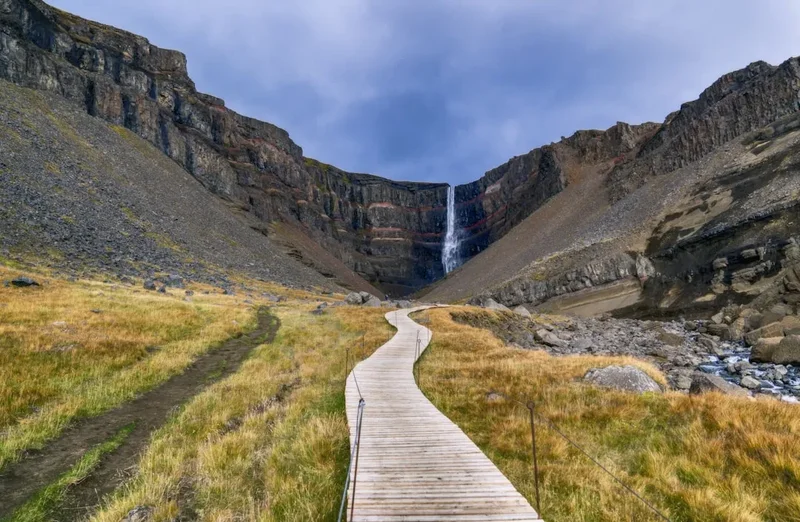
The Glymur Loop Route
Phase 1: The Trailhead to the Cave (Þvottahellir)
- Distance: 1.2 km
- Time: 20–30 minutes
- Start at the designated parking area at the end of the gravel road off Route 47.
- Follow the well-marked path through the gate, heading east toward the mountains.
- The trail is relatively flat initially, passing through low-lying shrubs and lupine fields (in early summer).
- Reach Þvottahellir, a small but charming natural cave. The trail actually passes through the cave, requiring a short descent and ascent through its rocky interior.
- This section serves as a gentle warm-up before the more technical terrain begins.
Phase 2: The River Crossing and Initial Ascent
- Distance: 0.8 km
- Time: 30–45 minutes
- After exiting the cave, the trail descends toward the Botnsá river.
- Cross the river via the seasonal log bridge. A steel cable serves as a handrail. Take your time; the log can be slippery when wet.
- Once across, the real climbing begins. The trail ascends the southern side of the canyon.
- This section is steep and involves navigating rocky outcrops. Fixed steel cables are provided in the most difficult sections to assist with balance and safety.
- Stop at the first lower viewpoints to catch your breath and see the bottom of the falls.
Phase 3: The Canyon Rim and Main Viewpoints
- Distance: 1.5 km
- Time: 45–60 minutes
- Continue climbing along the edge of the Glymsgil canyon. The path becomes narrower and more exposed.
- Multiple "balcony" viewpoints offer increasingly spectacular views of Glymur as it plunges into the depths.
- Look for the northern fulmars nesting in the cliffs opposite you.
- The trail eventually reaches the highest point of the hike, where the waterfall is visible in its entirety, from the lip of the plateau to the canyon floor.
- This is the primary photography spot and a perfect place for a break.
Phase 4: The Upper River Crossing and Descent
- Distance: 3.5 km
- Time: 1–1.5 hours
- From the top of the falls, continue walking upstream along the river Botnsá.
- The terrain flattens out into a rocky plateau. To complete the loop, you must cross the river again, this time above the waterfall.
- There is no bridge here. You must find a shallow spot to wade across. The water is usually mid-calf deep but very cold. Trekking poles are highly recommended for stability.
- Once on the northern side, follow the trail markers back down toward the fjord.
- The descent on the northern side is less steep and offers wide-angle views of Hvalfjörður and the surrounding mountains like Hvalfell.
- The trail eventually rejoins the main path near the cave, leading back to the parking lot.
Important Notes:
- The loop is best done in a counter-clockwise direction (ascending the south side).
- If you do not wish to wade the river at the top, you must return via the same path on the south side.
- The upper river crossing should only be attempted in good weather and when river levels are normal.
- Allow extra time for photography; the scale of the canyon is difficult to capture quickly.
Planning and Bookings
Book Your Trip
Everything you need to plan your journey
Accommodation
Find places to stay near Reykjavik
Flights
Search flights to Reykjavik
Essential Preparation
Preparation for Glymur begins with transport. While many of Iceland's attractions are accessible by public bus or tour groups, Glymur is best reached via a rental car. From Reykjavik, you have two choices: the fast route through the Hvalfjarðargöng tunnel (Route 1), or the scenic route around the fjord (Route 47). To reach the trailhead, you must take Route 47. If coming from the south, turn onto Route 47 before the tunnel entrance. The drive takes approximately 60 to 90 minutes depending on weather and road conditions. The final stretch to the parking lot is a gravel road; while a 4x4 is not strictly required in summer, high clearance is beneficial.
Physical fitness is a consideration. While the hike is only 7 kilometres, the 400-metre elevation gain is concentrated in steep, rocky sections. Hikers should be comfortable with heights (vertigo can be an issue on the canyon rim) and have the balance required for river crossings and cable-assisted climbing. There are no facilities at the trailhead—no toilets, no water taps, and no rubbish bins. Ensure you use facilities in Reykjavik or at the petrol stations along Route 1 before turning into the fjord.
Trail Accommodation
This is a day hike requiring no overnight accommodation on the trail itself. Camping is strictly prohibited in the immediate vicinity of the trailhead and the canyon to protect the fragile moss and ecosystem. However, there are several options for staying nearby if you wish to explore Hvalfjörður more deeply.
Nearby Options:
- Bjarteyjarsandur Farm: A working sheep farm located further along Route 47 that offers a campsite and small cottages. It is an excellent base for those wanting to start the hike early.
- Hotel Glymur: A higher-end hotel located on the opposite side of the fjord, offering spectacular views and hot tubs to soak in after the hike.
- Akranes: The nearby town of Akranes (approx. 40 minutes away) has various guesthouses, a campsite, and full services including supermarkets and a pharmacy.
- Reykjavik: Most visitors complete Glymur as a day trip from the capital, which offers the full spectrum of accommodation from hostels to luxury hotels.
Required Gear
- Hiking Boots: Essential. You need sturdy boots with excellent grip (Vibram soles or similar) for the steep, muddy, and rocky sections. Do not attempt this in trainers or fashion boots.
- Waterproof Jacket and Trousers: Icelandic weather is notoriously fickle. Even if it looks sunny, a waterproof shell is mandatory to protect against sudden rain and the mist from the waterfall.
- Layered Clothing: Use the "onion principle." A moisture-wicking base layer (merino wool is best), an insulating mid-layer (fleece or down), and a windproof outer shell. Avoid cotton, which stays cold and heavy when wet.
- Trekking Poles: Highly recommended, especially for the upper river crossing and the steep descent. They provide vital stability on loose scree.
- Gloves: Even in summer, the wind can be biting. Lightweight, windproof gloves are useful when holding onto the cold steel cables.
What to Bring
- Water: Bring at least 1.5 litres per person. While the river water is generally clean, it is always safer to carry your own or use a filter.
- Food and Snacks: High-energy snacks (nuts, chocolate, dried fruit) and a packed lunch. There are no food vendors anywhere near the trail.
- Small Towel: If you plan to complete the loop and wade the upper river, a small travel towel is essential for drying your feet before putting your boots back on.
- Sun Protection: Sunscreen and sunglasses. The Icelandic sun can be surprisingly intense, especially when reflected off the water and rock.
- First Aid Kit: Basic supplies including blister plasters (moleskin), antiseptic wipes, and any personal medications.
- Navigation: A downloaded offline map (like AllTrails or Google Maps) is helpful, though the trail is generally well-marked with yellow stakes.
Permits
Currently, no permits are required to hike to Glymur Waterfall. Access to the trail and the surrounding land is free for the public, reflecting Iceland's traditional "right to roam" (Almannaréttur), provided that visitors respect the land and follow established paths. There is no entrance fee for the parking area, though this is subject to change as Iceland continues to develop its tourism infrastructure.
Key Considerations:
- Parking: The parking lot is located on private land. While free, it is essential to park within the designated areas and not block the access road or farm gates.
- Group Sizes: Large organised groups (more than 10-12 people) should check with local authorities or the Bjarteyjarsandur farm if they plan to use the area for commercial purposes.
- Drone Usage: Drone regulations in Iceland are strict. While not explicitly banned at Glymur at the time of writing, you must not fly drones near nesting birds (especially during the spring and summer) or in a way that disturbs other hikers. Always check for updated "No Fly Zone" signs at the trailhead.
- Environmental Respect: The lack of a permit system places the burden of responsibility on the hiker. Staying on the marked trail is the most important "permit" you can carry—off-trail hiking destroys the ancient moss that takes decades to grow back.
Other Activities in the Area
Hvalfjörður is often overlooked by tourists rushing to the North or West, but it contains several hidden gems worth exploring before or after your hike:
- Hvammsvík Hot Springs: Located about 20 minutes from the Glymur trailhead, these natural hot springs sit right on the edge of the Atlantic Ocean. They offer a luxurious way to recover from the hike, with eight natural pools of varying temperatures.
- Bjarteyjarsandur Farm: A fantastic place to experience Icelandic farm life. They offer farm tours, a small café with local products, and a chance to meet Icelandic sheep and horses.
- Akranes Lighthouses: Drive to the tip of the Akranes peninsula to see two picturesque lighthouses. The larger one is often open to the public and offers great views across the bay to Reykjavik.
- Guðlaug Baths: Located on Langisandur beach in Akranes, these are architecturally stunning geothermal pools overlooking the ocean.
- War and Peace Museum: Located at Hlaðir in Hvalfjörður, this museum details the fascinating WWII history of the fjord and its role in the Atlantic convoys.
- Scenic Drive Route 47: Simply driving the full length of the fjord instead of taking the tunnel is an activity in itself, with numerous pull-offs for photography of the mountains and sea.
Safety and Conditions
Pre-Departure Checks:
- Check the weather forecast at vedur.is. Pay close attention to wind speeds; anything over 15 m/s makes the canyon edges dangerous.
- Check safetravel.is for any active alerts or trail closures in West Iceland.
- Ensure someone knows your plans and expected return time. Mobile signal is generally good but can be spotty at the bottom of the canyon.
Specific Hazards:
The Log Bridge: The crossing is narrow. If you have a poor sense of balance, use the cable and move slowly. If the log is wet, it can be extremely slippery. Only one person should be on the log at a time to prevent excess vibration.
Cliff Edges: The trail along the canyon rim is not fenced. The drop-offs are sheer and nearly 200 metres deep. Stay well back from the edge, especially in gusty winds. The volcanic soil can be unstable, particularly after heavy rain.
The Upper River Crossing: If you choose to do the loop, you must wade the river above the falls. Never attempt this if the water is above knee height or if the current feels too strong. Loosen your backpack straps before crossing so you can jettison the pack if you fall. Use trekking poles for three points of contact at all times.
Slippery Rocks and Mud: The ascent involves scrambling over basalt rocks that become like ice when wet. Use the provided steel cables. On the descent, be wary of "loose ball bearings"—small volcanic pebbles on hard surfaces that can cause slips.
Hypothermia: Even in summer, if you get wet and the wind picks up, hypothermia is a real risk. Always carry your waterproof layers and a warm hat.
Side Trips and Points of Interest
Þvottahellir (The Washing Cave): This cave near the start of the hike was historically used by locals for shelter and, as the name suggests, potentially for washing or drying items during long journeys. It provides a unique "tunnel" experience as the trail passes directly through it.
Hvalfell Mountain: For very fit hikers, the trail can be extended to summit Hvalfell (852 m), the prominent flat-topped mountain to the east of the waterfall. This requires significant extra time and navigation skills but offers a bird's-eye view of both Glymur and the massive Hvalvatn lake.
Hvalvatn Lake: If you continue past the upper river crossing for a few kilometres, you will reach the shores of Hvalvatn. It is one of Iceland's deepest lakes (160 m) and sits in a stark, beautiful volcanic bowl. The silence here is profound, as few hikers venture past the waterfall.
Botnssúlur Peaks: The "Peaks of the Bottom" are a cluster of rhyolite mountains visible to the south. They are part of a much longer hiking route (the Leggjabrjótur trail) that connects Hvalfjörður to Þingvellir National Park. While not a side trip for a single day, they provide a stunning backdrop to the Glymur hike.
Leave No Trace
Iceland's nature is rugged but incredibly fragile. The sub-arctic ecosystem grows slowly, and the damage caused by a single footstep off the trail can take decades to heal. As Glymur grows in popularity, the impact on the trail is becoming visible.
Your responsibility as a hiker:
- Stay on the marked trail: This is the single most important rule. Do not take shortcuts on switchbacks, as this causes erosion and "social trails" that scar the landscape.
- Protect the moss: Icelandic moss (thick, spongy Racomitrium) is a living organism. Stepping on it crushes the delicate structure and can lead to the death of the patch, which then leads to soil erosion.
- Pack it out: There are no bins. Every piece of litter, including organic waste like orange peels or banana skins (which do not decompose quickly in this climate), must be carried back to the city.
- Respect the wildlife: During nesting season (May-July), keep noise to a minimum near the cliffs. Do not attempt to feed or approach any birds.
- Human waste: There are no toilets. Use facilities before you arrive. If you are caught short, ensure you are at least 50 metres from any water source and bury waste deeply, packing out all toilet paper in a sealed bag.
 Iceland