
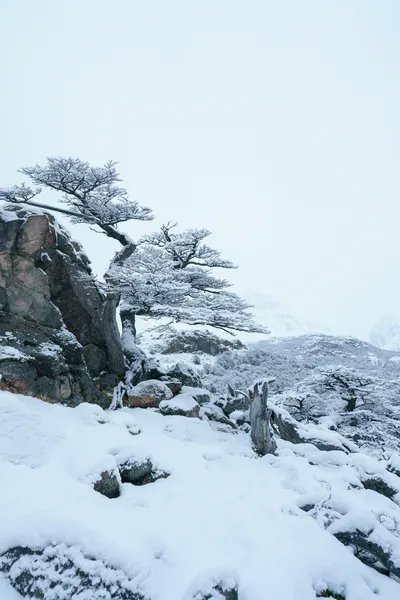
Fitz Roy Trek - The Granite Heart of Patagonia
The Fitz Roy Trek, often referred to as the "Mount Fitz Roy Loop" or the "Chaltén Traverse," is South America’s premier alpine hiking experience. Located within the northern sector of Los Glaciares National Park in Argentina’s Santa Cruz Province, this 55-kilometre journey circumnavigates the most iconic granite spires on Earth. Unlike many remote wilderness treks, this route begins and ends in the charming mountain village of El Chaltén, the self-proclaimed "Hiking Capital of Argentina." The trek weaves through ancient southern beech forests, crosses glacial meltwater streams of impossible clarity, and climbs to high-altitude viewpoints where the sheer vertical walls of Monte Fitz Roy (3,405 metres) and Cerro Torre (3,128 metres) dominate the skyline. This is a landscape of extremes, where the South Patagonian Ice Field breathes cold air across the Andes, creating a microclimate famous for its ferocious winds and rapidly shifting weather. For hikers, it offers a rare combination of accessible trailheads and world-class rugged beauty, making it a mandatory pilgrimage for those seeking the raw essence of Patagonia.
- Distance: 55.0 km (loop/traverse)
- Duration: 4 days / 3 nights
- Season: October–April (Best conditions in November and March)
- Accommodation: Free wilderness campsites (Poincenot, De Agostini)
- Highest point: Laguna de los Tres (1,170 m)
- Difficulty: Challenging (due to weather and steep final ascents)
- Direction: Usually walked in a counter-clockwise loop starting from El Chaltén
Overview
The Fitz Roy Trek is a masterclass in geological drama. While the total elevation gain of 1,100 metres might seem modest over four days, the statistics belies the physical reality of the terrain. The route is defined by "Patagonian flats"—long stretches of undulating forest trails—interrupted by brutally steep, rocky climbs that ascend directly up glacial moraines. The most famous of these is the final kilometre to Laguna de los Tres, which gains 400 metres of elevation in a single, lung-bursting push over loose scree and granite boulders. However, the reward is arguably the most famous view in the Southern Hemisphere: the three-pronged granite massif of Fitz Roy rising vertically above a turquoise glacial lake.
The trek is unique because it transitions through several distinct ecological zones. You begin in the arid Patagonian steppe, where the wind-whipped grasses transition into dense forests of Lenga (Nothofagus pumilio) and Ñire (Nothofagus antarctica). These trees, stunted and twisted by the relentless prevailing westerlies, create a "goblin forest" atmosphere, draped in "old man’s beard" lichen. As you climb higher, the forest thins, giving way to high alpine tundra and eventually the raw, exposed rock and ice of the glacial basins. The presence of the South Patagonian Ice Field—the world's third-largest continental ice mass—is felt everywhere, from the icebergs floating in Laguna Torre to the permanent glaciers clinging to the mountain flanks.
What sets the Fitz Roy Trek apart from its Chilean counterpart, the "W" Trek in Torres del Paine, is its sense of freedom. There are no mandatory booking systems for campsites, no high fees for entry (currently), and the trails are managed with a philosophy of minimal intervention. This allows for a more spontaneous experience, though it requires hikers to be more self-sufficient. The proximity to El Chaltén means you can tailor the trek to your fitness level, but to truly experience the magic of the "Golden Hour"—when the granite peaks turn a fiery orange at sunrise—spending nights in the wilderness camps is essential. This is a journey into the heart of a landscape that has inspired explorers, climbers, and dreamers for centuries.
History and Cultural Context
The human history of the Fitz Roy region is as layered as the sedimentary rock found in its valleys. For thousands of years, the area was the ancestral home of the Aonikenk people, also known as the Tehuelche. They were nomadic hunter-gatherers who followed the seasonal migrations of guanacos across the steppe. To the Aonikenk, the massive peak we now call Fitz Roy was known as "Chaltén," which translates to "smoking mountain." This name was not a reference to volcanic activity—the mountain is granite, not volcanic—but rather to the near-constant cap of clouds that clings to its summit, resembling a plume of smoke. The mountain held deep spiritual significance, appearing in Tehuelche mythology as a sacred pillar of the world.
European contact began in the 19th century. In 1877, the Argentine explorer Francisco "Perito" Moreno reached the shores of Lake Viedma. He renamed the peak "Mount Fitz Roy" in honour of Robert FitzRoy, the captain of the HMS Beagle who had surveyed the Patagonian coast decades earlier (and who famously travelled with Charles Darwin). Moreno chose to honour FitzRoy despite the captain never having seen the mountain, a decision that remains a point of historical debate today, as the local community has reclaimed the name "El Chaltén" for the town and the mountain's traditional identity.
The 20th century saw the region become a global focal point for extreme mountaineering. The sheer granite walls were considered "impossible" until the post-WWII era. In 1952, French climbers Lionel Terray and Guido Magnone completed the first ascent of Fitz Roy, a feat that remains one of the most respected achievements in climbing history. Later, in 1970, the controversial "Compressor Route" on Cerro Torre by Cesare Maestri sparked a decades-long debate about climbing ethics and the use of permanent bolts. Today, El Chaltén is a vibrant hub where the ghosts of legendary climbers mingle with modern trekkers. The town itself was only founded in 1985, making it one of Argentina's youngest settlements, established primarily to secure the border during a territorial dispute with Chile. Since then, it has evolved from a remote military outpost into a world-class trekking destination, all while maintaining a fierce commitment to environmental preservation and its rugged, frontier spirit.
Want more background? Read extended notes on history and cultural context → Learn more
Seasonal Highlights and Weather Reality
Patagonia does not have weather; it has "conditions." The region is located in the "Furious Fifties" latitudes, where nothing stands between the Andes and the moisture-laden winds of the Pacific Ocean. Consequently, weather can cycle through all four seasons in a single hour. Understanding the seasonal nuances is critical for a successful trek.
Summer (December to February): This is the peak trekking season. Days are long, with daylight lasting until 10:00 PM, providing ample time for long distances. Temperatures are mild, ranging from 10°C to 20°C during the day, though they can drop to near freezing at night. However, this is also the windiest season. Gusts exceeding 100 km/h are common, capable of flattening tents and making high-altitude passes dangerous. This is when the trails are busiest, and campsites like Poincenot can feel crowded.
Autumn (March to April): Many experienced hikers consider this the "Golden Season." The wind begins to die down, and the Lenga forests turn a spectacular palette of deep reds, oranges, and golds. The air is crisp and clear, often providing the best visibility for the peaks. While nights are colder and there is a higher chance of early snow, the lack of crowds and the stunning colours make it a photographer’s dream. By late April, many services in El Chaltén begin to close for the winter.
Spring (October to November): The landscape wakes up in a burst of green, and wildflowers like the red Notro (firebush) begin to bloom. The weather is highly unpredictable, with frequent rain and lingering snow on the higher trails. However, the mountains are at their most dramatic, heavily laden with winter ice and snow. This is a great time for those seeking solitude before the summer rush.
Winter (May to September): The Fitz Roy Trek becomes a serious winter expedition. Most trails are buried in snow, and daylight is scarce. Temperatures frequently drop to -15°C. Only experienced winter hikers with snowshoes or crampons and high-quality four-season gear should attempt the route. Many trail markers are obscured, and the town of El Chaltén enters a deep hibernation with very few shops or hostels remaining open.
Recommended Itinerary
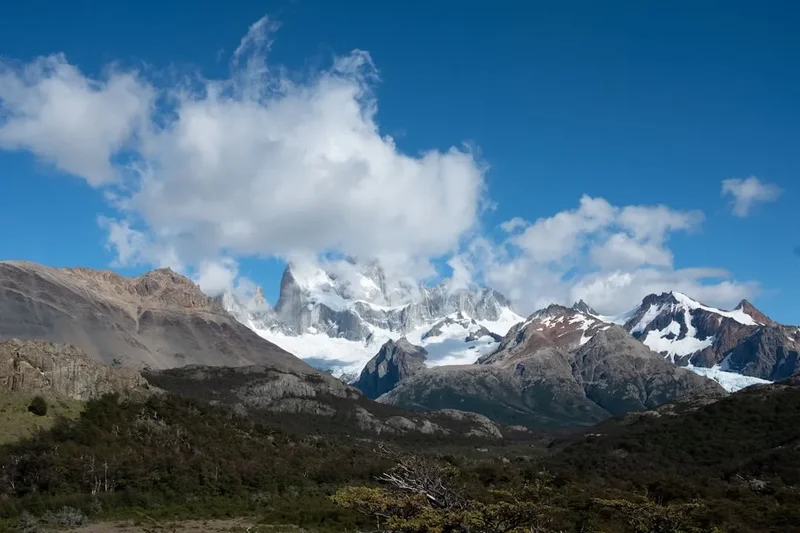
4-Day Fitz Roy Loop Itinerary
Day 1: El Chaltén to Campamento Poincenot
- Distance: 10 km
- Elevation gain: 350 m
- Time: 3–4 hours
- Start at the northern end of El Chaltén at the Fitz Roy trailhead.
- Steady climb through open scrubland with immediate views of the Las Vueltas River valley.
- Enter the Nothofagus forest and reach the Mirador del Fitz Roy (4 km mark) for your first panoramic view of the massif.
- Continue on relatively flat terrain past Laguna Capri, a beautiful lake reflecting the peaks.
- Arrive at Campamento Poincenot, situated in a sheltered forest clearing near the Blanco River.
- Set up camp and enjoy the evening light on the granite walls of Fitz Roy, which loom directly above the campsite.
Day 2: Laguna de los Tres and Piedras Blancas Glacier
- Distance: 10 km (return from camp)
- Elevation gain: 450 m
- Time: 5–6 hours
- Pre-dawn start is essential to catch the sunrise at the lake.
- Cross the wooden bridge over the Blanco River and begin the steep 1 km ascent.
- The trail is a series of rocky switchbacks; trekking poles are highly recommended here.
- Reach Laguna de los Tres (1,170 m) for the iconic view of Fitz Roy and the blue glacial water.
- Walk to the left of the lake to see the hidden Laguna Sucia, which sits 200 metres below.
- Descend back to Poincenot for lunch.
- Afternoon side trip: Follow the trail north for 2 km to the Mirador Piedras Blancas to see a spectacular hanging glacier.
- Return to Campamento Poincenot for a second night.
Day 3: Campamento Poincenot to Campamento De Agostini (via Lagunas Madre y Hija)
- Distance: 12 km
- Elevation gain: 150 m (mostly flat/undulating)
- Time: 4–5 hours
- Head south from Poincenot, following the connecting trail toward the Cerro Torre valley.
- Pass between Laguna Madre and Laguna Hija, two large lakes nestled in the forest.
- This section is often muddy but offers a peaceful break from the steep climbs of the previous day.
- The trail eventually joins the main Cerro Torre path. Turn right (west) toward the mountains.
- Arrive at Campamento De Agostini (also known as Bridwell), located in the forest just behind the terminal moraine of Laguna Torre.
- Walk 5 minutes to the lake shore to see Cerro Torre and the icebergs floating in the water.
Day 4: Laguna Torre to El Chaltén
- Distance: 11 km (plus 4 km optional side trip)
- Elevation gain: 100 m
- Time: 4–5 hours
- Optional morning trip: Hike 2 km along the northern ridge of the lake to Mirador Maestri for a closer look at the Glaciar Torre.
- Begin the gentle descent back toward El Chaltén along the Fitz Roy River.
- Pass through the "De Agostini" viewpoint for a final look at the spire of Cerro Torre.
- The trail winds through beautiful meadows and forest sections.
- Pass the Cascada Margarita, a small but picturesque waterfall.
- Finish the trek at the southern end of El Chaltén, conveniently located near several craft breweries for a celebratory meal.
Important Notes:
- Campsites are free and operate on a first-come, first-served basis.
- Water is abundant and generally safe to drink from fast-flowing streams, though treatment is advised near campsites.
- Wind is the primary factor; always check the forecast at the APN (National Park) office before heading out.
- There are no huts or food services on the trail; you must carry all supplies from El Chaltén.
- The final climb to Laguna de los Tres is often icy in October and April; micro-spikes may be useful.
Planning and Bookings
Book Your Trip
Everything you need to plan your journey
Accommodation
Find places to stay near El Chalten
Essential Preparation
The Fitz Roy Trek is unique among world-class multi-day hikes because it requires very little advance booking, but significant logistical preparation. Your primary base will be El Chaltén. You should plan to arrive in town at least one day before your trek to check weather forecasts, rent any missing gear, and register with the National Park office. Physical fitness is important; while much of the trail is moderate, the steep climbs to viewpoints require good cardiovascular health and stable knees for the descents.
Logistically, you will likely fly into El Calafate (FTE). From there, regular buses run the 215-kilometre route to El Chaltén (approximately 3 hours). It is wise to book your bus tickets a few days in advance during the peak months of January and February. El Chaltén has several supermarkets, but selection can be limited and prices are higher than in larger cities. If you have specific dietary requirements or high-end dehydrated meals, buy them in Buenos Aires or El Calafate before arriving.
Trail Accommodation
Accommodation on the Fitz Roy Trek consists of designated wilderness campsites managed by Los Glaciares National Park (APN). Unlike the Chilean parks, these are currently free of charge and do not require reservations.
Campsite Facilities:
- Campamento Poincenot: The largest and most popular camp. It offers flat, forested sites for tents and basic pit toilets. There is no running water other than the nearby Blanco River.
- Campamento De Agostini: Located near Laguna Torre. Similar to Poincenot, it features pit toilets and forested sites. It is slightly more sheltered from the wind than the lake shore.
- Campamento Capri: Located near Laguna Capri. Often used by those who want a shorter first day or a more relaxed atmosphere.
What is NOT Provided:
- There are no huts, bunk beds, or indoor shelters on this route.
- No cooking facilities or fuel are provided; you must bring your own stove.
- No rubbish bins; you must carry out every scrap of waste.
- No showers or treated water.
- No electricity or mobile phone signal.
Note on El Chaltén: For the nights before and after your trek, El Chaltén offers a wide range of accommodation from luxury hotels to budget hostels. During peak season (January), these book out months in advance.
Required Gear
- Tent: A high-quality 3-season or 4-season tent is mandatory. It must be able to withstand high winds (60-100 km/h). Cheap festival tents will fail in Patagonia.
- Sleeping Bag: Rated for at least -5°C comfort. Even in summer, temperatures at Poincenot can drop below freezing.
- Sleeping Mat: Essential for insulation from the cold ground.
- Footwear: Sturdy, waterproof hiking boots with good ankle support. The trail to Laguna de los Tres is very rocky.
- Clothing Layers: The "three-layer system" is vital. A moisture-wicking base layer (merino is best), an insulating mid-layer (fleece or down), and a high-quality waterproof/windproof hardshell jacket.
- Trekking Poles: Highly recommended for the steep ascents and to save your knees on the rocky descents.
- Backpack: 50–65L capacity with a waterproof cover.
- Headlamp: Essential for the sunrise hike to Laguna de los Tres.
What to Bring
- Food: High-calorie, lightweight meals for 4 days. Think pasta, rice, nuts, dried fruit, and chocolate. There are no resupply points on the trail.
- Stove and Fuel: Screw-top butane/propane canisters are widely available in El Chaltén. White gas (bencina blanca) is harder to find but available in some gear shops.
- Water Treatment: While many locals drink straight from the streams, a lightweight filter (like a Sawyer Squeeze) or purification tablets are recommended to avoid "Gastro" issues.
- Sun Protection: The ozone layer is thin here. Bring SPF 50+ sunscreen, lip balm with SPF, and high-quality sunglasses.
- First Aid: Blister kits (Compeed), ibuprofen, antiseptic wipes, and any personal medications.
- Dry Bags: To keep your sleeping bag and spare clothes dry inside your pack during the inevitable Patagonian rain.
- Toiletries: Biodegradable soap, toilet paper, and a small trowel (though pit toilets are available at main camps).
Permits
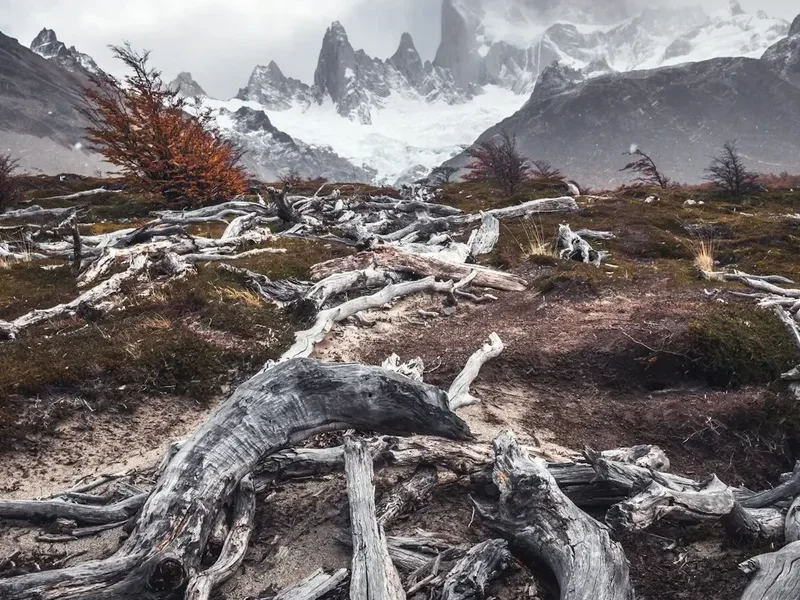
As of the current season, there is no fee to enter the northern sector of Los Glaciares National Park for trekking, and no specific "permit" is required to hike the Fitz Roy Trek. This makes it one of the most accessible world-class treks in existence. However, there are several administrative and regulatory steps you must follow to ensure the park remains protected and you remain safe.
Registration and Regulations:
- Mandatory Briefing: Upon arriving in El Chaltén by bus, all passengers are dropped off at the National Park Visitor Centre (Centro de Informes). Here, rangers provide a mandatory 10-minute briefing on park rules, fire safety, and current trail conditions.
- Voluntary Registration: For longer or more remote treks (like the Huemul Circuit), registration is mandatory. For the standard Fitz Roy Trek, it is highly recommended that you leave your itinerary with your hostel or the park office.
- Camping Rules: You are only permitted to camp in the designated campsites (Poincenot, De Agostini, Capri). Wild camping outside these areas is strictly prohibited and carries heavy fines.
- Fire Ban: Lighting fires is strictly prohibited throughout the National Park. You must use a camping stove for all cooking. This rule is enforced with zero tolerance due to the high risk of forest fires in the dry Lenga forests.
- Group Size: There are currently no limits on group sizes for the standard trek, but large groups are encouraged to split up to minimise impact on the trails and campsites.
Future Changes: There have been ongoing discussions by the Argentine government regarding the implementation of an entry fee for the El Chaltén sector, similar to the fee charged at the Perito Moreno Glacier. Always check the official APN website or the visitor centre upon arrival for the most up-to-date information regarding fees or new permit requirements.
Other Activities in the Area
El Chaltén is a paradise for outdoor enthusiasts, and many visitors stay for a week or more to explore the surrounding wilderness:
- Perito Moreno Glacier: While located 200 km south near El Calafate, this is a must-see. It is one of the few advancing glaciers in the world. You can take boat tours or even go ice-trekking on the glacier itself.
- Viedma Glacier Navigation: Take a boat trip from the port near El Chaltén to see the massive face of the Viedma Glacier, the largest in Argentina.
- Rock Climbing: El Chaltén is a world-renowned climbing destination. While the big walls are for experts, there are many "crags" near town offering sport and trad climbing for various levels. Local guides offer introductory courses.
- Lago del Desierto: A stunning lake 37 km north of town. You can take a boat across the lake, hike to the Huemul Glacier, or even cross the border into Chile via a remote trekking route.
- Fly Fishing: The Rio de las Vueltas and surrounding lakes offer world-class trout fishing. Local outfitters provide gear and guided trips.
- Craft Beer Tasting: El Chaltén has a thriving craft beer scene. After a long trek, visiting places like La Cervecería or Bajo el Búho is a local tradition.
Safety and Conditions
The Patagonian Wind: The single greatest safety hazard in the Fitz Roy region is the wind. It is not uncommon for gusts to reach 120 km/h. These winds can cause "whiteout" conditions by blowing dust or snow, and they can make walking on exposed ridges dangerous. If the wind is too strong, stay in the forested areas and avoid high viewpoints like Laguna de los Tres.
Water Safety: While the glacial meltwater is generally pristine, the increase in trekking numbers has led to concerns about water-borne parasites near campsites. Always collect water upstream from camps and use a filter or purification tablets. Never wash dishes or yourself directly in the streams; carry water at least 20 metres away from the source.
Navigation: The main trails are well-marked with yellow and white stakes and wooden signs. However, in bad weather or snow, visibility can drop to a few metres. Always carry an offline map (such as Maps.me or Gaia GPS) and a physical map. If you lose the trail, do not wander; backtrack to the last known marker.
Hypothermia: Even in mid-summer, the combination of rain, wind, and cold temperatures can lead to hypothermia. Always carry your waterproof layers, even on a sunny day. Avoid cotton clothing, which loses all insulating properties when wet; stick to wool or synthetic materials.
Emergency Services: There is a small medical clinic in El Chaltén for minor injuries. For serious emergencies, the nearest major hospital is in El Calafate. Search and rescue (SAR) is coordinated by the National Park rangers and the Comisión de Auxilio (volunteer rescue team). Be aware that rescues can be delayed for days by bad weather. Carrying a Satellite Messenger (like a Garmin inReach) is highly recommended for solo hikers.
Side Trips and Points of Interest
Loma del Pliegue Tumbado: Often overlooked, this is arguably the best viewpoint in the park. It is a separate day hike (or an extension) that climbs to a 1,500-metre ridge. From the summit, you can see both the Fitz Roy massif and the Cerro Torre massif simultaneously, along with a vast expanse of Lake Viedma. It provides a unique "top-down" perspective on the glacial valleys.
Piedra del Fraile: Located on private land just outside the park boundary (a small fee is required), this area offers a different angle of the north face of Fitz Roy. It was the base camp for many early expeditions and offers a more rugged, less-travelled experience.
Chorrillo del Salto: An easy 3 km walk from town leads to this beautiful 20-metre waterfall. It’s a perfect "rest day" activity or a short walk if you arrive in town late in the afternoon.
Mirador Maestri: For those staying at Campamento De Agostini, this 2 km trail follows the ridge above Laguna Torre. It is named after the climber Cesare Maestri and offers a spectacular view of the Glaciar Torre and the "Ice Mushroom" that often forms on the summit of Cerro Torre.
Leave No Trace
Los Glaciares National Park is a fragile ecosystem under increasing pressure from global tourism. The "Leave No Trace" principles are not just suggestions; they are essential for the survival of this wilderness. The soil is thin, and the vegetation grows incredibly slowly due to the harsh climate. A single footstep off-trail can destroy plants that took years to grow.
Key Principles for Fitz Roy:
- Pack it in, Pack it out: This includes organic waste like orange peels and apple cores, which do not decompose quickly in this cold environment and can harm local wildlife.
- Human Waste: Use the pit toilets provided at the campsites. If you are caught between camps, dig a "cathole" at least 15 cm deep and 60 metres from water. Pack out your used toilet paper in a sealed plastic bag.
- Respect Wildlife: You may see Andean Condors, Huemul deer (highly endangered), or Magellanic Woodpeckers. Observe from a distance and never feed them.
- Stay on the Trail: Avoid "social trails" or shortcuts, especially on the steep moraine sections, as this causes massive erosion.
- No Drones: The use of drones is strictly prohibited in the National Park to protect the peace of other hikers and the nesting sites of birds like the Condor.