
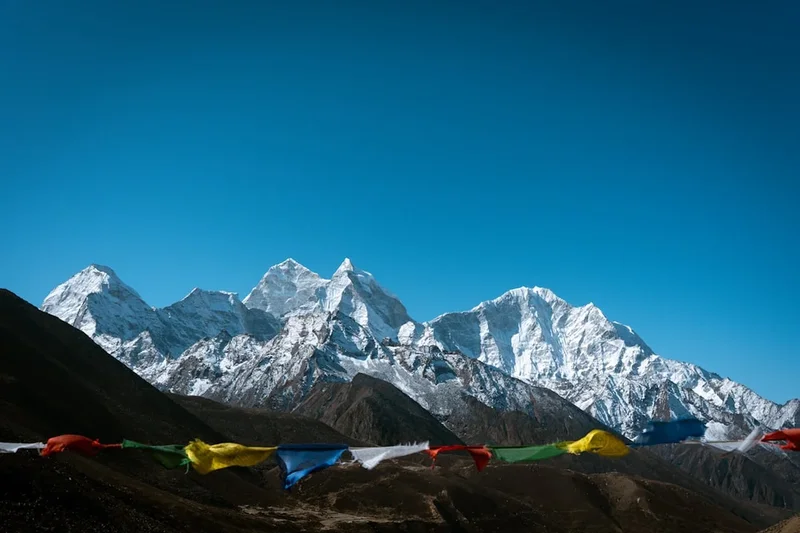
Everest Base Camp Day Hike - The Ultimate Himalayan Pilgrimage
The Everest Base Camp (EBC) day hike is the crowning achievement of the world’s most famous trekking route. While the entire journey from Lukla takes upwards of eight days to reach this point, the final push from the high-altitude settlement of Gorak Shep to the base of the world’s highest mountain is a distinct, challenging, and profoundly emotional day walk. Spanning approximately 15 kilometres return, this trek traverses the lateral moraine of the Khumbu Glacier, leading hikers to the edge of the Khumbu Icefall at an altitude of 5,364 metres. It is a journey through a high-alpine moonscape where the air is thin, the history is palpable, and the scale of the surrounding peaks—including Nuptse, Khumbutse, and Pumori—is almost impossible to comprehend. This is not merely a walk; it is a pilgrimage to the site where mountaineering legends are made and where the sheer power of the tectonic forces that shaped our planet is visible in every shattered rock and frozen serac.
- Distance: 15.0 km return (from Gorak Shep)
- Duration: 8–10 hours
- Elevation Gain: 800 m (cumulative including undulations)
- Maximum Altitude: 5,364 m (Everest Base Camp)
- Difficulty: Challenging (primarily due to extreme altitude)
- Best Time: April–May and September–November
- Permits: TIMS Card and Sagarmatha National Park Entry Permit
- Starting Point: Gorak Shep (5,164 m)
Overview
The Everest Base Camp day hike represents the physical and symbolic terminus of the trek through the Solu-Khumbu region of Nepal. Unlike the lush rhododendron forests and Sherpa villages encountered earlier in the journey, the final day walk from Gorak Shep to EBC takes place entirely within the "alpine zone," a stark, treeless environment dominated by rock, ice, and sky. The trail follows the undulating crest of the Khumbu Glacier’s lateral moraine, providing a front-row seat to one of the most active glacial environments on Earth. Walkers can hear the groans and cracks of the moving ice beneath the debris, a constant reminder of the landscape's volatility.
The physical challenge of this hike cannot be overstated. While a 15-kilometre walk at sea level might be considered moderate, at over 5,000 metres, every step requires conscious effort. Oxygen levels at this altitude are approximately 50% of those at sea level, meaning the heart and lungs must work twice as hard to sustain even a slow walking pace. The terrain is rugged, consisting of loose scree, large boulders, and sections of frozen ground that can be deceptively slippery. There is no "flat" ground; the trail constantly rises and falls as it navigates the debris left behind by the retreating glacier.
Upon reaching the base camp itself, hikers find themselves in a sprawling field of ice and rock. During the spring climbing season (April and May), the area is transformed into a vibrant "tent city" housing hundreds of climbers, Sherpas, and support staff from around the globe. In the autumn season, the camp is often empty of tents but remains a powerful site marked by prayer flags and the iconic "Everest Base Camp" rock. It is important to note that from the base camp itself, the summit of Mount Everest is actually obscured by the massive shoulder of Nuptse. However, the proximity to the Khumbu Icefall—a terrifying labyrinth of towering ice pinnacles and deep crevasses—provides a visceral understanding of the dangers faced by those attempting to reach the 8,848-metre summit.
History and Cultural Context
The history of the Everest Base Camp trek is inextricably linked to the history of high-altitude exploration and the Sherpa people of the Khumbu Valley. For centuries, the Sherpas—an ethnic group of Tibetan origin—lived in the shadow of "Chomolungma" (Mother Goddess of the World), as Everest is known in Tibetan. They were primarily traders and farmers, crossing high passes like the Nangpa La to trade salt and wool. It wasn't until the early 20th century, when British explorers began eyeing the mountain, that the Sherpas' extraordinary physiological adaptation to altitude and their local knowledge became the backbone of Himalayan mountaineering.
The specific route to the South Base Camp in Nepal became the primary focus of exploration after the 1950 Chinese occupation of Tibet closed the northern approach. In 1952, a Swiss expedition nearly reached the summit via the South Col, proving the feasibility of the route. A year later, on 29 May 1953, Sir Edmund Hillary and Tenzing Norgay Sherpa made the first successful ascent, an event that changed the Khumbu Valley forever. The trail that modern hikers follow is essentially the same supply line used by those early expeditions, though it has evolved from a primitive track into a well-trodden path supported by a sophisticated network of tea houses.
Culturally, the hike is a journey through a landscape of profound spiritual significance. Every mani stone (carved with Buddhist mantras), chorten (stupa), and prayer flag encountered along the way is a testament to the Buddhist faith that permeates the region. Hikers are expected to pass mani walls on the left side, following the clockwise direction of Buddhist prayer. The base camp itself, while a hub of modern technology and international ambition during the climbing season, remains a place where Sherpas perform "Puja" ceremonies to ask the mountain deities for permission and safe passage before any climbing begins. Understanding this blend of heroic mountaineering history and deep-seated spiritual tradition is essential for any visitor to the region.
Want more background? Read extended notes on history and cultural context → Learn more
Seasonal Highlights and Weather Reality
The Everest region experiences two primary trekking seasons, each offering a distinct atmosphere and set of challenges. Outside of these windows, the environment becomes significantly more hostile, requiring specialised skills and equipment.
Spring (March to May): This is the most popular time for the EBC hike, primarily because it coincides with the Everest climbing season. The weather is generally stable, and temperatures, while still freezing at night, become manageable during the day. The highlight of spring is the activity at Base Camp; the area is a bustling village of yellow tents, and hikers may see famous climbers or witness the logistical marvel of helicopter supply runs. The lower valleys are also in bloom with rhododendrons, providing a colourful contrast to the stark upper reaches.
Autumn (September to November): Following the monsoon rains, the atmosphere is washed clean, resulting in the most spectacular clarity and sharpest mountain views of the year. The skies are typically a deep, brilliant blue, and the weather is very stable. While the base camp is quiet (as there are few autumn climbing attempts), the trekking conditions are often considered superior to spring. However, temperatures begin to drop significantly toward late November, and the wind can become a major factor on the moraine.
Winter (December to February): Trekking to EBC in winter is possible but is an exercise in endurance. Temperatures at Gorak Shep can plummet to -20°C or -30°C at night. Many tea houses close, and the trail can be blocked by heavy snow. The benefit is total solitude and crystal-clear days, but the risk of frostbite and the physical toll of the cold make this suitable only for very experienced, well-equipped hikers.
Monsoon (June to August): This is the least desirable time to visit. Heavy rains lead to leeches in the lower forests, frequent landslides, and obscured mountain views. Most importantly, flights to Lukla are frequently cancelled for days or weeks at a time due to poor visibility, making logistics nearly impossible.
Recommended Itinerary
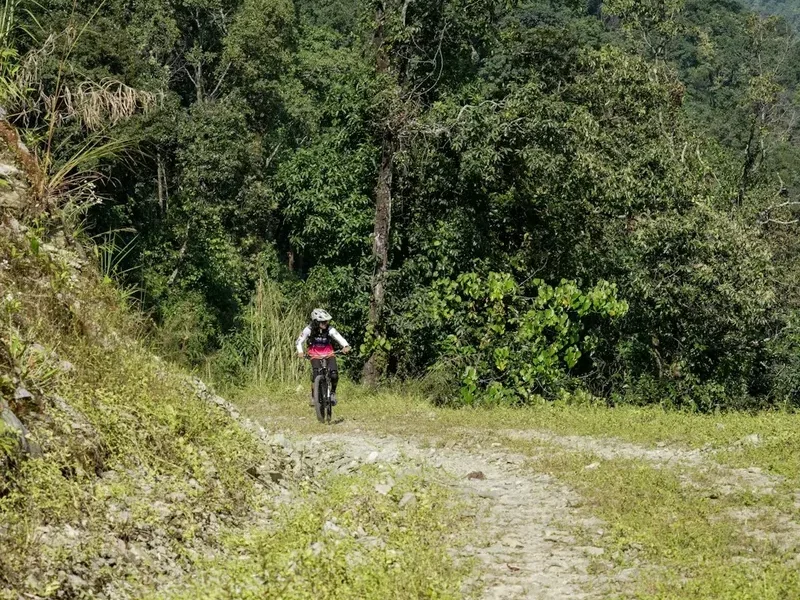
Everest Base Camp Day Hike Itinerary
Early Morning: Departure from Gorak Shep
- Time: 06:00 – 07:00
- Elevation: 5,164 m
- Begin the hike as early as possible to take advantage of the stable morning weather and clear views.
- The trail starts at the northern edge of the Gorak Shep sandy flats, immediately ascending onto the lateral moraine of the Khumbu Glacier.
- The initial section involves navigating a series of short, steep climbs over rocky ridges.
- Temperature will be well below freezing; ensure all layers are on and extremities are protected.
Mid-Morning: The Moraine Traverse
- Time: 08:30 – 10:30
- Distance: 4 km from Gorak Shep
- The trail follows the crest of the moraine, offering views down onto the debris-covered Khumbu Glacier.
- Look for the "pinnacles"—large towers of ice emerging from the grey rubble of the glacier.
- The path is undulating and can be narrow in places; yield to descending hikers and yak trains.
- This is the most physically demanding section as the altitude begins to exceed 5,250 metres. Maintain a slow, rhythmic pace ("bistarai, bistarai" in Nepali).
Midday: Arrival at Everest Base Camp
- Time: 11:00 – 12:00
- Elevation: 5,364 m
- The final approach involves a descent from the moraine wall onto the glacier itself.
- Celebrate at the iconic rock marked with prayer flags and "Everest Base Camp."
- Spend 30–45 minutes exploring the perimeter (do not enter the private expedition camps unless invited).
- Observe the Khumbu Icefall, the gateway to the Western Cwm and the summit route.
- Eat a packed lunch and hydrate heavily; the descent requires focus.
Afternoon: Return to Gorak Shep
- Time: 12:30 – 15:30
- Distance: 7.5 km (return leg)
- Retrace the route along the moraine. While it is "downhill" overall, the many short climbs feel much harder on the return journey.
- Clouds often begin to roll in during the afternoon, reducing visibility and temperature.
- Arrive back in Gorak Shep for a warm meal and rest.
- Monitor for any signs of increased altitude sickness after the exertion of the day.
Important Notes:
- This is a high-altitude environment; there are no shops or facilities between Gorak Shep and Base Camp.
- The trail is entirely on rock and ice; sturdy boots with good grip are mandatory.
- Weather can change in minutes; never hike without a waterproof and windproof outer shell.
- Stay hydrated; drink at least 1 litre of water during the hike despite the cold.
Planning and Bookings
Book Your Trip
Everything you need to plan your journey
Accommodation
Find places to stay near Lukla
Flights
Search flights to Lukla
Essential Preparation
The Everest Base Camp day hike is the culmination of a multi-day trekking expedition. You cannot simply "show up" at the trailhead. Preparation begins months in advance with physical conditioning. Focus on cardiovascular endurance and leg strength; being able to walk for 6–8 hours on consecutive days is essential. Most importantly, your itinerary must include at least two dedicated acclimatisation days (usually at Namche Bazaar and Dingboche) before reaching Gorak Shep. Attempting to rush the ascent is the primary cause of altitude-related failure.
Logistically, you must fly from Kathmandu or Ramechhap to Lukla (LUA). These flights are notorious for weather-related delays; always build at least two "buffer days" into your international travel plans. Once in the Khumbu, you will stay in tea houses. While you don't need to book every tea house months in advance, during peak season (October), it is highly recommended to have a guide or local contact secure rooms in Gorak Shep, as accommodation there is limited and fills up quickly.
Trail Accommodation
For the EBC day hike, your base of operations is Gorak Shep. This is the highest permanent settlement in the region, consisting of a handful of basic tea houses (lodges).
Hut/Tea House Facilities:
- Twin-share rooms with simple wooden beds and foam mattresses.
- Common dining hall heated by a central stove (usually fuelled by dried yak dung).
- Basic vegetarian and carbohydrate-heavy meals (Dal Bhat, pasta, potatoes).
- Shared "squat" or basic sit-down toilets (often frozen in the morning).
- Limited electricity for charging devices (available for a fee, usually 300–800 NPR).
- Satellite internet/Wi-Fi (available via "Everest Link" cards, though speeds are inconsistent).
What is NOT Provided:
- Bedding: You must bring a high-quality sleeping bag (rated to -20°C).
- Towels and toiletries: Bring everything you need, including toilet paper.
- Heating in bedrooms: Rooms are unheated and will be near or below freezing at night.
- Free water: Boiled or bottled water must be purchased (costs increase with altitude).
Costs: A room in Gorak Shep typically costs 500–1,000 NPR per night, provided you eat your meals at the lodge. If you do not eat there, the room rate may quadruple.
Required Gear
- Footwear: High-quality, waterproof trekking boots with stiff soles and ankle support. Ensure they are well broken-in.
- Outer Shell: A professional-grade Gore-Tex jacket and overtrousers. Wind protection is as important as waterproofing at this altitude.
- Insulation: A heavy down jacket (puffer) with a hood. This is essential for the early morning start and for when you stop moving at Base Camp.
- Base Layers: Merino wool or synthetic moisture-wicking tops and bottoms. Avoid cotton at all costs.
- Gloves: A two-layer system consisting of thin liner gloves and heavy, waterproof outer mitts or gloves.
- Headwear: A warm woollen beanie that covers the ears and a buff or neck gaiter to protect against the "Khumbu Cough" (caused by breathing cold, dry air).
- Eyewear: Category 4 sunglasses with side shields. The solar radiation reflected off the glacier is intense and can cause snow blindness.
What to Bring
- Water Treatment: Chlorine dioxide tablets or a UV purifier (like a SteriPen). Avoid buying plastic bottles to reduce waste.
- Sun Protection: SPF 50+ sunscreen and lip balm. The sun at 5,000 m burns skin in minutes.
- Snacks: High-energy, lightweight snacks (energy bars, nuts, chocolate). Appetite often decreases at altitude, so bring things you actually enjoy eating.
- Head Torch: Essential for the early morning departure from Gorak Shep. Bring spare batteries.
- First Aid: A personal kit including Diamox (if prescribed), ibuprofen, blister plasters, and rehydration salts.
- Trekking Poles: Highly recommended for the uneven terrain on the moraine; they save your knees on the descent.
- Day Pack: A 25–35 litre pack with a rain cover to carry your layers, water, and lunch.
Permits
To hike to Everest Base Camp, you require two specific permits. These are checked at various police and army checkpoints along the trail (specifically in Monjo and Namche Bazaar).
1. Khumbu Pasang Lhamu Rural Municipality Entrance Permit:
- Cost: 2,000 NPR (approximately 15 USD) per person.
- Where to buy: This permit is purchased locally in Lukla or at the entrance gate in Monjo. It cannot be obtained in Kathmandu.
- This permit replaced the old TIMS card for the Everest region, though some agencies still refer to it as such.
2. Sagarmatha National Park Entry Permit:
- Cost: 3,000 NPR (approximately 23 USD) per person, plus 13% VAT.
- Where to buy: You can purchase this at the Department of National Parks and Wildlife Conservation office in Kathmandu or, more commonly, at the park entrance gate in Monjo.
- You will need to show your passport to obtain this permit.
Important Logistics:
- Keep these permits in a waterproof sleeve in your day pack. You will be asked to produce them multiple times.
- If you are trekking with an organised agency, they will typically handle these permits for you.
- If you are trekking independently, ensure you have enough Nepalese Rupees in cash, as credit card facilities at the checkpoints are non-existent or frequently offline.
- Note that if you plan to climb any "Trekking Peaks" (like Island Peak or Lobuche East) in addition to the EBC hike, you will need a separate climbing permit from the Nepal Mountaineering Association (NMA).
Other Activities in the Area
While the hike to Base Camp is the primary goal, the area around Gorak Shep and the lower Khumbu offers several other world-class experiences:
- Kala Patthar Ascent: Often done the morning after the EBC hike. This 5,550 m peak offers the definitive view of Mount Everest’s summit, which is not visible from Base Camp itself. The sunrise from here is legendary.
- Visit the Everest ER: During the spring season, a volunteer-run medical clinic operates at Base Camp. They often give educational talks about high-altitude medicine.
- Khumbu Glacier Exploration: Spend time observing the "ice sails" and glacial lakes on the surface of the glacier near Gorak Shep.
- Sherpa Culture Museum: Located in Namche Bazaar, this museum offers deep insights into the traditional life, tools, and history of the Sherpa people.
- Tenzing Norgay Memorial: A beautiful stupa and statue located above Namche Bazaar, offering panoramic views of Everest, Lhotse, and Ama Dablam.
- Monastery Visits: The Tengboche Monastery is the spiritual heart of the Khumbu. Visitors can often witness the afternoon prayer ceremonies (Puja).
Safety and Conditions
Altitude Sickness (AMS): This is the single greatest risk on the EBC hike. Gorak Shep and Base Camp are well above the threshold for severe Acute Mountain Sickness. Symptoms include persistent headache, nausea, dizziness, and loss of appetite. The Golden Rule: If symptoms persist or worsen, you must descend immediately. Never ascend further if you have symptoms of AMS. High Altitude Pulmonary Oedema (HAPE) and Cerebral Oedema (HACE) are life-threatening conditions that can develop rapidly at this altitude.
The "Khumbu Cough": The combination of extreme altitude, freezing temperatures, and very low humidity often leads to a persistent, dry cough. Using a buff or mask to warm and humidify the air you breathe is the best preventative measure.
Weather and Exposure: The weather at 5,300 m is unpredictable. A clear morning can turn into a blizzard by midday. Hypothermia is a genuine risk if you are not wearing appropriate layers or if you get wet. Always carry a survival bag or emergency bivy, even on a day hike.
Glacial Hazards: The trail to EBC crosses active glacial terrain. While the main path is generally safe, do not wander off the marked route. Crevasses can be hidden by thin snow bridges, and rockfalls from the moraine walls are common, especially as the sun warms the slopes in the late morning.
Evacuation: In the event of a medical emergency, helicopter evacuation is the only viable option from Gorak Shep. Ensure your travel insurance specifically covers "trekking up to 6,000 metres" and includes emergency helicopter evacuation. Without this, an evacuation can cost upwards of 5,000 USD out of pocket.
Side Trips and Points of Interest
Kala Patthar (5,550 m): While technically a separate hike, it is the essential companion to the EBC day hike. Located directly above Gorak Shep, this "black rock" provides the most famous view in the Himalayas. From the summit, you look directly across the Khumbu Glacier to the South Col and the pyramid of Everest. Most hikers attempt this at 4:00 AM to catch the sunrise, though a sunset hike often provides better light for photography of Everest's face.
The Khumbu Icefall: From the edge of Base Camp, you can look directly into the Icefall. This is a frozen river of ice moving at a rate of about one metre per day. It is a chaotic jumble of seracs (ice towers) the size of houses. Watching this from a safe distance is a humbling experience, as you realise this is the most dangerous part of the climb for Everest mountaineers.
Gorak Shep Lake Bed: The settlement of Gorak Shep sits on the edge of a vast, frozen lake bed. In the summer, it is a silt-covered flat, but in winter and spring, it is a stark white expanse. It was the original base camp for the 1952 Swiss expedition before they moved further up the glacier.
Lobuche Memorials: Located on the ridge between Dugla and Lobuche (passed on the way to Gorak Shep), these stone chortens commemorate climbers and Sherpas who have lost their lives on Everest. It is a somber and beautiful place that puts the risks of the environment into perspective.
Leave No Trace
The Everest region has historically struggled with waste management, earning the unfortunate nickname "the world's highest junkyard" in the 1980s. However, massive efforts by the Sagarmatha Next project and the SPCC (Sagarmatha Pollution Control Committee) have significantly improved the situation. As a visitor, you have a strict responsibility to maintain this progress.
Your responsibility as a hiker:
- Carry In, Carry Out: Every piece of plastic, every wrapper, and every battery you bring into the park must leave with you. There is no waste processing infrastructure at 5,000 metres.
- Water: Use purification tablets or filters. Buying bottled water contributes to a massive plastic waste problem; thousands of bottles are discarded in the Khumbu every year.
- Human Waste: Use the toilets provided at the tea houses in Gorak Shep. If you are caught short on the trail, ensure you are at least 50 metres from any water source and bury waste deeply, or better yet, use a portable waste bag (WAG bag) and carry it out.
- Respect the Wildlife: You may see Himalayan Thar (mountain goats) or Danphe (the national bird of Nepal). Do not feed them or disturb their habitat.
- Stay on the Trail: The high-alpine soil is extremely fragile. Stepping off the trail destroys the tiny lichens and mosses that take decades to grow in this harsh climate.
- Cultural Respect: Never deface mani stones or chortens. Do not take "souvenir" rocks from the Base Camp or the glacier.
 Nepal
Nepal