
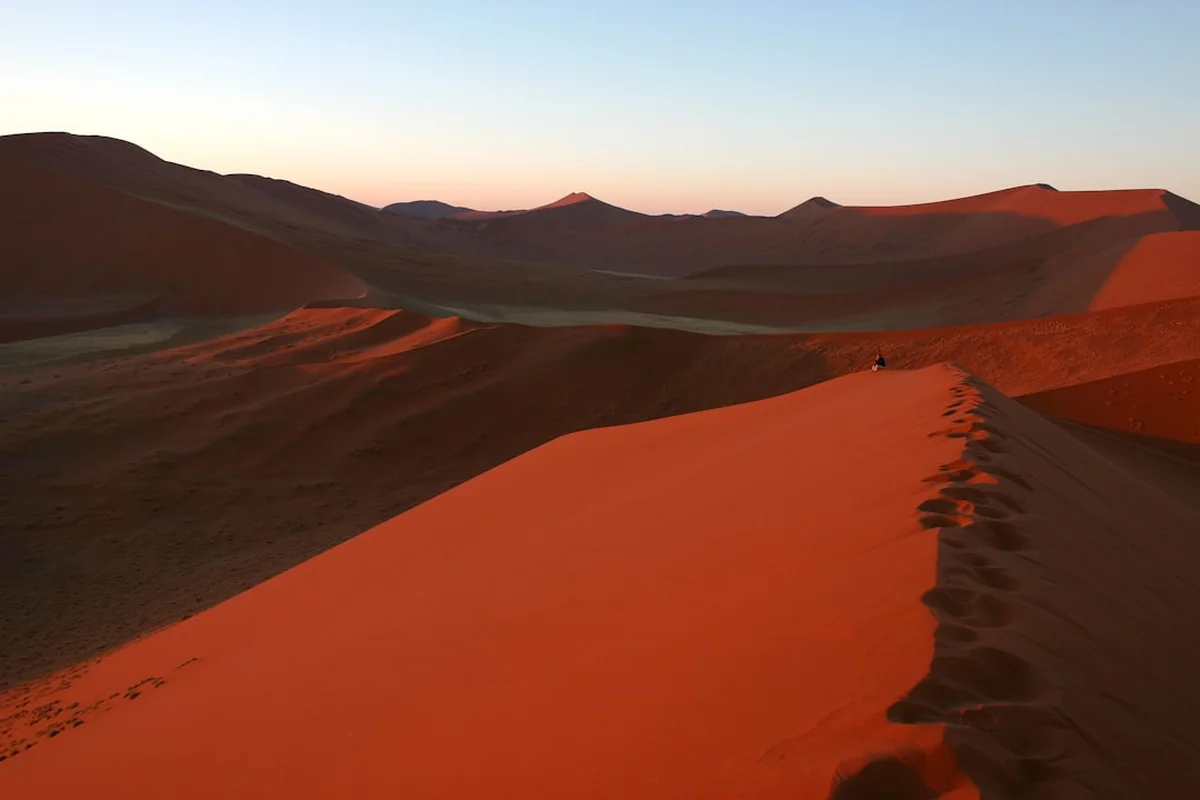
Dune 45 Trek - The Most Photographed Dune in the World
The Dune 45 Trek is an iconic Namibian experience, offering a relatively accessible but physically rewarding climb up one of the most aesthetically perfect sand structures on Earth. Located at the 45-kilometre mark on the road from Sesriem to Sossusvlei, this 170-metre-high star dune is composed of five-million-year-old sands, carried from the Orange River by the Atlantic currents and blown inland by the relentless south-westerly winds. Unlike the more daunting "Big Daddy" or "Dune 7," Dune 45 provides a manageable ascent that rewards walkers with a 360-degree panorama of the Namib Sand Sea—a UNESCO World Heritage site. The trek is defined by its sharp, sinuous ridge line and the dramatic interplay of light and shadow that occurs during the "golden hours" of sunrise and sunset. It is a journey into the heart of the world's oldest desert, where the silence is profound and the landscape feels prehistoric.
- Distance: 5.0 km return (including ridge walk)
- Duration: 2–3 hours
- Season: April to September (cooler months recommended)
- Elevation Gain: 85 m (vertical height of the dune is approximately 170 m, but the trek follows the ridge)
- Difficulty: Easy to Moderate (sand resistance increases physical effort)
- Location: Namib-Naukluft National Park, Namibia
- Closest Hub: Sesriem (45 km)
Overview
Dune 45 is more than just a pile of sand; it is a geological masterpiece and a symbol of the Namib Desert's raw beauty. Standing at over 170 metres, it is classified as a "star dune," a formation created by multi-directional winds that push the sand into a central peak with radiating ridges. The sand itself is a marvel of nature, consisting of fine grains of quartz coated in a thin layer of iron oxide. This oxidation process is what gives the dunes of Sossusvlei their distinctive burnt-orange and deep-red hues. The older the dune, the more intense the colour, making Dune 45 a vibrant, living monument to the passage of eons.
The trek typically begins in the pre-dawn darkness for those staying within the park gates, or at first light for those entering from Sesriem. The path is not a marked trail in the traditional sense; rather, it is a communal effort to follow the narrow, knife-edge ridge that leads to the summit. Walking on the ridge is essential, as the sand is more compacted there, though every step still requires roughly double the effort of walking on solid ground. As you ascend, the surrounding landscape reveals itself: a vast "sea" of dunes stretching toward the Atlantic Ocean to the west, and the purple-hued Naukluft Mountains shimmering to the east.
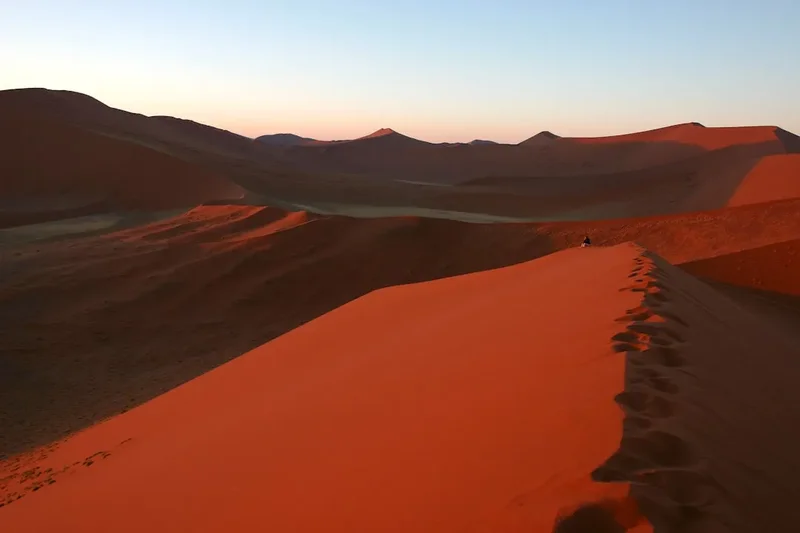
The experience is defined by the transition of light. At dawn, the eastern face of the dune is set ablaze with golden light, while the western face remains in deep, cool shadow, creating a sharp, geometric line of contrast that photographers travel across the globe to capture. The air is often crisp and cold in the early morning, a stark contrast to the blistering heat that arrives by midday. This trek is not about distance or speed; it is about the sensory experience of the desert—the feel of the cool sand between your toes (many choose to walk barefoot), the whistling of the wind over the crest, and the humbling scale of a landscape that has remained largely unchanged for millions of years.
While the climb is physically demanding due to the shifting nature of the sand, it is technically simple and accessible to anyone with a moderate level of fitness. The descent is often the highlight for many, as walkers can "run" or slide down the steep face of the dune, a process that creates a low-frequency hum known as "roaring sands," caused by the friction of the grains rubbing together. It is a joyful, visceral conclusion to a trek that begins with quiet contemplation.
History and Cultural Context
The history of Dune 45 is inextricably linked to the geological history of the Namib Desert, which is widely considered the oldest desert in the world, having persisted in arid or semi-arid conditions for at least 55 to 80 million years. The specific dunes of the Sossusvlei region, including Dune 45, are part of the Namib Sand Sea. This area was formed by the movement of sediment from the Orange River in the south, which was carried north by the Benguela Current and then deposited on the shore. From there, the wind took over, blowing the sand inland over millions of years to create the massive erg (sand sea) we see today.
The name "Dune 45" is purely functional, reflecting its location exactly 45 kilometres from the Sesriem gate along the paved road that leads to Sossusvlei. While it lacks a traditional indigenous name in common tourist parlance, the broader region is the ancestral home of the Topnaar (≠Aonin) people, a Nama-speaking group who have survived in the harsh desert environment for centuries. Their history is one of incredible resilience, utilising the !Nara melon and the scarce water of the Kuiseb River to sustain life in a place where most would perish. While the dunes themselves were not permanent settlements, they were landmarks in a vast, shifting territory.
In the modern era, Dune 45 became a focal point of Namibian tourism following the country's independence in 1990. The establishment of the Namib-Naukluft National Park—the largest game park in Africa and the fourth largest in the world—ensured the protection of this fragile ecosystem. In 2013, the Namib Sand Sea was inscribed as a UNESCO World Heritage site, recognising its unique "fog-cooled" coastal desert environment and the fact that it is the only coastal desert in the world that includes extensive dune fields influenced by fog. Today, Dune 45 stands as a protected natural monument, managed by Namibia Wildlife Resorts (NWR) and the Ministry of Environment, Forestry and Tourism, ensuring that the thousands of feet that tread its ridge every year do not permanently alter its ancient form.
Want more background? Read extended notes on history and cultural context → Learn more
Seasonal Highlights and Weather Reality
The Namib Desert is a land of extremes, and timing your visit to Dune 45 is crucial for both comfort and safety. The region experiences a desert climate, characterised by massive temperature fluctuations between day and night, and very little rainfall.
Winter (May to August): This is widely considered the best time to trek Dune 45. Daytime temperatures are pleasant, usually ranging from 20°C to 25°C, making the climb much less taxing. However, night-time temperatures can plummet to 0°C or even lower. If you are aiming for a sunrise trek, you will need significant layers for the pre-dawn wait. The air is exceptionally clear during these months, providing the best visibility for photography and stargazing.
Shoulder Seasons (April and September): These months offer a transition between the cold winter and the blistering summer. April often sees the desert at its most "lush" if there has been any summer rain, with occasional patches of yellow grass appearing between the dunes. September brings rising temperatures but remains manageable for those who start their trek early.
Summer (October to March): Trekking Dune 45 in summer requires extreme caution. Daytime temperatures regularly exceed 40°C, and the sand becomes hot enough to cause second-degree burns on exposed skin. During these months, the park authorities may restrict climbing to the very early morning hours. Summer also brings the possibility of the "Berg wind"—a hot, dry wind blowing from the interior that can create sandstorm conditions, reducing visibility to near zero and making the ridge walk dangerous.
The Fog Factor: A unique feature of the Namib is the coastal fog that can roll in from the Atlantic, sometimes reaching as far inland as Dune 45. While rare, a foggy morning can transform the trek into an eerie, ethereal experience, though it will obscure the famous sunrise views. Most often, the fog provides a vital source of moisture for the desert's specialised flora and fauna, such as the Tenebrionid beetles that "stand on their heads" to catch water droplets.
Recommended Itinerary
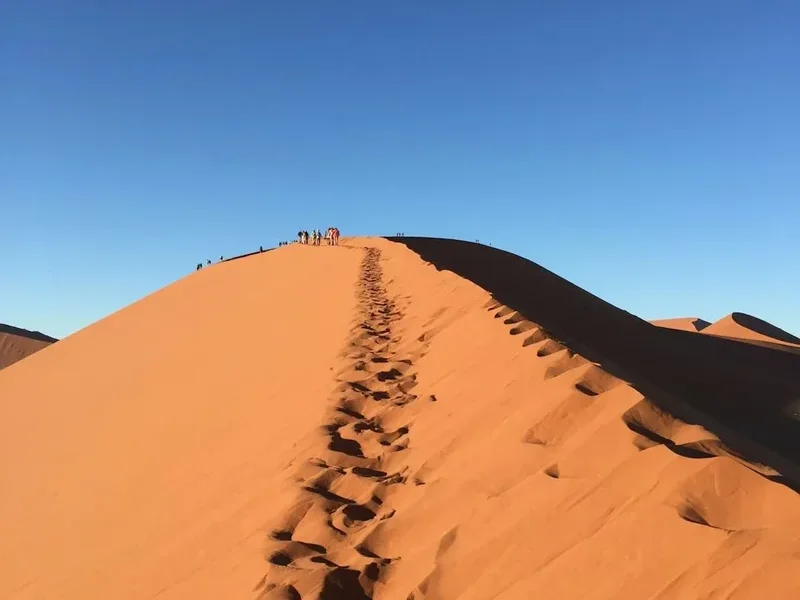
Dune 45 Sunrise Trek Itinerary
Early Morning: The Approach
- 05:15 – 05:45: Depart from Sesriem Campsite or Sossus Dune Lodge. If staying inside the park, you have a 1-hour head start over those outside the main gate.
- 05:45 – 06:15: Drive the 45 km along the paved Vlei Road. Keep a sharp eye out for Oryx (Gemsbok) and Springbok crossing the road in the twilight.
- 06:15: Arrive at the Dune 45 parking area. The dune is unmistakable, situated on the left-hand side of the road with a small cluster of Camel Thorn trees at its base.
- 06:20: Begin the ascent immediately to ensure you reach the summit before the sun clears the horizon.
Morning: The Ascent and Summit
- 06:20 – 07:00: Climb the ridge. The first section is the steepest; focus on placing your feet in the footprints of those ahead to save energy.
- 07:00 – 07:15: Reach the first plateau or continue to the higher summit. Find a spot on the ridge to sit and wait for the light.
- 07:15 – 07:45: Sunrise. Watch as the light hits the crest of the dunes, turning the sand from a dull grey to a brilliant, glowing orange. This is the peak time for photography.
- 07:45 – 08:15: Explore the summit ridge. The dune extends further back than it appears from the road, offering various vantage points of the surrounding dune sea.
Mid-Morning: The Descent and Breakfast
- 08:15 – 08:45: Begin the descent. You can return via the ridge, but the most popular method is to run directly down the steep face of the dune toward the parking area.
- 08:45 – 09:30: Enjoy a "tailgate" breakfast under the shade of the ancient Camel Thorn trees at the base. These trees are hundreds of years old and provide a vital ecosystem for sociable weavers and other desert birds.
- 09:30: Depart for Sossusvlei and Deadvlei (another 15 km drive) before the heat of the day becomes intense.
Important Notes:
- Gate times change monthly based on sunrise/sunset; check the board at the Sesriem office the day before.
- The "inner gate" (for those staying at NWR facilities) opens one hour before the "outer gate."
- Walking barefoot is popular but check the sand temperature frequently; it heats up rapidly after 09:00.
- The ridge can be narrow; always give way to those ascending if you are coming down.
Planning and Bookings
Book Your Trip
Everything you need to plan your journey
Accommodation
Find places to stay near Sesriem
Flights
Search flights to Sesriem
Essential Preparation
Planning a trek at Dune 45 requires more logistical coordination than a standard hike due to its remote location and the strict regulations of the Namib-Naukluft National Park. The most critical decision is where to stay. To see the sunrise from the top of the dune, you almost certainly need to stay *inside* the park's first gate at Sesriem. There are two gates: the outer gate (which opens at sunrise) and the inner gate (which opens an hour earlier for residents of the park's campsites and lodges). If you stay outside the park, you will likely reach Dune 45 after the sun has already risen.
The drive from Windhoek to Sesriem takes approximately 5 to 6 hours. While the road is mostly gravel (C19 and C27), it is generally well-maintained. However, a 4x4 vehicle is strongly recommended, not necessarily for the road to Dune 45 (which is paved), but for the corrugated gravel roads leading to the park and the deep sand sections further in at Sossusvlei. Ensure your spare tyre is in good condition and you know how to change it; punctures are common on Namibian gravel.
Trail Accommodation
Accommodation near Dune 45 ranges from basic campsites to ultra-luxury lodges. Because of the "sunrise advantage," bookings for in-park accommodation fill up months in advance.
Inside the Park (NWR Managed):
- Sesriem Campsite: The most popular option. Offers basic sites with power points, shared ablutions, and a swimming pool. Staying here allows you through the inner gate an hour before sunrise.
- Sossus Dune Lodge: An eco-friendly luxury lodge built into the base of the mountain. It offers the best access to the dunes and high-end amenities.
- Dead Valley Lodge: A newer luxury option located inside the park gates, offering air-conditioned "tents" and spectacular views.
Outside the Park (Within 5-10 km of the gate):
- Kulala Desert Lodge: Offers private access to the park via a dedicated gate (though still subject to sunrise opening times).
- Sossusvlei Lodge: Located right at the entrance gate, offering luxury accommodation and excellent buffet meals.
- Desert Quiver Camp: Self-catering units with a modern design, located about 5 km from the gate.
Facilities: Sesriem has a small petrol station, a basic shop for water and snacks, and a bar. However, do not rely on these for full grocery shopping; stock up in Windhoek or Walvis Bay before arriving.
Required Gear
- Footwear: Lightweight hiking boots or sturdy sports shoes. Many people prefer to climb barefoot to feel the sand, but you must have shoes with you as the sand becomes painfully hot by mid-morning.
- Clothing: Layers are essential. In winter, you will need a fleece or light down jacket for the pre-dawn start, which you will likely shed halfway up the dune. Long trousers protect against wind-blown sand.
- Sun Protection: A wide-brimmed hat with a chin strap (it gets windy on the ridge), high-SPF sunscreen, and UV-rated sunglasses. The glare from the orange sand can be intense.
- Camera Gear: A camera with a wide-angle lens is ideal. Crucially, bring a protective bag or "rain sleeve" for your camera; the fine desert sand is notorious for ruining lenses and sensors. Avoid changing lenses while on the dune.
- Daypack: A small 10-20L pack to carry your water and layers.
What to Bring
- Water: Minimum 2 litres per person, even for this short trek. Dehydration happens rapidly in the dry desert air.
- Snacks: High-energy snacks like nuts, dried fruit (biltong is a local favourite), or energy bars.
- Headlamp: Essential for the initial climb if you are starting before dawn.
- Permit: Keep your park entry permit in your vehicle or pocket; rangers occasionally check them at the dune parking area.
- Wet Wipes/Tissues: Useful for cleaning sand off your hands or face before eating.
- Personal First Aid: Basic kit including eye drops (for sand irritation) and plasters for any friction blisters from the sand.
Permits
Entry to Dune 45 requires a valid permit for the Namib-Naukluft National Park. These permits are issued at the Ministry of Environment and Tourism (MET) office located at the Sesriem gate. The process is generally straightforward, but it is important to understand the fee structure and timing.
Permit Costs (Subject to change):
- International Visitors: NAD 150 per person, per 24-hour period.
- SADC Residents: NAD 100 per person, per 24-hour period.
- Namibian Citizens: NAD 50 per person, per 24-hour period.
- Vehicle Fee: NAD 50 per vehicle (standard 4x4 or sedan).
Important Permit Rules:
- Permits are valid for 24 hours. If you arrive in the afternoon to see the sunset and plan to return the next morning for sunrise, one permit will cover both as long as it is within the 24-hour window.
- The office at Sesriem is typically open from sunrise to sunset. If you arrive after the office has closed, you can usually pay the following morning, but you must have your accommodation booking ready to show the gate guards.
- You must keep your permit receipt with you at all times while in the park.
- There is no "online booking" for park permits; they must be purchased in person at the gate. Payment can be made via credit card, but the system frequently goes offline due to the remote location, so carrying sufficient cash (Namibian Dollars or South African Rand) is highly recommended.
Other Activities in the Area
The Sesriem and Sossusvlei area offers some of the most spectacular landscapes in Africa. Most visitors combine the Dune 45 trek with these nearby attractions:
- Deadvlei: A white clay pan located 15 km past Dune 45. It is famous for the dark, dead camel thorn trees that have stood for over 600 years, contrasted against the white floor and orange dunes. It is arguably the most iconic sight in Namibia.
- Big Daddy: The highest dune in the Sossusvlei area (approx. 325 metres). It overlooks Deadvlei and offers a much more strenuous climb than Dune 45.
- Sesriem Canyon: A natural canyon carved by the Tsauchab River. It is about 1 km long and up to 30 metres deep. It is a great place to explore in the heat of the afternoon as the canyon floor remains relatively cool and shaded.
- Hot Air Ballooning: Several operators offer sunrise balloon flights over the Namib Sand Sea. It provides a perspective of the dune formations that is impossible to get from the ground. Most flights include a champagne breakfast in the desert.
- Stargazing: The Namib Desert is an International Dark Sky Reserve. The lack of light pollution makes it one of the best places on Earth to view the Milky Way and the Southern Cross.
- Elim Dune: Located near the Sesriem campsite, this dune is the best spot for sunset views, as it looks out over the vast gravel plains toward the Naukluft Mountains.
Safety and Conditions
Heat and Hydration: The primary danger at Dune 45 is the sun. Even in winter, the dry air and high UV index can lead to rapid dehydration and heatstroke. Drink water consistently, even if you don't feel thirsty. If you begin to feel dizzy, nauseous, or develop a headache, stop immediately, find shade (if possible), and descend. Do not attempt the climb during the heat of the day (11:00 to 16:00) in summer.
Sand and Wind: The ridge of Dune 45 can be very narrow. In high winds, the sand can be whipped up, stinging exposed skin and severely reducing visibility. If a sandstorm begins, descend the dune immediately. The sand can also be extremely hot; never walk barefoot in the afternoon. If you are wearing sandals, be aware that sand can get trapped under the straps and cause "sandpaper" blisters.
Driving Safety: The road from Sesriem to Dune 45 is paved, but it is narrow and often has sand drifts across it. Stick to the 60 km/h speed limit. The greatest risk is the gravel roads *outside* the park. Excessive speed on gravel is the leading cause of accidents in Namibia. Always lower your tyre pressure when driving on gravel (check manufacturer recommendations) and be wary of "dust clouds" from oncoming vehicles which can hide potholes or animals.
Wildlife: While the desert looks empty, it is home to Oryx, Springbok, Ostriches, and various snakes and scorpions. The Horned Adder and the Sidewinder are present in the dunes; they are well-camouflaged and typically bury themselves in the sand. While they are not aggressive, watch where you step and avoid putting your hands into holes or under rocks.
Emergency Contacts: There is very limited mobile signal at Dune 45. The nearest medical facility is a small clinic in Sesriem, but for serious emergencies, a medevac to Windhoek is required. Ensure your travel insurance covers emergency aero-medical evacuation.
Side Trips and Points of Interest
The "Fairy Circles": As you drive between Sesriem and Dune 45, look out over the gravel plains. You will see thousands of mysterious circular patches of bare earth surrounded by a ring of grass. These are the famous "Fairy Circles" of the Namib. Scientists have debated their origin for decades, with theories ranging from termite activity to plant competition for water. They are a unique biological phenomenon found only in this part of the world.
The Solitaire Stop: About 80 km north of Sesriem lies the tiny settlement of Solitaire. It is famous for its collection of rusted car wrecks and "Moose" McGregor’s Desert Bakery, which serves what is widely considered the best apple crumble in the Southern Hemisphere. It is a mandatory stop for anyone travelling to or from the dunes.
Photography Tips for Dune 45: To get the best shots, arrive at the base at least 45 minutes before sunrise. Use a tripod for the low-light pre-dawn shots. Look for "leading lines" provided by the ridge of the dune. The best "shadow play" occurs about 15–30 minutes after the sun has cleared the horizon. If you want to capture the texture of the sand, use a smaller aperture (f/11 or f/16) and focus about one-third of the way into the frame.
The Tsauchab River Bed: The road to Dune 45 follows the ancient path of the Tsauchab River. While the river rarely flows (only after exceptional rains in the mountains), the underground water supports the large Camel Thorn trees (Acacia erioloba) that line the road. These trees are vital "islands of life," providing shade and food for the desert's larger mammals.
Leave No Trace
The Namib-Naukluft National Park is a fragile desert wilderness. Because of the low rainfall, any damage to the environment can take decades or even centuries to heal. As a visitor to Dune 45, you have a responsibility to minimise your impact on this ancient landscape.
Leave No Trace Principles for the Dunes:
- Stay on the Ridge: When climbing, stay on the established ridge path. This concentrates the impact and prevents the "scarring" of the dune faces, which can take a long time to be smoothed over by the wind.
- No Littering: This includes organic waste like orange peels or nut shells. In the dry desert air, organic matter does not decompose; it mummifies and remains visible for years. Pack out everything you pack in.
- Respect the Trees: Do not climb on the ancient Camel Thorn trees at the base of the dune. They are extremely slow-growing and fragile. Do not collect wood for fires; all firewood must be brought in from outside the park.
- Do Not Feed Wildlife: Feeding jackals or birds at the parking area encourages "problem" behaviour and can lead to animals being euthanised.
- No Drones: The use of drones is strictly prohibited in Namibian National Parks without a special permit, which is rarely granted for recreational use. Drones disturb the peace and can harass wildlife.
- Keep it Quiet: The silence of the Namib is one of its greatest assets. Avoid shouting or playing music while on the dune.