
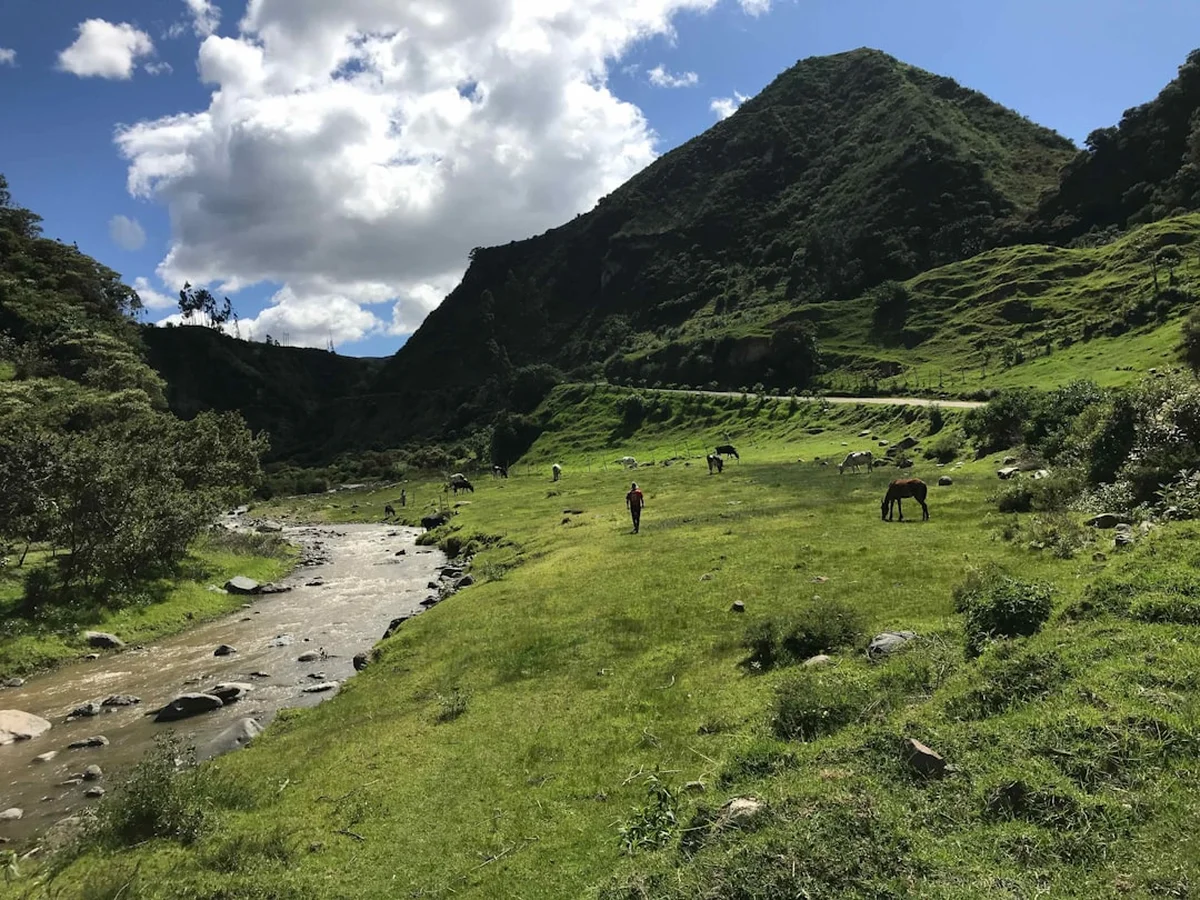
Darwin Trail - A Journey Through the Living Laboratory of Santa Cruz
The Darwin Trail on Santa Cruz Island is more than just a physical trek; it is a profound immersion into the very landscapes that sparked the most revolutionary idea in biological history. Spanning 12 kilometres through the lush, mist-shrouded highlands of the Galápagos archipelago, this moderate day walk offers an unparalleled window into an ecosystem where time seems to have slowed. Unlike the arid, volcanic coastlines most visitors first encounter, the Darwin Trail ascends into the humid "upper zones," where the vegetation shifts from prickly pear cacti to towering Scalesia forests draped in epiphytes and liverworts. This is the realm of the Galápagos Giant Tortoise, the island's most iconic resident, which can be found grazing in the wild meadows or wallowing in muddy ponds along the route. The trail serves as a vital corridor for observing the subtle variations in birdlife—specifically the various species of Darwin’s finches—that provided the empirical evidence for the theory of evolution by natural selection.
- Distance: 12.0 km loop
- Duration: 4–5 hours
- Elevation Gain: 400 m
- Difficulty: Moderate
- Best Time: June to September (the "Garúa" or dry season)
- Closest City: Puerto Ayora, Santa Cruz Island
- Trailhead Access: Accessible via taxi or private transport from Puerto Ayora (approximately 25 minutes)
- Key Wildlife: Galápagos Giant Tortoises, Vermilion Flycatchers, Darwin’s Finches, Galápagos Rails
Overview
The Darwin Trail represents the ecological heart of Santa Cruz Island, providing a stark contrast to the sun-bleached volcanic shores of the Galápagos. As you move inland and upward, the temperature drops and the humidity rises, creating a microclimate that supports a staggering diversity of endemic flora and fauna. The trail is characterised by its transition through several distinct vegetation zones: the transition zone, the Scalesia zone, and the brown zone. Each of these layers hosts a unique community of organisms, making the 12-kilometre journey feel like a condensed tour of an entire continent's worth of biodiversity. The path itself is a mix of well-trodden dirt tracks, grassy meadows, and occasional sections of uneven volcanic rock, requiring a steady foot but rewarding the walker with constant surprises.
The primary draw of the Darwin Trail is the opportunity to witness the Galápagos Giant Tortoise (Chelonoidis porteri) in its natural habitat. These prehistoric giants migrate between the lowlands and the highlands following the seasonal rains, and the trail intersects their primary feeding grounds. Standing in the presence of a creature that may be over 150 years old, weighing upwards of 250 kilograms, is a humbling experience that few other trails on Earth can offer. Beyond the tortoises, the trail is a haven for birdwatchers. The vibrant red of the Vermilion Flycatcher often darts through the canopy of the Scalesia trees—endemic members of the daisy family that grow to the size of large oaks. The air is filled with the calls of various finch species, each with beaks specialised for the specific seeds or insects found in this humid highland environment.
Geologically, the trail offers a glimpse into the island's volcanic soul. Santa Cruz is a shield volcano, and the trail passes near massive pit craters known as Los Gemelos (The Twins) and traverses areas where ancient lava tubes snake beneath the surface. These geological features, combined with the dense, mossy forests, create an atmosphere that feels prehistoric. Whether you are a dedicated naturalist, a photography enthusiast, or simply a walker looking to escape the coastal heat, the Darwin Trail provides a deep, sensory connection to the "Enchanted Isles" that remains long after the trek is finished.
History and Cultural Context
The history of the Darwin Trail is inextricably linked to the arrival of the HMS Beagle in September 1835. While Charles Darwin spent only five weeks in the Galápagos, his time on Santa Cruz and the neighbouring islands fundamentally altered human understanding of life on Earth. Darwin was particularly fascinated by the highlands of the larger islands, noting in his journals the dramatic change in climate and the peculiar adaptations of the animals he encountered. He observed that the tortoises on different islands had different shell shapes, a detail initially pointed out to him by the islands' acting governor, Nicholas Lawson. This trail follows the general path of early explorers and scientists who ventured into the interior to study these variations, eventually leading to the publication of "On the Origin of Species" in 1859.
Culturally, the highlands of Santa Cruz have a complex history of human interaction. In the early 20th century, settlers from Norway, Germany, and mainland Ecuador attempted to establish agricultural colonies in these fertile zones. They introduced cattle, goats, and various crops, which unfortunately led to significant habitat degradation and the introduction of invasive species. The area surrounding the trail was once heavily farmed, but since the establishment of the Galápagos National Park in 1959—Ecuador's first national park—massive efforts have been made to restore the native ecosystem. The trail now passes through areas where reforestation projects are successfully bringing back the Scalesia forests and where tortoise populations are carefully monitored and protected.
Today, the trail is a symbol of the balance between conservation and tourism. It is managed by the Galápagos National Park Directorate, which ensures that the presence of walkers does not disturb the delicate breeding and feeding cycles of the wildlife. For the local community in Puerto Ayora, the trail is a source of pride and a vital part of the island's identity as a world-class centre for scientific research and eco-tourism. Walking this path is not just a recreational activity; it is an act of witnessing the ongoing efforts to preserve one of the most unique biological treasures on the planet.
Want more background? Read extended notes on history and cultural context → Learn more about Galápagos Conservation
Seasonal Highlights and Weather Reality
The Galápagos Islands do not follow traditional four-season patterns; instead, the climate is dictated by the interaction of major ocean currents. The Darwin Trail is accessible year-round, but the experience changes significantly depending on when you visit. Understanding these cycles is crucial for planning your walk and managing expectations regarding visibility and wildlife activity.
The Garúa Season (June to September): This is widely considered the best time for hiking the Darwin Trail. During these months, the Humboldt Current brings cooler waters and a persistent misty rain known locally as "garúa." While the coast may remain relatively dry, the highlands are enveloped in clouds, creating a lush, emerald-green landscape. This is the peak of the "dry" season in terms of actual rainfall, but the humidity in the highlands is at its highest. The cooler temperatures (averaging 20°C to 24°C) make the 12-kilometre trek much more comfortable. This is also the time when giant tortoises are most active in the highland meadows, as they seek out the fresh vegetation stimulated by the mist.
The Hot Season (December to May): This period is characterised by warmer temperatures (26°C to 30°C) and occasional heavy tropical downpours. The skies are generally clearer and the sun is much more intense, which can make the ascent more taxing. During this season, the tortoises often migrate toward the lower elevations to nest, though many individuals remain in the highlands year-round near permanent water sources. The vegetation may appear less vibrant than during the garúa season, but the clarity of the air provides better views of the distant volcanic peaks and the surrounding ocean.
Shoulder Months (October, November, April, May): these months offer a transition between the two main seasons. October and November can be particularly rewarding as the mist begins to lift, but the highlands remain green. Regardless of the season, walkers should be prepared for rapid changes in weather. A bright, sunny morning in Puerto Ayora can easily turn into a damp, foggy afternoon in the highlands. Waterproof gear and sun protection are essential year-round.
Recommended Itinerary
Darwin Trail Day Walk Itinerary
Early Morning: Departure from Puerto Ayora
- 07:30 – 08:00: Arrange transport from Puerto Ayora. A local taxi is the most efficient method.
- 08:00 – 08:30: Drive toward the Santa Cruz highlands, passing through the village of Santa Rosa.
- 08:30: Arrive at the trailhead near the El Chato Tortoise Reserve or the Rancho Primicias entrance.
- Ensure all water bottles are filled and sun protection is applied before starting.
Morning: The Highland Ascent and Scalesia Forest
- 08:45 – 10:30: Begin the walk through the transition zone. The path climbs gradually through a mix of native and introduced vegetation.
- Keep a sharp eye out for the Vermilion Flycatcher; their bright red plumage is unmistakable against the green canopy.
- Enter the Scalesia forest. These endemic trees are a highlight of the trail, often covered in mosses and ferns that thrive in the highland mist.
- Distance covered: ~4 km.
Midday: Tortoise Territory and Lava Tubes
- 10:30 – 12:30: The trail levels out as you enter the primary grazing lands of the Giant Tortoises.
- Walk slowly and maintain the mandatory 2-metre distance from the animals. You will likely see dozens of tortoises of varying sizes.
- Explore the accessible lava tubes. These natural tunnels were formed by cooling lava flows and provide a fascinating look at the island's volcanic plumbing.
- Pause for a light snack and hydration at a designated clearing. Remember to pack out all rubbish.
- Distance covered: ~4 km (8 km total).
Afternoon: Descent and Return
- 12:30 – 14:30: Begin the return leg of the loop, which offers different perspectives of the highland landscape.
- Pass by small seasonal ponds where tortoises often congregate to cool off and hydrate.
- The final section of the trail descends back toward the trailhead, offering views of the southern coast of Santa Cruz on clear days.
- 14:30: Arrive back at the trailhead. Arrange for your taxi to collect you or walk to the main road to hail a passing vehicle.
- 15:00: Return to Puerto Ayora for a well-earned meal.
- Total distance: 12 km.
Important Notes:
- The trail can be muddy, especially during the garúa season (June–September). Sturdy footwear is essential.
- There are no food or water facilities on the trail itself; you must carry everything you need.
- Wildlife has the right of way. If a tortoise is on the path, wait for it to move or carefully bypass it while maintaining distance.
- Hiring a certified Galápagos National Park guide is highly recommended to fully appreciate the biological nuances of the trail.
Planning and Bookings
Book Your Trip
Everything you need to plan your journey
Accommodation
Find places to stay near Puerto Ayora
Flights
Search flights to Puerto Ayora
Essential Preparation
Planning a walk on the Darwin Trail requires more logistical coordination than a typical mainland hike due to the unique regulations of the Galápagos National Park. Your journey begins long before you reach the trailhead. First, you must fly into Baltra Airport (GPS), which serves Santa Cruz Island. From the airport, you will take a shuttle bus to the Itabaca Channel, a short ferry across the water, and then a bus or taxi across the island to the main hub of Puerto Ayora. It is highly recommended to base yourself in Puerto Ayora for at least two nights to allow for flexibility with weather and transport.
Physical fitness for the Darwin Trail is moderate. While the 400-metre elevation gain is spread over several kilometres, the humidity and potentially muddy conditions can make the walk feel more strenuous than the statistics suggest. Ensure you are acclimatised to the tropical heat. Booking a certified naturalist guide is not strictly mandatory for all sections of the highlands, but it is legally required for many National Park areas and is ethically encouraged to ensure you do not inadvertently disturb the wildlife or stray into protected zones.
Trail Accommodation
This is a day hike requiring no overnight accommodation on the trail itself. Camping is strictly prohibited within the Galápagos National Park boundaries on Santa Cruz to protect the fragile ecosystem and prevent the introduction of invasive species. All walkers must return to established settlements by nightfall.
Accommodation Options in Puerto Ayora:
- Luxury Eco-Lodges: Several high-end lodges are located in the highlands near the trail, offering a "glamping" experience or luxury suites with views of the tortoise migration routes.
- Mid-Range Hotels: Puerto Ayora has a wide range of comfortable hotels with air conditioning and modern amenities.
- Budget Hostels: Numerous hostels cater to backpackers, providing clean beds and communal kitchens.
- Facilities: Most accommodation in Puerto Ayora provides filtered water, WiFi (though often slow), and laundry services.
Required Gear
- Footwear: Lightweight hiking boots or sturdy trail running shoes with good grip. The volcanic rock can be sharp, and the highland mud is slippery.
- Clothing: Moisture-wicking base layers. Avoid heavy cotton. A lightweight, breathable waterproof jacket is essential for the highland mist.
- Sun Protection: A wide-brimmed hat, high-SPF sunscreen, and UV-protective sunglasses. The equatorial sun is exceptionally strong, even through cloud cover.
- Backpack: A 15–25L daypack with a rain cover.
- Navigation: While the main paths are generally clear, an offline map (such as Maps.me or Gaia GPS) is useful. Mobile signal is unreliable in the highlands.
- First Aid: A basic kit including antiseptic wipes, plasters (band-aids), and any personal medications.
What to Bring
- Water: At least 2–3 litres per person. Use reusable bottles to comply with the Galápagos "zero plastic" initiative.
- Food: High-energy snacks (nuts, dried fruit, energy bars) and a light lunch. There are no bins on the trail; all wrappers must be carried back to town.
- Camera: With a zoom lens if possible, to capture wildlife from the mandatory 2-metre distance.
- Binoculars: Essential for spotting Darwin’s finches and the elusive Galápagos Rail in the dense undergrowth.
- Insect Repellent: While mosquitoes are not usually a major issue in the dry season, they can be present in the humid highlands.
- Cash: Small denominations of US Dollars (the official currency of Ecuador) for taxi fares or entrance fees to private reserves like El Chato.
Permits
Accessing the Darwin Trail involves navigating the specific permit and fee structure of the Galápagos National Park. Unlike many international trails, there is no single "hiking permit" to purchase; instead, your entry is covered by the general National Park entrance fees and the Transit Control Card (TCT).
Mandatory Fees and Documentation:
- Transit Control Card (TCT): This must be purchased at the departure airport in mainland Ecuador (Quito or Guayaquil) before checking in for your flight to the Galápagos. The cost is US$20 per person. This card tracks your movement and ensures you do not overstay your tourist visa.
- National Park Entrance Fee: Paid in cash upon arrival at the airport in the Galápagos. As of 2024, the fee for most international tourists is US$200 (recently increased from US$100). This fee funds the conservation efforts, ranger patrols, and maintenance of trails like the Darwin Trail.
- Private Reserve Fees: If your chosen route passes through private lands such as El Chato or Rancho Primicias (which offer the best tortoise viewing), there is typically a small entrance fee of US$5–$10. This usually includes the use of rubber boots, which are highly recommended for the muddy sections.
Regulations:
- You must carry your passport or a clear photocopy of it at all times, as park rangers may perform spot checks.
- While some highland areas are accessible without a guide, the most pristine sections of the National Park require you to be accompanied by a licensed Galápagos National Park Naturalist Guide. It is your responsibility to ensure you are in a "free access" zone if walking independently.
- The trail is open from 06:00 to 18:00. Being on the trail after dark is strictly prohibited.
Other Activities in the Area
Santa Cruz Island is the logistical hub of the Galápagos, offering a wealth of activities to complement your hike:
- Charles Darwin Research Station: Located at the edge of Puerto Ayora, this is an essential visit to see the tortoise breeding programmes and learn about the ongoing conservation work.
- Tortuga Bay: A stunning white-sand beach accessible via a 2.5 km paved walk from town. It offers excellent swimming, kayaking, and opportunities to see marine iguanas and reef sharks.
- Los Gemelos (The Twins): Two massive sinkholes formed by the collapse of empty magma chambers. They are located near the Darwin Trail and are surrounded by beautiful Scalesia forest.
- Las Grietas: A spectacular volcanic crevice filled with crystal-clear emerald water, perfect for snorkelling in a unique geological setting.
- Scuba Diving: Santa Cruz is the starting point for world-class dive trips to sites like Gordon Rocks, where you can encounter hammerhead sharks, rays, and sea lions.
- Fish Market (Muelle de Pescadores): A small, vibrant market in Puerto Ayora where you can watch local fishermen bring in their catch, often accompanied by opportunistic pelicans and sea lions.
Safety and Conditions
Environmental Hazards:
- Heat and Humidity: The combination of equatorial sun and high humidity can lead to rapid dehydration and heat exhaustion. Drink water frequently, even if you do not feel thirsty.
- Volcanic Terrain: The trail includes sections of basaltic rock which can be incredibly sharp and uneven. Ankle injuries are the most common medical issue on the trail. Wear supportive footwear and watch your step.
- Mud: During the garúa season, the highland soil turns into a thick, slippery clay. Use trekking poles if you require extra stability.
Wildlife Safety:
- The 2-Metre Rule: You must maintain a minimum distance of 2 metres (1 m) from all wildlife. This is for your safety and the well-being of the animals. Giant tortoises may hiss if they feel threatened—this is a warning to back away.
- Insects: While the Galápagos is generally safe from major tropical diseases, wasps and mosquitoes can be found in the highlands. If you have a known allergy to stings, carry an EpiPen.
Logistical Safety:
- Communication: Mobile phone reception is non-existent in many parts of the highlands. Always inform your hotel or a friend of your intended route and expected return time.
- Water Quality: Never drink water from streams or ponds on the trail. Only consume bottled or purified water.
- Emergency Services: In case of a serious injury, the main hospital is located in Puerto Ayora. Evacuation from the trail would likely involve a manual carry to the nearest road access point.
Side Trips and Points of Interest
El Chato Tortoise Reserve: This is perhaps the most famous point of interest along the Darwin Trail route. It is a semi-wild area where tortoises roam freely across open pastures and through the forest. The reserve features several large lava tunnels that you can walk through, some of which are illuminated. It provides an excellent opportunity to see the tortoises in a more open environment than the dense forest sections.
The Scalesia Forest: Often referred to as "the broccoli forest" due to the shape of the trees, this is one of the most endangered ecosystems in the Galápagos. The Darwin Trail offers some of the best-preserved stands of *Scalesia pedunculata*. These trees are remarkable because they are essentially giant daisies that evolved to fill the niche of forest trees in the absence of competitors. The forest is a hotspot for endemic bird species, including the Woodpecker Finch, which famously uses tools to extract insects from bark.
Lava Tubes: These geological wonders are scattered throughout the Santa Cruz highlands. They were formed when the outer layer of a lava flow cooled and hardened, while the molten interior continued to flow out, leaving behind a hollow tube. Some of these tubes are over a kilometre long and several metres high. Exploring them requires a torch (flashlight) and a bit of scrambling, but it offers a unique perspective on the island's volcanic origins.
Cerro Mesa: A short detour or extension from the main trail leads to this viewpoint, which offers a 360-degree panorama of Santa Cruz Island. On a clear day, you can see the neighbouring islands of Baltra, North Seymour, and even the distant peaks of Isabela. It is also a great spot for seeing the Galápagos Hawk, the archipelago's apex land predator.
Leave No Trace
The Galápagos Islands are one of the most strictly regulated wilderness areas on Earth, and for good reason. The ecosystem is incredibly fragile and highly susceptible to the introduction of invasive species. As a walker on the Darwin Trail, you have a profound responsibility to minimise your impact.
Galápagos-Specific LNT Principles:
- Bio-Security: Before heading to the highlands, ensure your boots, clothing, and backpack are completely free of seeds, soil, and insects. Invasive plants are the single greatest threat to the Scalesia forest. Use the boot-scrubbing stations if provided at the trailhead.
- No Feeding: Never offer food to any animal, including birds or tortoises. This disrupts their natural foraging behaviour and can make them dependent on humans or cause illness.
- Stay on the Path: The highland soil is home to many endemic invertebrates and delicate fungi. Straying from the trail can crush these organisms and lead to soil erosion.
- Waste Management: Pack out absolutely everything. This includes organic waste like orange peels or apple cores, which are not native to the island and can introduce foreign bacteria or seeds.
- No Souvenirs: It is strictly illegal to remove any natural material from the National Park, including rocks, shells, wood, or feathers.
- Respect the Silence: Keep noise levels to a minimum to avoid stressing the wildlife and to allow other walkers to enjoy the natural sounds of the forest.
By following these rules, you ensure that the Darwin Trail remains a "living laboratory" for future generations of scientists and nature lovers. Your respect for the environment is the best way to honour the legacy of the trail's namesake.