
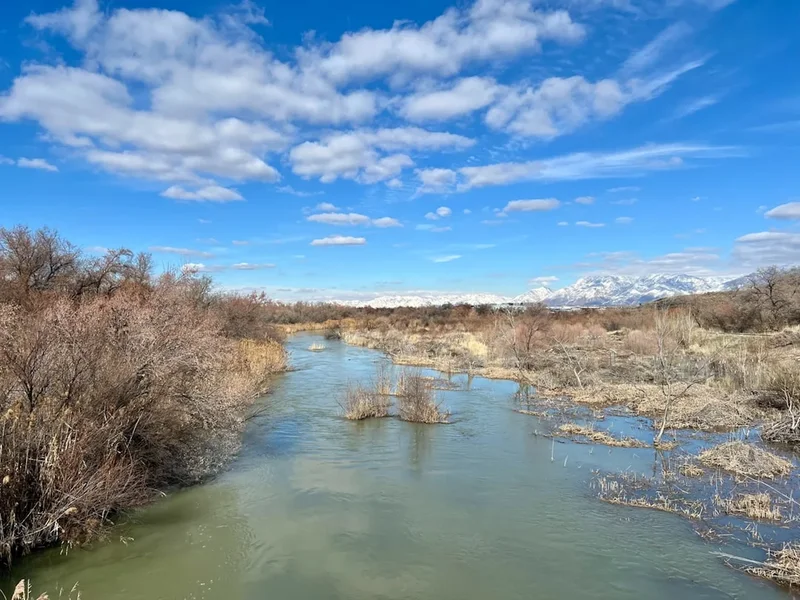
Dana to Petra Trek - The Inca Trail of the Middle East
The Dana to Petra Trek is Jordan's most iconic wilderness journey—an 80-kilometre multi-day expedition that traverses the rugged heart of the Great Rift Valley. Connecting the ancient stone village of Dana to the rose-red Nabatean capital of Petra, this trek is frequently cited by National Geographic as one of the world's best hikes. It is a journey through time and geology, crossing four distinct bio-geographical zones, from the Mediterranean-like highlands of the Dana Biosphere Reserve to the scorched, lunar landscapes of the Araba Valley, before ascending into the hidden sandstone canyons of the Sharah Mountains. Unlike many popular global trails, the Dana to Petra Trek offers a profound sense of isolation; it is a route where the silence of the desert is broken only by the crunch of gravel underfoot and the occasional greeting of a Bedouin shepherd. This is not merely a walk; it is an immersion into the ancestral lands of the Ammarin and Bdoul tribes, a physical challenge that rewards the persistent with the most dramatic entrance to one of the New Seven Wonders of the World.
- Distance: 80.0 km point-to-point
- Duration: 4–6 days
- Season: March–May and September–November (Spring and Autumn)
- Accommodation: Wild camping or established Bedouin eco-camps
- Highest point: Dana Village (1,200 m) and the Sharah Mountains (1,100 m)
- Difficulty: Challenging (requires high fitness and navigation skills)
- Direction: North to South (Dana to Petra is the standard route)
Overview
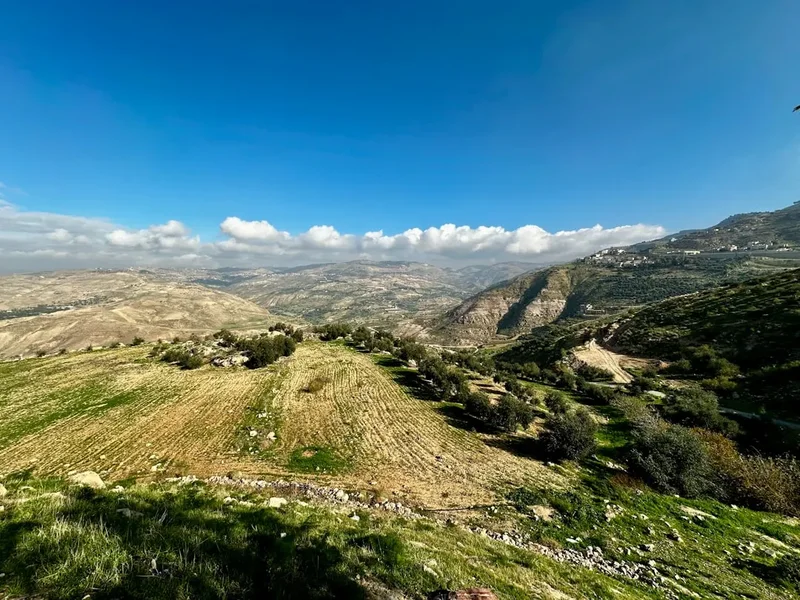
The Dana to Petra Trek is a masterclass in environmental transition. It begins at the precipice of the Dana Biosphere Reserve, where the limestone cliffs are dotted with Phoenician juniper and evergreen oak. As you descend over 1,000 vertical metres on the first day, the landscape transforms with startling speed. The lush greenery of the highlands gives way to the arid, gravelly plains of Wadi Araba, where the heat becomes a tangible force and the vegetation thins to hardy acacia trees and desert scrub. This section of the trail follows the edge of the African Rift Valley, a geological scar that defines the topography of the Levant. The middle days of the trek are a test of endurance and spirit, navigating the "labyrinth" of Wadi Malaga and the steep, rocky passes of Ras Al-Faid. Here, the geology shifts again, introducing the dark, volcanic granite that predates the sandstone of Petra by millions of years.
The final approach to Petra is perhaps the most spectacular conclusion to any trek on Earth. Rather than entering through the crowded main gate and the Siq, trekkers approach from the north, via the "Back Door." This route involves a high-altitude traverse along narrow ledges carved into the sandstone, offering a bird's-eye view of the Wadi Araba before suddenly revealing the Ad Deir (The Monastery) in all its colossal glory. This entrance allows walkers to experience Petra as the ancient caravans once did—emerging from the wilderness into a hidden city of stone. The trek is physically demanding, involving long days under a relentless sun, significant elevation changes, and terrain that ranges from soft sand to sharp scree. However, the logistical challenge is matched by the cultural richness; the hospitality of the local Bedouin, who have navigated these wadis for centuries, is an integral part of the experience. Whether sharing sweet sage tea in a goat-hair tent or sleeping under a canopy of desert stars, the human connection to the land is as memorable as the landscape itself.
While the trail is part of the larger 675-kilometre Jordan Trail, the Dana to Petra section remains its crown jewel. It requires careful planning, as water sources are scarce and the desert environment is unforgiving. For those who seek a raw, authentic adventure that combines world-class archaeology with pristine wilderness, there is no substitute for this Jordanian odyssey.
History and Cultural Context
The path between Dana and Petra has been trodden for millennia, serving as a vital artery for trade, pilgrimage, and pastoralism. Long before modern trekkers arrived, this route was part of the extensive network used by the Nabateans—the master engineers and traders of the ancient world. From the 4th century BCE to the 1st century CE, the Nabateans controlled the incense and spice routes that stretched from Southern Arabia to the Mediterranean ports. The Dana to Petra corridor was a strategic link, allowing caravans to bypass the more exposed King's Highway and move through the protected wadis of the Rift Valley. Evidence of their presence is scattered throughout the trek, from ancient water cisterns carved into the rock to the ruins of watchtowers that once guarded the precious cargo of frankincense and myrrh.
Beyond the Nabateans, the region holds deep significance for the local Bedouin tribes. The Dana Biosphere Reserve is the ancestral home of the Ata'ta tribe, while the southern reaches of the trek are the domain of the Ammarin and the Bdoul. For these communities, the wadis are not just transit routes but a living map of resources—seasonal springs, grazing lands for goats, and sheltered caves for winter. The village of Dana itself is a testament to this enduring history; its stone houses, some dating back to the Ottoman period, were built upon much older foundations. In the 1980s, the village was nearly abandoned as residents moved to modern settlements, but a concerted conservation effort by the Royal Society for the Conservation of Nature (RSCN) transformed it into a hub for eco-tourism, preserving its cultural heritage while protecting the surrounding biodiversity.
The trek also passes through Feynan, home to some of the oldest copper mines in the world. Archaeological excavations have revealed that copper smelting occurred here as early as the Chalcolithic period (4500–3100 BCE). The blackened slag heaps visible near the Feynan Ecolodge are remnants of an industrial scale of production that supplied the Roman Empire. Walking this trail is, therefore, a journey through the layers of human civilisation, where every canyon and ridge has a story to tell of survival, commerce, and empire.
Want more background? Read extended notes on history and cultural context → Learn more
Seasonal Highlights and Weather Reality
Timing is the most critical factor when planning the Dana to Petra Trek. The Jordanian desert is a land of extremes, where temperatures can swing from freezing at night to over 40° Celsius during the day. The "Goldilocks" windows are Spring and Autumn, when the weather is most conducive to long-distance walking.
Spring (March to May): This is arguably the best time to trek. Following the winter rains, the desert undergoes a brief but spectacular transformation. The Dana Biosphere Reserve bursts into bloom with wild irises (including the rare Black Iris, Jordan's national flower), anemones, and tulips. The wadis may still have flowing water, and the temperatures are generally mild, ranging from 15°C to 25°C. However, spring can also bring the "Khamsin"—a hot, dusty wind from the south that can obscure views and make walking uncomfortable.
Autumn (September to November): As the summer heat dissipates, the trekking season reopens. The air is often clearer than in spring, providing sharp, panoramic views across the Rift Valley. The landscape is much drier, and water sources are at their lowest, making self-sufficiency even more important. Temperatures are similar to spring, though the nights begin to get significantly colder as November approaches.
Winter (December to February): Trekking in winter is possible but requires high-level preparation. The highlands around Dana can experience snow, and the desert nights often drop below freezing. The primary danger in winter is flash flooding. Jordan's wadis are narrow drainage channels for a vast plateau; a rainstorm many kilometres away can send a wall of water through a canyon with no warning. Many sections of the trail become impassable and life-threatening during rain events.
Summer (June to August): Trekking during the height of summer is strongly discouraged. Temperatures in the Wadi Araba regularly exceed 40°C, and there is virtually no shade. The risk of heatstroke and severe dehydration is extreme, and most professional guiding companies suspend operations during these months for safety reasons.
Recommended Itinerary
5-Day Dana to Petra Itinerary
Day 1: Dana Village to Feynan
- Distance: 14 km
- Elevation: 200 m gain, 1,200 m descent
- Time: 5–6 hours
- Start in the historic stone village of Dana (1,200 m)
- Descend through the spectacular Wadi Dana, passing through four distinct bio-zones
- Observe the transition from Mediterranean forest to arid desert scrub
- Pass the "Shaq al-Reesh" (Canyon of Feathers) sandstone formations
- Arrive at Feynan, home to ancient copper mines and the award-winning Feynan Ecolodge
- Overnight: Feynan Ecolodge or wild camping nearby
Day 2: Feynan to Wadi Malaga
- Distance: 13.7 km
- Elevation: 450 m gain, 350 m descent
- Time: 5–6 hours
- Cross the gravelly plains of Wadi Araba, following the base of the mountains
- Pass through the black slag heaps of the Byzantine-era copper smelting sites
- The terrain is mostly flat but exposed to the sun with very little shade
- Enter the foothills of the Sharah Mountains as the geology shifts to granite
- Arrive at the mouth of Wadi Malaga, a beautiful desert wash
- Overnight: Wild camping in Wadi Malaga
Day 3: Wadi Malaga to Ras Al-Faid
- Distance: 13.7 km
- Elevation: 750 m gain, 450 m descent
- Time: 7–8 hours
- The most physically demanding day, involving a steep ascent out of Wadi Malaga
- Navigate the "Labyrinth," a complex series of ridges and small wadis
- Climb to the high pass of Ras Al-Faid, offering views back toward the Dead Sea
- Descend into the hidden valley of Al-Faid, where a permanent spring often provides water
- The scenery is dominated by dark volcanic rock and dramatic cliffs
- Overnight: Wild camping near the spring at Ras Al-Faid
Day 4: Ras Al-Faid to Little Petra (Siq al-Barid)
- Distance: 22.8 km
- Elevation: 600 m gain, 550 m descent
- Time: 8–9 hours
- A long day crossing a high plateau with expansive views of the Araba Valley
- The trail follows ancient Bedouin paths along the edge of the escarpment
- Pass through the "White Sandstone" region, where the rock begins to resemble the architecture of Petra
- Descend into the fertile valley of Beidha, an important agricultural site for the Nabateans
- Arrive at Little Petra (Siq al-Barid), a miniature version of the main city
- Overnight: Bedouin camp near Little Petra
Day 5: Little Petra to Petra via the "Back Door"
- Distance: 12.6 km
- Elevation: 450 m gain, 350 m descent
- Time: 4–5 hours
- Enter the Petra Archaeological Park through the northern entrance
- Follow a narrow, spectacular ledge trail carved into the sandstone cliffs
- Sudden reveal of Ad Deir (The Monastery), Petra's largest and most imposing monument
- Descend the 800 steps from the Monastery to the city centre (The Basin)
- Explore the Colonnaded Street, the Great Temple, and the Royal Tombs
- Finish the trek by walking through the Siq to the main gate at Wadi Musa
Important Notes:
- A local guide is highly recommended for navigation between Wadi Malaga and Little Petra
- Water sources are unreliable; always carry at least 4–6 litres per day
- The "Back Door" route to Petra requires a valid entry ticket (Jordan Pass recommended)
- Wild camping is permitted, but please respect local Bedouin grazing areas
- Mobile signal is non-existent for large portions of the middle days
Planning and Bookings
Book Your Trip
Everything you need to plan your journey
Accommodation
Find places to stay near Petra
Flights
Search flights to Petra
Essential Preparation
The Dana to Petra Trek is a serious undertaking that requires a high level of physical fitness and logistical coordination. Unlike European trails with frequent mountain huts, this is a wilderness route where you must be self-sufficient or have an organised support team. Most trekkers choose to hire a local Bedouin guide and a support vehicle (usually a 4x4) to transport water, tents, and food to designated meeting points each evening. This allows you to walk with only a daypack, which is crucial given the heat and elevation changes.
Before arriving in Jordan, ensure you have a high level of cardiovascular fitness. The terrain is often unstable, with loose scree and steep ascents that test ankle stability and endurance. It is also essential to coordinate your transport from Amman or Aqaba. Most trekkers base themselves in Amman, take a JETT bus or private taxi to Dana (approx. 3 hours), and arrange for a pickup in Wadi Musa (the town adjacent to Petra) at the end of the trek.
Trail Accommodation
Accommodation on the Dana to Petra Trek is a mix of eco-lodges, established Bedouin camps, and wild camping. There are no formal "huts" in the Western sense along the route.
Dana Village: Several guesthouses and the RSCN-run Dana Guest House offer comfortable rooms and traditional meals. Booking in advance is essential during peak season.
Feynan: The Feynan Ecolodge is a world-class sustainable hotel that operates entirely off-grid. It provides a high level of comfort, vegetarian meals, and guided activities. Alternatively, there are basic Bedouin campsites nearby.
Wild Camping (Wadi Malaga and Ras Al-Faid): These are remote wilderness sites with no facilities. You must bring your own tent, sleeping mat, and sleeping bag. If you are with a guided group, the support team will typically set up a communal mess tent and provide basic latrine facilities. There is no electricity, and water must be carried in or sourced from unreliable springs (treatment mandatory).
Little Petra: Several "Bedouin Camps" offer fixed tents with beds, shared bathrooms, and traditional "Zarb" (underground BBQ) dinners. These provide a welcome bit of comfort before the final day of trekking.
Wadi Musa (Petra): A wide range of accommodation is available, from budget hostels to 5-star luxury hotels. This is where you will likely spend your final night after completing the trek.
Required Gear
- Trekking boots - high-cut with excellent ankle support and a stiff sole for rocky terrain
- Trekking poles - essential for the steep descents and for stability on loose scree
- Daypack - 25-35L with a high-quality harness and rain cover (for dust protection)
- Waterproof jacket - lightweight shell for occasional rain or wind protection
- Insulating layer - a down jacket or heavy fleece for cold desert nights
- Sun hat - wide-brimmed to protect the face and neck
- Sunglasses - high UV protection (Category 3 or 4)
- Head torch - with spare batteries for camp life
- Navigation - GPS device with pre-loaded tracks and a physical map (Jordan Trail maps are excellent)
- First aid kit - including blister pads (Compeed), rehydration salts (Oralyte), and broad-spectrum antibiotics
What to Bring
- Water - capacity to carry 4-6 litres (bladder and hard bottles)
- Water treatment - a high-quality filter (Sawyer Squeeze or Katadyn) plus purification tablets
- Sunscreen - SPF 50+ and lip balm with UV protection
- Food - high-energy snacks (dates, nuts, energy bars) and lightweight dehydrated meals if self-supported
- Toiletries - biodegradable soap, wet wipes (for "desert showers"), and a trowel for waste
- Clothing - lightweight, breathable, long-sleeved shirts and trousers to protect from sun and thorns
- Power bank - to keep GPS and phone charged (cold nights drain batteries quickly)
- Personal medications - including an EpiPen if you have allergies to bee stings or plants
- Cash - Jordanian Dinars (JOD) for tipping guides and buying supplies in small villages
Permits
There is no specific "trekking permit" required to walk from Dana to Petra. However, you must navigate several administrative requirements to ensure a smooth journey. The most important of these is the Jordan Pass, which should be purchased online before you arrive in the country.
The Jordan Pass: This is an official government package that waives the visa entry fee (if you stay at least three nights) and includes entry to over 40 archaeological sites, including Petra. For the Dana to Petra Trek, the "Jordan Explorer" or "Jordan Expert" pass is recommended, as it allows for multiple days of entry into Petra, which you will need to fully explore the site after your trek.
Petra Entry: To enter Petra via the "Back Door" (the northern entrance), you must already have a valid ticket. There is no ticket office at the northern entrance. If you do not have a Jordan Pass, you must buy a ticket at the main Visitor Centre in Wadi Musa before starting your trek or have your guide arrange it. Rangers at the northern checkpoint will scan your ticket or Jordan Pass.
Dana Biosphere Reserve Fees: There is a small entrance fee (approx. 8-10 JOD) to enter the Dana Biosphere Reserve, which goes toward the conservation efforts of the RSCN. This is usually paid at the Guest House or included in your accommodation/guide fee.
Guiding Regulations: While not legally mandatory for the entire route, the authorities and the Jordan Trail Association strongly recommend hiring a local guide for the sections between Feynan and Little Petra. This is for safety, navigation, and to support the local economy. If you are trekking solo, you may be questioned by local police or rangers regarding your experience and equipment.
Other Activities in the Area
Jordan is a compact country with an extraordinary density of historical and natural sites. Consider these additions to your itinerary:
- Wadi Rum: A two-hour drive south of Petra, this "Valley of the Moon" offers world-class rock climbing, 4x4 tours, and luxury glamping in Martian-style pods.
- The Dead Sea: The lowest point on Earth is the perfect place to soothe sore muscles after 80 km of trekking. The mineral-rich mud and hypersaline water have genuine therapeutic properties.
- Wadi Ghuweir: Often called the "Petra of Canyons," this is a spectacular wet-wadi hike near Dana that can be done as a day trip or an alternative start to the trek.
- Amman Citadel and Roman Theatre: Spend a day in the capital exploring the layers of history, from the Neolithic to the Umayyad periods.
- Aqaba and the Red Sea: For those who want to finish with some relaxation, Aqaba offers excellent scuba diving and snorkelling on the northernmost coral reefs in the world.
- Mount Nebo and Madaba: Visit the site where Moses is said to have seen the Promised Land and view the famous 6th-century mosaic map of the Holy Land.
Safety and Conditions
Pre-Departure Checks:
- Check the weather forecast specifically for the Sharah Mountains and Wadi Araba; desert weather can be localised
- Inform your accommodation in Dana and Wadi Musa of your expected arrival time and route
- Ensure your travel insurance specifically covers "trekking up to 1,500 m" and emergency helicopter evacuation
- Verify that your GPS tracks are updated and that you have a backup power source
Flash Floods: This is the single greatest environmental hazard in Jordan. Even if it is sunny where you are, rain in the highlands can cause a flash flood in the wadis below. Never camp in the bottom of a narrow wadi. If you see dark clouds over the mountains or hear a distant roar like a freight train, move to high ground immediately. Do not attempt to cross flowing water in a wadi.
Heat and Hydration: Heat exhaustion and heatstroke are significant risks. The combination of high temperatures, low humidity, and physical exertion can lead to rapid dehydration. You must drink even when you don't feel thirsty. Aim for 1 litre of water per hour of walking during the heat of the day. Use rehydration salts to replace electrolytes lost through sweat. If you stop sweating, feel dizzy, or develop a headache, stop in the shade immediately and cool down.
Navigation: The trail is not consistently marked with signposts. It relies on stone cairns (waymarks) which can be knocked over or misleading. Between Wadi Malaga and Ras Al-Faid, the terrain is a "labyrinth" of similar-looking ridges. Without a guide or high-level GPS skills, it is very easy to become disoriented. Always carry a satellite communication device (like a Garmin inReach) as there is no mobile signal in the deep canyons.
Wildlife: While generally safe, the desert is home to scorpions and the Arabian cobra. Always shake out your boots in the morning and avoid sticking your hands into dark rock crevices. The most common "wildlife" encounter is with shepherd dogs; these are working animals and can be aggressive. If approached, stay calm, do not run, and wait for the shepherd to call them off.
Side Trips and Points of Interest
Wadi Ghuweir: If you have an extra day in Dana, Wadi Ghuweir is a must. It is a lush, palm-fringed canyon with a perennial stream. The towering walls are draped in hanging gardens of ferns and moss, providing a stark contrast to the arid landscapes of the main trek. It is a technical hike involving some scrambling over boulders and wading through ankle-deep water.
The Copper Mines of Feynan: Take an hour to explore the slag heaps and ancient mine shafts near the Feynan Ecolodge. These mines were the "oil fields" of the ancient world, and the scale of the Byzantine operations is staggering. You can still find small pieces of green malachite (copper ore) on the ground.
Beidha (Neolithic Village): Located near Little Petra, this is one of the oldest settled agricultural communities in the world, dating back to 7200 BCE. You can see the excavated remains of round and rectangular houses that predate the Nabateans by thousands of years.
The High Place of Sacrifice: Once you reach Petra, don't just stick to the main path. The climb to the High Place of Sacrifice offers the best views over the entire city and features two massive obelisks carved directly out of the mountain peak. It is a place of profound atmosphere and ancient ritual.
Leave No Trace
The Jordanian desert is a fragile ecosystem where the scars of human impact can last for decades. With the increasing popularity of the Jordan Trail, it is vital that every trekker adheres to strict Leave No Trace principles to preserve this landscape for the Bedouin communities and future walkers.
Your responsibility as a walker:
- Pack out all trash, including organic waste like orange peels and nut shells, which do not decompose quickly in the arid environment
- Dispose of human waste properly: dig a "cathole" at least 20 cm deep and at least 50 m away from any wadi bed or water source. Pack out your toilet paper in a sealed bag
- Respect water sources: do not wash yourself or your clothes directly in springs or communal troughs used by Bedouin livestock
- Do not disturb archaeological sites: it is illegal to remove pottery shards, flint tools, or stones from any site in Jordan
- Keep campfires small and use only dead, downed wood. In many areas, wood is scarce and needed by shepherds; using a gas stove is much more sustainable
- Respect local culture: dress modestly (shoulders and knees covered) when passing through villages or meeting Bedouin families
- Do not give money or sweets to children; this encourages begging and can lead to dental issues in remote areas where healthcare is limited