
Croagh Patrick Pilgrimage Trail - Ireland’s Holy Mountain
Croagh Patrick, affectionately known as "The Reek" by locals, is more than just a mountain; it is a profound symbol of Irish heritage, faith, and resilience. Rising 764 metres above the shimmering waters of Clew Bay in County Mayo, this quartzite pyramid has served as a site of ritual and pilgrimage for over 5,000 years. While it is world-renowned for its association with Saint Patrick, who is said to have fasted on its summit for forty days and forty nights in 441 AD, the mountain’s significance predates Christianity, stretching back to the pagan festival of Lughnasadh. Today, it remains one of the most climbed peaks in Ireland, attracting approximately 100,000 people annually who seek to test their physical limits or find spiritual solace on its rugged slopes.
- Distance: 7.0 km return
- Elevation Gain: 764 m
- Duration: 3.5–5 hours
- Difficulty: Moderate to Strenuous (due to steep scree and weather)
- Best Time: April to September (weather dependent)
- Closest City: Westport (8 km)
- Trailhead: Murrisk Car Park, opposite the National Famine Monument
- Permits: None required
Overview
The Croagh Patrick Pilgrimage Trail is a classic "out-and-back" route that begins at sea level in the village of Murrisk and ascends directly to the summit. The trail is famous for its challenging terrain, particularly the "cone" section near the top, which consists of loose quartzite scree. For decades, this section was notorious for its difficulty, but a major multi-year path restoration project—the Sustainable Croagh Patrick project—has recently introduced a beautifully crafted stone pitched path to mitigate erosion and improve safety for walkers. Despite these improvements, the mountain remains a serious undertaking that requires respect for the elements and a reasonable level of physical fitness.
The experience of climbing Croagh Patrick is defined by the shifting perspectives of the Atlantic coastline. As you ascend, the intricate tapestry of Clew Bay unfolds behind you. Legend says the bay contains 365 islands—one for every day of the year—and from the higher reaches of the trail, these drumlins (submerged glacial hills) look like a scattering of emeralds on a sapphire sea. To the south, the wild, rugged expanse of the Sheeffry Hills and the Mweelrea Mountains (the highest in Connacht) provide a dramatic backdrop of untamed wilderness. The climb is traditionally divided into three distinct stages: the initial ascent to the statue of Saint Patrick, the long traverse across the "shoulder" of the mountain, and the final, punishing scramble up the summit cone.
While many climb for the views or the physical challenge, the mountain’s atmosphere is heavily influenced by its status as a place of pilgrimage. On "Reek Sunday" (the last Sunday of July), thousands of pilgrims descend upon the mountain, some still adhering to the ancient tradition of climbing barefoot. Regardless of your motivations, standing at the summit beside the small white chapel, with the wind whipping off the Atlantic and the whole of Mayo spread out beneath you, is an experience that resonates long after you have returned to the trailhead.
History and Cultural Context
The history of Croagh Patrick is a fascinating blend of archaeology, mythology, and religious devotion. Long before the arrival of Christianity, the mountain was known as Cruachán Aigle (Mount of the Eagle). Archaeological excavations have revealed the remains of a Bronze Age hillfort on the summit, suggesting that the mountain has been a focal point for communal gathering and ritual for millennia. It is widely believed that the mountain was a primary site for the celebration of Lughnasadh, the Gaelic harvest festival, which explains why the modern pilgrimage still takes place in late July.
In the Christian tradition, the mountain is inextricably linked to Saint Patrick, Ireland’s patron saint. According to the 7th-century hagiography by Tírechán, Patrick spent the season of Lent on the summit in 441 AD. During this time, he is said to have wrestled with demons and eventually banished all snakes from Ireland—a metaphor for the eradication of paganism. The "Black Bell" of Saint Patrick, a relic associated with the mountain, was used for centuries by the keepers of the mountain to bless pilgrims. The current chapel at the summit was built in 1905 by local men who hauled the materials up the mountain using donkeys and their own backs. It was restored and celebrated its centenary in 2005, remaining a focal point for the masses held on Reek Sunday.
The mountain also sits in a landscape scarred by the Great Famine (1845–1852). At the base of the trail in Murrisk stands the National Famine Monument, a bronze sculpture of a "Coffin Ship" with skeleton figures, serving as a poignant reminder of the millions who died or emigrated during Ireland’s darkest hour. Climbing Croagh Patrick is, therefore, not just a walk through nature, but a walk through the very soul of Irish history.
Want more background? Read extended notes on history and cultural context → Learn more
Seasonal Highlights and Weather Reality
The weather on Croagh Patrick is notoriously fickle, influenced by its proximity to the Atlantic Ocean. Conditions at the base in Murrisk can be deceptively calm, while the summit is shrouded in cloud and buffeted by gale-force winds. Understanding the seasonal variations is crucial for a safe and enjoyable climb.
Spring (March to May): This is a beautiful time to climb as the gorse begins to bloom, painting the lower slopes in vibrant yellows. However, spring can be very wet, and the upper sections of the mountain may still hold lingering ice or frost in March. Visibility can be hit-or-miss, with frequent "Atlantic showers" passing through.
Summer (June to August): This is the peak season. The days are long (sunset can be as late as 10:00 PM in June), and the weather is generally at its most stable. This is also the busiest time, culminating in Reek Sunday in July. If you prefer solitude, avoid the last weekend of July. Even in summer, a "sea mist" (locally known as ceoch) can descend rapidly, reducing visibility to a few metres.
Autumn (September to November): September often provides some of the clearest, crispest days for climbing. The light in autumn is spectacular for photography, casting long shadows over Clew Bay. As November approaches, the wind speeds increase significantly, and the temperature on the summit can drop toward zero Celsius.
Winter (December to February): Climbing Croagh Patrick in winter is only recommended for experienced hikers with appropriate gear. The mountain frequently sees snow and ice, particularly on the steep summit cone. The loose scree becomes incredibly treacherous when frozen. Daylight is limited, with the sun setting as early as 4:30 PM. High winds are a constant threat, and the wind chill factor can make the summit feel like -10°C or lower.
Recommended Itinerary
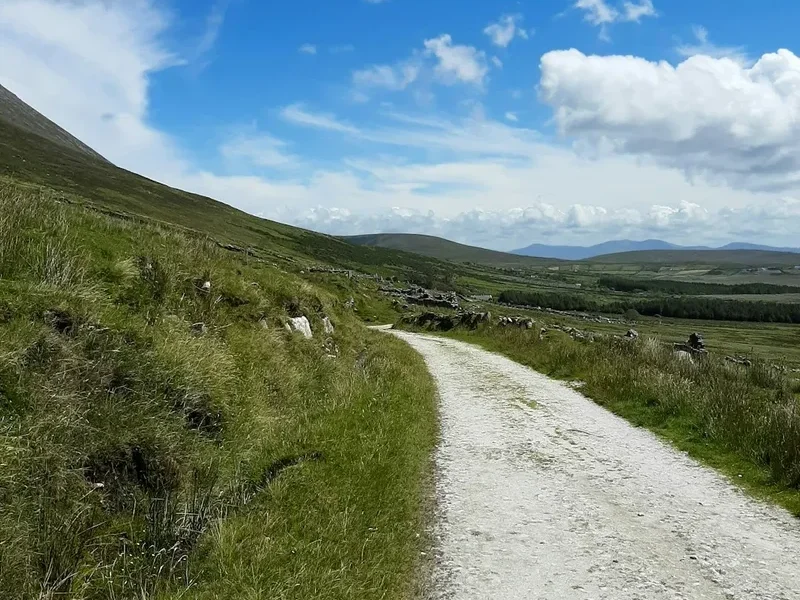
The Ascent: Route Progression
Stage 1: Murrisk Trailhead to the Saint Patrick Statue
- Distance: 1.2 km
- Elevation Gain: 150 m
- Time: 30–45 minutes
- Start at the Murrisk car park and follow the well-marked path past the craft shops and café.
- The trail begins with a steady incline on a wide, gravelled path.
- Pass through the "Pilgrim Gate" where many walkers pause to find a walking stick (available for a small donation).
- Reach the white statue of Saint Patrick, erected in 1928. This is a common spot for a first rest and offers the first expansive views of the Abbey ruins in Murrisk below.
Stage 2: The Shoulder (Leacht Benáin)
- Distance: 1.5 km
- Elevation Gain: 250 m
- Time: 45–60 minutes
- The path becomes steeper and more rugged as you leave the statue behind.
- This section involves navigating a series of natural stone steps and rocky outcrops.
- The trail eventually levels out onto a broad, flat ridge known as the "Shoulder" or Leacht Benáin.
- This is the easiest part of the walk physically, providing a much-needed reprieve before the final climb.
- On a clear day, you can see the entire stretch of the South Mayo coastline from here.
Stage 3: The Summit Cone (The Scree)
- Distance: 0.8 km
- Elevation Gain: 364 m
- Time: 45–75 minutes
- This is the most challenging part of the hike. The gradient increases sharply to approximately 30 degrees.
- Follow the newly constructed stone pitched path. This path is designed to keep walkers off the loose, dangerous scree that flanks it.
- The climb is relentless and will test your cardiovascular fitness. Take frequent short breaks to admire the view and stay hydrated.
- As you approach the top, the path narrows and the wind usually intensifies.
Stage 4: The Summit
- Time: 30–60 minutes (exploration time)
- The summit is a relatively flat plateau housing the small oratory (chapel).
- Walk the "Station Beds"—circular stone mounds where pilgrims perform traditional circuits.
- Enjoy 360-degree views: Clew Bay to the north, Nephin Beg range to the northeast, and the vast Atlantic to the west.
- The chapel is usually closed except on pilgrimage days, but the sheltered side of the building provides a good spot to eat lunch out of the wind.
Stage 5: The Descent
- Distance: 3.5 km
- Elevation Loss: 764 m
- Time: 1.5–2 hours
- Retrace your steps down the stone path. Caution is required here; more injuries occur on the descent than the ascent due to tired legs and gravity.
- Use trekking poles if you have them to reduce the impact on your knees.
- Once back at the Shoulder, the walking becomes easier, but stay focused on the rocky sections near the statue.
- Finish back at Murrisk for a well-earned meal or drink in the local pubs.
Planning and Bookings
Book Your Trip
Everything you need to plan your journey
Accommodation
Find places to stay near Westport
Flights
Search flights to Westport
Essential Preparation
Croagh Patrick does not require advanced bookings or permits, making it a highly accessible adventure. However, preparation is key to a successful climb. The nearest major town is Westport, a vibrant tourist hub located 8 km from the trailhead. It is highly recommended to base yourself in Westport the night before your climb to ensure an early start, especially during the busy summer months when the car park in Murrisk fills up by 10:00 AM.
Fitness requirements are moderate. While you don't need to be an elite athlete, you should be comfortable walking uphill for two hours. If you have knee or ankle issues, the descent can be particularly taxing. Logistics are straightforward: if you are not driving, a regular bus service (Bus Éireann route 450) runs from Westport to Murrisk. Alternatively, many people choose to cycle from Westport along the dedicated cycle path that parallels the coast.
Trail Accommodation
This is a day hike requiring no overnight accommodation on the mountain itself. Camping on Croagh Patrick is strongly discouraged to protect the fragile alpine environment and respect the sacred nature of the site. There are no huts or shelters for overnight stays.
Nearby Options:
- Murrisk: There are several high-quality Bed & Breakfasts and a hostel located within walking distance of the trailhead.
- Westport: A wide range of accommodation is available, from luxury hotels and boutique guesthouses to budget-friendly hostels and campsites.
- Campsites: There are organised caravan and camping parks in Westport and nearby Carrowholly, providing full facilities including showers and kitchens.
Required Gear
- Hiking Boots: Essential. The terrain is rocky and uneven. Ankle support is crucial to prevent sprains on the loose sections. Do not attempt this in sandals or fashion trainers.
- Waterproof Jacket: Even if the sun is shining at the base, the summit can be wet and windy. A breathable, waterproof shell is a must.
- Layered Clothing: Use a moisture-wicking base layer (merino wool or synthetic), an insulating mid-layer (fleece), and your outer shell. Avoid denim jeans, which become heavy and cold when wet.
- Trekking Poles: Highly recommended for the descent to save your knees and provide stability on the stone steps.
- Sun Protection: The Atlantic breeze can mask the strength of the sun. Bring a hat and high-factor sunscreen.
- Mobile Phone: Fully charged, with an offline map or GPS app.
What to Bring
- Water: At least 1.5 to 2 litres per person. There are no reliable water sources on the mountain.
- Food: High-energy snacks (nuts, chocolate, fruit) and a packed lunch to enjoy at the summit.
- Personal First Aid: Plasters (band-aids) for blisters, antiseptic wipes, and any personal medication.
- Small Backpack: A 15–25 litre pack with a rain cover to keep your gear dry.
- Rubbish Bag: To carry out all your waste, including organic matter like banana skins or orange peels.
- Whistle: For emergency signalling in low visibility.
Permits
Currently, there is no permit system or entry fee required to climb Croagh Patrick. Access to the mountain is free and open to the public year-round. This is made possible through the cooperation of local landowners and the work of the Croagh Patrick Stakeholders Group.
Parking Fees: While the trail is free, the main car park in Murrisk is a "pay and display" facility. The cost is approximately €3.00 to €5.00 for the day. Ensure you have coins or a card for the machine, as enforcement is regular. During peak times, an overflow car park may be opened, which sometimes operates on a cash-only basis.
Group Events: If you are organising a large charity climb or a commercial tour (more than 20 people), it is common courtesy to notify the Murrisk Development Association or the local authorities. This helps with traffic management and ensures that your event does not conflict with major religious ceremonies or maintenance work.
Respecting the Land: Although no permit is needed, walkers are reminded that they are guests on the mountain. Much of the land is privately owned by local farmers who graze sheep on the slopes. Dogs are strictly prohibited on the mountain to protect livestock, and walkers must stick to the designated paths to prevent further erosion of the fragile peat and quartzite soil.
Other Activities in the Area
The region surrounding Croagh Patrick is a playground for outdoor enthusiasts and culture seekers alike. Consider these additions to your itinerary:
- The Great Western Greenway: A 42 km world-class cycling and walking trail that follows the route of the old midlands Great Western Railway from Westport to Achill Island. It offers stunning views of Clew Bay and the Nephin Beg mountains.
- Westport House: One of Ireland’s most beautiful historic homes. Set in a 400-acre estate, it offers tours of the grand rooms, beautiful gardens, and a pirate-themed adventure park for families.
- Clew Bay Cruise: Take a boat trip from Westport Quay to see the 365 islands up close. Many cruises offer wildlife spotting, including the chance to see the local seal colony.
- Blue Flag Beaches: Visit Bertra Beach (at the foot of the mountain) or Old Head Beach for a refreshing dip in the Atlantic or a coastal walk.
- Traditional Music: Westport is famous for its traditional Irish music scene. Head to Matt Molloy’s (owned by the flautist of The Chieftains) for a nightly "session" of tunes and craic.
- Achill Island: A 45-minute drive from Westport, Achill features some of the highest sea cliffs in Europe and the stunning Keem Bay, recently made famous as a filming location for The Banshees of Inisherin.
Safety and Conditions
Weather Awareness: The single greatest danger on Croagh Patrick is the weather. Conditions can change from bright sunshine to thick fog and driving rain in less than twenty minutes. Always check the mountain-specific forecast on Met Éireann before starting. If the summit is covered in thick cloud and you are not experienced in navigation, consider turning back at the Shoulder.
The Scree Hazard: While the new stone path has significantly improved safety, the areas surrounding the path consist of loose, shifting quartzite. This scree is unstable and can easily cause a fall. Stay on the pitched stone path at all times. If you must step off, do so with extreme caution and be aware of walkers below you who might be hit by dislodged stones.
Hydration and Exhaustion: The climb is a steady, steep pull that can lead to rapid dehydration, especially in the wind. Drink small amounts of water frequently. Know your limits; many people find the final cone too daunting and choose to stop at the Shoulder. There is no shame in this—the views from the Shoulder are nearly as spectacular as those from the summit.
Emergency Procedures: In the event of an accident, dial 999 or 112 and ask for Mountain Rescue. Be prepared to give your location (using landmarks like the Statue, the Shoulder, or the Cone) and describe the nature of the injury. Because the mountain is so popular, help is often nearby, but in bad weather, a rescue can take several hours.
Barefoot Climbing: While it is a tradition, climbing barefoot is not recommended for those who have not conditioned their feet. The rocks are sharp, and the risk of infection or deep cuts is high. If you choose to climb barefoot for religious reasons, carry a pair of boots in your pack just in case.
Side Trips and Points of Interest
The National Famine Monument: Located at the base of the mountain in Murrisk, this striking bronze sculpture by John Behan is a "must-see." It depicts a coffin ship with skeletal figures, commemorating the victims of the Great Famine. It is a somber and powerful piece of art that sets a reflective tone for the climb.
Murrisk Abbey: Just a short walk from the car park lie the ruins of Murrisk Abbey, an Augustinian friary founded in 1457 by the O'Malley family. The ruins are well-preserved and offer a peaceful place to explore the history of the area before or after your hike. The abbey was built on the site of an earlier church supposedly established by Saint Patrick himself.
Bertra Beach: A stunning "tombolo" (a beach connected to an island) located just 2 km from the trailhead. It is a fantastic spot for a post-hike walk on the sand, offering a unique perspective of Croagh Patrick’s northern face reflecting in the tidal pools.
The Log na nDeamhan (Hollow of the Demons): On the northern side of the mountain, there is a deep, dramatic corrie or hollow. Legend says this is where Saint Patrick drove the demons into the sea. It is a spectacular geological feature that adds to the mountain's mystical aura.
The Tochar Phádraig: For those seeking a much longer adventure, the Tochar Phádraig is the ancient 35 km pilgrim path that leads from Ballintubber Abbey to the base of Croagh Patrick. This route requires a full day (or two) and takes you through the heart of the Mayo countryside, following the footsteps of medieval pilgrims.
Leave No Trace
Croagh Patrick is an environmentally sensitive site that suffers from significant "recreational pressure." As a walker, you have a responsibility to minimise your impact on this sacred and beautiful landscape. The mountain is a "Leave No Trace" area, and all visitors are expected to adhere to the following principles:
Protect the Path: The Sustainable Croagh Patrick project has spent years and significant funds to repair the mountain. Walking off the path destroys the fragile vegetation that holds the soil together, leading to massive "scarring" and erosion. Always stay on the designated stone path, even if it is wet or crowded.
Waste Management: There are no bins on the mountain. Everything you bring up must come back down. This includes "biodegradable" items like banana skins, apple cores, and orange peels. In the cold, acidic environment of the mountain, these items can take years to decompose and are an eyesore for others. If you see litter left by others, please consider picking it up.
Respect Wildlife and Livestock: The mountain is a working farm. Sheep graze here year-round. Keep a respectful distance from animals. Dogs are not permitted on the mountain because they can stress or injure the sheep, particularly during lambing season.
Be Considerate of Others: Croagh Patrick is a place of prayer for many. Avoid loud music, shouting, or intrusive drone use. Allow faster walkers to pass, and be patient at "bottlenecks" on the summit cone.
 Ireland