
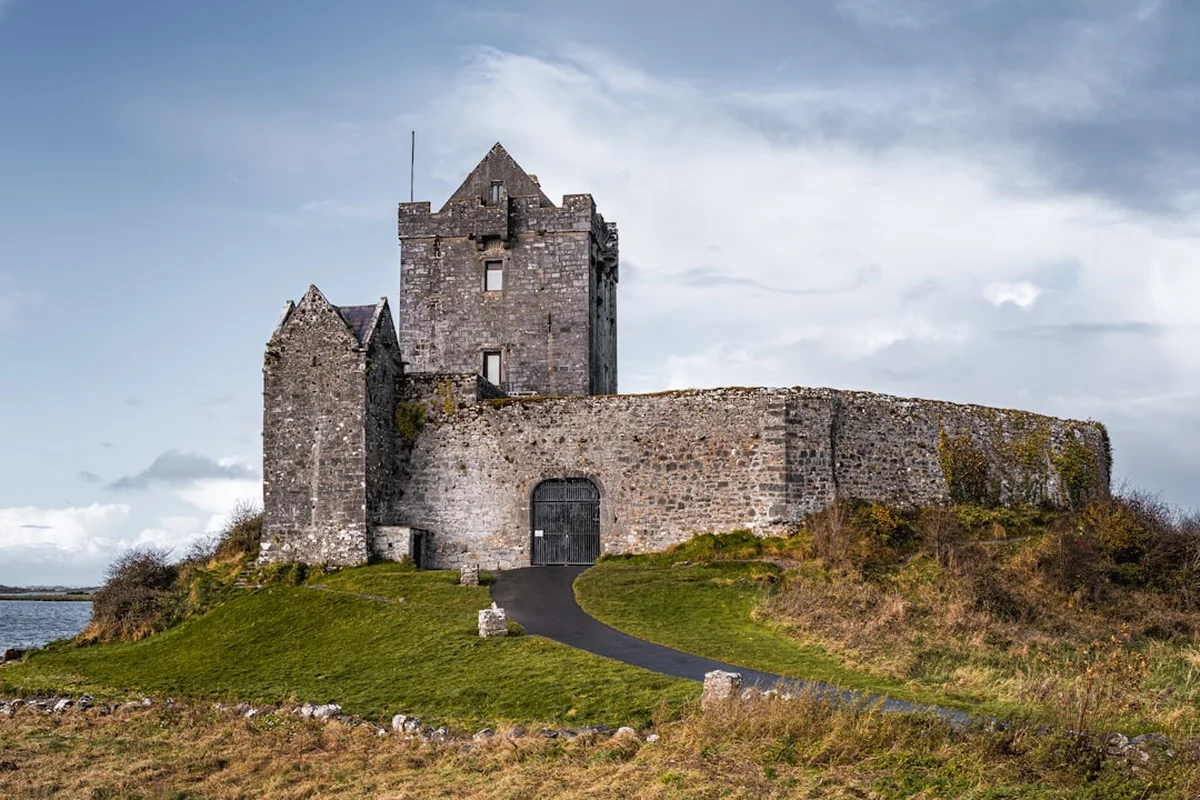
Croagh Patrick Pilgrimage - Ireland’s Holy Mountain
Croagh Patrick, affectionately known by locals as "The Reek," is more than just a mountain; it is a profound symbol of Irish identity, faith, and resilience. Rising 764 metres above the shimmering waters of Clew Bay in County Mayo, its distinctive conical shape dominates the western skyline. For over 1,500 years, pilgrims have ascended its quartzite slopes, following in the footsteps of Saint Patrick, who is said to have fasted and prayed on the summit for forty days and forty nights in 441 AD. Today, the mountain attracts approximately 100,000 visitors annually, ranging from devout pilgrims performing the ascent barefoot to outdoor enthusiasts seeking one of the most spectacular coastal views in Europe. The 13-kilometre return journey is a test of physical endurance and mental fortitude, particularly the final, punishing scramble up the scree-covered cone. Whether approached as a spiritual quest or a challenging day hike, Croagh Patrick offers a unique connection to Ireland’s ancient past and its rugged, Atlantic-sculpted present.
- Distance: 13.0 km return
- Elevation Gain: 764 m
- Duration: 4–5 hours
- Difficulty: Moderate to Strenuous (due to steep scree and weather)
- Best Time: April to September
- Closest City: Westport, County Mayo
- Trailhead: Murrisk (Croagh Patrick Visitor Centre)
- Highest Point: 764 m (Summit)
Overview
The ascent of Croagh Patrick is a quintessential Irish experience, blending natural beauty with deep-seated cultural tradition. Located just 8 kilometres from the vibrant town of Westport, the mountain serves as a sentinel over the "sunken drumlins" of Clew Bay—a drowned glacial landscape where, legend says, there is an island for every day of the year. The climb itself is divided into three distinct stages, each offering a different perspective on the landscape and a different level of physical challenge. The first stage leads from the statue of Saint Patrick at the base to the "shoulder" of the mountain, known as Cashel. This section is a steady climb on a well-defined, though rocky, path. The second stage is a relatively flat traverse across the ridge of Cashel, providing a brief respite and expansive views of the Nephin Beg mountain range to the north. The final stage is the infamous "cone"—a steep, 300-metre vertical scramble over loose quartzite scree that requires careful footwork and steady nerves.
Geologically, Croagh Patrick is composed primarily of quartzite, which gives the mountain its shimmering, almost ethereal appearance under the Atlantic sun. This rock type, however, breaks down into the treacherous "scree" that has long defined the climbing experience. In recent years, a massive sustainable access project has seen local stonemasons and international experts hand-build a stone staircase through the most eroded sections of the cone, significantly improving safety and protecting the mountain’s fragile ecology. Despite these improvements, the mountain remains a serious undertaking. The weather in County Mayo is notoriously fickle; a clear morning can transform into a mist-shrouded, wind-whipped afternoon in a matter of minutes. Reaching the summit, where a small white chapel stands against the sky, provides a sense of accomplishment that few other Irish peaks can match. From the top, the panorama stretches from the Twelve Bens of Connemara in the south to the distant cliffs of Achill Island in the west, offering a masterclass in the raw, unyielding beauty of the Wild Atlantic Way.
History and Cultural Context
The history of Croagh Patrick stretches back far beyond the arrival of Christianity in Ireland. Long before Saint Patrick’s legendary fast, the mountain was known as Cruachán Aigle (Mount of the Eagle) and served as a site of pagan ritual and assembly. Archaeological evidence, including a Neolithic hillfort and ancient rock art discovered near the summit, suggests that the mountain has been a place of spiritual significance for over 5,000 years. It was likely a focal point for the festival of Lughnasadh, the ancient harvest festival celebrated in late summer. This pagan heritage was seamlessly woven into the Christian tradition when Saint Patrick claimed the mountain for his mission. According to the 7th-century biographer Tírechán, Patrick spent the season of Lent on the summit, wrestling with demons and, according to popular folklore, banishing all snakes from Ireland by ringing his "Black Bell" and casting it down the mountainside.
The tradition of "Reek Sunday"—the last Sunday in July—is the modern continuation of these ancient rituals. On this day, thousands of pilgrims descend upon Murrisk to make the climb, many starting in the pre-dawn darkness. Historically, many performed the entire ascent barefoot as an act of penance, a practice that still continues today among a dedicated few. The small chapel at the summit, dedicated in 1905, was built using local stone carried up the mountain by hand and on the backs of donkeys. It replaced earlier structures that dated back to the medieval period. The mountain is also the terminus of the Tochar Phádraig, an ancient 35-kilometre pilgrim path that begins at Ballintubber Abbey. This route follows the old royal road from the Seat of the Kings of Connacht to the mountain, representing one of the most important heritage trails in Ireland. To walk Croagh Patrick is to participate in a living history that spans the transition from the Bronze Age to the modern era.
Want more background? Read extended notes on history and cultural context → Learn more
Seasonal Highlights and Weather Reality
The climbing season for Croagh Patrick typically runs from April to September, when the days are longer and the probability of clear skies is highest. However, "clear" is a relative term in the west of Ireland. The mountain is situated directly in the path of Atlantic weather systems, meaning it can experience "four seasons in one day." In late spring (April and May), the surrounding boglands are vibrant with new growth, and the air is often crisp and clear, though the wind can still carry a winter chill. This is often the best time for photography, as the light is sharp and the crowds are smaller than in high summer.
Summer (June to August) is the peak period for visitors. July, in particular, is dominated by the Reek Sunday preparations. While the temperatures are milder, ranging from 15°C to 20°C at the base, the summit can be significantly colder and windier. This is also the season of the "Atlantic mist," which can roll in with terrifying speed, reducing visibility to a few metres. Autumn (September and October) brings a palette of deep purples and browns to the landscape as the heather fades. The weather becomes more unpredictable, with increased rainfall and stronger gales, but the sense of solitude on the mountain increases.
Winter (November to March) transforms Croagh Patrick into a serious mountaineering prospect. While the mountain is not high by international standards, its proximity to the sea and its steep profile mean that snow and ice can make the scree cone extremely dangerous. During these months, the mountain is often shrouded in cloud for days at a time. Only those with proper winter hiking experience, including the use of crampons and ice axes if conditions dictate, should attempt the summit in mid-winter. Regardless of the season, hikers must check the Met Éireann mountain forecast before setting out, as conditions at the summit are invariably more severe than at the trailhead in Murrisk.
Recommended Itinerary
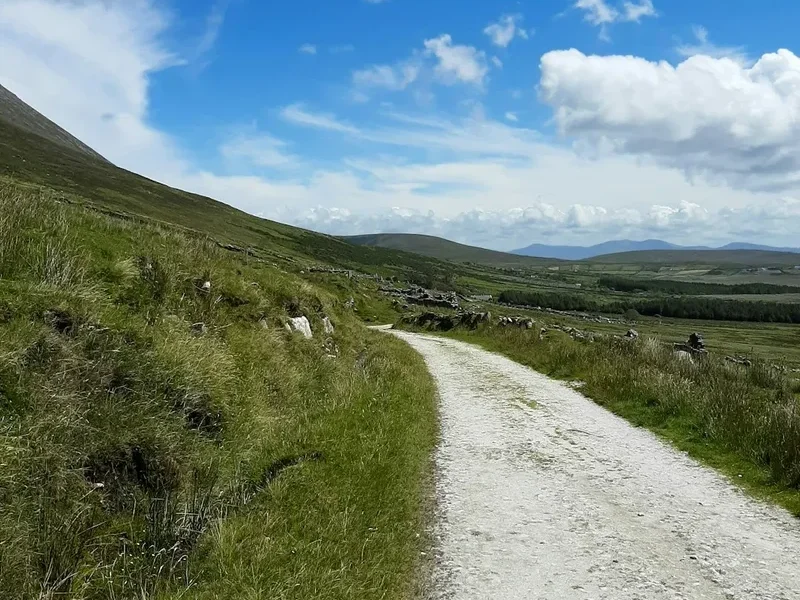
Route Progression: Murrisk to the Summit
Stage 1: The Trailhead to the Statue
- Distance: 0.5 km
- Elevation: 30 m gain
- Time: 10–15 minutes
- Start at the Croagh Patrick Visitor Centre in Murrisk
- Follow the paved path past the craft shops and café
- Reach the white statue of Saint Patrick, erected in 1928
- This is the traditional starting point for the pilgrimage and a popular spot for a final gear check
Stage 2: The Lower Slopes to the Shoulder (Cashel)
- Distance: 2.5 km
- Elevation: 400 m gain
- Time: 60–90 minutes
- The path becomes a rugged, rocky track through a gate
- Steady, unrelenting climb with several "false summits"
- The terrain is a mix of large stones and smaller gravel
- As you gain height, views of Clew Bay begin to open up behind you
- Reach the "Shoulder" or Cashel, a large, relatively flat plateau
- This is the ideal place for a rest and a snack before the final push
Stage 3: The Ridge Traverse
- Distance: 1.5 km
- Elevation: Minimal gain
- Time: 20–30 minutes
- A welcome flat section across the ridge connecting the lower mountain to the cone
- On a clear day, you can see the summit chapel ahead and the Sheeffry Hills to the south
- The path here is well-trodden and easy to follow, though it can be very windy
- Pass the "Leaba Phádraig" (Patrick’s Bed), a traditional station where pilgrims circle the stones
Stage 4: The Final Cone Scramble
- Distance: 1.0 km
- Elevation: 300 m gain
- Time: 45–60 minutes
- The most challenging part of the hike
- The gradient increases sharply as you tackle the quartzite cone
- Follow the newly constructed stone steps where possible to avoid the loose scree
- In sections without steps, use "three points of contact" and be mindful of dislodging rocks onto hikers below
- The air becomes thinner and the wind often intensifies as you approach the top
Stage 5: The Summit and Chapel
- Distance: N/A (Summit area)
- Elevation: 764 m
- Time: 30–60 minutes (exploration time)
- The summit is a large, flat area dominated by the 1905 chapel
- Walk the perimeter for 360-degree views: Clew Bay to the north, Nephin to the northeast, the Atlantic to the west, and the mountains of Connemara to the south
- On Reek Sunday, Mass is celebrated here throughout the day
- The chapel is usually closed except on pilgrimage days, but its sheltered side provides a windbreak
Stage 6: The Descent
- Distance: 6.5 km
- Elevation: 764 m loss
- Time: 1.5–2 hours
- Retrace your steps carefully down the cone; this is where most injuries occur
- The loose scree acts like ball bearings underfoot; trekking poles are highly recommended
- Once back on the shoulder, the descent is faster but still requires attention to avoid ankle rolls
- Finish back at the Murrisk car park for a well-earned meal in the local pubs
Planning and Bookings
Book Your Trip
Everything you need to plan your journey
Accommodation
Find places to stay near Westport
Flights
Search flights to Westport
Essential Preparation
Croagh Patrick does not require advanced bookings or permits, but successful completion requires careful logistical planning. The mountain is best accessed from Westport, a major tourism hub in County Mayo. Westport is well-connected by rail from Dublin (approximately 3 hours 15 minutes) and by road. From Westport, the trailhead at Murrisk is a 10-minute drive or a short bus journey. If you are visiting during the peak summer months or on Reek Sunday, accommodation in Westport and Murrisk should be booked months in advance, as the region reaches full capacity.
Physical fitness is a key consideration. While children and elderly pilgrims regularly complete the climb, the 764-metre ascent is physically demanding. Hikers should have a moderate level of cardiovascular fitness and be comfortable moving on unstable, steep terrain. If you have knee or ankle issues, the descent on the loose scree will be particularly taxing. It is highly recommended to spend a night in Westport before the climb to ensure an early start, which helps avoid the largest crowds and the midday heat (on the rare occasions it occurs).
Trail Accommodation
This is a day hike requiring no overnight accommodation on the mountain itself. Camping on Croagh Patrick is strongly discouraged to protect the fragile alpine environment and respect the sacred nature of the site. There are no huts or shelters for overnight stays.
Nearby Options:
- Murrisk: Several high-quality bed and breakfasts and a popular hostel are located within walking distance of the trailhead. This is the best option for those wanting to start their climb at dawn.
- Westport: A wide range of accommodation from luxury hotels (e.g., Westport Coast Hotel, Castlecourt Hotel) to budget-friendly hostels and guesthouses.
- Camping: There are several organised campsites and caravan parks along the coast between Westport and Louisburgh, offering full facilities including showers and kitchens.
Required Gear
- Hiking Boots: Essential. Do not attempt this in trainers or fashion shoes. The quartzite scree is sharp and unstable; you need stiff soles and good ankle support.
- Waterproof Layers: A high-quality waterproof jacket and overtrousers are mandatory. Atlantic squalls can arrive without warning.
- Trekking Poles: Highly recommended, especially for the descent. They provide crucial stability on the loose scree and reduce the impact on your knees.
- Warm Layers: A fleece or woollen mid-layer. The temperature at the summit is typically 5–7°C cooler than at sea level, not accounting for wind chill.
- Head Torch: Essential if you plan an early morning or late evening ascent.
- Small Backpack: 15–25 litres to carry your gear and supplies.
What to Bring
- Water: At least 2 litres per person. There are no reliable water sources on the mountain.
- High-Energy Food: Sandwiches, nuts, chocolate, or energy bars. The climb burns significant calories.
- Sun Protection: Sunscreen and a hat. Even on overcast days, the UV levels at altitude can be high, and there is no shade on the mountain.
- Personal First Aid: Plasters (band-aids) for blisters, antiseptic wipes, and any personal medications.
- Mobile Phone: Fully charged, with an offline map or GPS app. Signal is generally good on the mountain but can be patchy in the valleys.
- Whistle: For emergency signalling in low visibility.
Permits
There are currently no permits required to climb Croagh Patrick. Access to the mountain is free and open to the public year-round. This open-access policy is a point of pride for the local community, though it places a significant burden on the mountain's infrastructure and environment.
Associated Costs:
- Parking: The main car park at the Croagh Patrick Visitor Centre in Murrisk is a "pay and display" facility. Expect to pay approximately €4–€6 for a full day. During peak times, this car park fills up early.
- Visitor Centre: Entry to the centre's small museum and information area is free, but there are charges for using the shower and locker facilities (approximately €2–€3).
- Donations: There are often donation boxes for the Mayo Mountain Rescue Team and the Croagh Patrick Stakeholders Group, who manage the path restoration. Contributions are voluntary but highly encouraged to support the upkeep of the trail.
Group Events: If you are organising a large charity climb or a commercial group event (more than 20 people), it is common courtesy to notify the Croagh Patrick Visitor Centre in advance. This helps them manage car parking and ensures your event does not conflict with other major activities or religious ceremonies.
Other Activities in the Area
County Mayo is a playground for outdoor enthusiasts and culture seekers. Consider these nearby attractions to round out your trip:
- The Great Western Greenway: A 42-kilometre world-class cycling and walking trail following the route of the old mid-west railway from Westport to Achill Sound. It offers stunning views of Clew Bay and the Nephin Beg mountains.
- Westport House: One of Ireland’s most beautiful historic homes, set in a vast estate with gardens, a lake, and a pirate-themed adventure park for children.
- Clew Bay Cruises: Take a boat trip from Westport Quay to explore the islands of the bay. Many tours offer insights into the local seal colonies and the history of the "Pirate Queen" Grace O'Malley.
- Achill Island: A 45-minute drive from Westport, Achill features some of Ireland’s highest sea cliffs (Croaghaun) and the stunning Keem Bay, often cited as one of the best beaches in the world.
- Killary Fjord: Located on the border of Mayo and Galway, this is Ireland’s only true fjord. You can take a catamaran cruise or hike the "Famine Walk" along its southern shore.
- Traditional Music: Westport is famous for its traditional Irish music scene. Pubs like Matt Molloy’s (owned by the flautist of The Chieftains) offer live sessions almost every night of the week.
Safety and Conditions
The Scree Hazard: The single greatest danger on Croagh Patrick is the loose quartzite scree on the final cone. It is exceptionally easy to slip, especially on the descent. Every year, the Mayo Mountain Rescue Team (MMRT) responds to numerous call-outs for lower-limb injuries (sprained or broken ankles and knees) sustained in this area. Use the newly built stone path wherever possible, move slowly, and keep a safe distance from the person in front of you to avoid being hit by falling stones.
Weather Volatility: The mountain creates its own microclimate. It is common for the summit to be encased in "The Reek’s Cap"—a thick layer of cloud—while the base is in sunshine. If the mist descends, stay on the main path. The edges of the cone drop off into steep, dangerous gullies. If you lose the path in zero visibility, the safest course of action is often to wait for a break in the clouds or use a GPS to retrace your steps to the ridge.
Hydration and Exposure: There is no shade and no water on the mountain. On a warm day, the reflection of the sun off the white quartzite can lead to rapid dehydration and heat exhaustion. Conversely, in wet and windy conditions, hypothermia is a genuine risk, even in summer. Always carry high-energy food and more water than you think you need.
Emergency Contacts: In the event of an emergency, dial 999 or 112 and ask for "Mountain Rescue." Be prepared to give your approximate location (e.g., "the shoulder," "halfway up the cone") and the nature of the injury. The MMRT is a voluntary organisation; please respect their expertise and follow their advice if they are on the mountain during your climb.
Side Trips and Points of Interest
The Statue of Saint Patrick: Located at the very beginning of the climb, this statue was erected in 1928 to mark the 1500th anniversary of the Saint's arrival. It has become a focal point for pilgrims, many of whom touch the base of the statue for good luck before beginning their ascent. The area around the statue offers the last bit of level ground before the climb begins in earnest.
The Stations of the Cross: For those climbing for religious reasons, there are three "stations" on the mountain where specific prayers are traditionally said. These are at the Statue, at "Leaba Phádraig" (Patrick’s Bed) on the shoulder, and at the summit itself. Even for non-religious hikers, these sites are interesting markers of the mountain's cultural heritage.
Tochar Phádraig (The Pilgrim Path): If the 13-kilometre mountain hike isn't enough, you can attempt the full Tochar Phádraig. This 35-kilometre route from Ballintubber Abbey is a serious cross-country trek through fields, bogs, and ancient boreens. It is usually completed over two days, with the ascent of Croagh Patrick as the final climax. It requires a permit from Ballintubber Abbey (to cover insurance and access to private farmland).
The National Famine Monument: Located across the road from the car park in Murrisk, this striking bronze sculpture of a "Coffin Ship" commemorates the victims of the Great Irish Famine (1845–1852). It is a somber and beautiful piece of art that provides important historical context to the region you are visiting.
Murrisk Abbey: The ruins of a 15th-century Augustinian friary sit just a few hundred metres from the trailhead. Founded by the O'Malley family, the abbey was a key stop for medieval pilgrims. Its carved stone windows and quiet graveyard offer a peaceful contrast to the busy mountain path.
Leave No Trace
Croagh Patrick is an extremely high-traffic environment, and its status as a sacred site makes the "Leave No Trace" principles even more critical. The mountain has suffered from severe erosion over the decades, and your actions can either contribute to its decline or help its restoration.
Guidelines for a Responsible Climb:
- Stick to the Path: This is the most important rule. Wandering off the main trail destroys the fragile alpine vegetation and accelerates erosion. Use the stone steps on the cone; they were built specifically to prevent the mountain from "sliding" away.
- Pack It In, Pack It Out: There are no bins on the mountain. Every piece of litter—including orange peels, banana skins, and cigarette butts—must be carried back down to Murrisk. Organic waste does not decompose quickly in the cold, acidic environment of the summit.
- Respect the Chapel: The summit chapel is a place of worship. Even if you are not religious, maintain a respectful volume and do not lean gear against the building or climb on its roof.
- No Wild Camping: As mentioned, camping is not permitted on the mountain. Use the designated campsites in the surrounding area.
- Protect the Water: Do not use soaps or detergents in any of the small streams at the base of the mountain.
- Be Considerate: Croagh Patrick is shared by pilgrims, hikers, and local sheep farmers. Keep dogs on a lead at all times (sheep worrying is a major issue) and yield to those climbing upward.
 Ireland