
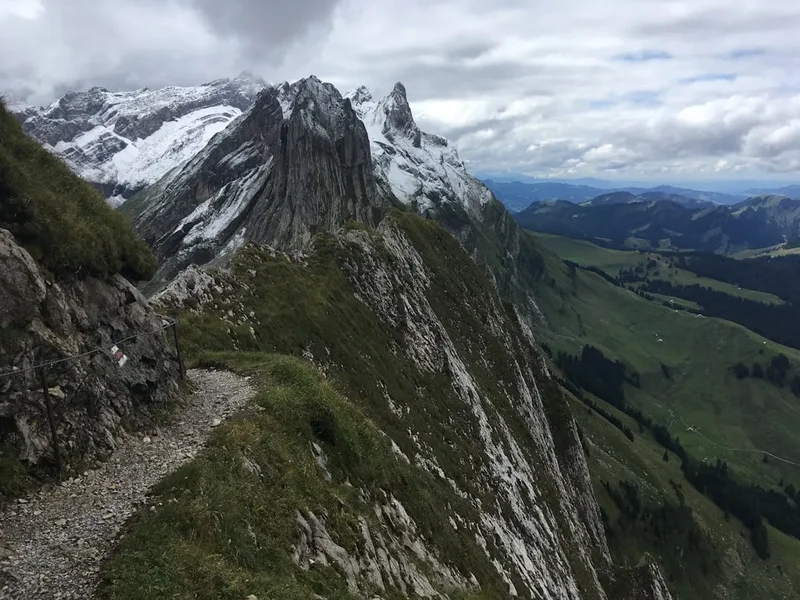
Creux du Van Loop - Switzerland's Natural Amphitheatre
The Creux du Van Loop is a spectacular day walk in the Jura Mountains of Switzerland, renowned for its dramatic natural amphitheatre, sheer cliffs, and breathtaking panoramic views. This circular route offers a moderate challenge with significant elevation gain, rewarding hikers with unforgettable vistas across Lake Neuchâtel and the Swiss Alps. It's a journey into a landscape carved by geological forces, offering a unique blend of natural wonder and accessible wilderness, making it a popular destination for both locals and international visitors seeking a taste of the Jura's rugged beauty.
- Distance: 14.0 km
- Elevation Gain: 520 m
- Duration: 4-5 hours
- Difficulty: Moderate
- Best Time: May to October
- Closest City: Neuchâtel
- Trailhead Access: Nearest airport: Zurich (ZRH). Train to Neuchâtel, then bus to Noiraigue. From Noiraigue, follow signs to Creux du Van trailhead (approx. 1km uphill walk). Driving: A5 motorway to Noiraigue. Limited parking available. Coordinates: 46.9033, 6.6939. No permits needed.
Overview
The Creux du Van Loop is a captivating day hike that showcases one of Switzerland's most striking natural landmarks. The centrepiece of the walk is the Creux du Van itself, a colossal natural cirque or amphitheatre measuring approximately 160 metres deep, 4 kilometres long, and 1 kilometre wide. Its sheer rock walls, sculpted by erosion and geological uplift over millennia, plunge dramatically into a valley floor dotted with ancient, gnarled pine trees. The scale of this natural wonder is awe-inspiring, offering a profound sense of the earth's raw power and artistry.
The trail typically begins in the village of Noiraigue, a charming gateway to the Creux du Van. From here, a steady ascent leads walkers through mixed forests and alpine meadows, gradually revealing glimpses of the dramatic landscape to come. The route is well-marked, though the terrain can be uneven and steep in places, requiring a reasonable level of fitness. As you approach the rim of the Creux du Van, the trees thin out, and the first expansive views begin to unfold. Standing on the edge of the precipice, looking down into the vast, silent amphitheatre, is an experience that stays with you.
The loop continues along the rim, offering multiple viewpoints and opportunities to appreciate the sheer scale and geological formations. The path then descends through different terrain, often via a more direct route back towards Noiraigue, completing a circuit that balances challenging ascents with rewarding descents and spectacular scenery. The surrounding Jura landscape, with its rolling hills, dense forests, and clear mountain air, provides a beautiful backdrop to this geological marvel.
History and Geological Significance
The Creux du Van is a testament to the immense geological forces that have shaped the Jura Mountains. Its formation is primarily attributed to a combination of tectonic uplift and subsequent erosion. Over millions of years, the uplift of the Jura range created a landscape of folded limestone strata. The Creux du Van itself is a prime example of a karst landscape, where soluble rocks like limestone have been eroded by water, creating sinkholes, underground drainage systems, and dramatic cliff faces.
The sheer walls of the amphitheatre are composed of Jurassic limestone, dating back approximately 150 to 200 million years. The dramatic vertical drop is a result of faulting and the relentless action of water and ice, which have carved away at the rock. The distinctive shape of the Creux du Van, resembling a colossal, natural theatre, is a rare and striking geological feature.
Historically, the area around the Creux du Van has been used for grazing and forestry. The remote and rugged nature of the landscape meant it remained largely untouched by significant human settlement, preserving its natural character. Local legends and folklore often surround such dramatic natural formations, with tales of spirits or ancient beings inhabiting the deep ravines. While specific historical accounts of human habitation within the Creux du Van itself are scarce, the surrounding region has a long history of human activity, particularly related to agriculture and the exploitation of natural resources.
The designation of the Creux du Van as a protected natural monument underscores its ecological and geological importance. It serves as a vital habitat for various plant and animal species adapted to its unique environment, including rare alpine flora and birds of prey that utilise the cliff faces for nesting and hunting. The area's geological significance also makes it a valuable site for scientific study and education, offering insights into the Earth's dynamic history.
Seasonal Highlights and Weather
The Creux du Van Loop is best enjoyed during the warmer months, from May to October, when the trails are generally clear of snow and ice, and the weather is more predictable. Each season offers a distinct experience:
Spring (May-June): As the snow melts, the landscape awakens. Wildflowers begin to bloom in the meadows, adding vibrant colours to the slopes. The forests are lush and green, and the air is fresh. However, spring weather can be variable, with occasional rain showers and cooler temperatures, especially at higher elevations. The waterfalls, fed by snowmelt, can be particularly impressive.
Summer (July-August): This is the peak season for hiking. The days are long and generally warm, providing ample time to complete the loop and enjoy the views. The meadows are in full bloom, and the surrounding forests offer welcome shade. However, summer can also bring occasional thunderstorms, so it's essential to check the weather forecast and start your hike early in the day. Sandflies are generally not a significant issue in this region compared to some other alpine areas.
Autumn (September-October): Autumn transforms the landscape into a spectacle of colour. The deciduous trees in the forests turn shades of gold, red, and orange, creating a stunning contrast with the evergreen pines and the grey limestone cliffs. The air is crisp and clear, offering excellent visibility for panoramic views. This season often provides stable weather patterns, making it ideal for hiking. However, temperatures can drop significantly, especially in the mornings and evenings, and early snowfalls are possible towards the end of October.
Weather Considerations: The Jura Mountains can experience rapid weather changes. Even during summer, it's advisable to be prepared for cooler temperatures, wind, and rain, especially at the higher elevations along the rim of the Creux du Van. Always check the local weather forecast before setting out and carry appropriate layers of clothing.
Recommended Itinerary
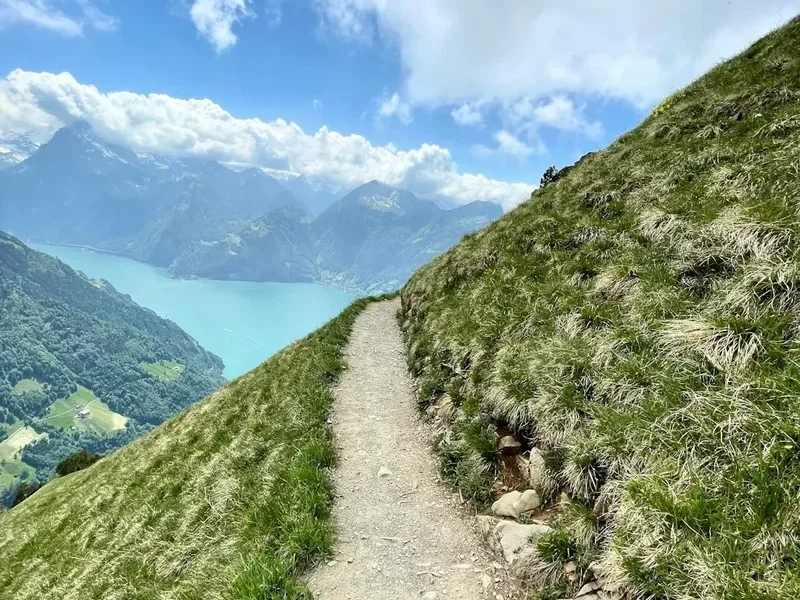
Creux du Van Loop - Day Walk
Early Morning: Arrival and Ascent to the Rim
- Approx. 8:00 AM - 9:00 AM: Arrive in Noiraigue. Park your vehicle and locate the trailhead signs for the Creux du Van.
- Approx. 9:00 AM: Begin the ascent from Noiraigue. The initial part of the trail is a steady climb through mixed forest.
- Distance: Approx. 4-5 km
- Elevation Gain: Approx. 300-350 m
- Time: 1.5-2 hours
- Key Waypoints: Follow marked trails from Noiraigue, passing through woodland. The gradient increases as you approach the plateau.
Morning: Exploring the Creux du Van Rim
- Approx. 11:00 AM: Reach the rim of the Creux du Van. The landscape opens up dramatically.
- Explore the viewpoints along the edge of the amphitheatre. Take time to absorb the scale and grandeur of the natural cirque.
- Walk along the rim towards the main viewing areas, such as the "Dalle" (the flat rock slab) and the "Sentier des 14 Contours" (Path of the 14 Contours), which offers a more direct descent.
- Distance: Approx. 3-4 km along the rim
- Elevation: Relatively flat with some undulations
- Time: 1.5-2 hours
- Key Waypoints: Main viewpoints overlooking the Creux du Van, signs indicating different paths.
Midday: Descent and Forest Walk
- Approx. 1:00 PM: Begin the descent from the rim. Depending on the chosen route, this can be steep and winding.
- The descent often takes you through different forest types and open meadows, offering varied scenery.
- Distance: Approx. 4-5 km
- Elevation Loss: Approx. 200-250 m
- Time: 1-1.5 hours
- Key Waypoints: Follow descent markers, potentially passing through areas with more open terrain before re-entering woodland.
Afternoon: Return to Noiraigue
- Approx. 2:30 PM - 3:00 PM: Arrive back in Noiraigue.
- Enjoy a well-deserved rest and perhaps a refreshment at a local establishment.
- Total Distance: 14.0 km
- Total Elevation Gain: 520 m
- Total Time: 4-5 hours (excluding extended breaks)
Alternative Route Considerations: Some variations exist, including routes that might start or end at different points or incorporate longer loops. The described itinerary is a common and highly recommended circuit.
Planning and Bookings
Book Your Trip
Everything you need to plan your journey
Accommodation
Find places to stay near Neuchâtel
Flights
Search flights to Neuchâtel
Essential Preparation
The Creux du Van Loop is a day hike, meaning no overnight accommodation is required. However, essential preparation still involves ensuring you have the right gear, understanding the trail conditions, and planning your logistics. The closest major city is Neuchâtel, which offers comprehensive services including accommodation, dining, and transport links. From Neuchâtel, you can take a train to the village of Noiraigue, which is the primary trailhead for the Creux du Van. If driving, the A5 motorway provides access to the region, with limited parking available in Noiraigue. It's advisable to check public transport schedules in advance, especially if travelling on weekends or public holidays, as services may be less frequent.
Trail Accommodation
This is a day hike requiring no overnight accommodation.
Required Gear
- Sturdy hiking boots: Waterproof and with good ankle support are essential due to the uneven terrain and potential for wet conditions.
- Waterproof jacket and trousers: Weather in the Jura Mountains can change quickly; always be prepared for rain.
- Backpack: A comfortable daypack (20-30 litres) to carry essentials.
- Navigation: A map of the area and a compass, or a reliable GPS device/smartphone with offline maps. While the trail is generally well-marked, it's good practice to have navigation tools.
- First-aid kit: Including blister treatment, bandages, antiseptic wipes, and any personal medications.
- Head torch: With spare batteries, in case of unexpected delays or if you start earlier/finish later than planned.
- Sun protection: Sunscreen, sunglasses, and a hat, as exposed sections of the trail can be sunny.
What to Bring
- Food: Plenty of snacks and a packed lunch. There are no facilities for purchasing food along the trail.
- Water: At least 1.5-2 litres of water per person. Water sources may be available but should be treated before drinking.
- Water treatment: A water filter or purification tablets if you plan to refill from natural sources.
- Toiletries: Hand sanitiser, toilet paper (and a bag to pack out used paper if facilities are unavailable).
- Insect repellent: While not usually a major issue, it's wise to have some on hand, especially during warmer months.
- Walking poles: Recommended for the steep ascents and descents, to reduce strain on knees and improve stability.
- Camera: To capture the stunning scenery.
- Cash: For potential small purchases in Noiraigue or if using public transport.
Permits
No specific permits are required to hike the Creux du Van Loop. The trail is part of the public domain and accessible to all. However, it is important to be aware of local regulations regarding camping, fires, and waste disposal. Respecting the natural environment and adhering to Leave No Trace principles is paramount.
Other Activities in the Area
The region surrounding the Creux du Van offers a variety of activities for visitors:
- Exploring Neuchâtel: Visit the charming city of Neuchâtel, with its picturesque old town, medieval castle, and beautiful lakefront promenade.
- Lake Neuchâtel: Enjoy watersports, boat trips, or simply relax by the lake. The lake is the largest entirely within Switzerland.
- Jura Mountains Hiking: Discover other hiking trails in the Jura region, which offer diverse landscapes from rolling hills to dramatic cliffs.
- Local Gastronomy: Sample regional Swiss cuisine and local wines in the villages and towns around Neuchâtel.
- Museums: Explore local history and culture at museums in Neuchâtel, such as the Laténium archaeological museum.
- Cycling: The Jura region offers excellent cycling routes, from scenic road rides to more challenging mountain biking trails.
Safety and Conditions
Trail Conditions: The Creux du Van Loop is generally well-maintained, but conditions can vary. The path can be rocky, uneven, and steep, especially on the descent. In wet weather, sections can become slippery and muddy. Always wear appropriate footwear.
Weather: Mountain weather is unpredictable. Be prepared for rapid changes in temperature, wind, and precipitation. Check the forecast before you go and carry layers of clothing. Hypothermia is a risk even in summer if you get wet and cold.
Navigation: While the main loop is well-signposted, it's always wise to carry a map and compass or a GPS device. Familiarise yourself with the route beforehand.
Steep Drops: The rim of the Creux du Van features sheer cliffs. Exercise extreme caution near the edges, especially in windy conditions or if visibility is poor. Keep a close eye on children.
Water: Carry sufficient water for the entire hike. Natural water sources should be treated before consumption.
Emergency: In case of an emergency, contact Swiss emergency services on 144 (ambulance) or 112 (general emergency number). Mobile phone reception can be patchy in some areas, so be prepared for this.
Fitness: The hike involves significant elevation gain and can be strenuous. Ensure you have a moderate level of fitness and are comfortable with steep ascents and descents.
Side Trips and Points of Interest
The "Dalle" (The Slab): This is a large, flat expanse of rock right on the edge of the Creux du Van, offering an unparalleled panoramic view into the amphitheatre. It's a popular spot for photos and a moment of quiet contemplation.
Sentier des 14 Contours (Path of the 14 Contours): This is a particularly scenic and somewhat challenging descent route from the rim back towards Noiraigue. It features numerous switchbacks, offering varied perspectives of the landscape and the surrounding forests.
"Le Solitaire" (The Solitary Pine): A famous, ancient, and gnarled pine tree that stands alone on the edge of the Creux du Van, often photographed as a symbol of the area's rugged beauty and resilience.
Viewpoints along the Rim: Beyond the main "Dalle," numerous smaller viewpoints offer different angles and perspectives of the Creux du Van and the distant landscape, including Lake Neuchâtel and the Alps on clear days.
Forest Sections: The trails wind through beautiful mixed forests, offering shade and a different atmosphere from the exposed rim. These sections are rich in flora and fauna, providing a tranquil contrast to the dramatic cliffs.
Leave No Trace
The Creux du Van is a natural treasure, and it's crucial to preserve its beauty and ecological integrity for future visitors. Adhering to Leave No Trace principles ensures that the impact of our visit is minimal:
- Plan Ahead and Prepare: Familiarise yourself with the trail, weather conditions, and any local regulations before you go.
- Travel and Camp on Durable Surfaces: Stick to marked trails to avoid damaging vegetation and soil. The Creux du Van rim is particularly sensitive.
- Dispose of Waste Properly: Pack out everything you pack in, including all food scraps, wrappers, and used toilet paper. Use designated waste bins if available, or carry it all home.
- Leave What You Find: Do not remove rocks, plants, or any other natural objects. Take only photographs and memories.
- Minimise Campfire Impacts: Campfires are generally not permitted on this day hike. If you are in an area where they are allowed, use designated fire rings and ensure fires are completely extinguished.
- Respect Wildlife: Observe wildlife from a distance and never feed animals. Feeding them can harm their health and alter their natural behaviours.
- Be Considerate of Other Visitors: Keep noise levels down, yield to other hikers on narrow trails, and be mindful of others' enjoyment of the natural environment.
By following these guidelines, you help protect the unique environment of the Creux du Van for generations to come.
 Switzerland