

Corcovado Mountain Trail - The Ascent to the Redeemer
The Corcovado Mountain Trail is one of the most iconic and physically rewarding day walks in South America, offering a direct, foot-based pilgrimage to the feet of the Christ the Redeemer statue (Cristo Redentor). Located within the lush confines of the Tijuca National Park—the world's largest urban forest—this 3.5-kilometre journey is a vertical challenge that rises 700 metres through the dense Atlantic Rainforest (Mata Atlântica). Unlike the thousands of tourists who reach the summit via the historic cog train or official vans, those who choose the trail experience the mountain's raw ecological beauty, transitioning from the humid forest floor to the breezy, panoramic heights of the summit. It is a walk that demands respect for the tropical climate and the steep terrain, but rewards hikers with a perspective of Rio de Janeiro that no vehicle can provide.
- Distance: 3.5 km return (from Paineiras)
- Duration: 3–4 hours
- Elevation Gain: 700 m
- Difficulty: Moderate (steep gradients and high humidity)
- Best Time: April to September (dry season)
- Closest City: Rio de Janeiro, Brazil
- Trailhead Access: Paineiras (via Cosme Velho)
- Coordinates: -22.9521, -43.2105
Overview
Rising sharply from the coastal plains of Rio de Janeiro, Corcovado Mountain (meaning "hunchback" in Portuguese) is a 710-metre granite peak that has become the global symbol of Brazil. While the statue at its peak is the primary draw, the trail itself is a masterclass in tropical biodiversity. The route begins in the heart of the Tijuca National Park, a protected area that serves as the "green lungs" of the city. As you ascend, the urban cacophony of Rio fades, replaced by the rhythmic calls of cicadas, the rustle of capuchin monkeys in the canopy, and the distant roar of waterfalls hidden within the ravines.
The experience is defined by its verticality. With 700 metres of elevation gain packed into a relatively short distance, the trail is a relentless climb. The path weaves through ancient secondary-growth forest, where massive Jequitibá trees and silver-leaved Cecropias compete for sunlight. The humidity here is a constant companion, often hovering above 80 percent, making the shade of the forest canopy a vital refuge. The terrain is a mix of packed earth, tangled root systems, and occasional rocky scrambles that require steady footwork. As the trail nears the summit, the forest thins, offering tantalising glimpses of the blue expanse of Guanabara Bay, the curved shoreline of Copacabana, and the jagged silhouette of Sugarloaf Mountain (Pão de Açúcar).
Reaching the summit on foot provides a profound sense of accomplishment. While the final platform is shared with crowds of international visitors, the hiker arrives with the salt of the Atlantic Forest on their skin and a deep appreciation for the mountain's scale. The view from the top is arguably the most famous urban panorama in the world, encompassing the Rodrigo de Freitas Lagoon, the Maracanã Stadium, and the sprawling favelas that cling to the surrounding hillsides. It is a journey that bridges the gap between Rio's vibrant urban energy and its wild, prehistoric roots.
History and Cultural Context
The history of Corcovado is inextricably linked to the environmental and spiritual evolution of Rio de Janeiro. In the early 19th century, the mountains surrounding the city were almost entirely deforested to make way for coffee and sugar cane plantations. This led to severe water shortages and landslides, prompting Emperor Dom Pedro II to initiate a massive reforestation project in 1861. Over several decades, thousands of native saplings were hand-planted, creating the Tijuca Forest we see today. The Corcovado Mountain Trail passes through this reclaimed wilderness, a testament to one of the world's first successful large-scale ecological restoration projects.
The summit itself was a popular lookout point long before the statue was conceived. In 1884, the Corcovado Rack Railway was inaugurated by Emperor Dom Pedro II, making it the first railway in Brazil to be used for tourism. It was this railway that later transported the materials needed to build the Christ the Redeemer statue. The monument was the brainchild of the Catholic Circle of Rio, who proposed it in 1920 to counter what they perceived as a "godless" drift in society. Designed by Brazilian engineer Heitor da Silva Costa and sculpted by French-Polish artist Paul Landowski, the statue was constructed between 1922 and 1931.
The construction was a feat of engineering. The statue is made of reinforced concrete, but its outer shell is composed of six million soapstone tiles, chosen for their durability and resistance to the harsh tropical elements. These tiles were often inscribed with the names of the workers and donors who made the project possible. Today, the statue is not only a religious icon but a symbol of Brazilian hospitality and a UNESCO World Heritage site. For hikers, the trail represents a connection to this history of labour, faith, and environmental resilience, following the same vertical contours that challenged the engineers and labourers of the early 20th century.
Want more background? Read extended notes on history and cultural context → Learn more
Seasonal Highlights and Weather Reality
Rio de Janeiro's tropical savanna climate means that weather is the most significant factor in planning a successful hike. The city experiences two distinct seasons: the wet summer and the dry winter. Understanding these cycles is crucial for safety and visibility.
The Dry Season (April to September): This is the optimal window for hiking the Corcovado Mountain Trail. During these months, the humidity drops slightly, and the chance of heavy afternoon downpours is significantly reduced. Temperatures are more manageable, typically ranging from 18°C to 26°C. The air is often clearer, providing the sharpest views of the coastline and the distant Serra dos Órgãos mountains. However, even in the dry season, early morning mist can shroud the summit; hikers should aim to reach the top by mid-morning when the sun has burnt off the low-lying clouds.
The Wet Season (October to March): Summer in Rio is characterised by intense heat and high humidity, with temperatures frequently soaring above 35°C. This season brings the "chuvas de verão" (summer rains)—sudden, violent thunderstorms that usually occur in the late afternoon. These storms can turn the trail into a muddy, slippery hazard and increase the risk of lightning strikes near the summit. If hiking during this period, an early start (before 8:00 AM) is mandatory to avoid both the peak heat and the afternoon storms. The forest is at its most vibrant and lush during these months, but the physical toll on the hiker is much higher.
Weather Reality: Regardless of the season, Corcovado creates its own microclimate. It is common for the city to be bathed in sunshine while the summit is enveloped in a "cap" of clouds. Hikers should check the "Cristo Redentor" live webcams before starting to ensure the view is clear. Additionally, the Atlantic Forest retains moisture long after rain has stopped, meaning the trail can remain slippery and humid even on a sunny day.
Recommended Itinerary
Corcovado Route Progression
Early Morning: Arrival at Paineiras
- Start at the Paineiras Visitor Centre (Centro de Visitantes Paineiras)
- Ensure you have your monument entry ticket pre-purchased or ready to buy at the centre
- Fill water bottles at the centre's facilities; this is the last reliable water source before the summit
- The trailhead is located near the entrance to the road that leads to the monument
- Take a moment to observe the historic Paineiras Hotel ruins, once a luxury retreat for Rio's elite
Morning: The Forest Ascent
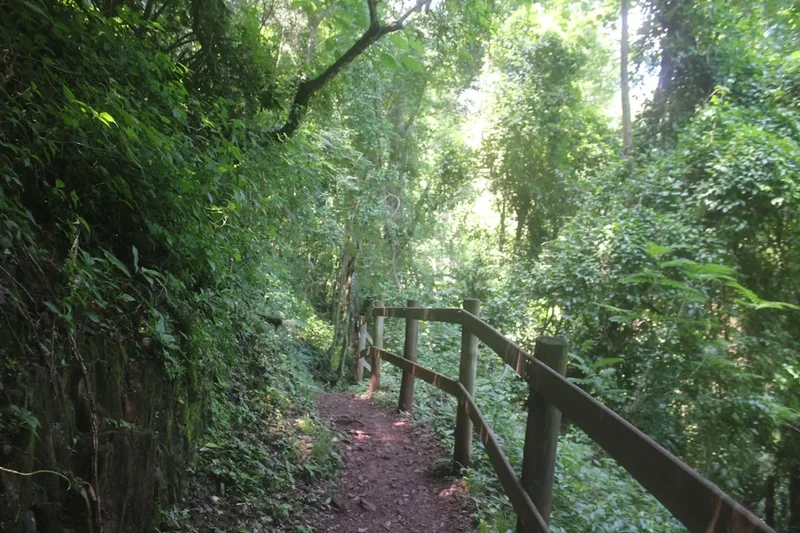
- The first 1.5 kilometres involve a steady climb through dense secondary-growth rainforest
- The path is well-defined but narrow, with significant root systems crossing the trail
- Look for local wildlife: marmosets and capuchin monkeys are frequently seen in the lower canopy
- Pass through sections of bamboo groves and giant ferns
- The humidity is highest in this section as the dense foliage traps moisture
- Maintain a steady pace; the gradient is consistent and requires good cardiovascular effort
Mid-Morning: The Ridge and Scramble
- As you gain elevation, the trail becomes rockier and more exposed
- There are several points where the forest opens up to provide views of the South Zone (Zona Sul) and the Atlantic Ocean
- A short section involves a steeper scramble over granite slabs; use caution if the rock is damp
- The sound of the Corcovado Cog Train can often be heard echoing through the trees as it passes nearby
- The air begins to cool slightly as you move out of the deep valley and onto the mountain's shoulder
Late Morning: The Summit and Monument
- The trail terminates near the final access point for the Christ the Redeemer monument
- Join the final set of stairs or elevators to reach the base of the 30-metre statue
- Spend time at the viewing platforms: the 360-degree views include the Sugarloaf, Niteroi Bridge, and the Tijuca Massif
- Visit the small chapel (Capela de Nossa Senhora Aparecida) located inside the pedestal of the statue
- After enjoying the summit, descend via the same trail or take the official van back to Paineiras
- Total walking time is typically 1.5 to 2 hours for the ascent and 1 hour for the descent
Important Notes:
- The trail is steep; trekking poles can be helpful for the descent to save your knees
- Access to the statue area requires a paid ticket, even if you hike up
- Stay on the marked path to avoid damaging the fragile Atlantic Forest undergrowth
- Be aware of your surroundings; while the trail is popular, it is still a wilderness area within a large city
Planning and Bookings
Book Your Trip
Everything you need to plan your journey
Accommodation
Find places to stay near Rio de Janeiro
Flights
Search flights to Rio de Janeiro
Essential Preparation
Preparation for the Corcovado Mountain Trail focuses on two areas: physical readiness for a steep tropical climb and logistical coordination of transport. While the distance is short (3.5 km), the 700-metre gain is significant. Hikers should have a moderate level of fitness and be comfortable with steep, uneven terrain. It is highly recommended to base yourself in the South Zone (Copacabana, Ipanema, or Flamengo) or the historic district of Santa Teresa for easy access to the trailhead.
To reach the trailhead, you must first get to Cosme Velho. From there, you take the official "Paineiras-Corcovado" vans which depart from the Paineiras Visitor Centre. You can reach the Visitor Centre by taxi, Uber, or by taking a van from the Largo do Machado metro station or Copacabana (Praça do Lido). Coordination is key: ensure you know the operating hours of the vans and the monument to avoid being stranded at the summit or the trailhead after dark.
Trail Accommodation
This is a day hike requiring no overnight accommodation. The trail is located entirely within the Tijuca National Park, where camping is strictly prohibited. Rio de Janeiro offers a vast array of accommodation options to suit all budgets, from luxury beachfront hotels to boutique guesthouses in the hills of Santa Teresa. For those wanting to stay close to the nature of the park, there are several eco-lodges and "pousadas" located on the fringes of the Tijuca Forest in the Alto da Boa Vista neighbourhood.
Required Gear
- Hiking boots or trail shoes - Must have excellent grip for slippery roots and granite slabs
- Breathable clothing - Moisture-wicking fabrics are essential; avoid heavy cotton which becomes waterlogged in the humidity
- Lightweight rain shell - For sudden tropical showers, even in the dry season
- Daypack - 15-25L capacity with a rain cover
- Trekking poles - Highly recommended for the steep descent to reduce impact on joints
- Sun protection - High SPF sunscreen, a wide-brimmed hat, and UV-rated sunglasses
- Mobile phone - With offline maps (e.g., Maps.me or AllTrails) and a portable power bank
- Whistle and basic emergency kit - Standard safety items for any forest hike
What to Bring
- Water - Minimum 2 litres per person; the tropical heat leads to rapid dehydration
- Electrolytes - Powder or tablets to add to water to replace salts lost through sweating
- High-energy snacks - Bananas, nuts, energy bars, or dried fruit
- Monument tickets - Pre-purchased digital or printed tickets for Christ the Redeemer
- Identification - A copy of your passport or national ID (required for some ticket types)
- Insect repellent - Essential for the lower forest sections where mosquitoes can be active
- Small towel - To wipe away sweat during the humid ascent
- Cash and Card - For the Visitor Centre, snacks at the summit, or transport fees
Permits
While no specific "hiking permit" is required to walk the trail itself, access to the Christ the Redeemer monument at the summit is strictly controlled and requires a paid ticket. It is highly recommended to purchase these tickets in advance, especially during peak tourist seasons (December to March and July).
Ticket Options and Costs:
- Paineiras-Corcovado Ticket: This includes the van transport from the Visitor Centre to the summit and entry to the monument. Even if you hike up, you will need a valid entry ticket to pass through the final gates to the statue.
- Prices: Costs vary by season. High season (weekends, holidays, and summer) is approximately R$110–R$120. Low season is approximately R$80–R$90. Discounts are available for children, seniors (60+), and Brazilian residents.
- Where to buy: Tickets can be purchased online via the official "Paineiras Corcovado" website or at the ticket booths at Largo do Machado, Copacabana, or the Paineiras Visitor Centre itself.
Important Considerations:
- The trail is open during the operating hours of the Tijuca National Park, typically from 8:00 AM to 5:00 PM. Do not attempt the trail late in the afternoon, as the forest becomes dark very quickly under the canopy.
- There are no fees for entering the Tijuca National Park for hiking purposes.
- If you plan to take the Cog Train (Trem do Corcovado) back down instead of hiking, you must purchase a train ticket, which includes monument entry. Note that train tickets are often sold out days in advance.
Other Activities in the Area
The Corcovado Mountain Trail is located in one of the most diverse areas of Rio de Janeiro. Consider these nearby experiences to round out your trip:
- Paineiras Visitor Centre: Before or after your hike, explore the permanent exhibition "The Forest We See," which details the history and ecology of the Tijuca National Park. The centre also has a café with stunning views.
- Dona Marta Lookout (Mirante Dona Marta): Located just a short drive from Paineiras, this viewpoint offers what many consider the best view of Rio, featuring the Christ and Sugarloaf in a single frame. It is particularly spectacular at sunrise.
- Tijuca Forest Waterfalls: Explore other sectors of the park to visit Cascatinha Taunay (the park's tallest waterfall) or take a dip in the Cachoeira das Almas.
- Vista Chinesa: An oriental-style gazebo built in the early 20th century, offering a panoramic view of the South Zone and the lagoon. It is a popular spot for cyclists and photographers.
- Parque Lage: A public park at the foot of Corcovado featuring a stunning mansion, art school, and botanical gardens. It is the starting point for an alternative (and much more difficult) trail to the summit.
- Santa Teresa Neighbourhood: After your hike, head to this bohemian district for its narrow winding streets, historic tram (bondinho), and excellent traditional Brazilian restaurants.
Safety and Conditions
Pre-Departure Checks:
- Check the weather forecast specifically for "Corcovado" or "Tijuca National Park." Avoid hiking if heavy rain or thunderstorms are predicted.
- Ensure your mobile phone is fully charged and you have downloaded offline maps of the area.
- Inform someone of your planned route and expected return time.
- Check the official Tijuca National Park social media or website for any temporary trail closures due to maintenance or fallen trees.
Environmental Hazards: The primary risks on the Corcovado trail are heat exhaustion and dehydration. The combination of steep climbing and high humidity can lead to rapid physical depletion. Drink water regularly, even if you do not feel thirsty. Be wary of slippery surfaces; the granite rocks and exposed roots can be extremely treacherous when wet. In the event of a sudden thunderstorm, move away from the summit and exposed ridges immediately to avoid lightning risk.
Wildlife Safety: While the Atlantic Forest is home to beautiful wildlife, hikers should maintain a respectful distance. Do not feed the monkeys; they can become aggressive and are known to steal food or bags. Be mindful of snakes, such as the Jararaca (pit viper), which are camouflaged against the leaf litter. Stay on the path and watch where you step. If you encounter a snake, remain still and allow it to move away.
Security: Like any major urban park, security is a consideration. It is best to hike in groups and avoid carrying excessive valuables or expensive jewellery. Stick to the main, well-marked trail and avoid hiking at dawn or dusk when the trail is less populated. Most hikers find the trail safe and well-traversed, especially on weekends.
Emergency Contacts: In case of an emergency, the national emergency number in Brazil is 190 (Police) or 193 (Fire/Ambulance). The Tijuca National Park administration can also be contacted for assistance within the park boundaries.
Side Trips and Points of Interest
The Paineiras Hotel Ruins: Located near the trailhead, these ruins are all that remain of a grand hotel that hosted international dignitaries and celebrities in the early 20th century. It serves as a haunting reminder of the mountain's long history as a luxury destination before it became a mass-tourism icon.
The Corcovado Cog Railway: Even if you are hiking, seeing the century-old railway in action is a highlight. The tracks run parallel to sections of the trail, and the sight of the bright red trains climbing the 30-degree gradient is a classic Rio image. The railway was a pioneer in electric traction in Brazil and remains an engineering marvel.
The Soapstone Tiles: When you reach the Christ the Redeemer statue, take a close look at the surface. The millions of small, triangular soapstone tiles create a mosaic effect. If you look closely, you might see faint pencil marks or names; the women who glued the tiles onto the fabric backing often wrote messages or names of loved ones on the reverse side, believing they would be closer to God.
The "Hunchback" Ridge: From certain points on the trail, you can clearly see the geological formation that gives the mountain its name. The "hunchback" shape is a result of the differential erosion of the Precambrian granite and gneiss that forms the Rio de Janeiro landscape. The ridge offers a unique perspective on the "Sugarloaf" type mountains (monadnocks) that define the city's skyline.
Leave No Trace
The Tijuca National Park is a fragile island of biodiversity surrounded by a city of millions. Its survival depends on the responsible behaviour of every visitor. The Atlantic Forest is one of the most threatened biomes on Earth, with only a small fraction of its original extent remaining. Your actions on the trail directly impact the health of this ecosystem.
Your responsibility as a walker:
- Pack out all rubbish, including organic waste like banana skins or orange peels, which can disrupt the diet of local wildlife.
- Stay strictly on the marked trail. Short-cutting switchbacks causes severe soil erosion and destroys the delicate root systems of forest trees.
- Do not pick flowers, plants, or remove rocks. Every element of the forest plays a role in the nutrient cycle.
- Never feed or approach wildlife. Feeding monkeys leads to "human-habituated" behaviour, which often results in the animals becoming pests or being hit by vehicles on nearby roads.
- Keep noise levels low. Loud music or shouting disturbs the natural behaviour of birds and mammals and detracts from the experience of other hikers.
- Do not use soaps or detergents in any forest streams or waterfalls; these chemicals are toxic to aquatic life.
- Respect the cultural significance of the monument and the park's history.
By following these principles, you help ensure that the Corcovado Mountain Trail remains a wild and beautiful escape for future generations of Cariocas (Rio residents) and visitors alike.