
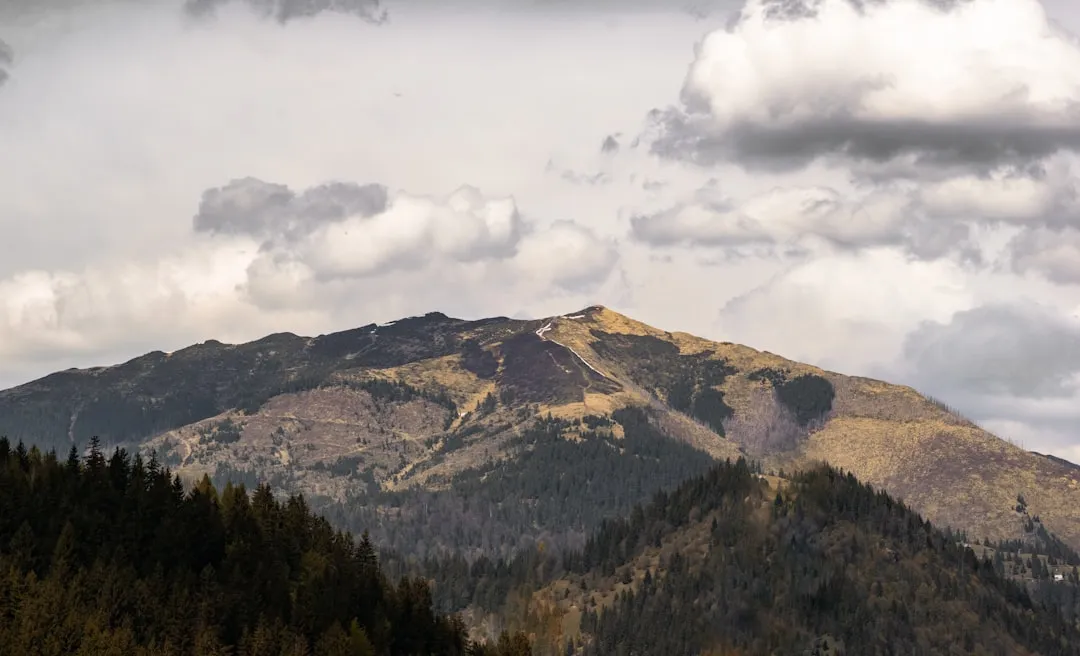
Ciucas Peak Hike - A Challenging Day in the Romanian Carpathians
The Ciucas Peak Hike is a demanding yet incredibly rewarding day walk located in the Ciucas Mountains of Romania, part of the Southern Carpathians. This trail offers a significant elevation gain over a relatively short distance, leading to the summit of Ciucas Peak (1,954 metres), the highest point in the range. The ascent is characterised by steep, rocky paths, alpine meadows, and dramatic rock formations, culminating in breathtaking panoramic views of the surrounding mountain landscape. It's a route that tests physical endurance and offers a true sense of accomplishment upon reaching the summit. The trail is best suited for experienced hikers with good fitness levels, seeking a challenging day out in a wild and beautiful natural setting.
- Distance: 9.5 km (one-way to summit and return)
- Elevation Gain: 950 m
- Duration: 6–8 hours (round trip)
- Difficulty: Challenging
- Best Time: June to October
- Closest City: Brasov
- Trailhead Access: Drive from Brasov (~2 hours) via DN1A to Cheia. Continue to Muntele Mic trailhead. Road can be rough in sections. Parking available.
- Permits: Generally not required for day hikes, but always check local regulations.
Overview
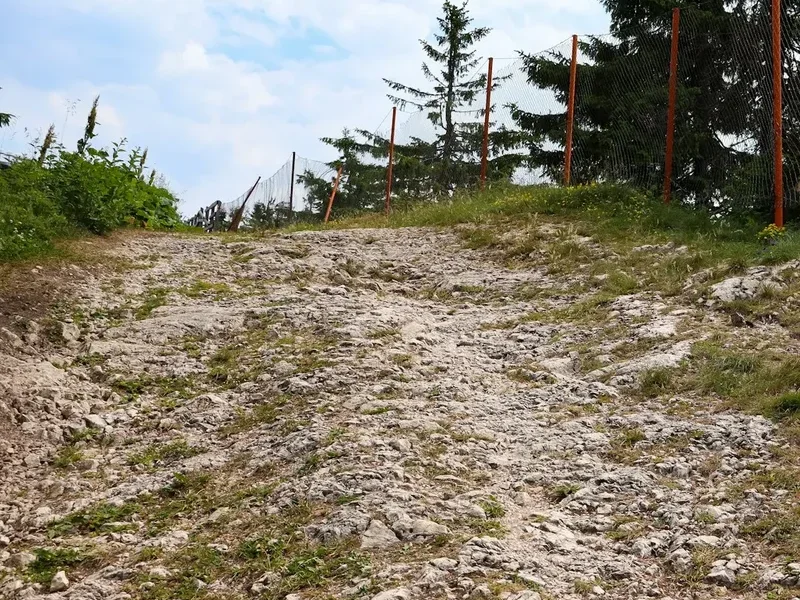
The Ciucas Peak hike is a classic Carpathian mountain challenge, renowned for its steep ascent and the spectacular reward of its summit views. Starting from the Muntele Mic trailhead near the village of Cheia, the trail immediately begins to climb, quickly gaining altitude through mixed forests of fir and beech. As you ascend, the terrain transitions from dense woodland to open alpine meadows dotted with wildflowers during the warmer months. The path becomes increasingly rocky and exposed, requiring careful footing and a good sense of balance.
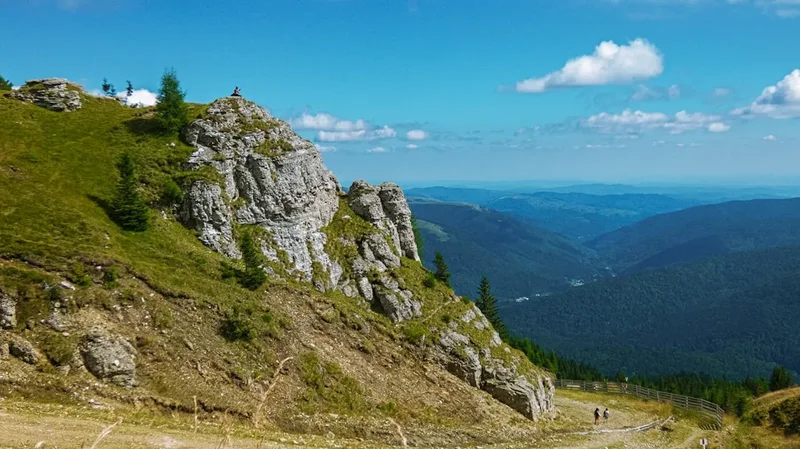
A significant feature of the hike is the presence of striking rock formations, particularly as you approach the summit area. These weathered limestone and conglomerate formations add a dramatic visual element to the landscape and often require scrambling or navigating over uneven surfaces. The final push to Ciucas Peak involves a steep, often exposed climb that can feel relentless but is ultimately manageable for those with adequate fitness.
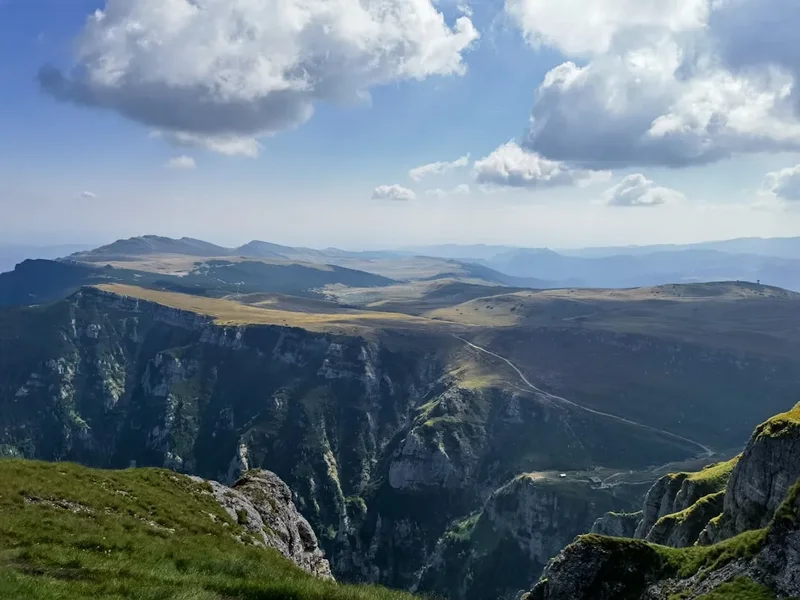
Upon reaching the summit of Ciucas Peak (1,954 m), hikers are greeted with a truly magnificent 360-degree panorama. On a clear day, you can see for miles across the rolling peaks of the Ciucas Mountains, the vastness of the surrounding Carpathian range, and on exceptionally clear days, even distant views towards the Bucegi Mountains. The sense of achievement is immense, amplified by the wild and remote feeling of the location. The descent follows the same route, offering a different perspective on the landscape you've conquered.
This hike is not for the faint-hearted. The sustained elevation gain of 950 metres over just 9.5 kilometres means an average gradient of nearly 10%, with steeper sections interspersed. It demands good cardiovascular fitness, strong leg muscles, and mental resilience. However, for those prepared to put in the effort, the Ciucas Peak hike offers an unforgettable experience of the Romanian wilderness.
History and Cultural Context
The Ciucas Mountains, like much of the Carpathian range, have a long history of human interaction, primarily related to pastoralism and forestry. For centuries, these mountains provided grazing land for sheep and cattle, with shepherds establishing temporary settlements and following ancient transhumance routes. The rugged terrain and relative remoteness meant that the mountains remained largely wild, with human presence concentrated in the lower valleys and foothills.
The specific trails leading to Ciucas Peak have likely evolved over time, initially used by shepherds and hunters, and later by early mountaineers and explorers. The development of marked hiking trails is a more recent phenomenon, often undertaken by local hiking clubs or national park authorities to facilitate access and promote tourism. The Muntele Mic trailhead, a common starting point, is situated near the Cheia village, which has a history tied to the natural resources of the region, including timber and agriculture.
While the Ciucas Peak hike itself doesn't have a singular, dramatic historical event associated with it in the same way as some more famous trails, it is part of a broader cultural landscape. The mountains have inspired local folklore and provided a backdrop for the lives of communities for generations. The rock formations at the summit, such as the "Babele" (Old Women) and "Sfinxul" (Sphinx), have captured the imagination and are often featured in local legends, adding a layer of mystique to the ascent.
In more recent times, the Ciucas Mountains have become a popular destination for hikers and nature enthusiasts, drawn by their wild beauty and challenging terrain. The establishment of protected areas, such as parts of the Ciucas Mountains National Park, aims to preserve the unique flora, fauna, and geological features for future generations, ensuring that the natural heritage of this region continues to be appreciated and explored responsibly.
Seasonal Highlights and Weather Reality
The Ciucas Peak hike is best undertaken during the warmer months, typically from June to October. During this period, the weather is generally more stable, and the trails are free of snow and ice, making the ascent safer and more enjoyable.
Spring (April-May): While the lower slopes may begin to show signs of life with blooming wildflowers, higher elevations can still be covered in snow. Trails can be muddy and slippery. This season is generally not recommended for the summit hike unless you have specific winter hiking experience and equipment.
Summer (June-August): This is the peak season for hiking in the Ciucas Mountains. The alpine meadows are vibrant with a profusion of wildflowers, and the days are long, offering ample time for the hike. Temperatures are generally pleasant, though it can get hot at lower altitudes. Afternoon thunderstorms are common, so starting early is crucial. The summit can still be cool and windy, even in summer.
Autumn (September-October): Autumn offers crisp air, clear skies, and stunning foliage colours as the leaves change. The trails are usually dry, and the insect population (including potential biting flies) is significantly reduced. This is an excellent time for photography and enjoying the expansive views. By late October, the first snowfalls can occur at higher elevations, making the summit inaccessible without winter gear.
Winter (November-March): The Ciucas Mountains are typically covered in deep snow during winter. The trails are often indistinguishable, and the summit area is exposed to severe weather conditions, including strong winds, blizzards, and extreme cold. This season is strictly for experienced winter mountaineers with appropriate equipment (snowshoes, crampons, ice axe) and knowledge of avalanche safety. For most hikers, winter is not a viable season for this trail.
Weather Considerations: Mountain weather is notoriously unpredictable. Even during the summer months, conditions can change rapidly. Be prepared for rain, wind, and a significant drop in temperature, especially at higher altitudes. Always check the weather forecast before you go and be ready to turn back if conditions deteriorate.
Recommended Itinerary
Ciucas Peak Day Hike Itinerary
Early Morning (Approx. 7:00 AM): Departure from Brasov
- Drive from Brasov towards Cheia via DN1A.
- The journey takes approximately 2 hours, depending on traffic and road conditions.
- Ensure your vehicle is suitable for potentially rougher sections of road closer to the trailhead.
Morning (Approx. 9:00 AM): Arrival at Muntele Mic Trailhead
- Park your vehicle at the designated parking area near Muntele Mic.
- Final gear check: ensure you have water, snacks, appropriate clothing layers, and navigation tools.
- Begin the hike. The initial section is a steady climb through forest.
Late Morning to Midday (Approx. 11:00 AM - 1:00 PM): Ascent through Alpine Meadows
- The trail emerges from the forest into open alpine meadows.
- The gradient becomes steeper, and the path may be rocky and uneven.
- Pass by distinctive rock formations as you gain altitude.
- Take short breaks to hydrate and enjoy the expanding views.
Midday (Approx. 1:00 PM - 2:00 PM): Reaching the Summit of Ciucas Peak
- The final push to the summit is steep and may involve some scrambling over rocks.
- Arrive at Ciucas Peak (1,954 m).
- Spend time enjoying the 360-degree panoramic views.
- Have your packed lunch and celebrate reaching the highest point.
Afternoon (Approx. 2:00 PM - 4:00 PM): Descent Begins
- Begin your descent, retracing your steps back down the mountain.
- Be mindful of your footing, as descents can be hard on the knees and require concentration.
- The changing light offers a new perspective on the landscape.
Late Afternoon (Approx. 4:00 PM - 5:00 PM): Return to Trailhead
- Arrive back at the Muntele Mic trailhead.
- Ensure all gear is accounted for and you have left no trace.
Evening (Approx. 5:00 PM onwards): Return Journey
- Drive back to Brasov or your accommodation.
- Consider a stop in Cheia or a nearby village for a well-deserved meal.
Important Notes:
- This is a challenging day hike requiring good physical condition.
- Start early to allow ample time and avoid afternoon thunderstorms.
- Carry sufficient water (at least 2 litres per person) and high-energy snacks.
- Weather can change rapidly; be prepared for all conditions.
- The trail is marked, but a map and compass or GPS device are recommended.
- Respect the natural environment and follow Leave No Trace principles.
Planning and Bookings
Book Your Trip
Everything you need to plan your journey
Accommodation
Find places to stay near Brasov
Flights
Search flights to Brasov
Essential Preparation
The Ciucas Peak hike is a demanding day walk that requires careful planning to ensure a safe and enjoyable experience. Given its challenging nature, physical fitness is paramount. Ensure you have a good level of cardiovascular endurance and strong leg muscles, as the 950-metre elevation gain over 9.5 kilometres is substantial. It's advisable to have prior hiking experience, particularly on mountain terrain.
Logistics primarily revolve around reaching the trailhead. The closest major city is Brasov, which offers a wide range of accommodation options, from budget hostels to comfortable hotels. Brasov also serves as a good base for stocking up on supplies. From Brasov, you will need to arrange transportation to the Muntele Mic trailhead near Cheia. This typically involves driving a car, which can be rented in Brasov. The road to the trailhead can be rough in sections, so a vehicle with decent ground clearance is recommended, though a standard car can often manage if driven carefully.
It's crucial to check the weather forecast for the Ciucas Mountains specifically before you depart. Mountain weather can be highly variable and change quickly. Have a backup plan in case of adverse conditions, such as choosing a lower-altitude hike or postponing your trip.
Trail Accommodation
This is a day hike requiring no overnight accommodation. Hikers typically start from the Muntele Mic trailhead and complete the ascent and descent within a single day. There are no designated huts, lodges, or campsites directly on the Ciucas Peak trail itself. Accommodation would be sought in the nearest towns or villages, such as Cheia or Brasov, before or after the hike.
Required Gear
- Sturdy hiking boots: Waterproof and with good ankle support are essential for navigating the rocky and uneven terrain. Ensure they are well broken-in to prevent blisters.
- Waterproof and windproof jacket: A reliable outer layer is crucial, as mountain weather can change rapidly, bringing rain and strong winds.
- Waterproof overtrousers: To complement your jacket and keep you dry during downpours.
- Warm layers: Including a fleece or insulated jacket, and a hat and gloves. Temperatures at the summit can be significantly colder than at the trailhead.
- Backpack: A comfortable daypack (25-35 litres) to carry your essentials.
- Navigation tools: A map of the Ciucas Mountains, a compass, and/or a GPS device or smartphone with offline maps. Mobile signal can be unreliable.
- Head torch: With spare batteries, in case of unexpected delays or if you start before dawn/finish after dusk.
- First-aid kit: Including blister treatment, bandages, antiseptic wipes, pain relievers, and any personal medications.
- Sun protection: Sunscreen (SPF 30+), sunglasses, and a wide-brimmed hat, as the sun can be intense at higher altitudes, even on cloudy days.
What to Bring
- Food: High-energy snacks such as nuts, dried fruit, energy bars, and sandwiches. Pack enough for the entire duration of the hike, plus a little extra in case of delays.
- Water: Carry at least 2 litres of water per person. There are no reliable water sources directly on the summit trail, and any water found should be treated.
- Water treatment: A water filter or purification tablets if you plan to refill from natural sources (though not recommended on this specific route due to its challenging nature and potential lack of easily accessible, clean sources).
- Toiletries: Biodegradable soap, toothbrush, toothpaste, hand sanitiser, and toilet paper. Pack out all used toilet paper.
- Personal items: Mobile phone (fully charged), power bank, camera, identification, and some cash for emergencies or potential small purchases in Cheia.
- Trekking poles: Highly recommended for stability on ascents and descents, and to reduce strain on your knees.
- Whistle: For emergency signalling.
Permits
For a standard day hike to Ciucas Peak, specific permits are generally not required. The trails are part of the natural landscape and accessible to the public. However, it is always advisable to check with local authorities or the nearest national park visitor centre for any updated regulations or specific requirements, especially if you plan to visit during peak seasons or if there are any temporary access restrictions due to environmental conditions or events.
The Ciucas Mountains are partially protected, and while day access is usually free, it's good practice to be aware of any local rules regarding waste disposal, campfires (which are generally prohibited on trails), and respecting the natural environment.
If you were planning any activities beyond a standard day hike, such as extensive camping or research, specific permissions might be necessary. For the purpose of a day walk to the summit, no advance booking or permit purchase is typically needed.
Other Activities in the Area
The region surrounding the Ciucas Mountains offers several other activities for visitors looking to extend their stay or explore beyond the peak hike:
- Hiking in the Ciucas Mountains: Beyond the summit trail, numerous other marked paths wind through the mountains, offering varying levels of difficulty and exploring different valleys, ridges, and smaller peaks. These can range from gentle forest walks to more strenuous ridge traverses.
- Visiting Cheia Village: The village of Cheia itself is a charming rural settlement. You can experience local life, sample traditional Romanian cuisine at local guesthouses or restaurants, and enjoy the peaceful atmosphere of the mountain foothills.
- Exploring the Cheia Monastery (Manastirea Cheia): Located near the village, this historic monastery is a place of spiritual significance and architectural interest, offering a glimpse into the region's religious heritage.
- Photography: The dramatic rock formations, expansive mountain vistas, and vibrant alpine flora provide excellent opportunities for landscape and nature photography.
- Birdwatching and Wildlife Spotting: The diverse habitats of the Ciucas Mountains support a variety of bird species and small mammals. With patience and quiet observation, you might spot local wildlife.
- Relaxation: For those seeking a more relaxed experience, the natural beauty and tranquility of the area provide an ideal setting for unwinding and enjoying the fresh mountain air.
Safety and Conditions
Pre-Departure Checks:
- Weather Forecast: Always check the most up-to-date mountain weather forecast for the Ciucas Mountains before you leave. Websites like Meteo Romania or specific mountain weather services are valuable resources. Be prepared for rapid changes.
- Trail Conditions: While generally well-marked, trail conditions can vary. Check with local hiking groups or visitor centres for recent reports, especially regarding snow cover (early spring/late autumn) or any temporary closures.
- Road Conditions: The road leading to the Muntele Mic trailhead can be rough. Ensure your vehicle is suitable and drive cautiously.
On the Trail:
- Navigation: The trail is marked with blue triangle symbols, but it's essential to carry a map and compass or a reliable GPS device. Do not rely solely on mobile phone signal, as it can be intermittent.
- Physical Exertion: This is a challenging hike with significant elevation gain. Pace yourself, take regular breaks, and listen to your body. Do not push yourself beyond your limits.
- Hydration and Nutrition: Carry ample water and high-energy food. Dehydration and fatigue can lead to poor decision-making and increase the risk of accidents.
- Hypothermia Risk: Even in summer, temperatures at the summit can be cold, especially with wind chill. Always carry warm layers, a hat, and gloves. If you get wet, hypothermia can set in quickly.
- Rock Formations: The summit area features steep, rocky terrain and potentially loose scree. Exercise caution when walking and scrambling, and be aware of your surroundings. Avoid walking directly below others on steep slopes.
- Wildlife: While large predators are rare in this specific area, be aware of your surroundings. Respect any wildlife you encounter and maintain a safe distance.
- Emergency: In case of an emergency, try to stay calm. Use your mobile phone if you have signal, or use a whistle (three short blasts is a universal distress signal). Know the location of the nearest emergency services or mountain rescue contacts.
General Safety Advice:
- Inform someone of your hiking plans, including your intended route and expected return time.
- Hike with a companion if possible.
- Carry a fully charged mobile phone and a power bank.
- Be aware of the time and ensure you have enough daylight to complete your descent safely.
Side Trips and Points of Interest
Ciucas Peak Summit (1,954 m): The primary objective of the hike. Reaching the summit offers unparalleled 360-degree views of the surrounding Carpathian landscape. The summit area is characterised by striking conglomerate rock formations, sculpted by erosion over millennia. These formations, often referred to as "Babele" (Old Women) or "Sfinxul" (Sphinx) in Romanian mountain folklore, add a unique and dramatic element to the peak.
Rock Formations: As you ascend, particularly in the upper sections of the trail, you will encounter numerous impressive rock formations. These natural sculptures are a highlight of the hike and provide excellent opportunities for photography. Take time to appreciate their unique shapes and textures.
Alpine Meadows: During the summer months (June to August), the slopes leading to the summit are carpeted with vibrant alpine wildflowers. This creates a picturesque and colourful environment, especially when contrasted with the grey rock and green forests. The meadows are also home to various insects and small wildlife.
Panoramic Views: The entire ascent offers increasingly expansive views. As you gain altitude, the valleys and surrounding peaks unfold. The summit provides the ultimate reward, with a vast panorama that can stretch for many kilometres on a clear day, showcasing the rugged beauty of the Ciucas Mountains and beyond.
Forest Sections: The lower parts of the trail wind through dense forests of fir and beech trees. These sections offer a cooler, shaded environment and a different sensory experience, with the scent of pine and damp earth. The transition from forest to open alpine terrain is a significant part of the hike's character.
Leave No Trace
The Ciucas Mountains are a natural treasure, and it is essential for all visitors to practice Leave No Trace principles to preserve their beauty and ecological integrity for future generations. As a challenging day hike, the impact of each individual hiker is significant.
Your responsibility as a hiker:
- Pack it in, Pack it out: Carry out all that you carry in. This includes all food wrappers, fruit peels, and any other waste. Do not bury or burn trash.
- Stay on the Trail: Stick to the marked paths to avoid damaging fragile vegetation, preventing erosion, and protecting the natural habitat of local wildlife. The alpine meadows are particularly sensitive.
- Respect Wildlife: Observe wildlife from a distance. Never feed animals, as this can disrupt their natural behaviours and diets, and can make them dependent on human food.
- Dispose of Waste Properly: Use designated toilets where available. If no facilities exist, dig a cathole at least 70 metres (60 m) away from water sources, trails, and campsites. Pack out all toilet paper.
- Leave What You Find: Do not take rocks, plants, or any other natural objects. Leave them for others to enjoy and for the ecosystem to thrive.
- Minimise Campfire Impacts: Campfires are generally not permitted on this trail, especially in alpine areas. If you are camping elsewhere in the region, use established fire rings and keep fires small.
- Be Considerate of Other Visitors: Keep noise levels down, yield to uphill hikers, and be courteous to fellow hikers.
By adhering to these principles, you help ensure that the Ciucas Peak hike remains a wild and beautiful experience for everyone.