
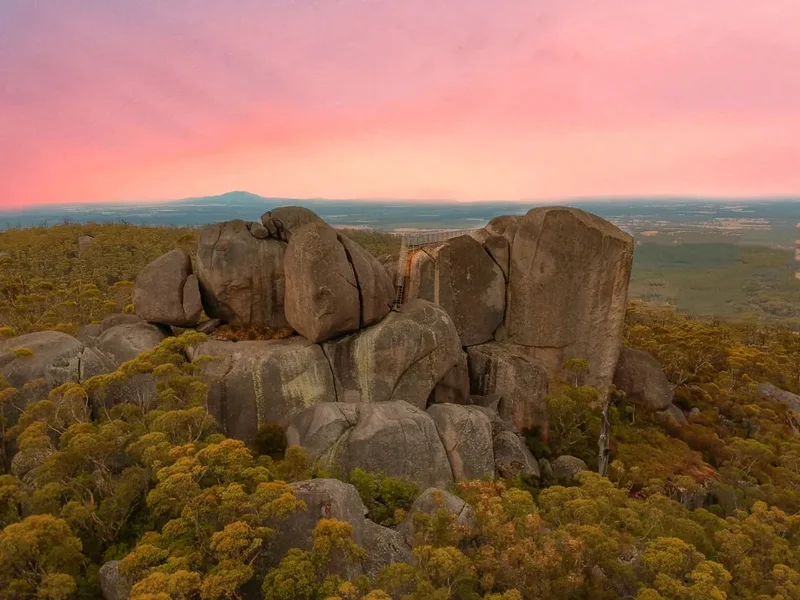
Castle Rock Trail (Porongurup) - A Granite Gem
The Castle Rock Trail in the Porongurup National Park, Western Australia, offers a rewarding day hike with spectacular panoramic views. This relatively short but steep walk leads to the summit of Castle Rock, a prominent granite dome that provides a commanding vista over the surrounding landscape, including the Stirling Range, the Southern Ocean, and the Porongurup Range itself. It's a popular destination for locals and visitors alike, known for its unique granite formations, diverse flora, and the sense of accomplishment upon reaching the summit.
- Distance: 4.4 km one-way
- Elevation gain: 320 m
- Duration: 2-3 hours return
- Difficulty: Moderate to Hard (due to steepness and some scrambling)
- Best Time: Spring (September-November) for wildflowers, Autumn (March-May) for milder temperatures
- Closest City: Albany
- Trailhead Access: From Albany, drive north on Albany Hwy, then west on Porongurup Rd. Follow signs to Castle Rock. Approx. 50 min drive. Road sealed. Parking available.
- Permits: No permits required for day use.
- Coordinates: -34.6718, 117.8694
Overview
The Castle Rock Trail is a quintessential Western Australian granite country experience. It's a walk that demands a reasonable level of fitness due to its consistent and often steep ascent, but the rewards are immediate and sustained. The trail begins at a well-maintained trailhead, offering ample parking and interpretive signage. As you ascend, the vegetation transitions from the lower woodland of the Porongurup Range to the more hardy, wind-swept flora found at higher elevations. The path is a mix of well-formed gravel and rocky sections, with some areas requiring careful footing.
The defining feature of this trail is the final approach to Castle Rock itself. The last section involves a series of granite steps and, for the adventurous, a short, exhilarating scramble up the rock face. This final push is aided by a fixed wire and metal rungs, providing a secure handhold and a sense of adventure. Reaching the summit plateau of Castle Rock is a significant achievement. From this vantage point, the 360-degree views are breathtaking. On a clear day, you can see for kilometres in every direction. The Stirling Range, with its dramatic peaks like Bluff Knoll, forms a striking backdrop to the north. To the south, the vast expanse of the Southern Ocean stretches to the horizon, with glimpses of the coastline near Albany. The Porongurup Range itself, a remnant of an ancient mountain range, unfolds below, showcasing its unique geological features and diverse plant life.
The trail is well-marked, but the exposed nature of the summit means that weather conditions can change rapidly. It is advisable to check the forecast before setting out and to be prepared for wind and sun, even on cooler days. The walk is suitable for most reasonably fit individuals, though those with a fear of heights or who are uncomfortable with exposed rock faces might find the final ascent challenging. Despite its moderate difficulty rating, the elevation gain and the nature of the terrain make it a solid workout, offering a satisfying blend of physical challenge and natural beauty.
History and Cultural Context
The Porongurup Range, including Castle Rock, holds significant cultural importance for the Menang Noongar people, the traditional custodians of the land. For millennia, this area has been a place of spiritual connection, sustenance, and seasonal gathering. The granite outcrops and the diverse flora provided resources and shelter, and the elevated positions offered vantage points for observing the land and its movements. The Noongar people have a deep and enduring relationship with this landscape, and their knowledge of its plants, animals, and seasons is invaluable.
European settlement in the region began in the mid-19th century, with the area around Albany being one of the earliest European settlements in Western Australia. The Porongurup Range, with its distinctive granite formations, quickly became a point of interest for explorers and settlers. Castle Rock, in particular, with its imposing presence and commanding views, would have been a natural landmark for early surveyors and travellers.
In the early 20th century, as conservation movements gained momentum, the Porongurup Range was recognised for its unique ecological and geological values. It was eventually declared a National Park, ensuring its protection for future generations. The development of walking trails, including the Castle Rock Trail, facilitated public access and appreciation of the range's natural beauty. The construction of the steps and the fixed wire on the final ascent of Castle Rock reflects a period when access to natural attractions was being enhanced to encourage tourism and recreation, while still preserving the natural character of the site. The trail itself is a testament to the enduring appeal of this ancient landscape, a place where natural history and human history converge.
Seasonal Highlights and Weather Reality
The Porongurup National Park experiences a Mediterranean climate, with hot, dry summers and mild, wet winters. The best times to tackle the Castle Rock Trail are during the shoulder seasons, when the weather is most conducive to hiking and the natural environment is at its most vibrant.
Spring (September to November): This is arguably the most spectacular time to visit. The Porongurup Range comes alive with a dazzling display of wildflowers. Numerous endemic species, including various orchids, banksias, and proteas, carpet the hillsides. The weather is generally mild and pleasant, with average temperatures ranging from 15°C to 25°C. The increased rainfall of winter means that waterfalls and streams are often flowing, adding to the scenic beauty. However, spring can also bring unpredictable weather, including occasional strong winds and showers.
Autumn (March to May): Autumn offers a welcome respite from the summer heat. The temperatures are cooler and more stable, typically ranging from 10°C to 20°C, making for comfortable hiking conditions. The landscape takes on a golden hue, and the air is often crisp and clear, providing excellent visibility for the panoramic views from Castle Rock. While the wildflower displays are less prolific than in spring, the overall atmosphere is serene and inviting.
Summer (December to February): Summers in this region can be very hot, with temperatures frequently exceeding 30°C. While the trail is still accessible, hiking during the midday heat is not recommended due to the risk of heatstroke and dehydration. If hiking in summer, it is essential to start very early in the morning, carry ample water, and wear sun protection. The vegetation can also be dry, increasing the risk of bushfires.
Winter (June to August): Winters are mild but wet, with average temperatures between 8°C and 15°C. While the rain can make the trails slippery and less pleasant for hiking, the landscape is lush and green. The higher elevations can experience frost, and occasionally, light snow may fall on the Stirling Range nearby, though it is rare on Castle Rock itself. The views can be obscured by cloud and mist, but there's a unique, moody beauty to the landscape in winter.
Weather Considerations: Regardless of the season, always check the local weather forecast before your hike. The summit of Castle Rock is exposed, and conditions can change rapidly. Strong winds can make the final ascent challenging, and rain can make the granite surfaces slippery. Be prepared for all eventualities.
Recommended Itinerary
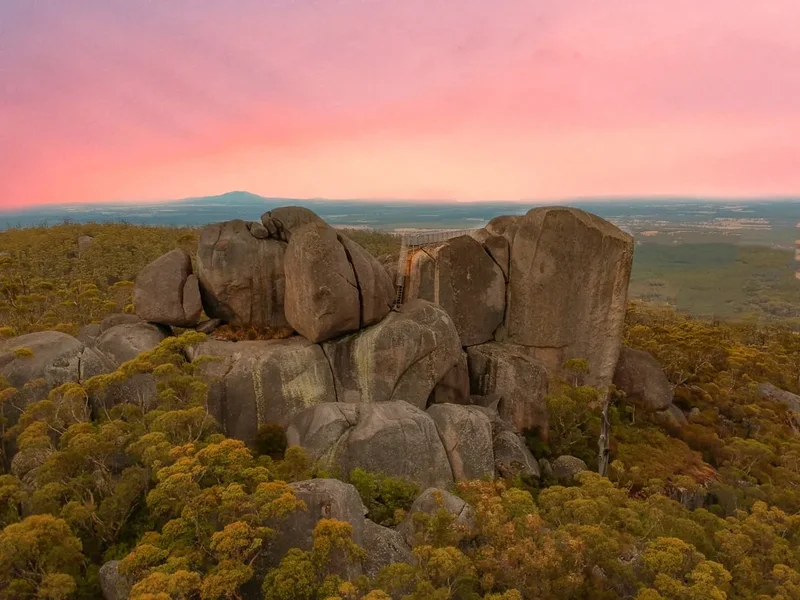
Castle Rock Trail - Day Hike Itinerary
Early Morning (Approx. 8:00 AM - 9:00 AM): Arrival and Trailhead Preparation
- Drive from Albany to Porongurup National Park (approx. 50 minutes).
- Follow signs for Castle Rock Trailhead.
- Park at the designated car park.
- Use toilet facilities if needed.
- Review trail information and maps at the trailhead.
- Ensure you have sufficient water and snacks.
- Apply sunscreen and insect repellent.
Morning (Approx. 9:00 AM - 10:30 AM): Ascent to the Base of Castle Rock
- Begin the hike from the trailhead.
- The initial section is a well-formed gravel path, gradually ascending through woodland.
- Observe the changing vegetation as you gain elevation.
- Pass interpretive signs detailing the local flora and fauna.
- The gradient becomes steeper as you approach the granite outcrops.
- Reach the base of Castle Rock, where the terrain becomes more rugged.
Midday (Approx. 10:30 AM - 12:00 PM): Summit Ascent and Exploration
- Engage with the final, more challenging section of the trail.
- Ascend the granite steps and the fixed wire/rung section.
- Take your time, use the handholds provided, and be mindful of your footing.
- Reach the summit plateau of Castle Rock.
- Spend time exploring the summit area and taking in the panoramic views.
- Identify landmarks such as the Stirling Range and the Southern Ocean.
- Enjoy a well-deserved snack and hydration break at the summit.
Afternoon (Approx. 12:00 PM - 1:30 PM): Descent and Return to Trailhead
- Begin the descent from Castle Rock.
- Exercise caution on the steep sections and granite steps.
- Continue down the gravel path back towards the trailhead.
- Reflect on the views and the accomplishment of reaching the summit.
- Arrive back at the trailhead car park.
Post-Hike (Optional):
- Visit other viewpoints or shorter walks within Porongurup National Park.
- Drive back to Albany for lunch or further exploration of the region.
Important Notes:
- This is a day hike; no overnight accommodation is required.
- The final ascent requires a moderate level of fitness and comfort with heights.
- Always carry sufficient water, especially during warmer months.
- Wear sturdy, closed-toe footwear.
- Check weather conditions before you go.
- Be aware of potential bushfire risks during dry periods.
Planning and Bookings
Book Your Trip
Everything you need to plan your journey
Accommodation
Find places to stay near Albany
Flights
Search flights to Albany
Essential Preparation
The Castle Rock Trail is a popular day walk, and preparation is key to a safe and enjoyable experience. The closest major town and logistical hub is Albany, approximately a 50-minute drive from the Porongurup National Park. Albany offers a full range of services, including accommodation (hotels, motels, caravan parks, Airbnb), supermarkets for purchasing supplies, outdoor gear shops, and numerous cafes and restaurants.
Before heading to the trailhead, ensure you have adequate water, food, and appropriate clothing. The trail is well-signposted, but having a map or a reliable GPS device is always a good idea. The road leading to the trailhead is sealed and accessible by conventional vehicles. Parking is available at the designated trailhead area, which also includes toilet facilities. Given that this is a day walk, no complex booking coordination is required, but it's wise to check the Parks and Wildlife Service website for any alerts or closures before your visit, especially during periods of high fire danger.
Trail Accommodation
This is a day hike requiring no overnight accommodation.
Required Gear
- Sturdy Hiking Boots: Waterproof and with good ankle support are recommended due to the rocky and uneven terrain, especially on the ascent to Castle Rock.
- Day Pack: A comfortable backpack (20-30 litre capacity) to carry essentials.
- Weather-Appropriate Clothing: Layers are advisable. A moisture-wicking base layer, an insulating mid-layer (fleece or softshell), and a waterproof and windproof outer jacket are essential. Even on warm days, the summit can be exposed and windy.
- Sun Protection: A wide-brimmed hat, sunglasses, and high SPF sunscreen are crucial, as the sun can be intense, particularly at the exposed summit.
- Navigation Tools: While the trail is well-marked, a map of the Porongurup National Park and a compass or GPS device are recommended for safety. A charged mobile phone is also advisable, though reception can be intermittent.
- First-Aid Kit: A basic kit including plasters, antiseptic wipes, pain relievers, blister treatment, and any personal medications.
- Head Torch: Essential if you plan to start very early or finish late, though unlikely for this day walk.
What to Bring
- Water: Carry at least 1.5 to 2 litres of water per person, especially during warmer months. There are no water sources along the trail.
- Food: High-energy snacks such as trail mix, muesli bars, fruit, and sandwiches for a packed lunch.
- Insect Repellent: Particularly useful during warmer months to ward off flies and mosquitoes.
- Camera: To capture the stunning scenery and panoramic views from the summit.
- Binoculars (Optional): For enhanced viewing of distant landscapes and wildlife.
- Small Towel: Useful for wiping sweat or drying off after unexpected rain.
- Hand Sanitiser: For hygiene, especially before eating.
Permits
No permits are required for day use of the Castle Rock Trail or the Porongurup National Park. Access to the park and its walking trails is free of charge. However, it is always advisable to check the official Parks and Wildlife Service website for Western Australia for any alerts, track closures, or fire bans that may be in effect before your visit. These are particularly important during the summer months when bushfire risk is high.
The park is managed by the Department of Biodiversity, Conservation and Attractions (DBCA). While no booking is necessary for individuals or small groups undertaking the day walk, larger organised groups or those planning specific activities might need to make enquiries with the local DBCA office. For general visitors, the focus is on responsible enjoyment of the natural environment.
Other Activities in the Area
The Porongurup National Park and its surrounds offer several other attractions and activities for visitors:
- The Porongurup Range: Beyond Castle Rock, the park features other walking trails, including the shorter but equally scenic Twin Peaks Walk, which offers different perspectives of the range.
- Tree-Top Walk: Located within the Porongurup National Park, this elevated walkway allows you to stroll through the canopy of the forest, offering a unique perspective on the arboreal environment. It's an accessible and enjoyable experience for all ages.
- Picnic Areas: Several designated picnic spots are available within the park, equipped with tables and barbecues, providing pleasant locations to relax and enjoy a meal amidst nature.
- Nature Observation: The park is a haven for birdwatchers and nature enthusiasts. Keep an eye out for various native bird species, kangaroos, and the diverse flora, especially the wildflowers in spring.
- Albany's Attractions: As the closest major city, Albany offers a wealth of historical and natural attractions. These include the National Anzac Centre, the historic whaling station at Discovery Bay, the stunning coastline with its dramatic rock formations like The Gap and Natural Bridge, and the charming town centre.
- Stirling Range National Park: For those seeking more challenging hikes, the nearby Stirling Range National Park is home to Western Australia's highest peak, Bluff Knoll, offering a more strenuous but rewarding climb.
Safety and Conditions
Trail Conditions: The Castle Rock Trail is generally well-maintained. The lower sections are gravel paths, while the upper reaches become rocky and uneven. The final ascent involves granite steps and a section with a fixed wire and rungs, which can be slippery when wet. Always wear appropriate footwear with good grip.
Weather: The Porongurup Range is exposed, and weather can change rapidly. Be prepared for strong winds, especially at the summit. In summer, temperatures can be very high, so carry plenty of water and avoid hiking during the hottest part of the day. In winter, rain can make the trail slippery, and fog can reduce visibility. Always check the weather forecast before you go.
Bushfire Risk: Western Australia experiences a significant bushfire season, particularly during the warmer months. The Porongurup National Park can be affected. Always check for fire bans and park closures before your visit. If a fire is detected, evacuate the area immediately and follow the advice of park rangers.
Physical Fitness: The trail is moderately difficult due to the consistent elevation gain and the steep final ascent. A reasonable level of fitness is required. Those with a fear of heights or who are uncomfortable with exposed rock faces may find the final section challenging. Take your time, use the provided handholds, and don't hesitate to turn back if you feel unsafe.
Wildlife: While generally not dangerous, be aware of local wildlife. Kangaroos may be seen grazing, and snakes can be present, especially during warmer weather. Give them space and do not attempt to feed them.
Communication: Mobile phone reception can be patchy within the park. Inform someone of your hiking plans, including your expected return time. Consider carrying a personal locator beacon (PLB) if hiking alone or in remote areas.
Water: There are no water sources on the trail. Carry all the water you will need for the duration of your hike.
Side Trips and Points of Interest
The Summit of Castle Rock: The primary point of interest is the summit itself. The granite dome offers an unparalleled 360-degree panoramic view. On a clear day, you can see the rugged peaks of the Stirling Range to the north, the vast Southern Ocean to the south, the rolling agricultural lands, and the unique topography of the Porongurup Range spread out below. The summit plateau is a fascinating geological feature, with weathered granite formations and hardy, low-lying vegetation adapted to the exposed conditions.
The Fixed Wire and Rungs: The final ascent to the summit involves a section where a fixed wire and metal rungs have been installed to assist climbers. This adds an element of adventure and challenge to the hike, making it more than just a simple walk. It's a memorable part of the experience for many visitors.
Granite Formations: Throughout the trail, and particularly near the summit, you will encounter impressive granite outcrops and formations. These are remnants of an ancient mountain range that has been shaped by millions of years of weathering and erosion, creating unique shapes and textures.
Flora and Fauna: The Porongurup Range is known for its rich biodiversity. Keep an eye out for the diverse array of wildflowers, especially during spring. Various species of banksias, proteas, and orchids can be found. Birdlife is also abundant, and you might spot kangaroos or other native mammals.
Interpretive Signage: Along the trail, interpretive signs provide valuable information about the geology, flora, fauna, and cultural history of the Porongurup Range, enhancing the visitor's understanding and appreciation of the area.
Leave No Trace
The Porongurup National Park is a precious natural environment, and it is vital that all visitors practice Leave No Trace principles to preserve its beauty and ecological integrity for future generations. Castle Rock Trail, being a popular destination, is particularly susceptible to the impacts of human activity.
Plan Ahead and Prepare: Familiarise yourself with the trail, check weather forecasts, and pack appropriately. This includes bringing enough water and food so you don't need to forage or leave waste behind.
Travel and Camp on Durable Surfaces: Stick to the marked trail at all times. The vegetation around the trail, especially near the summit, is fragile. Straying from the path can cause erosion and damage delicate plant life. The summit plateau is a durable surface, but avoid disturbing the rock formations.
Dispose of Waste Properly: Pack out everything you pack in. This includes all food scraps, wrappers, and any other litter. Use the bins provided at the trailhead if available, but it's best practice to carry all waste with you until you can dispose of it responsibly. Use toilet facilities where available and avoid digging catholes.
Leave What You Find: Do not take any natural souvenirs, such as rocks, plants, or flowers. Leave them for others to enjoy and for the ecosystem to thrive.
Minimise Campfire Impacts: This is a day walk, so campfires are not applicable. However, if using barbecues at picnic areas, ensure they are used responsibly and cleaned afterwards.
Respect Wildlife: Observe wildlife from a distance. Do not feed animals, as this can disrupt their natural behaviours and diets, and can make them dependent on human food. Keep pets under control if they are permitted in the park (check local regulations).
Be Considerate of Other Visitors: Keep noise levels down, especially on the summit. Yield to uphill hikers. Allow others to enjoy the peace and quiet of the natural environment.
 Australia