
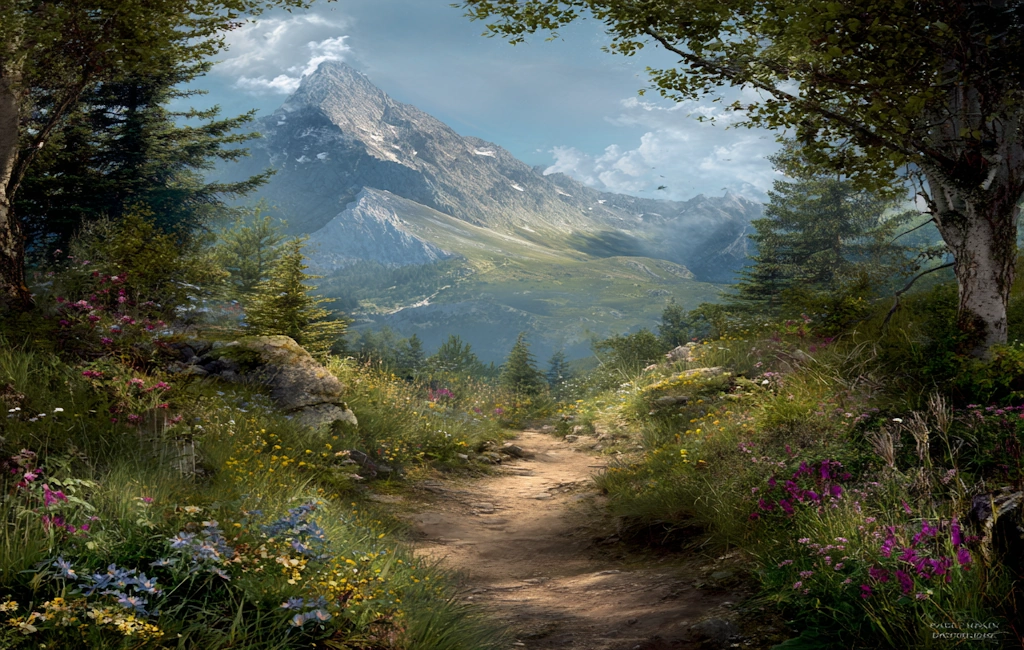
Cascade Pass and Sahale Arm - The Crown Jewel of the North Cascades
The journey to Cascade Pass and the subsequent ascent of the Sahale Arm represents the quintessential North Cascades experience. Located in the heart of North Cascades National Park in Washington State, this 18.5-kilometre round-trip trek transports hikers from the dense, moss-draped temperate rainforests of the Cascade River Valley to the high-alpine world of glaciers, jagged granite spires, and wildflower-strewn ridges. It is a landscape of staggering verticality, where the transition between ecological zones occurs with dramatic speed. The trail is celebrated not only for its accessibility relative to the ruggedness of the surrounding terrain but for the unparalleled 360-degree panoramas it offers of the "American Alps." From the turquoise waters of Doubtful Lake to the crumbling ice of the Sahale Glacier, every kilometre of this trail provides a masterclass in glacial geology and subalpine beauty.
- Distance: 18.5 km return (to Sahale Glacier Camp)
- Duration: 6–8 hours
- Elevation Gain: 1,524 m
- Highest Point: Sahale Glacier Camp (2,316 m)
- Difficulty: Moderate to Strenuous (depending on final ascent)
- Best Time: Late July to September (snow-free window)
- Closest City: Seattle, Washington (approx. 3 hours drive)
- Trailhead: Cascade Pass Trailhead at the end of Cascade River Road
Overview
Cascade Pass has long been recognised as the most popular hike in North Cascades National Park, and for good reason. The trail begins at the head of the Cascade River Road, where the valley is hemmed in by the massive, ice-clad walls of Johannesburg Mountain and Mixup Peak. The initial leg of the journey involves a steady, well-engineered climb through 30-plus switchbacks under the shade of ancient Douglas firs and Western red cedars. This section, while demanding, is designed with a gentle gradient that allows hikers to find a rhythm before the landscape opens up into the spectacular subalpine basin of Cascade Pass itself.
Upon reaching the pass at 1,646 metres, the view explodes in every direction. To the east, the Stehekin Valley stretches toward Lake Chelan; to the north, the Sahale Arm beckons. While many hikers choose to end their journey at the pass, the true glory of the route lies in the ascent of the Sahale Arm. This ridge-line traverse is one of the most scenic stretches of trail in the United States. As you climb higher, the forest disappears entirely, replaced by vast meadows of heather and huckleberry that turn a brilliant crimson in the autumn. The Arm provides a front-row seat to the dramatic peaks of the Ptarmigan Traverse, including Formidable, Spider, and Magic Mountain.
The final push to the Sahale Glacier Camp is a test of resolve and physical conditioning. The trail steepens significantly, turning into a rugged scramble over loose talus and scree. However, the reward at the summit—the base of the Sahale Glacier—is a perspective usually reserved for technical mountaineers. Here, at 2,316 metres, you are surrounded by a sea of peaks, with the sound of calving ice and rushing meltwater providing a constant soundtrack to the immense silence of the high alpine. It is a place that humbles the spirit and highlights the raw, unyielding power of the natural world.
History and Cultural Context
The history of Cascade Pass is as layered as the rock strata that form the surrounding peaks. Long before the arrival of European explorers and miners, this pass served as a vital trans-mountain corridor for Indigenous peoples. The Skagit tribes from the west and the Chelan and Entiat tribes from the east utilised this route for trade, social gatherings, and seasonal hunting. The pass was a natural bridge between the coastal rainforests and the drier interior plateaus, facilitating the exchange of resources such as dried salmon, mountain goat wool, and obsidian. For these communities, the mountains were not merely obstacles but sacred landscapes imbued with spiritual significance and ancestral memory.
In the late 19th and early 20th centuries, the focus shifted toward extraction. The North Cascades became a magnet for prospectors seeking silver, lead, and gold. The Cascade River Road, which today provides access to the trailhead, was originally constructed to service the mines in the Horseshoe Basin and surrounding areas. Remnants of this mining era, including rusted machinery and abandoned adits, can still be found tucked away in the valleys, serving as a reminder of the arduous labour required to navigate this vertical terrain before the advent of modern infrastructure. The "Boston Mine" and the "Doubtful Mine" are names that still echo through the local geography.
The transition from an extractive landscape to a protected wilderness was a hard-fought battle. Conservationists, inspired by the raw beauty of the region, lobbied for decades to protect the North Cascades from logging and large-scale development. This culminated in the North Cascades National Park Act of 1968, which established the park and ensured that areas like Cascade Pass would remain "untrammelled by man." Today, the trail is managed by the National Park Service with a focus on preserving its ecological integrity while allowing thousands of visitors to experience its majesty. The cultural context of the trail is now one of stewardship, where the goal is to balance human appreciation with the protection of a fragile and ancient ecosystem.
Want more background? Read extended notes on history and cultural context → Learn more
Seasonal Highlights and Weather Reality
The window for hiking Cascade Pass and Sahale Arm is relatively narrow due to the extreme snowfall the North Cascades receive. In a typical year, the trail remains buried under several metres of snow well into July. Attempting the hike before the snow has melted requires advanced navigation skills and ice axe proficiency, as the steep slopes above the pass can be prone to avalanches and dangerous glissades.
Summer (Late July to August): This is the peak season. The wildflowers—including lupine, Indian paintbrush, and avalanche lilies—erupt in a riot of colour across the meadows. The weather is generally stable, with warm days and cool nights. However, this is also the season of the "Cascade mosquito" and biting flies, which can be relentless in the lower forest and near water sources. Hikers should also be prepared for sudden afternoon thunderstorms that can roll over the peaks with little warning.
Autumn (September to early October): Many locals consider this the best time to visit. The bugs have vanished, the air is crisp and clear, and the huckleberry bushes turn the Sahale Arm into a sea of deep red and orange. The "larch season" (though larches are more prevalent further east) brings a golden hue to the distant ridges. Early snow can arrive as early as mid-September, so checking the forecast is essential. The light in autumn is softer, making it the preferred season for photographers.
Winter and Spring (November to June): The Cascade River Road is closed at the park boundary (several kilometres from the trailhead) due to snow and avalanche risk. During this time, the area is the domain of backcountry skiers and mountaineers. The trail itself is invisible, and the risk of large-scale avalanches from the surrounding peaks is extreme. This is not a season for recreational hiking.
Recommended Itinerary
Cascade Pass and Sahale Arm Day Hike
Early Morning: The Forest Ascent
- Start: Cascade Pass Trailhead (approx. 1,100 m)
- Distance: 0–4.5 km
- Time: 1.5–2 hours
- The trail begins with a series of 35 well-graded switchbacks through a dense forest of hemlock and fir.
- The shade is welcome in the early morning, but the humidity can be high.
- Listen for the whistle of hoary marmots as you approach the upper limits of the treeline.
- Key Waypoint: The "Cooling Spot," a small creek crossing about halfway up the switchbacks where the air temperature noticeably drops.
Mid-Morning: Reaching the Pass
- Distance: 4.5–6 km
- Elevation: Reaching 1,646 m
- Time: 1 hour
- The forest thins, and the trail traverses a spectacular rock-strewn basin beneath the peaks of Sahale and Pelton.
- Arrive at Cascade Pass, a broad saddle with wooden benches and incredible views of the Stehekin Valley and the Ptarmigan Traverse.
- This is the perfect spot for a first break and to refuel before the steeper climbing begins.
Late Morning: The Sahale Arm Traverse
- Distance: 6–8.5 km
- Elevation Gain: 400 m from the pass
- Time: 1.5 hours
- Turn left (north) at the pass junction to begin the ascent of the Sahale Arm.
- The trail climbs steeply at first, then levels out onto a breathtaking ridge-line.
- To your right, Doubtful Lake sits in a deep glacial cirque, its colour ranging from turquoise to deep sapphire.
- The views of Johannesburg Mountain across the valley are unparalleled here.
Midday: The Final Scramble to the Glacier
- Distance: 8.5–9.25 km
- Elevation Gain: 300 m (very steep)
- Time: 1 hour
- The well-defined trail ends, replaced by a steep scramble over loose rock and talus.
- Follow the cairns carefully as you navigate the final 300 metres of vertical gain.
- Arrive at Sahale Glacier Camp (2,316 m), marked by circular stone windbreaks for tents.
- Stand at the edge of the Sahale Glacier and take in the 360-degree view of the North Cascades.
Afternoon: The Descent
- Distance: 9.25–18.5 km
- Time: 2.5–3.5 hours
- Retrace your steps down the Arm. The descent from the glacier camp requires careful footwork to avoid slipping on loose scree.
- Enjoy the changing light on the peaks as you descend back to Cascade Pass.
- The final 35 switchbacks through the forest can feel long on tired legs; trekking poles are highly recommended for this section.
- Return to the trailhead by late afternoon to avoid driving the Cascade River Road in total darkness.
Important Notes:
- There is no reliable water source between the trailhead and the Sahale Glacier (except for seasonal snowmelt). Carry at least 3 litres.
- The final scramble to the glacier camp is not suitable for those with a severe fear of heights or poor balance.
- Mountain goats are frequently seen on the Arm; maintain a distance of at least 50 metres.
- The trail is extremely popular; starting before 7:00 AM is essential to secure parking and enjoy some solitude.
Planning and Bookings
Book Your Trip
Everything you need to plan your journey
Accommodation
Find places to stay near Seattle, Washington
Flights
Search flights to Seattle, Washington
Essential Preparation
Planning for Cascade Pass and Sahale Arm requires more than just physical fitness; it requires careful logistical coordination. The trailhead is located at the end of the Cascade River Road, a 37-kilometre road that is partially unpaved and can be rough in places. While standard passenger cars can usually make the trip, a vehicle with higher clearance is preferred. The road often opens in late June or early July, but this is entirely dependent on snowpack and road repairs following winter washouts.
Fitness is a critical component of your preparation. While the hike to Cascade Pass is "moderate," the full trip to the Sahale Glacier involves over 1,500 metres of elevation gain. This is equivalent to climbing the Empire State Building four times. Hikers should be comfortable with steep ascents and descents and have experience moving over loose, uneven terrain. If you are travelling from sea level, consider spending a night in Marblemount or at a nearby campground to begin acclimatising to the mountain air.
Trail Accommodation
For the vast majority of visitors, Cascade Pass and Sahale Arm is a day hike. There are no huts or lodges along the trail. However, for those wishing to experience a night under the stars, there are specific backcountry options.
Sahale Glacier Camp: This is one of the most spectacular campsites in the world. Located at the base of the glacier, it consists of several stone-walled sites designed to protect tents from the fierce alpine winds.
- Booking: A backcountry permit is mandatory. These are highly coveted and are distributed via a lottery system in the spring, with a small number of "walk-in" permits available at the Wilderness Information Centre in Marblemount.
- Facilities: There are no facilities other than a "composting toilet" (essentially a wooden box with a view). There is no water; you must melt snow or find seasonal meltwater streams.
- Cost: The permit fee is approximately US$20 plus a per-person nightly fee.
Nearby Campgrounds: For day hikers, several National Park and Forest Service campgrounds are located along the Cascade River Road, such as Marble Creek or Mineral Park. these provide a great base for an early morning start. Most are first-come, first-served, though some can be reserved via Recreation.gov.
Required Gear
- Footwear: Sturdy, waterproof hiking boots with excellent traction. The scree on the Sahale Arm will shred lightweight trainers.
- Trekking Poles: Highly recommended. They are essential for saving your knees on the 1,500-metre descent and providing stability on the loose rock near the glacier.
- Clothing Layers: The temperature at the trailhead might be 25°C, while the glacier camp could be 5°C with a biting wind. Bring a moisture-wicking base layer, an insulating mid-layer (fleece or down), and a high-quality waterproof/windproof shell.
- Navigation: A detailed topographic map and a compass (and the knowledge of how to use them). While the trail is well-marked, clouds can drop visibility to near zero in minutes.
- Sun Protection: The Sahale Arm is entirely exposed. High-SPF sunscreen, a wide-brimmed hat, and UV-rated sunglasses are non-negotiable.
What to Bring
- Water: At least 3 litres per person. There are very few places to refill once you leave the forest, and the climb is dehydrating.
- Water Treatment: If you do find a meltwater stream, it must be treated. Use a lightweight filter or purification tablets to protect against Giardia.
- High-Calorie Food: You will burn a significant amount of energy. Bring a mix of complex carbohydrates and proteins—nuts, dried fruit, energy bars, and a substantial lunch.
- Emergency Kit: A basic first aid kit, a multi-tool, a headlamp (with extra batteries), and an emergency bivvy or space blanket.
- Waste Bags: If you need to go and are not near the composting toilet at the camp, you must pack out all human waste and toilet paper. "Blue bags" are often available at the ranger station.
Permits
The permit requirements for Cascade Pass and Sahale Arm depend entirely on whether you are visiting for the day or staying overnight. The National Park Service manages this area strictly to prevent overcrowding and environmental degradation.
Day Hiking: No permit is required for day hiking. However, you must display a valid parking pass in your vehicle at the trailhead. Accepted passes include the Northwest Forest Pass or the America the Beautiful (Interagency) Pass. You can purchase these at the Wilderness Information Centre in Marblemount or at various outdoor retailers in Seattle.
Overnight Camping: If you plan to camp at Sahale Glacier Camp or any other backcountry site (such as Pelton Basin or Doubtful Creek), you MUST have a backcountry permit.
- The Lottery: Due to extreme demand, the park uses an online lottery system on Recreation.gov, typically opening in early March.
- Walk-in Permits: Approximately 40% of permits are held back for walk-in visitors. These are issued at the Marblemount Wilderness Information Centre on a first-come, first-served basis, either the day of or one day before your trip. During peak summer weekends, people often queue outside the station hours before it opens.
- Regulations: Permits are site-specific. You cannot "stealth camp" anywhere along the Sahale Arm; you must stay in the designated sites to protect the fragile alpine heather.
Group Size: The maximum group size for both day hiking and camping is 12 people. This is to minimise the physical impact on the trail and the social impact on other hikers seeking a wilderness experience.
Other Activities in the Area
The North Cascades Highway (WA-20) is one of the most scenic drives in North America. If you have extra time, consider these nearby attractions:
- Diablo Lake Overlook: Famous for its intense turquoise colour (caused by glacial flour), this is a must-stop for photos. There are also kayaking and boat tour options on the lake.
- Washington Pass Overlook: Located further east, this provides a stunning view of Liberty Bell Mountain and the Early Winters Spires.
- Stehekin: While not accessible by car, you can hike into Stehekin from Cascade Pass (approx. 37 km one way). This remote community at the head of Lake Chelan is accessible only by foot, boat, or floatplane.
- Ross Lake: A massive reservoir offering remote boat-in camping and excellent fishing. The Ross Lake Resort offers unique floating cabins.
- Marblemount: The gateway town. Visit the local eateries for a "post-hike burger" or explore the Skagit River, which is famous for eagle watching in the winter months.
Safety and Conditions
Mountain Weather: The North Cascades create their own weather systems. A clear morning in Marblemount does not guarantee a clear day at Sahale Arm. Rapid cooling, sudden fog, and high winds are common. Hypothermia is a genuine risk even in August if you are caught in a cold rain without proper layers. Always check the National Weather Service "Point Forecast" for Cascade Pass before heading out.
Wildlife Encounters:
- Black Bears: They are common in the huckleberry patches along the Arm. They are generally shy but should be treated with respect. Carry bear spray and know how to use it. Store all food in bear-resistant containers if camping.
- Mountain Goats: These animals have become habituated to humans and are attracted to the salt in human urine. Do not feed them, and do not allow them to approach you. If a goat becomes aggressive, shout and wave your arms to assert your space.
- Cougars: While rarely seen, they inhabit the park. Avoid hiking alone at dawn or dusk, and keep small children close.
Terrain Hazards: The final ascent to Sahale Glacier Camp involves "Class 2" scrambling. The rock is often loose, and a slip could result in a significant fall. Furthermore, rockfall is a constant hazard; if you are hiking in a group, be mindful of dislodging stones onto those below you. If you hear "ROCK!", move quickly to the side or cover your head.
Snow and Ice: Even in late summer, permanent snowfields may persist on the trail. These can be rock-hard in the morning and slushy in the afternoon. If you are not comfortable crossing steep snow, do not attempt it without traction devices (like microspikes) and an ice axe.
Side Trips and Points of Interest
Doubtful Lake: From the Sahale Arm, a steep, unmaintained social trail drops down to the shores of Doubtful Lake. This is a 300-metre descent (and subsequent re-ascent) that adds significant effort to your day. However, the lake is a pristine alpine gem, perfect for a very cold dip on a hot summer day. The basin around the lake is also a frequent haunt for marmots and pikas.
Horseshoe Basin: At Cascade Pass, instead of turning left for the Arm, you can continue straight/right toward Horseshoe Basin. This is a spectacular hanging valley filled with dozens of waterfalls plunging hundreds of metres down sheer granite walls. It is a less-visited alternative that offers a sense of scale and solitude that is hard to find on the main Sahale Arm route.
The Sahale Glacier: For those with mountaineering experience and the proper gear (crampons, ice axe, rope), the Sahale Glacier itself can be ascended to reach the true summit of Sahale Peak. This is a technical climb and should not be attempted by hikers. However, standing at the edge of the glacier and watching the blue ice and deep crevasses is a highlight for everyone who reaches the camp.
Pelton Basin: A short descent from Cascade Pass toward the east leads into Pelton Basin. This area is often lush and green, providing a different perspective of the pass and a quieter place to enjoy a meal away from the crowds at the main saddle.
Leave No Trace
The North Cascades alpine environment is one of the most fragile ecosystems on Earth. The growing season here is incredibly short—sometimes only six weeks. A single footstep off the trail can destroy heather plants that have taken decades to grow. As a visitor, you have a moral and legal obligation to minimise your impact.
The Seven Principles in the Cascades:
- Plan Ahead and Prepare: Know the regulations, check the weather, and ensure you have the right gear to avoid emergencies that require rescue.
- Travel and Camp on Durable Surfaces: Stay on the established trail at all times. Do not cut switchbacks, as this causes massive erosion. If camping, use only the designated stone-walled sites at Sahale Glacier.
- Dispose of Waste Properly: Pack out ALL trash, including organic waste like orange peels or apple cores, which do not decompose in the cold alpine air and attract wildlife. Use the composting toilets where provided; otherwise, use a "blue bag" system.
- Leave What You Find: Do not pick wildflowers or remove rocks. Leave the landscape as you found it for the next person to enjoy.
- Minimise Campfire Impacts: Campfires are strictly prohibited in the high alpine. Use a lightweight stove for cooking.
- Respect Wildlife: Observe from a distance. Never feed animals, as this changes their natural behaviour and can lead to them being euthanised if they become a nuisance.
- Be Considerate of Other Visitors: Keep noise levels down. Yield to uphill hikers. Let the sounds of nature prevail.
 USA
USA