Spain — Santiago de Compostela
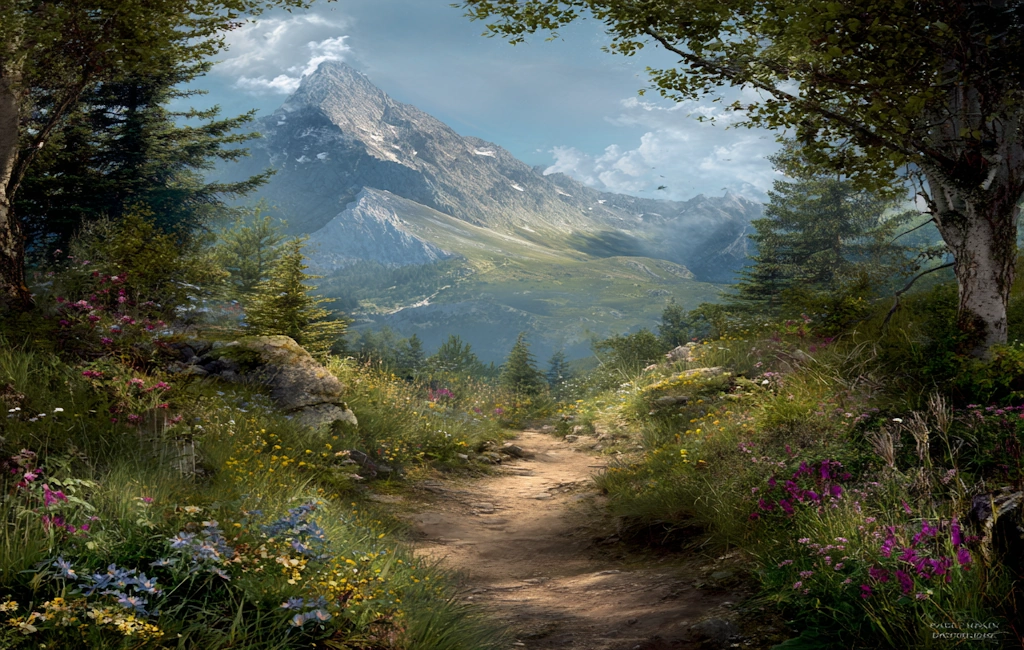
Walk the Camino Francés, Spain's most celebrated pilgrimage route. This 780km moderate walk traverses diverse Northern Spanish landscapes, from Pyrenean foothills to the Atlantic coast, over 30-35 days. Follow an ancient path rich in history and culture, offering stunning panoramas and a profound personal experience.
Distance: 780.0 km
Elevation Gain: 12000 m
Difficulty: Moderate
Duration: 30-35 days
The Camino Francés, or the French Way, is the most iconic and historically significant of the various pilgrimage routes leading to the shrine of the apostle Saint James the Great in the Cathedral of Santiago de Compostela. Stretching approximately 780 kilometres from the foothills of the French Pyrenees across the diverse landscapes of Northern Spain, this ancient path has been trodden by millions of pilgrims for over a thousand years. It is not merely a long-distance hike; it is a cultural, spiritual, and physical odyssey that traverses mountain ranges, vast agricultural plains, and lush Atlantic forests. The journey typically begins in the medieval town of Saint-Jean-Pied-de-Port in France, crossing the border into Spain on the very first day, and continues through the regions of Navarra, La Rioja, Castilla y León, and finally Galicia.
Walking the Camino Francés is a transformative experience that demands endurance and resilience, yet rewards the traveller with a profound sense of community and historical connection. The route is punctuated by medieval bridges, Romanesque churches, Gothic cathedrals, and humble stone villages where the "Pilgrim's Greeting"—Buen Camino—is a constant refrain. Whether undertaken for religious reasons, spiritual seeking, or the simple love of trekking, the French Way offers a unique infrastructure of dedicated pilgrim hostels (albergues) and a well-marked path that makes it accessible to those with moderate fitness and a determined spirit. It is a journey of self-discovery where the destination is often secondary to the lessons learned along the dusty tracks of the Meseta or the misty hills of Galicia.
The Camino Francés is a masterclass in geographical and cultural diversity. The route is traditionally divided into three distinct phases, often described by pilgrims as the physical, the mental, and the spiritual. The first phase begins with a dramatic crossing of the Pyrenees, a challenging ascent that tests the legs and lungs immediately. This section through Navarra and La Rioja is characterised by rolling vineyards, red-earthed tracks, and the historic cities of Pamplona and Logroño. The terrain is undulating and physically demanding, but the lush greenery and world-class wine regions provide ample motivation.
The second phase enters the Meseta, the vast high-altitude plateau of central Spain. Stretching between Burgos and León, this section is often feared for its perceived monotony and exposure to the elements. Here, the path is straight, the horizon is distant, and the sun can be relentless. However, many pilgrims find this the most rewarding part of the journey; the lack of external distraction forces an internal dialogue, making it the "mental" stage of the pilgrimage. The silence of the wheat fields and the immense sky create a meditative atmosphere that is unique to the Spanish interior.
The final phase begins as the trail climbs into the mountains of León and enters Galicia. The landscape shifts dramatically to emerald-green hills, eucalyptus forests, and misty valleys reminiscent of Ireland or the Scottish Highlands. This is the "spiritual" stage, where the proximity to Santiago de Compostela creates a palpable energy among the walking community. The final 100 kilometres from Sarria see a significant increase in pilgrim numbers, as this is the minimum distance required to receive the Compostela certificate. The journey concludes in the Plaza del Obradoiro, beneath the towering spires of the Santiago Cathedral, a moment of profound emotional release for those who have walked across the continent.
The infrastructure of the Camino Francés is unparalleled. The route is marked by the iconic yellow shell and yellow arrows, ensuring that navigation is rarely a concern. A network of albergues—ranging from basic municipal dormitories to boutique private hostels—provides affordable accommodation every few kilometres. This allows for a high degree of flexibility; pilgrims can choose to follow traditional stages or create their own itinerary based on their physical condition and interests. The social aspect of the Camino is equally vital, with communal dinners and shared stories forming the backbone of the "Camino family" experience.
The origins of the Camino de Santiago date back to the early 9th century, when the tomb of the Apostle James was purportedly discovered in a field in Galicia, guided by a star (hence Compostela, from the Latin Campus Stellae or "Field of Stars"). King Alfonso II of Asturias was the first to make the pilgrimage from Oviedo, establishing the Camino Primitivo. However, as the Reconquista pushed Moorish influence south, the Camino Francés became the primary artery for European pilgrims, supported by kings and clergy who built bridges, hospitals, and monasteries to protect and house the travellers.
By the 12th century, the pilgrimage had become one of the three great pilgrimages of Christendom, alongside those to Rome and Jerusalem. The Codex Calixtinus, often cited as the world's first travel guide, was written during this period to provide pilgrims with advice on routes, water sources, and local customs. The trail served as a vital conduit for the exchange of ideas, architectural styles (particularly Romanesque and Gothic), and languages across medieval Europe. Many of the towns along the route, such as Santo Domingo de la Calzada and Villafranca del Bierzo, owe their existence and prosperity to the steady stream of pilgrims.
After centuries of decline due to the Reformation, plagues, and political upheaval, the Camino experienced a dramatic resurgence in the late 20th century. This revival was sparked by the efforts of local priests like Elias Valiña, who first painted the yellow arrows, and the designation of the route as a UNESCO World Heritage site in 1993. Today, the Camino Francés is a global phenomenon, attracting hundreds of thousands of people from every corner of the world, transcending its purely religious roots to become a symbol of international peace and personal reflection.
Want more background? Read extended notes on history and cultural context → Learn more
Choosing the right time to walk the Camino Francés is critical for both comfort and the availability of services. The most popular windows are Spring (April to June) and Autumn (September to October). During these months, the weather is generally mild, the landscapes are vibrant—either with spring wildflowers or autumnal harvests—and most albergues and services are fully operational.
Summer (July and August) brings intense heat, particularly in the Meseta, where temperatures regularly exceed 35°C. This is also the busiest period, coinciding with European holidays and the feast of Saint James (25 July). During these months, a "race for beds" can occur, with pilgrims starting their walk before dawn to reach the next hostel before they fill up. While the social atmosphere is at its peak, the physical toll of the heat and the crowds can be significant.
Winter (November to March) offers a solitary and contemplative experience, but it is only for the well-prepared. Many albergues close for the season, and the weather can be severe. The crossing of the Pyrenees (the Napoleon Route) is often closed due to snow from November to March for safety reasons, requiring pilgrims to take the lower Valcarlos route. Snow is also common in the mountains of León and Galicia. However, for those seeking silence and a true challenge, the winter Camino is a hauntingly beautiful journey.
Rain is a constant factor in Galicia, regardless of the season. The region's Atlantic climate means that even in mid-summer, mist and drizzle (known locally as calabobos) are common. Proper waterproof gear is essential for the final 150 kilometres of the trek. Conversely, the Navarra and Rioja regions can be quite humid in the spring, while the Meseta is characterised by dry, biting winds.
Week 1: The Pyrenees and Navarra
Week 2: La Rioja and the approach to the Meseta
Week 3: The Heart of the Meseta
Week 4: The Mountains of León and El Bierzo
Week 5: The Final Stretch through Galicia
Important Notes:
Preparation for the Camino Francés involves both physical training and logistical coordination. While the trail is not technically difficult, the cumulative effect of walking 20–30 kilometres daily for a month is significant. It is recommended to begin training at least three months in advance, gradually increasing distance while wearing the boots and pack you intend to use. Focus on back, core, and leg strength, and include some hill work to prepare for the Pyrenees and Galician climbs.
Logistically, you must decide on your starting point. While Saint-Jean-Pied-de-Port is the traditional start, many begin in Roncesvalles, Pamplona, or Sarria. If starting in SJPP, fly into Biarritz (France) or take a train from Paris. If starting in Spain, Pamplona is the most accessible hub. Booking your first night's accommodation is essential, especially in SJPP or Roncesvalles, as these hubs fill up quickly. Beyond the first few days, many pilgrims prefer to walk without bookings to maintain flexibility, though in peak season (July–August), booking a day ahead via apps or phone is increasingly common.
The Camino offers a unique hierarchy of accommodation designed specifically for pilgrims. To stay in pilgrim-specific hostels, you must carry a Credencial (Pilgrim Passport).
Albergues (Pilgrim Hostels):
Facilities Provided: Most albergues provide a bunk, a mattress, and access to a shower. Many have kitchens with basic utensils, though you must buy your own food. Blankets are sometimes provided, but a sleeping bag or liner is mandatory for hygiene.
What's NOT Provided: Towels, toiletries, and laundry detergent are rarely provided. Most albergues do not have heating or air conditioning, and many have strict "lights out" (usually 10:00 PM) and "departure" (usually 8:00 AM) times.
There is no "permit" required to walk the Camino in the sense of a restricted-entry pass. However, to access the network of albergues and to receive the official Compostela certificate at the end, you must obtain a Credencial del Peregrino (Pilgrim Passport).
The Credencial: This is a folding document that you "stamp" (sello) at albergues, churches, cafes, and town halls along the way. It serves as proof that you have walked the route. You can obtain one at the Pilgrim Office in Saint-Jean-Pied-de-Port, at major cathedrals along the route, or via your national Camino association before you leave home. It typically costs 2–5 Euros.
The Compostela: To receive this Latin certificate of completion, you must prove you have walked at least the last 100 kilometres (starting from Sarria) or cycled the last 200 kilometres (starting from Ponferrada). During the final 100 km, you must obtain two stamps per day in your Credencial. Upon arrival in Santiago, you take your stamped Credencial to the Pilgrim Welcome Centre near the Cathedral to claim your certificate.
Costs: While the trail itself is free, the daily cost of living (accommodation and food) typically ranges from 35 to 55 Euros per day for a budget-conscious pilgrim. This includes an albergue bed, a "Pilgrim Menu" (a three-course meal offered by many restaurants for 12–15 Euros), and basic snacks.

Detailed route notes, maps, logistics & tips for the Camino De Santiago Camino Frances (PDF).

Precisely traced GPX for the Camino De Santiago Camino Frances, ready for your GPS or favourite mapping app.
The Camino Francés passes through some of Spain's most culturally rich cities and regions. Consider taking extra time to explore:
The Camino Francés is generally a very safe trail, even for solo female travellers. However, the primary risks are physical rather than criminal. Blisters, tendonitis, and heat exhaustion are the most common reasons pilgrims are forced to stop. It is vital to listen to your body and not push through severe pain.
Road Safety: While much of the trail is on dirt tracks, there are sections that follow or cross busy roads (N-VI and N-120). Always walk facing traffic where possible and wear reflective gear if walking in the twilight or rain.
Weather Extremes: In the Meseta, the lack of shade makes heatstroke a genuine risk. Start early, wear a wide-brimmed hat, and drink at least 3 litres of water daily. In the mountains, weather can change rapidly; always check the forecast before crossing the Pyrenees or the climb to O Cebreiro.
Bed Bugs: While albergues work hard to prevent them, bed bugs can occasionally be an issue. Use a repellent spray on your pack and never put your pack on the bed. If you are bitten, wash all your gear in hot water (60°C) and dry it on high heat.
Cruz de Ferro: Located between Rabanal del Camino and Ponferrada, this is one of the most symbolic spots on the Camino. It is a simple iron cross atop a wooden pole, surrounded by a massive mound of stones. Tradition dictates that pilgrims bring a stone from home and leave it at the foot of the cross, symbolising the laying down of a burden or a prayer for a loved one.
Samos Monastery: Between Triacastela and Sarria, you can take a slightly longer valley route to visit the Monastery of San Xulián de Samos. It is one of the oldest and largest inhabited monastic complexes in Spain, offering guided tours of its impressive cloisters and murals.
Eunate: A short detour from the main path near Puente la Reina leads to the Church of Santa María de Eunate. This 12th-century Romanesque church is unique for its octagonal shape and mysterious origins, often associated with the Knights Templar.
O Cebreiro: This ancient village marks the entrance to Galicia. It is famous for its pallozas—circular stone houses with thatched roofs that date back to pre-Roman times. The village church, Santa María la Real, is the site of a 14th-century Eucharistic miracle and houses a famous Romanesque statue of the Virgin Mary.
With hundreds of thousands of people walking the Camino each year, the environmental impact is significant. It is the responsibility of every pilgrim to preserve the beauty and sanctity of the trail for those who follow.
Key Principles:
