
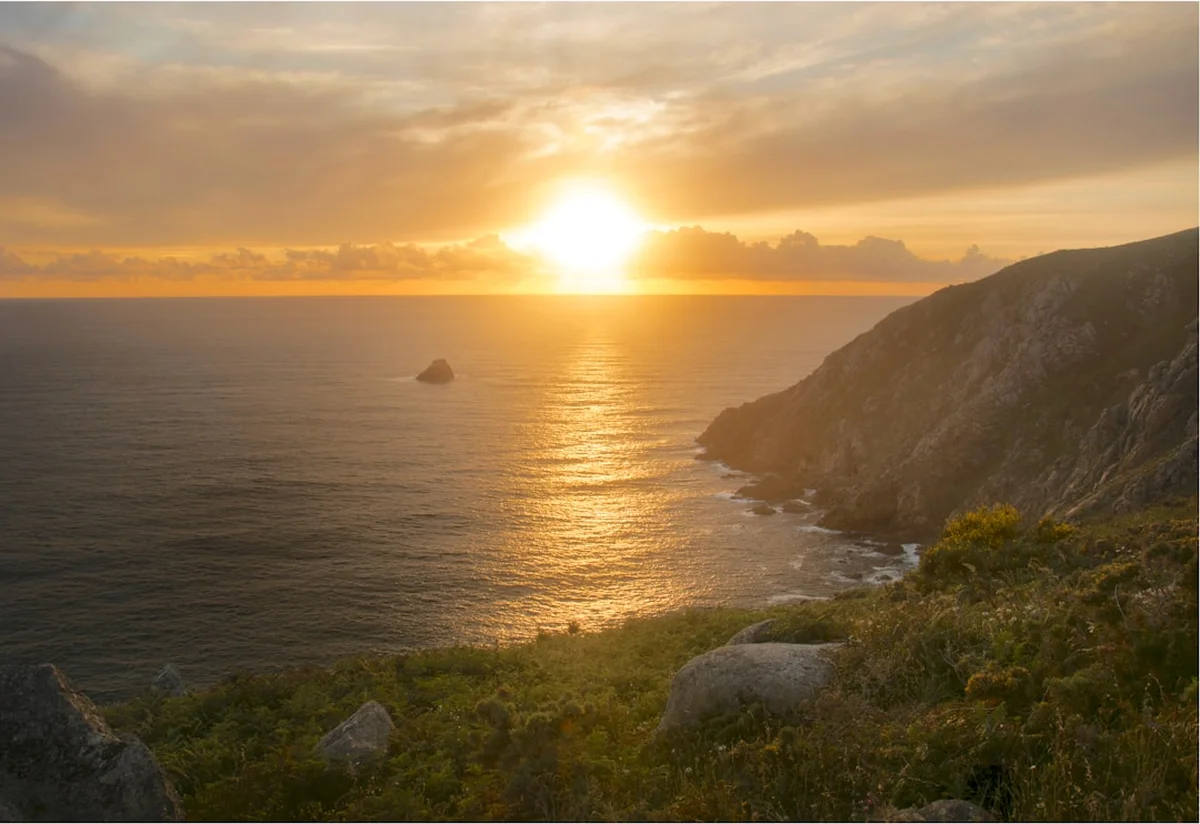
Camino de Finisterre - Journey to the Edge of the World
The Camino de Finisterre, also known as the Fisterra-Muxía Way, occupies a unique position in the world of pilgrimage. While every other route of the Camino de Santiago concludes at the majestic Cathedral of Santiago de Compostela, this is the only path that begins there. It is a 90-kilometre journey that leads pilgrims westward, following the path of the setting sun toward the rugged Atlantic coast of Galicia. Historically known as the "Finis Terrae" or the "End of the World" by the Romans, this ancient trail predates Christian pilgrimage, rooted in pagan traditions of sun worship and the belief that the soul's journey continued beyond the western horizon. Today, it serves as a profound epilogue for those who have walked hundreds of kilometres across Europe, offering a transition from the spiritual intensity of Santiago to the raw, elemental power of the ocean.
- Distance: 90.0 km (Santiago to Finisterre); 118.0 km if continuing to Muxía
- Duration: 4–5 days
- Season: April–June and September–October (Spring and Autumn are ideal)
- Accommodation: Albergues (pilgrim hostels), pensions, and rural guesthouses
- Highest point: Monte Aro (approx. 370 m)
- Difficulty: Moderate (rolling hills, well-marked paths, and some road walking)
- Direction: Westward from Santiago de Compostela to the Atlantic coast
Overview
The Camino de Finisterre is a masterclass in Galician geography, taking the walker through a landscape that feels increasingly ancient and untamed as the kilometres pass. Leaving the medieval stone streets of Santiago de Compostela, the trail quickly transitions into deep eucalyptus and pine forests, crossing medieval bridges and winding through tiny stone hamlets where life appears to have changed little over the centuries. The route is characterised by its "rolling" nature—rarely flat, but never reaching the punishing alpine heights of the Pyrenees or the Cantabrian Mountains. Instead, it offers a series of moderate climbs and descents through lush green valleys, past traditional "hórreos" (granite granaries), and alongside rushing rivers like the Tambre.
The emotional arc of this trail is perhaps its most defining feature. For many, the arrival in Santiago is a moment of overwhelming noise, crowds, and completion. The walk to Finisterre provides the necessary "decompression" time. As the urban sprawl of Santiago fades, the air becomes saltier and the wind more insistent. The final approach to the coast is spectacular; after days of inland forest, the first glimpse of the Atlantic Ocean from the heights above Cee is a moment of genuine catharsis. The trail concludes at Cape Finisterre, a jagged peninsula jutting into the Atlantic, where the lighthouse stands as a sentinel over the "Costa da Morte" (Coast of Death). Here, pilgrims traditionally watch the sunset, symbolising the death of their old selves and the birth of a new journey.
While the infrastructure is excellent, with yellow arrows marking every turn, the Camino de Finisterre feels significantly more solitary than the final stages of the Camino Francés. It attracts a specific type of walker—those not yet ready to let go of the rhythm of the road, and those seeking a more elemental, nature-focused conclusion to their pilgrimage. Whether you walk it as an extension of a longer journey or as a standalone four-day trek, the path to the edge of the world offers a unique blend of Celtic mysticism, Roman history, and Galician hospitality.
History and Cultural Context
The history of the Camino de Finisterre is a complex tapestry of pagan myth, Roman conquest, and Christian tradition. Long before the discovery of the tomb of St. James in the 9th century, the promontory of Finisterre was a sacred site for the Celts and other pre-Roman tribes. They believed that the sun "died" into the ocean here every night, and the area was home to the "Ara Solis," an altar dedicated to the sun. For these ancient peoples, the journey to the westernmost edge of the known world was a ritualistic passage, a way to witness the boundary between the living world and the mysterious beyond.
When the Romans arrived in the 1st century BC, they were awestruck by the sight of the sun sinking into the Atlantic. They named the region "Finis Terrae," literally the "End of the Earth." They incorporated the local sun-worshipping traditions into their own mythology, further cementing the area's status as a place of spiritual significance. In the medieval period, as the cult of St. James grew, the Church "Christianised" the route. Legend suggested that St. James himself had travelled to the coast to preach, and several sites along the way—most notably in Muxía—are associated with the Virgin Mary appearing in a stone boat to encourage the apostle in his mission.
Throughout the Middle Ages, many pilgrims who reached Santiago felt a spiritual compulsion to continue to the coast. They would travel to Finisterre to collect a scallop shell from the beaches as proof of their journey (the origin of the Camino's most famous symbol). A series of rituals developed: pilgrims would bathe in the sea at Langosteira beach to purify themselves, burn their old walking clothes at the Cape to symbolise the shedding of their past lives, and watch the sunset to mark the completion of their transformation. While the burning of clothes is now strictly prohibited for environmental reasons, the sense of renewal remains the core of the Finisterre experience. The landscape is dotted with "cruceiros" (stone crosses) and ancient chapels, each serving as a reminder of the millions of footsteps that have trodden this path over two millennia.
Want more background? Read extended notes on history and cultural context → Learn more
Seasonal Highlights and Weather Reality
Galicia is famously the greenest region of Spain, a title it earns through frequent and sometimes unpredictable rainfall. The weather on the Camino de Finisterre is heavily influenced by the Atlantic Ocean, meaning it is generally milder but wetter than the Spanish interior.
Spring (April to June): This is arguably the most beautiful time to walk. The Galician countryside is in full bloom, with yellow gorse and purple heather covering the hillsides. Temperatures are comfortable for walking, typically ranging from 12°C to 20°C. However, April and May can be quite rainy, so high-quality waterproof gear is essential. The trail is moderately busy but rarely crowded.
Summer (July to August): While much of Spain swelters in 40°C heat, Galicia remains relatively cool, with temperatures usually hovering between 20°C and 28°C. This makes it a popular escape for Spanish tourists. The days are long, with light lasting until 10:00 PM, allowing for relaxed walking. The downside is that albergues can fill up quickly, and the coastal towns of Finisterre and Muxía are at their busiest. The "Costa da Morte" can also experience sudden sea fogs (niebla) that drop temperatures rapidly.
Autumn (September to October): Another prime window for trekking. The summer crowds dissipate, and the light takes on a golden, autumnal quality that is perfect for photography. September often sees stable, clear weather, though by late October, the Atlantic storms begin to roll in more frequently. Temperatures remain mild, making for pleasant walking conditions.
Winter (November to March): Walking the Camino de Finisterre in winter is a solitary and challenging experience. Many private albergues and seasonal restaurants close down, leaving only municipal facilities. Galicia is very wet and windy during these months, and the coastal sections can be battered by fierce Atlantic gales. While snow is rare at these low altitudes, the damp cold can be biting. This season is only recommended for experienced walkers who enjoy solitude and are well-prepared for persistent rain.
Recommended Itinerary
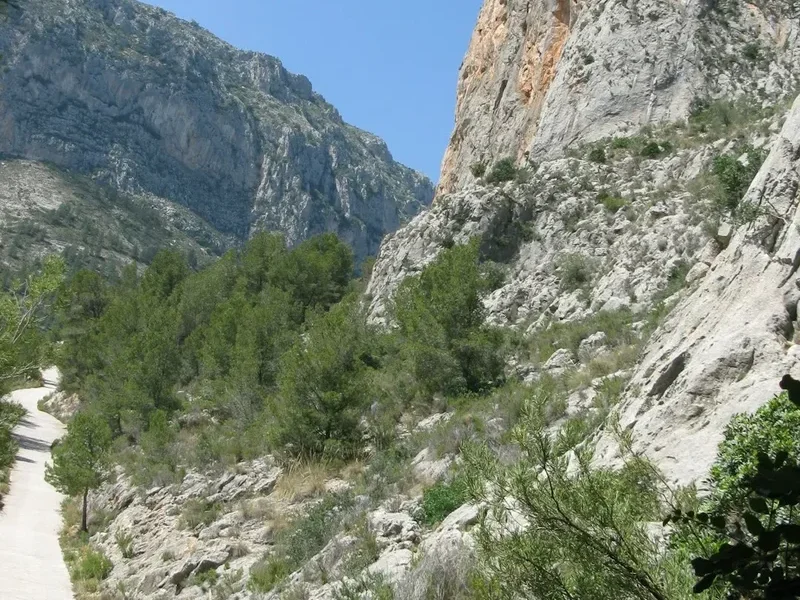
4-Day Camino de Finisterre Itinerary
Day 1: Santiago de Compostela to Negreira
- Distance: 21.0 km
- Elevation gain: 450 m
- Time: 5–6 hours
- Start at the Praza do Obradoiro in front of the Santiago Cathedral
- Descend through the city and enter the oak forests of Sarela
- Pass through the beautiful medieval village of Ponte Maceira, featuring a 14th-century bridge over the Tambre River
- Final climb into the hilltop town of Negreira
- Key Waypoint: Ponte Maceira is one of the most photographed spots on the entire Camino
- Negreira offers all services, including several albergues and a historic manor house (Pazo do Cotón)
Day 2: Negreira to Olveiroa
- Distance: 33.0 km
- Elevation gain: 550 m
- Time: 8–9 hours
- A long, demanding day through rural Galicia
- The trail climbs steadily out of Negreira through pine and eucalyptus plantations
- Cross the Xallas River and enter the windswept plateau of A Pena
- Pass through tiny hamlets like Vilaserío and Santa Mariña
- Arrive in Olveiroa, a beautifully restored village known for its high concentration of traditional stone hórreos
- Note: This is the longest stage; some walkers choose to break it up by staying in Santa Mariña (20 km from Negreira)
Day 3: Olveiroa to Cee / Corcubión
- Distance: 18.0 km
- Elevation gain: 250 m
- Time: 4–5 hours
- A shorter day with a spectacular reward
- The trail follows the Xallas valley before climbing toward Monte Aro
- From the ridge, you get your first panoramic views of the Atlantic Ocean and the Cape of Finisterre in the distance
- A long, steep descent leads into the coastal town of Cee and its neighbour, Corcubión
- Key Waypoint: The viewpoint at Cruceiro de Armada, where the ocean first becomes visible
- Cee is a large town with full services, while Corcubión is a charming, historic fishing village
Day 4: Cee to Cape Finisterre
- Distance: 12.0 km (plus 3 km to the Lighthouse)
- Elevation gain: 250 m
- Time: 3–4 hours
- The trail hugs the coastline, offering stunning views of the Estuary of Corcubión
- Walk along the 2-kilometre stretch of Langosteira Beach (many pilgrims walk barefoot in the surf here)
- Enter the town of Fisterra (Finisterre) to check into accommodation and receive your certificate
- The final 3-kilometre walk follows the road and a coastal path up to the Lighthouse (Faro)
- Key Waypoint: The "0.00 km" marker at the lighthouse, signifying the end of the road
- Tradition: Watch the sunset at the Cape, the westernmost point of the pilgrimage
Optional Extension: Day 5: Finisterre to Muxía
- Distance: 28.0 km
- Elevation gain: 400 m
- Time: 7–8 hours
- A rugged, coastal trek connecting the two "ends" of the Camino
- Pass through dense forests and remote beaches like Praia de Rostro
- Arrive in Muxía, home to the Sanctuary of Virxe da Barca, built on the rocks where the Atlantic waves crash
- This stage is often considered the most beautiful and wild part of the entire route
Important Notes:
- The trail is marked with yellow arrows and stone markers, but the arrows point toward the coast (opposite to the rest of the Camino)
- Water fountains (fuentes) are frequent, but always carry at least 1.5 litres
- The descent into Cee is very steep and can be hard on the knees; trekking poles are highly recommended
- If walking in summer, start early (6:30 AM) to avoid the midday sun on the exposed plateaus of Day 2
Planning and Bookings
Book Your Trip
Everything you need to plan your journey
Accommodation
Find places to stay near Santiago de Compostela
Flights
Search flights to Santiago de Compostela
Essential Preparation
The Camino de Finisterre requires a moderate level of fitness. While it is not as mountainous as the Camino Primitivo, the 33-kilometre second day is a significant challenge for many. It is recommended to train by walking 15–20 kilometres on consecutive days with a weighted pack before departure. Because this route starts in Santiago, most walkers are already "trail-hardened," but if you are starting fresh in Santiago, give yourself a day to acclimatise to the city and organise your pilgrim credentials.
Logistically, Santiago de Compostela is the perfect base. It has an international airport (SCQ) with frequent flights to major European hubs. From the airport, a shuttle bus runs every 30 minutes to the city centre. Before starting, visit the Pilgrim Office (Oficina de Acogida al Peregrino) near the Cathedral to get your "Credencial" (pilgrim passport) if you don't already have one. This document is essential for staying in albergues and receiving your final certificate.
Trail Accommodation
Accommodation on the Camino de Finisterre is plentiful and varied, catering to all budgets. The most common option is the "Albergue," which comes in two types: Municipal and Private.
Municipal Albergues: Run by local councils or the Xunta de Galicia. They are the most affordable (usually €8–€10 per night). They operate on a first-come, first-served basis and cannot be booked in advance. Facilities are basic: bunk beds in large dormitories, shared bathrooms, and usually a communal kitchen (though often without pots and pans).
Private Albergues: These cost slightly more (€12–€18) but offer the advantage of being bookable via apps like Booking.com or WhatsApp. They often have better facilities, such as smaller dorms, laundry machines, WiFi, and sometimes breakfast. In peak summer, booking your private albergue a day or two in advance is highly recommended.
Pensions and Casa Rurales: For those seeking more privacy, Galician "pensions" and "casas rurales" (country houses) offer private rooms with en-suite bathrooms. These range from €40 to €80 per night and provide a high level of comfort and local character. In towns like Negreira, Cee, and Finisterre, these are excellent options for a good night's rest.
What is NOT provided: Most albergues provide a bottom sheet and a pillowcase (often disposable), but you must bring your own sleeping bag or lightweight liner. Towels are rarely provided in albergues. Toiletries are your responsibility, though most places have soap in the bathrooms.
Required Gear
- Footwear: Trail running shoes or lightweight hiking boots. The terrain is a mix of asphalt, gravel, and forest paths; heavy mountaineering boots are unnecessary and may cause blisters.
- Socks: High-quality merino wool socks (e.g., Darn Tough or Smartwool). Bring at least three pairs to rotate.
- Backpack: A 30–40 litre pack is ideal. Ensure it has a supportive hip belt. Total weight should not exceed 10% of your body weight.
- Rain Gear: A lightweight, breathable waterproof jacket and a pack cover. A "pilgrim poncho" that covers both you and your pack is a popular and effective Galician choice.
- Clothing: Moisture-wicking base layers (no cotton), a lightweight fleece or down jacket for evenings, and two pairs of trekking trousers or shorts.
- Trekking Poles: Highly recommended for the steep descent into Cee and for saving your knees on the rolling hills.
- Sleeping Bag: A lightweight 1-season sleeping bag or a silk liner (depending on the season). Huts are generally well-insulated but not always heated.
What to Bring
- Pilgrim Credencial: Your passport for the journey. You need this to stay in albergues and to get your Fisterrana certificate.
- Water Treatment: While tap water in Galicia is generally safe, a filtered water bottle (like LifeStraw) provides extra peace of mind when using rural fountains.
- First Aid Kit: Focus on blister care (Compeed, needle and thread, antiseptic wipes), ibuprofen, and sunblock.
- Earplugs and Eye Mask: Essential for sleeping in communal dormitories.
- Universal Adapter: Spain uses Type C and F plugs. A small power bank is useful for long days.
- Toiletries: Solid shampoo and soap save weight and space. Don't forget a quick-dry microfibre towel.
- Food/Snacks: You will pass through towns frequently, so there is no need to carry days of food. Carry "emergency" snacks like nuts, dried fruit, or chocolate.
- Cash: While many places take cards, small village bars and municipal albergues often only accept cash. Carry at least €50 in small notes.
Permits
No formal "permits" are required to walk the Camino de Finisterre, and there are no trail fees or entry requirements. However, to access the network of pilgrim albergues and to receive your completion certificates, you must carry a Credencial del Peregrino (Pilgrim Passport).
The Credencial: If you have just finished another Camino route, you can continue using the same Credencial. If you are starting fresh in Santiago, you can purchase one for €2 at the Pilgrim Office, the Cathedral, or various churches and albergues in the city. You must get this stamped at least twice a day (usually at your accommodation and a café or church along the way) to prove you have walked the distance.
The Fisterrana and Muxiana: These are the official certificates of completion for this route. They are separate from the "Compostela" given in Santiago.
- The Fisterrana: Issued at the Albergue de Peregrinos in the town of Fisterra. You must show your stamped Credencial to prove you walked from Santiago.
- The Muxiana: Issued at the Tourist Office or the Municipal Albergue in Muxía for those who continue to or start from Muxía.
Logistics and Transport:
- Luggage Transfer: If you prefer not to carry your full pack, services like "Correos" (the Spanish postal service) or "Paq Mochila" will transport your bag from one accommodation to the next for approximately €7 per stage. This must be organised a day in advance.
- Return Transport: Once you reach Finisterre or Muxía, buses run several times a day back to Santiago de Compostela. The journey takes about 2 to 2.5 hours and costs roughly €15. Tickets can be bought on the bus or at the station.
- Booking Strategy: While you don't need a permit, you do need a bed. In July and August, the "Holy Year" effect or general summer popularity can make beds scarce. Use apps like 'Buen Camino' or 'Gronze' to check availability and phone ahead to private albergues by 10:00 AM to secure a spot for that evening.
Other Activities in the Area
The region surrounding Finisterre and Muxía is rich in natural beauty and Galician culture. Consider spending an extra day or two to explore:
- Ezaro Waterfall (Fervenza do Ézaro): Located near the town of Dumbría, this is the only waterfall in continental Europe that flows directly into the ocean. It is a powerful sight, especially when illuminated at night during the summer months.
- Monte Pindo: Known as the "Celtic Olympus," this granite mountain offers a challenging hike with incredible views over the Atlantic. It is steeped in local legends of giants and ancient gods.
- Seafood Dining in Muxía: Muxía is famous for its "percebes" (goose barnacles), a local delicacy harvested from the dangerous rocks of the Costa da Morte. The town's harbour-front restaurants offer some of the freshest seafood in Spain.
- Langosteira Beach: A 2-kilometre white sand beach just before Finisterre. It is perfect for a celebratory swim, though the Atlantic water is famously "refreshing" (cold) even in summer.
- Sanctuary of Virxe da Barca: Visit this stunning church in Muxía, built on the very edge of the sea. The "Pedra de Abalar" (rocking stone) nearby is said to have healing powers.
- Maritime Museum in Finisterre: Located in the San Carlos Castle, this small museum provides fascinating context on the shipwrecks and maritime history of the Coast of Death.
Safety and Conditions
Pre-Departure Checks:
- Check the local Galician weather forecast (MeteoGalicia) specifically for the "Costa da Morte" region, as it can differ significantly from Santiago.
- Ensure your footwear is broken in; blisters are the most common reason pilgrims fail to reach the coast.
- Inform your accommodation or a friend of your daily destination, especially if walking alone in the shoulder season.
Road Walking Hazards: A significant portion of the Camino de Finisterre involves walking on or alongside paved roads. While these are generally quiet country lanes, Galician drivers can be fast. Always walk on the left side of the road (facing traffic), wear reflective gear if walking in low light, and stay alert. Avoid using headphones on road sections.
The "Costa da Morte" Weather: The name "Coast of Death" is not an exaggeration. The Atlantic weather can change in minutes. Sudden sea fogs can reduce visibility to a few metres, making it easy to lose the yellow arrows. If caught in heavy fog on the cliffs, stay on the main path and wait for it to clear or move very slowly. The wind at Cape Finisterre can be extremely strong; stay well back from the cliff edges, as gusts can be unpredictable.
Hydration and Heat: On the exposed plateaus between Negreira and Olveiroa, there is very little shade. Heatstroke is a genuine risk in July and August. Drink at least 3 litres of water on hot days and wear a wide-brimmed hat. Use the "fuentes" (fountains) frequently, but ensure they are marked "agua potable."
Personal Safety: The Camino is generally very safe for solo walkers, including women. However, standard precautions apply. Keep your valuables (passport, cash, phone) in a small waist pack or "bum bag" that never leaves your person, even when showering in albergues. Theft is rare but can happen in crowded dormitories.
Emergency Services: The emergency number in Spain is 112. Most operators speak some English. Coverage is generally good along the route, but there are "dead zones" in the deep valleys between Negreira and Olveiroa.
Side Trips and Points of Interest
Ponte Maceira: This tiny village, located about 17 km from Santiago, is a highlight of the first day. The 14th-century bridge spans the Tambre River with five grand arches. The sound of the rushing weirs, the ancient stone mills, and the surrounding forest create a fairytale atmosphere. It is the perfect place for a mid-morning break.
Monte Aro Viewpoint: On the way from Olveiroa to Cee, the trail skirts the side of Monte Aro. If you have the energy, a short detour to the summit offers the first breathtaking view of the Fervenza reservoir and the distant Atlantic. It is a moment of profound realisation—the ocean is finally within reach.
The 0.00 km Marker: Located at the Finisterre Lighthouse, this stone marker is the most iconic photo opportunity on the trail. It represents the absolute end of the pilgrimage. Nearby, you will find a bronze boot sculpture, a tribute to the millions of pilgrims who have finished their journey here.
The Stones of Muxía: In Muxía, the area around the Sanctuary is covered in massive, smooth granite boulders. Two are particularly famous: the "Pedra de Abalar" (the rocking stone) and the "Pedra dos Cadris" (the kidney stone). Local legend says that crawling under the kidney stone nine times will cure back pain. Whether you believe the myth or not, the geological scale of these rocks is impressive.
Corcubión: Often overlooked in favour of the larger town of Cee, Corcubión is a declared "Historic-Artistic Site." Its narrow streets, traditional Galician balconies (galerías), and quiet plaza offer a more peaceful alternative for your final night before reaching the Cape.
Leave No Trace
The Camino de Finisterre passes through some of Galicia's most pristine and culturally sensitive landscapes. With the increasing popularity of the route, the environmental impact of thousands of walkers is significant. It is the responsibility of every pilgrim to preserve the "End of the World" for those who follow.
Your responsibility as a walker:
- No Burning of Clothes: This ancient tradition is now strictly illegal. It causes wildfires, pollutes the pristine Atlantic air, and leaves unsightly charred remains on the sacred rocks of the Cape. Symbolise your renewal in other ways, such as a swim or a moment of meditation.
- Pack Out Your Trash: Do not leave fruit peels, tissues, or cigarette butts on the trail. Even "biodegradable" items take a long time to break down in the damp Galician climate and are an eyesore for others.
- Respect the Hórreos: These stone granaries are private property and historic monuments. Do not climb on them or use them as shelters for drying clothes.
- Stay on the Path: In coastal areas, especially near Muxía and Finisterre, the dunes and cliff-top grasses are home to rare flora. Stick to the marked trails to prevent erosion.
- Water Conservation: Albergues often rely on local wells. Keep your showers short and be mindful of water usage, especially in the drier summer months.
- Noise Pollution: Many pilgrims walk for spiritual reasons. Respect the silence of the forests and the peace of the small villages you pass through. Avoid playing music through speakers.
The Camino is a shared heritage. By following these principles, you ensure that the "End of the Earth" remains as wild and mystical as it was for the Romans and Celts.
 Spain
Spain