
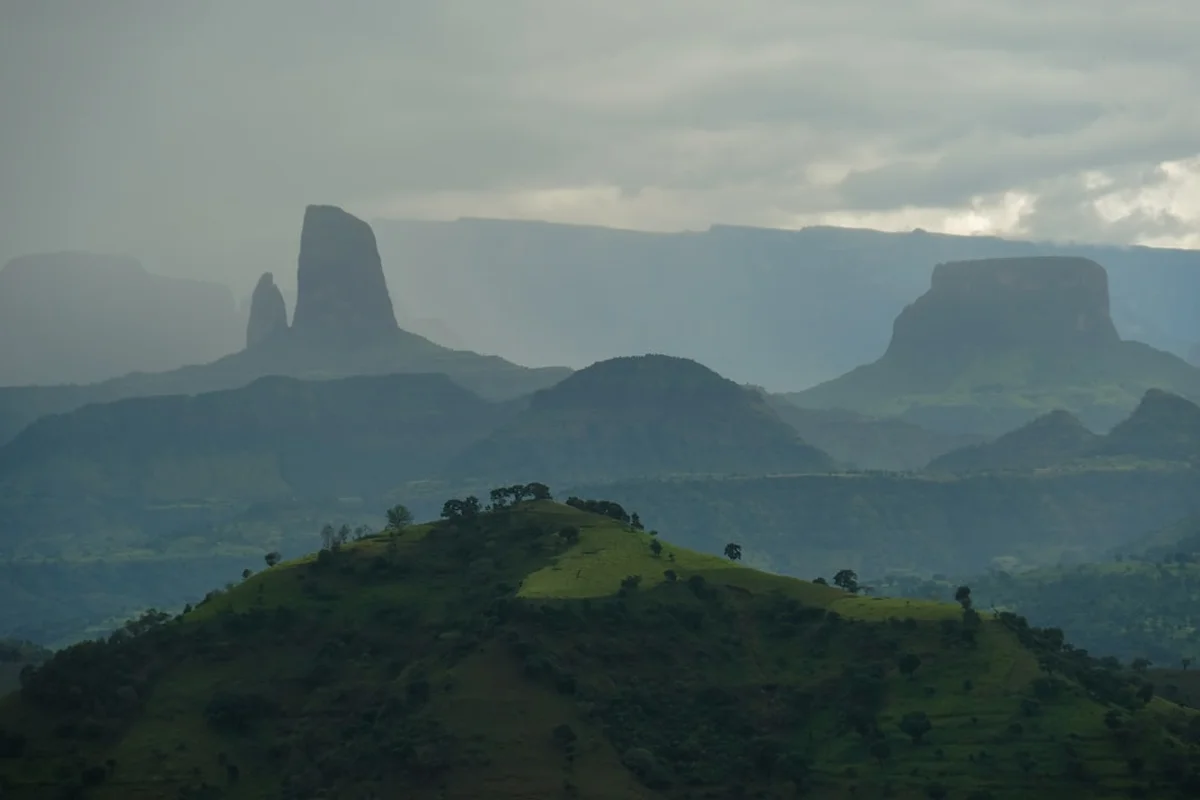
Bale Mountains Trek - The Roof of Africa
The Bale Mountains Trek is Ethiopia’s most profound wilderness experience—a 40-kilometre journey through the largest expanse of Afro-alpine habitat on the African continent. Located in the south-eastern highlands of Ethiopia, this trek traverses the Sanetti Plateau, a volcanic landscape that sits consistently above 4,000 metres, offering a window into an ancient world of endemic species and glacial remnants. Unlike the jagged peaks of the Simien Mountains, the Bale Mountains are characterised by vast, undulating plateaus, dramatic escarpments, and the hauntingly beautiful Harenna Forest. This is the primary stronghold of the Ethiopian wolf, the world’s rarest canid, and the only place on Earth where the giant mole-rat and the mountain nyala can be seen in their natural environment. The trek is a test of endurance against altitude and elements, rewarding walkers with a sense of isolation that is increasingly rare in the modern world.
- Distance: 40.0 km (standard route; variations exist)
- Duration: 4–5 days
- Season: October to April (Dry season; clear skies and cold nights)
- Accommodation: Wilderness campsites (Dinsho, Mararo, Worgona, Gebre Guracha)
- Highest point: Tullu Dimtu (4,377 m)
- Difficulty: Challenging (primarily due to sustained high altitude)
- Direction: Typically North to South (Dinsho to Sanetti/Harenna)
Overview
The Bale Mountains National Park (BMNP) is a biodiversity hotspot of global significance, recently inscribed as a UNESCO World Heritage site. The trek across its high-altitude heart is not merely a physical challenge but an immersion into three distinct ecological zones. The journey begins in the Gaysay Grasslands and northern woodlands, where juniper and Hagenia abyssinica trees create a lush, montane atmosphere. As walkers ascend, they enter the Afro-alpine moorlands, a landscape dominated by giant lobelias that stand like prehistoric sentinels against the mist. Finally, the route crosses the Sanetti Plateau, a high-altitude desert of lichen-covered rocks and alpine tarns, before dropping toward the emerald canopy of the Harenna Forest, one of the few remaining natural forests in Ethiopia.
The defining characteristic of the Bale Mountains Trek is the altitude. Most of the walking takes place between 3,500 and 4,300 metres. At this height, the air is thin, the sun is fierce, and the weather is notoriously fickle. Even in the dry season, a clear morning can transform into a sleet-filled afternoon within minutes. However, the rewards for braving these conditions are unparalleled. The Sanetti Plateau is often described as looking like the surface of the moon, yet it teems with life. Walkers frequently spot the Ethiopian wolf hunting for rodents amongst the "everlasting flowers" (Helichrysum), or see the majestic mountain nyala grazing in the lower valleys. The silence of the plateau is broken only by the wind and the occasional cry of an augur buzzard or a Wattled Crane.
Logistically, the trek requires a degree of organisation that reflects its remote nature. While the trail is not technically difficult in terms of climbing, the lack of permanent infrastructure means walkers must be self-sufficient, supported by local guides, scouts, and pack horses arranged through the park headquarters at Dinsho. This traditional style of trekking fosters a deep connection with the local Oromo communities, who have lived in harmony with these mountains for centuries. Whether you are standing on the summit of Tullu Dimtu looking out over the vastness of the Rift Valley or sitting by a campfire at Gebre Guracha as the temperature drops below freezing, the Bale Mountains Trek offers a raw, unfiltered encounter with the "Roof of Africa."
History and Cultural Context
The Bale Mountains have been inhabited by the Oromo people for generations. For the local communities, the mountains are not just a scenic backdrop but a vital source of water, grazing land, and spiritual significance. The high-altitude plateaus serve as seasonal grazing grounds for cattle, a practice known as "Godantu," where herders move their livestock to the highlands during the rainy season. This traditional land-use system has existed for centuries and is intricately linked to the ecology of the park. The Oromo culture is deeply embedded in the landscape, from the names of the peaks to the traditional knowledge of medicinal plants found in the Harenna Forest.
The formal history of the Bale Mountains National Park began in the late 1960s. Following a survey by British naturalist Leslie Brown, the Ethiopian government realised the urgent need to protect the endemic mountain nyala and the Ethiopian wolf. The park was officially established in 1970, though its boundaries and management have evolved significantly over the decades. During the 1970s and 80s, the region saw periods of instability, but conservation efforts persisted, largely driven by the Ethiopian Wildlife Conservation Authority (EWCA) and international partners like the Frankfurt Zoological Society. The park's recent UNESCO World Heritage status in 2023 recognises its exceptional natural beauty and its role as a refuge for species found nowhere else on the planet.
Walking through Bale is also a journey through geological time. The mountains are of volcanic origin, formed by massive lava outpourings during the Oligocene period, approximately 30 million years ago. Subsequent glaciation during the last Ice Age carved the dramatic cirques and U-shaped valleys that walkers traverse today. The numerous alpine lakes, such as Gebre Guracha (meaning "Black Servant" in Afaan Oromo), are glacial remnants that provide essential water to the lowlands of Ethiopia and Somalia. Understanding this deep history—both geological and human—adds a layer of profound respect to every kilometre walked on the trail.
Want more background? Read extended notes on history and cultural context → Learn more
Seasonal Highlights and Weather Reality
The Bale Mountains experience a distinct weather pattern that dictates the trekking experience. Because of the extreme altitude, temperatures can fluctuate wildly within a single 24-hour period. It is not uncommon to experience "four seasons in one day," with intense equatorial sun at midday and sub-zero temperatures at night.
Dry Season (October to April): This is the primary trekking season. The skies are generally clear, providing spectacular views across the Sanetti Plateau and toward the southern escarpment. October and November are particularly beautiful as the wildflowers are in bloom following the rains. However, this is also the coldest time of year. Night-time temperatures on the plateau frequently drop to -5°C or even -10°C. Frost is common in the mornings, turning the lobelias into glittering ice sculptures. The wind can be biting, making windproof layers essential.
Wet Season (May to September): The "Kiremt" rains bring heavy precipitation and frequent mists. While the landscape becomes incredibly lush and green, trekking becomes significantly more difficult. Trails can become muddy and slippery, and the high-altitude passes may be shrouded in clouds, obscuring the views. July and August are the wettest months and are generally avoided by trekkers. However, for those interested in botany, the rainy season is when the Afro-alpine flora is at its most vibrant.
Wildlife Viewing: The Ethiopian wolf is active year-round, but they are often easier to spot in the dry season when the vegetation is shorter. Birdwatchers should note that many migratory species from Europe and Asia arrive in the Bale Mountains between November and March, joining the resident endemics like the Blue-winged Goose and the Rouget's Rail. Regardless of the season, walkers must be prepared for sudden rain or hail, as the mountains create their own microclimate that defies regional forecasts.
Recommended Itinerary
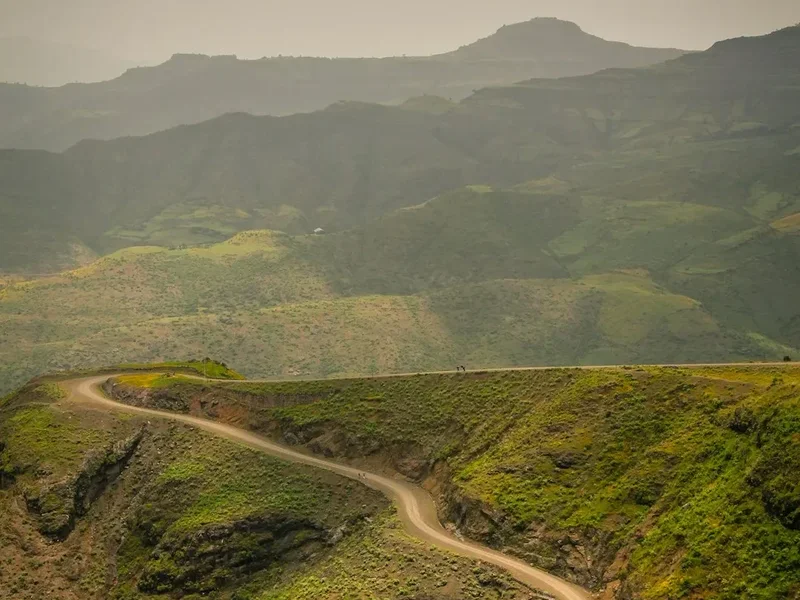
5-Day Bale Mountains Traverse
Day 1: Dinsho to Mararo
- Distance: 12 km
- Elevation gain: 400 m
- Time: 4–5 hours
- Start at the Park Headquarters in Dinsho (3,100 m)
- Walk through the Gaysay Grasslands and juniper woodlands
- Spot Mountain Nyala, Menelik's Bushbuck, and Warthogs
- Gradual ascent through the Finch Habera waterfall area
- Arrive at Mararo Campsite (3,500 m)
- The first day is essential for acclimatisation, moving from the lush valley into the lower moorlands
Day 2: Mararo to Worgona
- Distance: 14 km
- Elevation gain: 500 m
- Time: 6–7 hours
- Ascend into the Afro-alpine zone dominated by Giant Lobelia
- Cross the Wasama Ridge with views of the surrounding peaks
- Pass through volcanic rock formations and fields of Helichrysum (everlasting flowers)
- Look for the Ethiopian Wolf hunting in the valleys
- Arrive at Worgona Campsite (3,900 m) near the Worgona mineral springs
- A more demanding day as the altitude begins to impact pace and breathing
Day 3: Worgona to Gebre Guracha
- Distance: 12 km
- Elevation gain: 450 m
- Time: 5–6 hours
- Climb toward the Sanetti Plateau escarpment
- Cross high passes with views of the "Central Peaks"
- Descend into the dramatic cirque containing Lake Gebre Guracha
- Camp on the shores of the lake (3,950 m)
- Gebre Guracha is one of the most scenic campsites, surrounded by towering cliffs and alpine vegetation
Day 4: Gebre Guracha to Sanetti Plateau / Tullu Dimtu
- Distance: 10 km
- Elevation gain: 400 m
- Time: 4–5 hours
- Steep climb out of the lake basin onto the main Sanetti Plateau
- Walk across the vast, flat plateau at an average altitude of 4,000 m
- Optional summit of Tullu Dimtu (4,377 m), the highest point in the park
- High probability of Ethiopian Wolf sightings on the plateau
- Rendezvous with vehicle transport at the Sanetti road or continue to a final plateau camp
- The landscape here is stark, wind-swept, and hauntingly beautiful
Day 5: Sanetti Plateau to Harenna Forest (Descent)
- Distance: 15 km (if walking) or vehicle transfer
- Elevation loss: 1,500 m
- Time: 5–6 hours
- Descend the southern escarpment via the "Harenna Escarpment"
- Dramatic transition from alpine desert to dense tropical cloud forest
- Pass through the bamboo zone and into the tall forest canopy
- Spot Bale Monkeys and various endemic birds
- Finish at the Harenna Forest village or lodge
- This day provides the most dramatic ecological contrast of the entire trek
Important Notes:
- A local guide and park scout are mandatory for all treks
- Pack horses are highly recommended to carry gear and supplies
- Water must be treated; while streams are plentiful, livestock grazing occurs in some areas
- Altitude sickness is a genuine risk; ensure you have spent at least one night in Goba or Dinsho before starting
- The itinerary can be customised to include more peaks or a longer stay in the Harenna Forest
Planning and Bookings
Book Your Trip
Everything you need to plan your journey
Accommodation
Find places to stay near Goba
Flights
Search flights to Goba
Essential Preparation
The Bale Mountains Trek requires more logistical coordination than a standard European or North American trail. The primary hub for the park is the town of Dinsho, where the Park Headquarters is located. Most trekkers arrive via Goba, which has a small airport with regular flights from Addis Ababa. It is essential to spend at least 24 to 48 hours at an altitude of 2,500–3,000 metres (such as in Addis Ababa or Goba) before beginning the trek to minimise the risk of Acute Mountain Sickness (AMS).
You must coordinate with the Bale Mountains National Park office in Dinsho to arrange your mandatory guide and scout. While you can show up and arrange this on the spot, it is highly recommended to book through a reputable Ethiopian trekking agency or contact the park office in advance during peak season. They will also help you hire pack horses and horse handlers. There are no supermarkets on the trail, so all food and supplies must be purchased in Addis Ababa or Goba before heading to the trailhead.
Trail Accommodation
Accommodation on the Bale Mountains Trek is primitive and focused on wilderness camping. There are no luxury huts or serviced lodges along the main high-altitude route.
Campsites:
- Designated camping areas (Mararo, Worgona, Gebre Guracha) are basic clearings
- Some sites have very basic pit toilets, but many do not
- Water is sourced from nearby streams or lakes (treatment essential)
- No electricity, showers, or permanent shelters are provided
- You must bring your own high-quality, four-season tent
Dinsho Lodge:
- Located at the Park Headquarters
- Offers basic dormitory-style rooms and a common area
- A good place to stay the night before starting the trek
- Provides a chance to meet your guide and organise gear
Harenna Forest Options:
- At the end of the trek, there are more comfortable options, including the eco-friendly Bale Mountain Lodge (high-end) or basic guesthouses in the village of Rira
Required Gear
- Four-season tent - must be able to withstand high winds and potential sleet/snow
- Sleeping bag - rated to at least -10°C (comfort rating); nights are extremely cold
- Sleeping mat - essential for insulation from the frozen ground
- Trekking boots - waterproof and well-broken in; the terrain is rocky and can be boggy
- Large backpack (60-70L) - for your gear, even if using a pack horse (use waterproof liners)
- Daypack (20-30L) - for water, snacks, and layers while walking
- Waterproof jacket and trousers - Gore-Tex or equivalent; essential for wind and rain
- Down jacket - for evenings in camp when temperatures plummet
- Head torch - with extra batteries; there is no light on the plateau
- Trekking poles - highly recommended for the steep descent into Harenna and rocky passes
What to Bring
- Food for the duration - lightweight, high-calorie meals (pasta, rice, tinned tuna, nuts, dried fruit)
- Cooking stove and fuel - multi-fuel or gas (ensure canisters are compatible with your stove; often available in Addis Ababa)
- Water purification - filter, UV purifier, or chlorine tablets (essential due to livestock)
- Sun protection - SPF 50+ sunscreen, lip balm with SPF, wide-brimmed hat, and Category 4 sunglasses (the UV at 4,000 m is intense)
- Warm layers - merino wool base layers, fleece mid-layers, warm hat (beanie), and insulated gloves
- First aid kit - including blister care, rehydration salts, and Diamox (consult a doctor regarding altitude medication)
- Biodegradable toiletries - including "wet wipes" as showers are non-existent
- Power bank - for charging cameras and phones; cold temperatures drain batteries quickly
- Small gifts/cash - for guides, scouts, and horse handlers (tipping is standard practice)
Permits
All visitors to the Bale Mountains National Park must obtain a permit and pay the relevant fees at the Park Headquarters in Dinsho. The process is generally straightforward but must be done in person before starting the trek. Fees are subject to change, but they are typically structured per person, per day.
Current Fee Structure (Approximate):
- Park Entry Fee: ~100–150 ETB per person, per day (Foreign Nationals)
- Camping Fee: ~50–100 ETB per tent, per night
- Vehicle Entry Fee: ~20–50 ETB (if using a drop-off/pick-up)
- Guide Fees: Negotiated daily rate (mandatory)
- Scout Fees: Fixed daily rate (mandatory for security and trail knowledge)
- Horse and Handler Fees: Fixed daily rate per horse
Regulations:
- You cannot trek without a certified park guide and a scout. This is both for your safety and to ensure the protection of the park's fragile ecosystem
- Permits must be carried with you at all times, as scouts may check them at various points or campsites
- The park office is generally open from 8:30 AM to 5:30 PM. If you arrive late, you will need to wait until the following morning to process your permits
- Payment is usually required in Ethiopian Birr (ETB). There are limited ATM facilities in Dinsho, so ensure you withdraw sufficient cash in Goba or Addis Ababa
Other Activities in the Area
The Bale region offers several other unique experiences that can be combined with a trek:
- Harenna Forest Exploration: Spend extra days in the southern part of the park. This is one of the few places where you can see wild coffee growing in the shade of the forest canopy. It is also excellent for spotting the endemic Bale Monkey and various forest birds.
- Sof Omar Caves: Located about 100 km east of Robe, these are the longest caves in Ethiopia and among the most spectacular in Africa. The Web River flows through the limestone caverns, creating a massive underground cathedral of pillars and arches. It is a site of great religious significance for local Muslims.
- Birdwatching: With over 280 species, including 16 endemics, Bale is a premier birding destination. Look for the Spot-breasted Lapwing, Abyssinian Longclaw, and the rare Prince Ruspoli’s Turaco in the surrounding juniper forests.
- Goba Market: Visit the vibrant local market in Goba to experience Oromo culture, see traditional crafts, and purchase local spices and honey.
- Sanetti Plateau Drive: If you have limited time or mobility, the highest all-weather road in Africa crosses the Sanetti Plateau, allowing you to see the Ethiopian wolf and the Afro-alpine landscape from a vehicle.
Safety and Conditions
Altitude Sickness (AMS): This is the primary safety concern. Most of the trek takes place above 3,500 metres, where the risk of Acute Mountain Sickness is high. Symptoms include headache, nausea, dizziness, and fatigue. The best prevention is a slow ascent and proper acclimatisation. If symptoms persist or worsen (indicating HAPE or HACE), the only solution is immediate descent to a lower altitude. Discuss the use of Acetazolamide (Diamox) with your doctor before travelling.
Hypothermia: Even in the dry season, temperatures can drop below freezing very quickly. Wet clothing combined with wind chill is a dangerous combination. Always carry waterproof layers and a dry set of thermal clothing in a waterproof bag. Ensure your sleeping bag is adequate for sub-zero temperatures.
Wildlife: While the Ethiopian wolf is shy and poses no threat to humans, there are leopards and hyenas in the Harenna Forest and lower slopes. Always stay with your guide and scout, and avoid wandering away from the campsite at night. The giant mole-rats are harmless but their burrows can create uneven ground—watch your step to avoid ankle injuries.
Navigation: The Sanetti Plateau can become shrouded in thick fog within minutes, reducing visibility to a few metres. The trail is not always clearly marked. This is why a mandatory guide is required. Never attempt to navigate the plateau alone in poor visibility.
Health: Medical facilities in Dinsho and Goba are basic. For any serious injury or illness, evacuation to Addis Ababa would be necessary. Ensure your travel insurance covers high-altitude trekking and emergency medical evacuation.
Side Trips and Points of Interest
Tullu Dimtu: At 4,377 metres, this is the second-highest mountain in Ethiopia. While it is accessible by road, hiking to the summit provides a sense of accomplishment and a 360-degree view of the Sanetti Plateau. The summit is often cold and windy, but the sight of the "everlasting flowers" clinging to the volcanic soil is unforgettable.
Lake Gebre Guracha: This "Black Lake" is a stunning example of a glacial tarn. Surrounded by vertical cliffs and giant lobelias, it feels like a hidden world. It is a great spot for photography, especially in the early morning when the water is still and reflects the surrounding peaks.
Finch Habera Waterfall: Located near the start of the trek, this waterfall is where the Web and Wolla rivers meet. It is a beautiful spot for a break and offers a chance to see the transition from the juniper forests to the moorlands.
The Harenna Escarpment: The point where the Sanetti Plateau suddenly drops away into the Harenna Forest. Standing on the edge of the escarpment, you can see the clouds rolling over the forest canopy thousands of metres below. It is one of the most dramatic viewpoints in Africa.
Leave No Trace
The Bale Mountains ecosystem is incredibly fragile. The plants and animals here have evolved over millions of years in isolation, and the impact of human visitors can be devastating if not managed carefully. As a UNESCO World Heritage site, it is our collective responsibility to preserve this wilderness.
Your responsibility as a walker:
- Pack out all trash, including food scraps and cigarette butts. There is no waste management system on the plateau
- Use the designated pit toilets where available. If none exist, bury human waste at least 20 centimetres deep and 50 metres away from any water source. Pack out your used toilet paper in a sealed bag
- Do not pick wildflowers or disturb the giant lobelias. Some of these plants take decades to reach maturity
- Stay on the established trails to prevent soil erosion and the destruction of fragile alpine mosses and lichens
- Never feed the wildlife. Feeding Ethiopian wolves or birds disrupts their natural hunting patterns and can make them dependent on humans
- Use a stove for cooking. Firewood is extremely scarce in the Afro-alpine zone, and collecting it destroys vital habitat for insects and small mammals
- Respect the local Oromo herders. Ask for permission before taking photos of people or their livestock
 Australia