
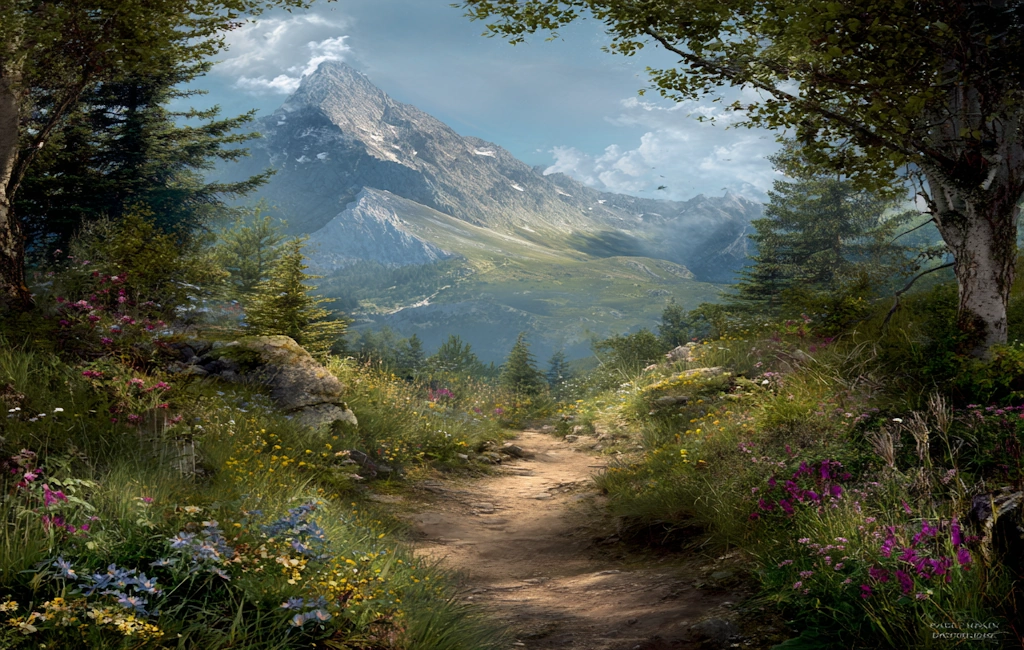
Baekdu-daegan Trail - The Spiritual Spine of the Korean Peninsula
The Baekdu-daegan Trail is South Korea's ultimate wilderness challenge—a monumental 687-kilometre journey that traverses the continuous mountain ridge forming the geographical and spiritual backbone of the Korean Peninsula. Unlike traditional trails that follow valleys or rivers, the Baekdu-daegan strictly adheres to the watershed divide; to walk this path is to never cross a single stream or river, staying perpetually on the crest that separates the eastern and western drainage basins of the country. This "ridge-only" philosophy makes it one of the most physically demanding long-distance hikes in Asia, involving a staggering 54,122 metres of cumulative elevation gain—the equivalent of climbing Mount Everest from sea level more than six times. Starting at Cheonwangbong Peak in Jirisan National Park and ending at the Jinburyeong Pass near the North Korean border, the trail weaves through ancient granite peaks, dense temperate forests, and sacred mountain passes that have defined Korean identity for millennia.
- Distance: 687.0 km (South Korean section)
- Duration: 45–55 days
- Total Elevation Gain: 54,122 m
- Highest Point: Cheonwangbong (Jirisan) - 1,915 m
- Difficulty: Challenging / Expert
- Best Time: Mid-May to late June or late August to early October
- Direction: Traditionally walked South to North (Jirisan to Jinburyeong)
- Accommodation: National Park shelters, mountain village guesthouses (Minbak), and occasional camping
Overview
The Baekdu-daegan is more than just a hiking trail; it is a physical manifestation of Korean cosmology. The name translates to "White Head Great Ridge," referring to the entire 1,400-kilometre range that begins at Mount Baekdu on the Chinese-North Korean border and terminates at Jirisan in the south. While the northern half remains inaccessible due to the division of the peninsula, the 687-kilometre southern section offers a profound immersion into the "San-man" (mountain-culture) of Korea. The trail is defined by its relentless verticality. Because it follows the ridge, hikers are subjected to a "sawtooth" profile of constant steep ascents and descents, often gaining and losing 1,000 metres of elevation multiple times in a single day. There are very few flat sections; the path is a rhythmic cycle of climbing to a peak, descending to a "gogae" (mountain pass), and immediately ascending the next ridge.
The landscape is a tapestry of rugged granite massifs and lush, biodiversity-rich forests. In the south, Jirisan offers vast, rolling ridges and deep historical resonance. Moving north, the trail enters the Deogyusan and Songnisan ranges, characterised by dramatic rock formations and ancient Buddhist temples nestled in the folds of the mountains. The central sections through Sobaeksan and Taebaeksan provide softer, grass-covered highlands, while the northern terminus in Seoraksan National Park presents the most technical and jagged terrain, with razor-sharp ridges and sheer cliffs that require steady nerves and physical resilience. This is a journey through the heart of Korea's protected wilderness, passing through numerous National Parks and provincial reserves where the flora ranges from sub-alpine conifers to vibrant azaleas and royal rhododendrons that carpet the slopes in spring.
Logistically, the Baekdu-daegan is a test of endurance and adaptability. While the trail is generally well-marked with ribbons and stone markers, the sheer length and the isolation of certain sections require careful planning. Hikers must navigate a complex system of National Park shelter bookings, coordinate resupplies in remote mountain villages, and contend with the unpredictable Korean climate. However, the rewards are unparalleled: the sight of a "sea of clouds" (Un-hae) at dawn from a high ridge, the hospitality of a remote mountain Minbak, and the profound sense of accomplishment that comes from traversing the entire length of a nation's spiritual heartland.
History and Cultural Context
The Baekdu-daegan has been the fundamental framework for Korean geography since at least the 10th century. Unlike Western geographical systems that often categorise mountains as isolated peaks, the Korean "Pungsu-jiri" (Feng Shui) system views the mountains as a living, interconnected system of energy (Gi). The Baekdu-daegan is the "Great Vein" that distributes this energy from the sacred Mount Baekdu throughout the entire peninsula. This concept was formalised in the 18th-century text Sangyeongpyo (Mountain Range List), which classified the peninsula's mountains into one great ridge (the Baekdu-daegan), one long ridge (Jangnyeong), and thirteen branch ridges (Jeongmaek). This system ensured that the mountains were never seen as barriers, but as the very bones of the land that dictated the flow of water and the placement of cities.
Throughout history, the ridge has served as a site of spiritual refuge and military defence. Ancient "Sansung" (mountain fortresses) dot the trail, remnants of the Three Kingdoms period when Silla, Baekje, and Goguryeo vied for control of the peninsula. The trail also passes near some of Korea's most significant Buddhist temples, such as Beopjusa and Haeinsa, which were established in the mountains to seek solitude and spiritual purity. The mountains are also home to the "Sanshin" (Mountain Spirits), ancient deities often depicted as old men with tigers, who are still honoured at small shrines (Sanshin-gak) found along the path. For many Koreans, walking the Baekdu-daegan is a pilgrimage to reconnect with these ancestral roots.
In the modern era, the trail took on new significance following the Korean War and the subsequent division of the country. The ridge was severed by the Demilitarised Zone (DMZ), making the full traverse impossible. In the 1980s and 90s, a movement led by Korean hikers and environmentalists sought to "rediscover" the southern section of the ridge, which had been largely forgotten during the country's rapid industrialisation. Today, the Baekdu-daegan is a symbol of the hope for reunification, with many hikers dreaming of the day they can continue their journey north to the slopes of Mount Baekdu itself. The trail's restoration and maintenance are now a matter of national pride, managed by the Korea Forest Service and the Korea National Park Service.
Want more background? Read extended notes on history and cultural context → Learn more
Seasonal Highlights and Weather Reality
The Baekdu-daegan experiences four distinct seasons, each presenting unique challenges and beauties. Choosing the right window is critical for a successful thru-hike.
Spring (April to June): This is one of the most popular times to start. The mountains come alive with colour as cherry blossoms give way to royal azaleas and rhododendrons. However, early spring (April to mid-May) often sees "Fire Prevention Closures" in many National Parks, where large sections of the trail are strictly off-limits to prevent forest fires. Hikers must check the Korea National Park Service (KNPS) website for specific dates. By late May, the weather is mild and the air is clear, though the "Yellow Dust" (Hwangsa) from the Gobi Desert can occasionally reduce visibility and air quality.
Summer (July to August): This is the most challenging season. The "Jangma" (monsoon) brings heavy, relentless rain, making the steep granite sections dangerously slippery and increasing the risk of landslides. The humidity is extreme, often exceeding 90%, and temperatures can soar above 30°C even on the ridges. Leeches and mosquitoes are prevalent in the lower forests. Thru-hiking during the height of summer requires exceptional mental fortitude and high-quality waterproof gear.
Autumn (September to October): Widely considered the "Golden Season" for the Baekdu-daegan. The humidity drops, the skies become a deep, clear blue, and the "Danpung" (autumn foliage) transforms the mountains into a spectacular display of crimson, orange, and gold. Temperatures are perfect for hiking, though it can drop below freezing at night on the higher peaks by October. This is also the busiest time on the trail, and securing shelter bookings becomes extremely difficult.
Winter (November to March): A winter thru-hike is an elite-level undertaking. The Baekdu-daegan receives heavy snowfall, particularly in the northern sections like Seoraksan and Odaesan. Temperatures can plummet to -20°C or lower, and the wind chill on the exposed ridges is brutal. Many sections become impassable without crampons, ice axes, and advanced winter navigation skills. However, the "Snow Flowers" (hoarfrost) on the trees create a surreal, crystalline landscape for those equipped to handle the conditions.
Recommended Itinerary
Baekdu-daegan Thru-Hike Stages
Stage 1: Jirisan Massif (Cheonwangbong to Bokseong-chi)
- Distance: 65 km
- Duration: 4–5 days
- Key Waypoints: Cheonwangbong (1,915 m), Nogodan, Seongsamjae Pass
- The journey begins at the highest point in mainland South Korea. This section features wide, high-altitude ridges and well-maintained National Park shelters.
- Expect significant crowds near Cheonwangbong, but the trail becomes quieter as you move north toward the Baemsagol Valley.
Stage 2: The Southern Highlands (Bokseong-chi to Yuksimnyeong)
- Distance: 72 km
- Duration: 5–6 days
- Key Waypoints: Maebongsan, Bonghwansan, Deogyusan National Park
- A transition from the massive Jirisan range into the rugged Deogyusan. This section involves numerous steep passes (Gogae) and the first taste of the "sawtooth" ridge profile.
- Deogyusan offers spectacular sub-alpine scenery and the famous Hyangjeokbong peak.
Stage 3: The Central Ridges (Yuksimnyeong to Hwayang-chi)
- Distance: 85 km
- Duration: 6–7 days
- Key Waypoints: Namdeogyusan, Sosok-san, Songnisan National Park
- Songnisan is famous for its jagged granite spires and the historic Beopjusa Temple. The hiking here is technical, with many sections requiring the use of fixed ropes and metal railings.
- This stage requires careful water management as the ridge becomes drier.
Stage 4: The Heart of the Ridge (Hwayang-chi to Ihwaryeong)
- Distance: 68 km
- Duration: 5–6 days
- Key Waypoints: Bunsu-ryeong, Daeya-san, Huimyang-san
- A very demanding section with constant elevation changes. The trail passes through dense forests and over sharp granite outcrops.
- Ihwaryeong is a major pass with a tunnel, marking a significant psychological midpoint for many hikers.
Stage 5: Woraksan and Sobaeksan (Ihwaryeong to Jukryeong)
- Distance: 78 km
- Duration: 6–7 days
- Key Waypoints: Woraksan National Park, Sobaeksan National Park, Birobong
- Sobaeksan offers a dramatic change in scenery, with wide, grassy ridges that feel almost Mongolian in scale. It is famous for its fierce winds and stunning wildflower meadows.
- Woraksan features some of the steepest staircases on the entire trail.
Stage 6: The High Passes (Jukryeong to Dosol-san)
- Distance: 62 km
- Duration: 4–5 days
- Key Waypoints: Taebaeksan National Park, Cheonjedan (Altar)
- Taebaeksan is a sacred mountain where ancient rituals are still performed at the stone altars on the summit. The terrain is generally softer and more forested here.
- This section is known for its deep snow in winter and cool breezes in summer.
Stage 7: The Coal Country (Dosol-san to Daegwallyeong)
- Distance: 75 km
- Duration: 5–6 days
- Key Waypoints: Gumunso, Hambaeksan, High 1 Resort area
- The trail passes through former coal mining regions. While some sections show signs of industrial history, the ridges remain wild and offer expansive views toward the East Sea.
- Daegwallyeong is a famous pass known for its wind farms and sheep ranches.
Stage 8: Odaesan and the Northern Wilds (Daegwallyeong to Hangyeryeong)
- Distance: 82 km
- Duration: 6–7 days
- Key Waypoints: Odaesan National Park, Noinbong, Guryong-ryeong
- Odaesan is a lush, deeply forested park with ancient fir trees. The trail here is remote and requires self-sufficiency, as there are fewer villages near the ridge.
- Guryong-ryeong (Nine Dragon Pass) is one of the most isolated points on the trail.
Stage 9: The Seoraksan Massif (Hangyeryeong to Misiryeong)
- Distance: 45 km
- Duration: 3–4 days
- Key Waypoints: Daecheongbong (1,708 m), Dinosaur Ridge (Gongnyong Neungseon)
- The most spectacular and difficult section of the entire trail. The "Dinosaur Ridge" is a series of jagged peaks that require intense physical effort and focus.
- The views of the East Sea and the surrounding granite cathedrals are the ultimate reward for the journey.
Stage 10: The Final Descent (Misiryeong to Jinburyeong)
- Distance: 55 km
- Duration: 3–4 days
- Key Waypoints: Sinseon-bong, Maebong-san, Jinburyeong Pass
- The trail gradually descends toward the DMZ. The final peak, Sinseon-bong, offers a poignant view toward the North Korean mountains of the Baekdu-daegan.
- The journey ends at the Jinburyeong stone marker, a humble conclusion to a massive undertaking.
Planning and Bookings
Book Your Trip
Everything you need to plan your journey
Accommodation
Find places to stay near Seoul
Flights
Search flights to Seoul
Essential Preparation
The Baekdu-daegan is not a trail for beginners. Physical preparation should focus on weighted hill climbs and leg strength, as the constant "stairmaster" nature of the Korean ridges is punishing on the knees. Logistics are the primary challenge: the trail is not a single managed entity but a collection of sections passing through National Parks, Provincial Parks, and private land. You must coordinate multiple shelter bookings and research resupply points in advance.
Basic Korean language skills are highly beneficial. While younger Koreans in cities speak English, mountain village guesthouse (Minbak) owners and park rangers often do not. Learning to read Hangul (the Korean alphabet) is essential for identifying trail markers, bus destinations, and food labels. Most hikers base themselves in Seoul for initial gear shopping and then take an express bus to Gurye (for Jirisan) to begin the hike.
Trail Accommodation
Accommodation on the Baekdu-daegan is a mix of National Park shelters, village guesthouses, and occasional wild camping (where permitted).
National Park Shelters: Located in Jirisan, Deogyusan, Songnisan, Sobaeksan, Seoraksan, and Odaesan. These are large, communal bunkhouses.
- Booking: Must be booked online via the KNPS website. Reservations open on the 1st and 15th of each month and sell out in seconds for weekends.
- Facilities: Hard wooden bunks (no mattresses), blankets for rent (sometimes), basic kitchen area (bring your own stove), composting toilets, and limited water sources.
- Cost: Approximately 10,000–13,000 KRW per night.
Minbak (Village Guesthouses): When the trail drops into a pass (Gogae) near a road, you can often find a Minbak. These are simple rooms in private homes or small lodges.
- Facilities: Floor sleeping (Ondol - heated floors), shared or private bathrooms, and often the option for a home-cooked Korean meal (Sanchae-bibimbap).
- Cost: 30,000–50,000 KRW per night.
Camping: Strictly prohibited inside National Parks except in designated campgrounds. In non-protected forest areas, "stealth" camping is common among thru-hikers, but you must be discreet and follow Leave No Trace principles. There are no formal "campsites" on the ridge itself.
Required Gear
- Footwear: Sturdy, waterproof hiking boots with excellent grip. The granite can be incredibly slippery when wet. Many hikers prefer mid-cut boots for ankle support on the uneven ridges.
- Trekking Poles: Non-negotiable. They are essential for saving your knees on the thousands of metres of descent and for stability on steep rock sections.
- Navigation: A GPS device or a reliable smartphone app (like Locus Map or Kakao Maps) with offline topographic maps. Physical maps are available but often lack the detail needed for the ridge.
- Clothing: A moisture-wicking layering system. Even in summer, a lightweight fleece or down jacket is needed for the ridges. A high-quality, breathable waterproof shell is critical for the monsoon season.
- Backpack: 50–65L capacity with a comfortable harness. Ensure it has a durable rain cover.
- Sleeping Gear: A lightweight sleeping bag (rated to 0°C for spring/autumn) and a compact sleeping pad (essential for the hard wooden bunks in shelters).
What to Bring
- Food: While you can resupply in villages, you need 3–5 days of food between major passes. Korean mountain staples include dried ramen, "Haetban" (pre-cooked rice), dried seaweed, and "Yanggaeng" (sweet red bean jelly) for quick energy.
- Water Treatment: A lightweight filter (like a Sawyer Squeeze) or purification tablets. While many shelters have springs, they can dry up in summer, and lower-elevation sources may need treatment.
- Stove and Fuel: A compact canister stove. Iso-butane canisters are widely available in Korean convenience stores (CU, GS25) and outdoor shops.
- First Aid: Focus on blister care (Compeed), anti-inflammatories (Ibuprofen), and basic wound care. Include a small roll of athletic tape for knee support.
- Power Bank: A high-capacity (20,000mAh) power bank to keep your navigation devices charged, as outlets in shelters are rare and highly contested.
- Trash Bags: You must carry out all your rubbish. Korea has a strict waste disposal system; you may need to buy specific regional trash bags in villages.
Permits
There is no single "thru-hiking permit" for the Baekdu-daegan. Instead, access is managed through a series of National Park regulations and seasonal closures. Understanding these is the most complex part of the planning process.
National Park Access: Entry to the National Parks is free, but you must adhere to the "Shelter Reservation System" if you plan to stay overnight. You cannot simply show up at a shelter and expect a bed. If you are caught in a park after hours without a reservation, you may be fined and escorted out.
Seasonal Fire Closures: This is the biggest hurdle for thru-hikers. From approximately mid-February to mid-May and again from mid-November to mid-December, many sections of the trail are closed to prevent forest fires. These closures are strictly enforced. Hikers often have to "flip-flop" or skip sections during these times. Check the KNPS website for the "Notice of Restricted Hiking Trails."
Restricted Areas (Non-Park): Some sections of the ridge pass through "Ecological Protection Zones" or military areas where hiking is technically prohibited. While many local hikers ignore these signs, international visitors should be aware that they are technically trespassing. The section near the DMZ at the very end of the trail requires checking in at a military checkpoint in some years, though Jinburyeong itself is generally accessible.
Booking Strategy:
- Create an account on the KNPS reservation portal well in advance.
- Be ready at 10:00 AM KST on the day reservations open (1st and 15th of the month).
- Have a backup plan (Minbaks in nearby villages) if you fail to secure a shelter spot.
Other Activities in the Area
If you have extra time or need a break from the ridge, South Korea offers numerous cultural and natural attractions near the trail:
- Temple Stays: Many of the temples near the trail (like Beopjusa or Guinsa) offer "Temple Stay" programmes where you can live like a monk for 24 hours, participating in meditation and tea ceremonies.
- Gyeongju: The ancient capital of the Silla Kingdom is a short bus ride from the southern sections of the trail. It is an "outdoor museum" filled with tombs, pagodas, and palaces.
- Hot Springs (Oncheon): After weeks on the trail, visit a traditional Korean hot spring. O색 (Osaek) near Seoraksan is famous for its carbonated and alkaline waters.
- Seoul City Exploration: Most hikers start or end in Seoul. Visit the Gyeongbokgung Palace, hike the Bukhansan National Park (within the city), and enjoy the world-class food scene in Myeongdong or Insadong.
- DMZ Tours: At the northern end of the trail, you can take an organised tour to the Demilitarised Zone to see the border with North Korea and the "Infiltration Tunnels."
Safety and Conditions
Terrain Hazards: The Baekdu-daegan is notorious for its "false peaks" and steep, technical descents. Fatigue is the leading cause of injury. The granite rock, while beautiful, becomes treacherous when wet or icy. Always use the provided fixed ropes and railings, and never attempt to shortcut the ridge, as the slopes are often sheer and unstable.
Weather Extremes: Hypothermia is a genuine risk in the shoulder seasons (spring/autumn) when a sunny day can quickly turn into a freezing rainstorm on the ridge. In summer, heat exhaustion and dehydration are common. Always carry at least 2–3 litres of water and know the location of the next reliable source. During the monsoon, lightning on the exposed ridges is a lethal threat; if a storm approaches, descend to a lower elevation immediately.
Wildlife:
- Asian Black Bears: Reintroduced to Jirisan. They are generally shy, but hikers should use bear bells and store food properly in shelters.
- Wild Boars: Common throughout the trail. They can be aggressive if they have young or feel cornered. If you encounter one, stay calm, do not run, and slowly back away while keeping your eyes on the animal.
- Snakes: Several venomous species (like the Short-tailed Viper) exist. Watch your step on sun-drenched rocky paths and avoid sticking your hands into crevices.
Emergency Services: Dial 119 for emergencies. Korea has an excellent mountain rescue service (often using helicopters). Most trail markers have a unique ID number; note these down as you pass them, as they are the fastest way for rescuers to locate you. Ensure you have a local SIM card with good coverage (SKT or KT have the best mountain reception).
Side Trips and Points of Interest
Cheonwangbong Sunrise: The traditional start of the hike involves staying at Jangteomok Shelter and climbing to the summit of Cheonwangbong (1,915 m) before dawn. Watching the sun rise over the "sea of clouds" is a rite of passage for every Korean hiker.
Dinosaur Ridge (Gongnyong Neungseon): Located in Seoraksan, this is often cited as the most beautiful hike in Korea. It is a 5-kilometre stretch of the Baekdu-daegan that looks like the jagged spine of a prehistoric beast. It is physically exhausting but offers the most dramatic alpine scenery on the peninsula.
Haeinsa Temple: While slightly off the main ridge, a detour to this UNESCO World Heritage site is highly recommended. It houses the Tripitaka Koreana—over 80,000 woodblocks of Buddhist scriptures carved in the 13th century, perfectly preserved in ancient wooden halls.
The Altars of Taebaeksan: At the summit of Taebaeksan, you will find three massive stone altars (Cheonjedan) where ancient kings and modern shamans alike have performed rituals to the heavens. The atmosphere here, especially in the mist, is deeply spiritual.
The 1,000-Year-Old Yew Trees: On the slopes of Sobaeksan and Taebaeksan, you can find ancient, twisted Yew trees that have survived for a millennium. They are particularly beautiful in winter when covered in "snow flowers."
Leave No Trace
The Baekdu-daegan passes through some of Korea's last remaining pristine wilderness. With the increasing popularity of hiking, the environmental impact is significant. Hikers are expected to follow strict conservation ethics.
Specific Korean Regulations:
- No Cooking/Smoking: Strictly prohibited outside of designated shelter kitchen areas. Forest fires are a massive threat to the peninsula's ecology.
- Waste Management: There are no trash cans in National Parks. You must pack out every single item, including fruit peels and eggshells. In many villages, you must use the "Standard Plastic Garbage Bag" (Jongnyangje-bongtu) which can be bought at any convenience store.
- Stay on the Path: The ridges are narrow and the soil is prone to erosion. Avoid stepping on the delicate sub-alpine flora.
- Water Protection: Do not use soap (even biodegradable) in mountain streams. Collect water and wash at least 30 metres away from the source.
- Respect the Silence: Many Koreans hike for spiritual reasons. Avoid loud music or shouting (except for the traditional "Ya-ho!" on the summit, though even this is discouraged in some areas).
 Argentina
 USA
USA