
Assisi to Rome Pilgrimage - The Way of Saint Francis
The Assisi to Rome Pilgrimage, often referred to as the Cammino di Francesco (The Way of Saint Francis), is a profound 550-kilometre journey through the spiritual heart of Italy. This trail is not merely a physical challenge but a cultural and historical odyssey that traces the footsteps of one of history’s most beloved figures, Saint Francis of Assisi. Spanning approximately 25 to 30 days, the route traverses the rugged Apennine Mountains, the rolling olive groves of Umbria, the sacred Rieti Valley, and finally the ancient Roman Campagna, culminating at the Tomb of Saint Peter in Vatican City. Unlike more commercialised trails, this pilgrimage offers a raw, authentic encounter with the Italian wilderness and its medieval heritage, leading walkers through secluded hermitages, ancient forests, and hilltop towns that have remained largely unchanged for centuries. It is a path that demands physical stamina and mental resilience, rewarding the traveller with unparalleled vistas and a deep sense of peace.
- Distance: 550.0 km total (including the northern extension from Florence/La Verna)
- Duration: 25–30 days
- Season: April–June and September–October (Spring and Autumn)
- Accommodation: Religious guesthouses, hostels, and small hotels
- Highest point: Monte Luco / Apennine passes (approx. 1,200 m)
- Difficulty: Moderate (requires endurance for consecutive long-distance days)
- Direction: North to South (traditionally ending in Rome)
Overview
The Assisi to Rome Pilgrimage is a masterclass in landscape diversity and spiritual immersion. While many modern hikers are familiar with the Camino de Santiago in Spain, the Italian Cammino offers a more intimate and vertically challenging alternative. The route is traditionally divided into three major segments: the Northern Way (from Florence or La Verna to Assisi), the Southern Way (from Assisi to Rieti), and the Roman Way (from Rieti to the Vatican). The 550-kilometre total distance encompasses the full breadth of this journey, providing a comprehensive experience of central Italy’s geographical and cultural transitions.
The journey begins in the high, mist-shrouded forests of the Casentino in Tuscany, where the Sanctuary of La Verna sits perched on a sheer rock face. From here, the trail descends into the Tiber Valley, crossing into Umbria—the "Green Heart of Italy." This section is defined by steep climbs and descents through oak and beech forests, interspersed with medieval walled cities like Gubbio and Citerna. The arrival in Assisi serves as the emotional midpoint of the trail, where the Basilica of Saint Francis stands as a testament to the saint's enduring legacy. South of Assisi, the landscape softens into the Spoleto Valley, famous for its silver-grey olive trees and world-class vineyards, before entering the "Sacred Valley" of Rieti. Here, the trail visits four foundational Franciscan sanctuaries—Greccio, La Foresta, Poggio Bustone, and Fonte Colombo—each marking a pivotal moment in the saint's life.
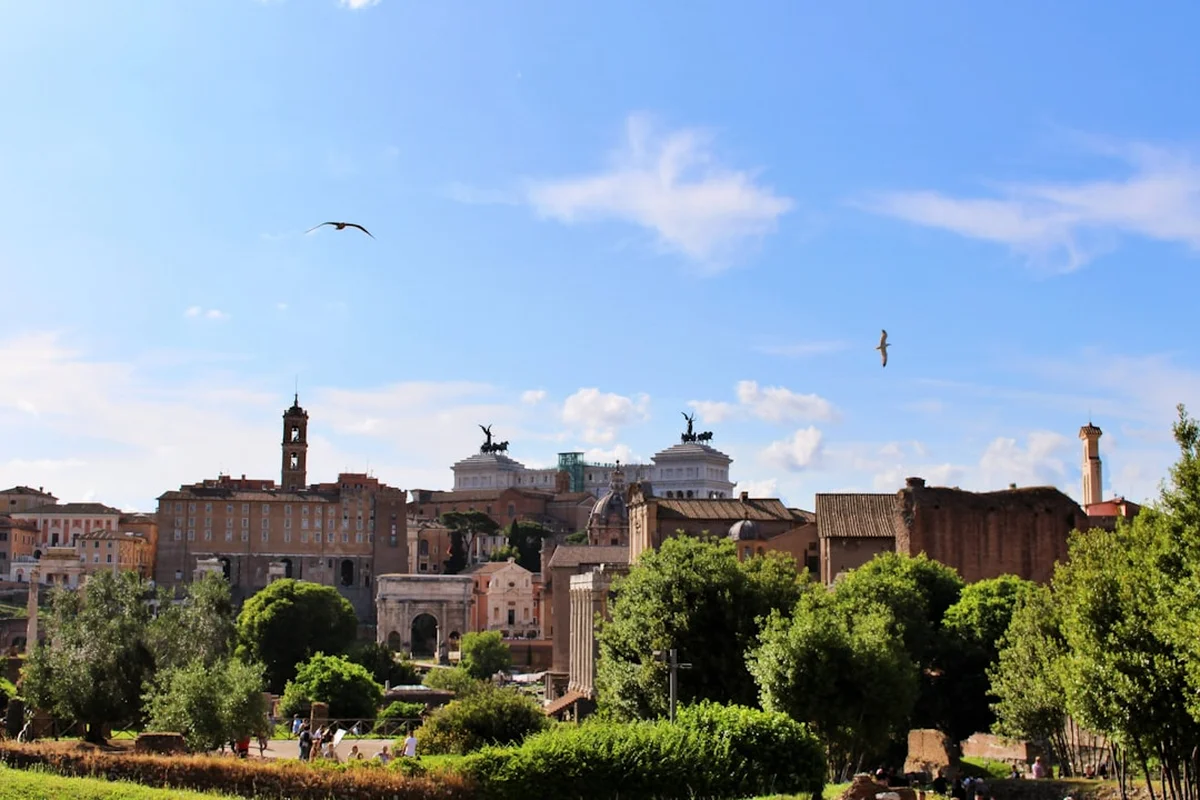
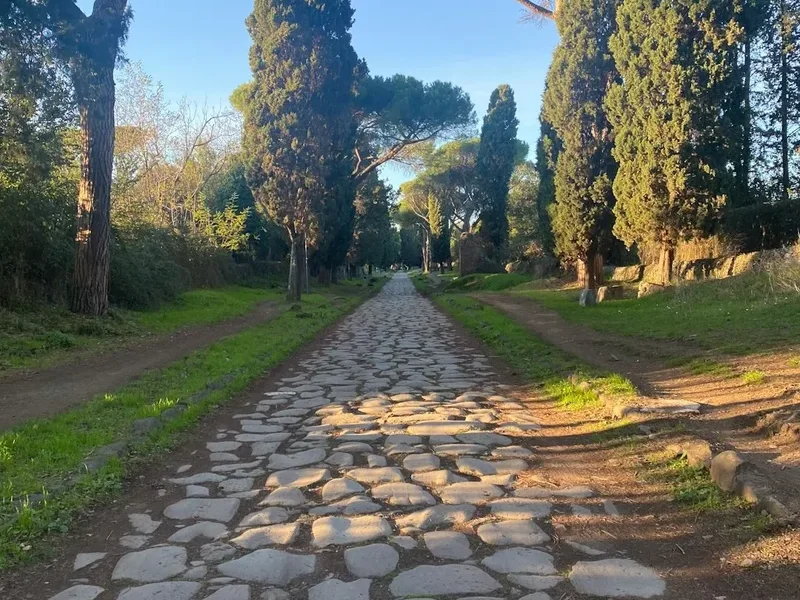
The final approach to Rome is a transition from the quietude of the Sabine Hills to the bustling energy of the Eternal City. Walking into Rome via the Via Appia Antica or the northern suburbs provides a visceral sense of history, as the cobblestones beneath your boots have been trodden by millions of pilgrims over two millennia. This is a landscape defined by "pietra e preghiera" (stone and prayer), where every village church holds a fresco and every mountain pass offers a moment of reflection. The physical demand is significant, with a total elevation gain of approximately 10,000 metres, but the infrastructure of pilgrim hospitality ensures that even the most weary traveller finds a warm welcome at the end of each day.
History and Cultural Context
The history of the Assisi to Rome Pilgrimage is inextricably linked to the life of Francesco d'Assisi, born Giovanni di Pietro di Bernardone in 1181. Francis was a man of the road; he spent much of his adult life travelling between the small hermitages of the Apennines and the papal courts of Rome. The trail we walk today follows the historical routes he used to seek approval for his Rule from Pope Innocent III in 1209 and to spread his message of "Pax et Bonum" (Peace and All Good). For the medieval pilgrim, this was a journey of penance and devotion, connecting the site of Francis's stigmata at La Verna with the administrative and spiritual centre of Christendom in Rome.
Culturally, the trail preserves the "Franciscan Spirit"—a philosophy of simplicity, environmental stewardship, and hospitality. Many of the sanctuaries along the route, such as the Eremo delle Carceri above Assisi or the sanctuary at Greccio (where Francis created the first live Nativity scene in 1223), are still active religious communities. Walking this path allows for a unique engagement with Italian "accoglienza" (hospitality). In many small villages, the arrival of a pilgrim is still treated with traditional respect, and it is common for locals to offer directions, water, or a simple "Buon Cammino."
The trail also traverses regions of immense Roman and pre-Roman history. You will walk over Roman bridges, past Etruscan ruins, and through towns that were vital strongholds during the Middle Ages. The architecture of the route—from the Romanesque cathedrals of Spoleto to the Baroque splendours of Rome—serves as a visual timeline of European civilisation. In 2015, the importance of these routes was further recognised by the Italian government and the Church, leading to improved waymarking and the formalisation of the "Statio Peregrinorum" in Assisi and Rome to welcome modern walkers.
Want more background? Read extended notes on history and cultural context → Learn more
Seasonal Highlights and Weather Reality
Choosing the right time to walk the Assisi to Rome Pilgrimage is crucial for both safety and enjoyment. The Italian climate varies significantly between the high Apennine passes and the low-lying Roman plains.
Spring (April to June): This is arguably the best time to undertake the pilgrimage. The Umbrian hills are a vibrant emerald green, wildflowers carpet the mountain meadows, and the temperatures are mild (averaging 15°C to 22°C). However, April can still bring late snow to the higher passes near La Verna and Gubbio, and rain showers are frequent. Early June begins to see the onset of summer heat, particularly in the valleys.
Autumn (September to October): Another excellent window for walking. The heat of the Italian summer begins to fade, replaced by crisp mornings and golden afternoon light. This is the season of the "vendemmia" (grape harvest) and the olive harvest, providing a fascinating cultural backdrop to the walk. Temperatures are similar to spring, though the days are shorter. October brings the feast day of Saint Francis (October 4th), which is a period of intense celebration in Assisi but also means accommodation must be booked well in advance.
Summer (July and August): Walking during the height of summer is not recommended for most. Temperatures in the Rieti Valley and the Roman Campagna can regularly exceed 35°C, and the humidity can be punishing. Many religious guesthouses and small businesses close for the "Ferragosto" holiday in mid-August. If you must walk in summer, start your days at dawn and aim to be off the trail by midday.
Winter (November to March): This is the off-season. While the lower sections near Rome remain walkable, the mountain sections are often blocked by snow and ice. Many pilgrim hostels (ostelli) are unheated or closed entirely during these months. Only experienced winter hikers with appropriate gear and navigation skills should attempt the full route in winter.
Recommended Itinerary
30-Day Full Pilgrimage Itinerary (Florence to Rome)
Stage 1: The Tuscan Highlands (Days 1–6)
- Day 1: Florence to Pontassieve (19 km) – Leaving the Duomo behind, follow the Arno River into the Tuscan hills.
- Day 2: Pontassieve to Consuma (18 km) – A steady climb into the mountains, reaching the Consuma Pass (1,050 m).
- Day 3: Consuma to Stia (15 km) – Descent into the Casentino Valley, passing ancient castles.
- Day 4: Stia to Camaldoli (16 km) – Entering the Foreste Casentinesi National Park to reach the famous monastery.
- Day 5: Camaldoli to Badia Prataglia (12 km) – A shorter day through ancient beech and fir forests.
- Day 6: Badia Prataglia to La Verna (15 km) – The final climb to the Sanctuary of La Verna, where Francis received the stigmata.
Stage 2: The Northern Way to Assisi (Days 7–14)
- Day 7: La Verna to Pieve Santo Stefano (15 km) – A steep descent from the sacred mountain into the Tiber Valley.
- Day 8: Pieve Santo Stefano to Sansepolcro (25 km) – Walking through the birthplace of Piero della Francesca.
- Day 9: Sansepolcro to Citerna (13 km) – A short climb to one of Italy’s "most beautiful villages."
- Day 10: Citerna to Città di Castello (20 km) – Crossing the border from Tuscany into Umbria.
- Day 11: Città di Castello to Pietralunga (30 km) – A long, demanding day through rugged, uninhabited hills.
- Day 12: Pietralunga to Gubbio (27 km) – Arriving in the medieval "City of Stone," famous for the story of Francis and the Wolf.
- Day 13: Gubbio to Valfabbrica (38 km) – The longest and most challenging day; many pilgrims split this into two stages.
- Day 14: Valfabbrica to Assisi (14 km) – The emotional arrival at the Basilica of Saint Francis.
Stage 3: The Southern Way through the Spoleto Valley (Days 15–21)
- Day 15: Rest Day in Assisi – Essential for visiting the Eremo delle Carceri and the Basilica.
- Day 16: Assisi to Spello (12 km) – A beautiful walk through olive groves on the slopes of Mount Subasio.
- Day 17: Spello to Trevi (20 km) – Following the "Sentiero degli Ulivi" (Path of the Olives).
- Day 18: Trevi to Spoleto (20 km) – Arriving in the city of the Great Festival and the Ponte delle Torri.
- Day 19: Spoleto to Ceselli (16 km) – Crossing the mountains into the Valnerina (Nera Valley).
- Day 20: Ceselli to Arrone (15 km) – Walking alongside the Nera River through lush forest.
- Day 21: Arrone to Piediluco (13 km) – Passing the Marmore Falls (the tallest man-made waterfall in Europe) to reach Lake Piediluco.
Stage 4: The Sacred Valley and the Roman Campagna (Days 22–30)
- Day 22: Piediluco to Rieti (22 km) – Entering the "Sacred Valley" and the geographical centre of Italy.
- Day 23: Rieti to Poggio Bustone (18 km) – A climb to the sanctuary where Francis famously greeted the villagers with "Good morning, good people!"
- Day 24: Poggio Bustone to Greccio (22 km) – Visiting the site of the first Nativity scene.
- Day 25: Greccio to Stroncone (25 km) – Crossing back into the hills of southern Umbria.
- Day 26: Stroncone to Calvi dell'Umbria (28 km) – A remote section through oak forests and small hamlets.
- Day 27: Calvi dell'Umbria to Passo Corese (35 km) – A long descent towards the Tiber Valley and the outskirts of Rome.
- Day 28: Passo Corese to Monterotondo (18 km) – Walking through the Sabine olive groves.
- Day 29: Monterotondo to Montesacro (18 km) – Entering the urban sprawl of Rome via the Nature Reserve of Marcigliana.
- Day 30: Montesacro to Vatican City (15 km) – The final walk through the heart of Rome to Saint Peter’s Square.
Important Notes:
- Distances are approximate and can vary based on the specific path chosen (there are often "low" and "high" route variants).
- The 38 km day from Gubbio to Valfabbrica is very strenuous; consider staying in a "posto tappa" (midway point) if your fitness is not peak.
- Water is generally available in village fountains (fontanelle), but carry at least 2 litres for the mountain sections.
Planning and Bookings
Book Your Trip
Everything you need to plan your journey
Accommodation
Find places to stay near Assisi
Flights
Search flights to Assisi
Essential Preparation
Preparation for a 550-kilometre pilgrimage requires more than just physical training. You must coordinate your "Credenziale" (Pilgrim Passport), understand the transport logistics of central Italy, and prepare for the mental challenge of walking for a month. Fitness requirements are moderate to high; you should be comfortable walking 20–25 kilometres per day with a 7–10 kg pack. Training should include back-to-back days of hill walking to condition your joints and feet.
Assisi and Rome are the primary logistical hubs. Assisi is well-connected by train to Florence and Rome. If starting in Florence, the city is a major international gateway. For those starting at La Verna, you must take a train to Arezzo and then a local bus or the "Ferrovia Casentinese" train to Bibbiena, followed by a bus to the Sanctuary. It is highly recommended to spend at least two days in Assisi mid-trip to rest and absorb the spiritual atmosphere of the town.
Trail Accommodation
Accommodation on the Assisi to Rome Pilgrimage is diverse, ranging from humble religious convents to modern hotels. As a pilgrim, you have access to "accoglienza povera" (simple hospitality), which is often donation-based or very low cost.
Types of Accommodation:
- Religious Houses (Conventi/Monasteri): Often the most atmospheric. Expect simple rooms or dormitories. Some provide meals (mezza pensione), while others offer only a bed. Curfews (usually 9:00 PM or 10:00 PM) are common.
- Pilgrim Hostels (Ostelli): Dedicated facilities for walkers. These usually offer bunk beds, shared bathrooms, and sometimes a communal kitchen.
- Agriturismi: Farm-stays located in the countryside. These offer higher comfort and exceptional local food but are more expensive.
- B&Bs and Hotels: Available in almost every town for those seeking more privacy and comfort.
Facilities and Costs:
- Costs: Religious houses typically ask for a donation (offertà) of €15–€25. Ostelli cost €20–€30. Hotels start from €50.
- What's Provided: Most provide a bed and a pillow. Many religious houses require you to have your own sleeping bag liner or light sleeping bag.
- What's NOT Provided: Toiletries, towels (in cheaper hostels), and laundry detergent. WiFi is hit-or-miss in rural convents.
- Booking: During peak season (May, June, September, October), it is wise to book 1–2 days in advance, especially for smaller religious houses with limited beds.
Required Gear
- Footwear: High-quality hiking boots or trail runners. Ensure they are well broken-in. The terrain includes rocky mountain paths and hard asphalt.
- Backpack: A 35–45 litre pack is ideal. Keep the total weight (including water) under 10% of your body weight. A rain cover is essential.
- Clothing: Moisture-wicking base layers (merino wool is best), two pairs of high-quality hiking socks (plus liners to prevent blisters), a lightweight fleece or down jacket for cool mornings, and a high-quality waterproof shell.
- Navigation: A dedicated GPS device or a smartphone with offline maps (e.g., Gaia GPS, AllTrails, or the official Cammino app). A physical guidebook is highly recommended for historical context and accommodation listings.
- Safety Gear: A basic first aid kit (focus on blister care: Compeed, antiseptic, needle/thread), a whistle, and a lightweight emergency bivvy or space blanket.
What to Bring
- The Credenziale: Your pilgrim passport, essential for accessing religious accommodation and receiving the Testimonium in Rome.
- Sleeping Bag Liner: A silk or cotton liner is mandatory for hygiene in many hostels. A lightweight 1-season sleeping bag is recommended for spring/autumn.
- Water Treatment: While village fountains are generally safe, a filtered water bottle (like a LifeStraw or Sawyer Squeeze) provides peace of mind in remote areas.
- Toiletries: Biodegradable soap/shampoo, a quick-dry microfibre towel, sunblock (SPF 30+), and lip balm.
- Power Bank: To keep your phone charged for navigation, as outlets can be scarce in old stone buildings.
- Universal Adapter: Italy uses Type L and Type C plugs.
- Earplugs and Eye Mask: Essential for sleeping in communal dormitories.
- Cash: Many small convents and village bars do not accept credit cards. Carry at least €50–€100 in small denominations.
Permits
There are no formal "permits" required to walk the Assisi to Rome Pilgrimage in the sense of restricted access or daily quotas. However, the Credenziale del Pellegrino (Pilgrim Passport) is an essential document for any serious walker. This document serves as your "identity card" as a pilgrim and is required to stay in many religious guesthouses and dedicated pilgrim hostels.
How to obtain the Credenziale:
- In Advance: You can order it online from the official website of the "Cammino di Francesco" or from various Franciscan associations in your home country.
- On the Trail: It can be picked up at the Sanctuary of La Verna (if starting there) or at the Statio Peregrinorum at the Basilica of Saint Francis in Assisi.
- Cost: Usually a small donation of €3–€5.
The Testimonium:
Upon reaching Rome, pilgrims who have walked at least the last 100 kilometres (usually starting from Rieti) or cycled the last 200 kilometres are eligible for the Testimonium. This is a formal certificate of completion, written in Latin, issued by the Vatican. To receive it, you must present your Credenziale with stamps (sellos) from the various towns and sanctuaries you visited along the way. In Rome, the Testimonium can be collected at the Ufficio del Pellegrino near Saint Peter’s Basilica.
The Assisium:
If you are walking the Northern Way and ending in Assisi, you can receive the Assisium certificate at the Statio Peregrinorum in the Lower Basilica of Saint Francis. Similar to the Testimonium, you must show a stamped Credenziale proving you have walked the required distance.
Other Activities in the Area
The regions of Tuscany, Umbria, and Lazio offer a wealth of experiences beyond the trail. Consider adding a few days to your itinerary to explore:
- Wine Tasting in Montefalco: Just a short detour from the trail near Spello, Montefalco is the home of the Sagrantino grape, producing some of Italy’s most powerful red wines.
- The Marmore Falls (Cascata delle Marmore): Located near Terni, these are the tallest man-made waterfalls in the world, created by the ancient Romans. The park offers hiking trails and rafting.
- Underground Rieti: Take a guided tour beneath the modern city of Rieti to see the remains of a 3rd-century BC Roman viaduct.
- The Vatican Museums: After finishing your walk, spend a day in the Vatican Museums and the Sistine Chapel. It is highly recommended to book tickets weeks in advance.
- Mount Subasio Paragliding: For a different perspective, you can paraglide from the top of Mount Subasio, landing in the valley below Assisi.
- Cooking Classes in Spoleto: Many local agriturismi offer half-day classes where you can learn to make traditional Umbrian pasta like "strangozzi."
Safety and Conditions
Physical Hazards and Terrain:
- Road Walking: While much of the trail is on dirt paths (strade bianche) and forest tracks, some sections require walking on provincial roads. Always walk facing oncoming traffic and wear high-visibility gear if visibility is low.
- Elevation: The trail involves significant climbing. Be aware of the signs of overexertion and heat exhaustion, especially in the summer months.
- Loose Stones: The descent from mountain passes can be steep and covered in loose limestone scree. Trekking poles are highly recommended to protect your knees and provide stability.
Weather and Environment:
- Thunderstorms: Afternoon thunderstorms are common in the Apennines during late spring and summer. If you hear thunder, descend from ridges and open areas immediately.
- Sun Exposure: The Italian sun is intense. Wear a wide-brimmed hat, use high-SPF sunscreen, and stay hydrated. Many sections of the trail offer little shade.
- Wildlife: You may encounter wild boars (cinghiale) or Maremma sheepdogs. Boars are generally shy but can be dangerous if cornered or with young. Maremma dogs are protective of their flocks; if you encounter one, stay calm, do not make eye contact, and walk a wide berth around the sheep.
Health and Logistics:
- Water: Most village fountains (marked "acqua potabile") are safe. However, avoid drinking from agricultural pipes or unmarked streams.
- Pharmacies: Italian pharmacies (Farmacia) are excellent and can provide advice on minor ailments like blisters or muscle pain. Look for the green illuminated cross.
- Emergency Numbers: Dial 112 for all emergencies in Italy. It is the universal European emergency number.
Side Trips and Points of Interest
The Eremo delle Carceri: Located 4 kilometres above Assisi on the slopes of Mount Subasio, this is the "Hermitage of the Prisons" where Francis and his early followers retreated for silent prayer. The site is a labyrinth of tiny stone cells and natural caves carved into the rock. The ancient ilex tree, where Francis is said to have preached to the birds, still stands. It is a steep walk from Assisi but essential for understanding the saint's desire for solitude.
Greccio and the First Nativity: Perched on a cliff in the Rieti Valley, the Sanctuary of Greccio is where Francis staged the first live Nativity scene in 1223. The sanctuary is built directly into the rock face and offers stunning views over the valley. The "Grotto of the Nativity" is a deeply moving site, regardless of one's religious background.
The Sacred Forest of Monteluco: Above the city of Spoleto lies Monteluco, a mountain that has been considered sacred since pre-Christian times. It features an ancient ilex forest that was protected by a "Lex Spolatina" (Spoleto Law) as early as the 3rd century BC. Francis established a small friary here, which is still in use today. The forest is cool, quiet, and filled with a sense of ancient mystery.
The Via Appia Antica: The final 10 kilometres into Rome can be walked via the "Queen of Roads." This ancient Roman highway is lined with catacombs, tombs, and original basalt paving stones. Walking into the city this way, rather than through the modern suburbs, provides a grand and historical entrance to the journey's end.
Leave No Trace
The Assisi to Rome Pilgrimage passes through some of Italy’s most pristine natural parks and sensitive historical sites. As a pilgrim, you are a guest of the land and the local communities. Practising Leave No Trace principles is essential to ensure the trail remains viable for future generations.
Guidelines for the Italian Cammino:
- Respect Religious Sites: Many sanctuaries are places of active worship and silence. Dress modestly (shoulders and knees covered) when entering churches and keep your voice low.
- Waste Management: Italy has a strict waste separation system (raccolta differenziata). When staying in hostels or towns, ensure you place your rubbish in the correct bins (plastic, paper, organic, glass). Never leave litter on the trail.
- Stay on the Path: Avoid cutting switchbacks on mountain descents, as this causes significant soil erosion and damages local flora.
- Water Conservation: In many hilltop towns, water is a precious resource. Keep your showers short and do not leave taps running.
- Fire Safety: Wildfires are a major risk in Italy during the summer and autumn. Never light open fires and ensure cigarette butts are fully extinguished and carried out.
- Wildlife and Livestock: Do not feed wild animals or local livestock. Close all gates behind you when crossing agricultural land.
 Italy
Italy