
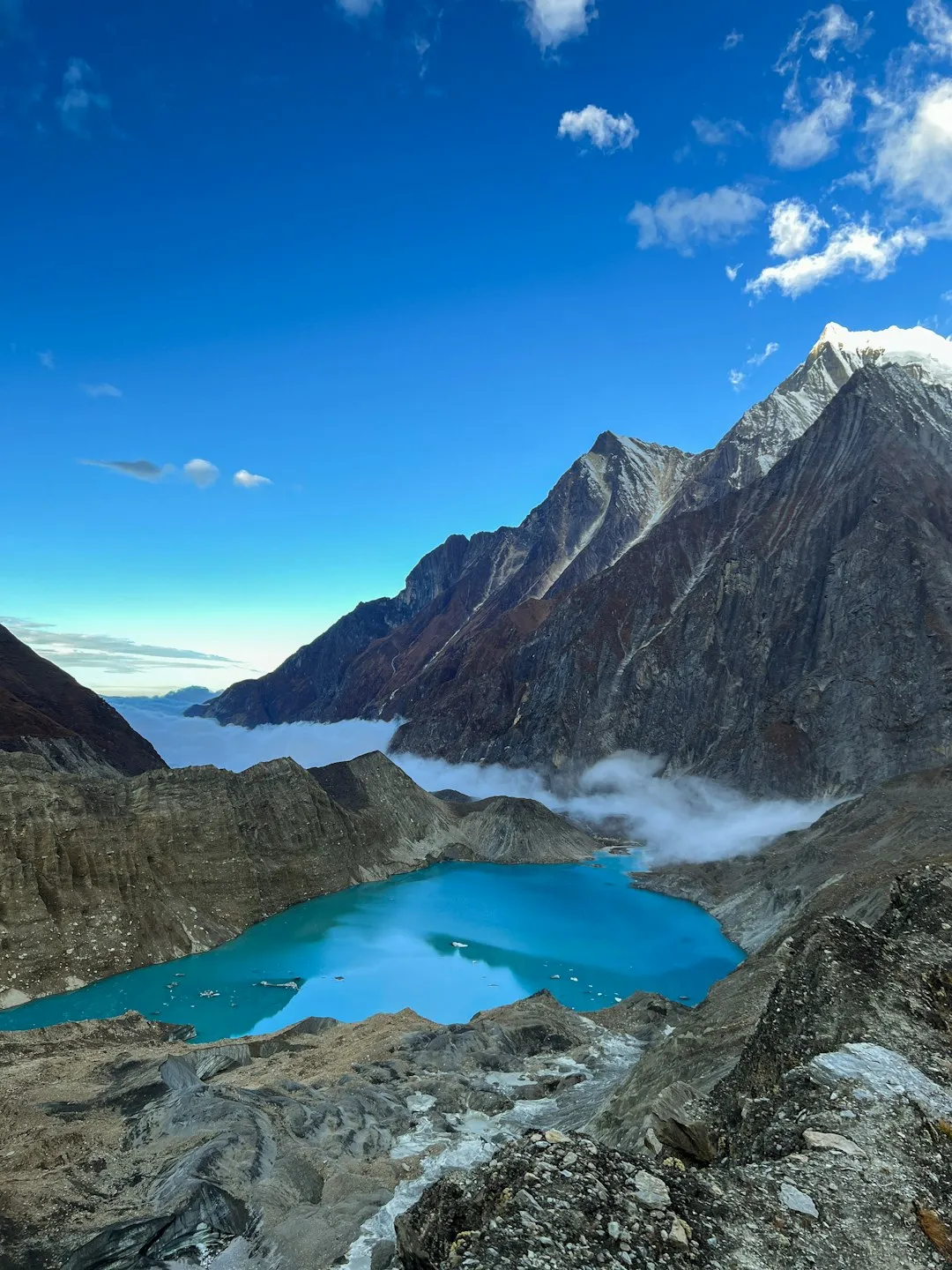
Annapurna Base Camp Trek - Journey to the Heart of the Himalayas
The Annapurna Base Camp (ABC) trek is one of the most iconic and celebrated high-altitude journeys in the world. Located within the Annapurna Conservation Area in north-central Nepal, this 65.0 km trek offers a profound immersion into the vertical world of the Himalayas. Unlike many other treks that follow long ridges or deep valleys, the ABC trek leads walkers into a natural amphitheatre known as the Annapurna Sanctuary—a high-altitude glacial basin encircled by a ring of giants, including Annapurna I (8,091 m), the tenth highest mountain on Earth. The route is a masterclass in ecological diversity, beginning in sub-tropical lowlands filled with terraced rice paddies and rhododendron forests, before ascending through bamboo thickets and alpine meadows to reach the stark, glaciated terrain of the base camp at 4,130 m.
The trek is characterised by its accessibility and the unique "tea house" culture of Nepal. Walkers stay in small, family-run lodges in mountain villages, providing a window into the lives of the Gurung and Magar ethnic groups who have inhabited these slopes for centuries. The journey is not merely a physical challenge but a cultural pilgrimage, where the scent of incense from local shrines mingles with the crisp mountain air. With an elevation gain of 4,130 m over the course of the journey, the trek demands physical stamina and respect for the altitude, yet it remains one of the most achievable "bucket list" treks for those with moderate fitness and a spirit of adventure. From the vibrant lakeside city of Pokhara to the silent, snow-draped peaks of the Sanctuary, the Annapurna Base Camp trek is a transformative experience that captures the very essence of Himalayan trekking.
- Distance: 65.0 km (approximate return distance depending on route variations)
- Duration: 7–12 days
- Elevation Gain: 4,130 m
- Highest Point: Annapurna Base Camp (4,130 m)
- Difficulty: Moderate (requires good cardiovascular fitness and knee strength)
- Best Time: October–November (autumn) or March–May (spring)
- Accommodation: Tea houses (mountain lodges)
- Permits: ACAP (Annapurna Conservation Area Project) and TIMS (Trekkers' Information Management System)
Overview
The Annapurna Base Camp trek is often described as a "theatre of the gods." The primary draw is the Annapurna Sanctuary, a unique geographical feature where the mountains form a near-perfect circle, protecting the basin from the harshest winds and creating a micro-climate that feels isolated from the rest of the world. Standing at the centre of this sanctuary, one is surrounded by a 360-degree panorama of peaks: Annapurna I (8,091 m), Annapurna South (7,219 m), Machhapuchhre (6,993 m), and Hiunchuli (6,441 m). The scale is difficult to comprehend; the vertical walls of rock and ice rise kilometres above the valley floor, dwarfing the human presence to insignificance.
The trek begins in the lush, green foothills near Pokhara. The initial days are spent navigating thousands of stone steps—a hallmark of Nepali trekking—that wind through vibrant villages like Ghandruk and Chhomrong. These settlements are architectural marvels, with houses built from local slate and stone, perched precariously on steep hillsides. As you ascend, the landscape undergoes a dramatic transformation. The sub-tropical heat gives way to the cool shade of ancient rhododendron forests, which erupt in shades of crimson and pink during the spring. Higher still, the forest thins into bamboo groves, a vital habitat for the elusive red panda, before finally opening into the rugged, treeless terrain of the high Himalayas.
One of the most striking aspects of the ABC trek is the constant presence of Machhapuchhre, the "Fishtail" mountain. Revered as a sacred peak and never officially climbed to its summit, its distinct double-peaked profile dominates the skyline for much of the journey. The trek is also notable for its "up and down" nature; because the route crosses several ridges and river valleys, the cumulative elevation gain is significantly higher than the simple difference between the start and end points. This makes the trek an excellent test of endurance, though the well-maintained trails and frequent tea house stops allow for a paced and manageable progression. Whether you are watching the sunrise hit the golden face of Annapurna South or sharing a hot meal of dal bhat with fellow travellers in a communal dining hall, the ABC trek offers a sense of camaraderie and wonder that is unique to the Nepali mountains.
History and Cultural Context
The history of the Annapurna region is inextricably linked to the Gurung people, an ethnic group renowned for their bravery and their long-standing tradition of service in the British and Indian Gorkha (Gurkha) regiments. The villages along the trek, such as Ghandruk, serve as cultural hubs where traditional Gurung customs are still practiced. Historically, these communities relied on subsistence farming, sheep herding, and trade with Tibet. The stone-paved paths you walk today were originally trade routes and paths used by locals to move livestock between seasonal pastures.
In the context of mountaineering, the Annapurna massif holds a place of high honour. In 1950, a French expedition led by Maurice Herzog and Louis Lachenal became the first humans to summit an 8,000-metre peak when they reached the top of Annapurna I. This historic achievement predated the successful ascent of Mount Everest by three years and brought international attention to the region. The "Sanctuary" itself was first explored by Westerners in 1956 when Colonel James Roberts, a legendary figure in Himalayan exploration, identified the basin as a potential trekking destination. Roberts is often credited with "inventing" the concept of commercial trekking in Nepal, and the Annapurna region was his primary focus.
The cultural landscape is also deeply spiritual. For the local communities, the mountains are not just geological features but the abodes of deities. Machhapuchhre is considered sacred to the god Shiva, and climbing it is strictly prohibited to preserve its sanctity. Throughout the trek, you will encounter "mani" walls (stone structures inscribed with Buddhist mantras), prayer flags fluttering in the wind, and small Hindu shrines. The practice of "Puja" (worship) is common before major undertakings, and trekkers are encouraged to respect these local traditions. The establishment of the Annapurna Conservation Area Project (ACAP) in 1986 marked a turning point in the region's history, creating a model for sustainable tourism that balances environmental protection with the economic needs of the local people.
Want more background? Read extended notes on history and cultural context → Learn more
Seasonal Highlights and Weather Reality
The Annapurna region experiences a distinct monsoon-driven climate, which dictates the best times for trekking. There are two primary windows for a successful and enjoyable trek to Annapurna Base Camp.
Autumn (October to November): This is widely considered the peak trekking season. Following the monsoon rains, the air is washed clean of dust, resulting in exceptionally clear skies and the best possible mountain views. The temperatures are moderate at lower elevations and crisp but manageable at base camp. This is the busiest time on the trail, so tea houses can be crowded, and a social atmosphere prevails. The landscape is lush and green, though the flowers of spring have faded.
Spring (March to May): The second most popular window. This season is famous for the blooming of the rhododendron forests, which turn the hillsides into a riot of colour. Temperatures are warmer than in autumn, making the higher altitudes more comfortable. However, as the season progresses toward May, a haze can sometimes build up in the afternoons, partially obscuring the distant peaks. This is also the time when mountaineering expeditions are active on the higher peaks.
Winter (December to February): For those seeking solitude and who are well-prepared for the cold, winter trekking is possible. The skies are often brilliantly blue, but temperatures at Annapurna Base Camp can drop to -15°C or lower at night. Snowfall can block the trail between Deurali and Machhapuchhre Base Camp, and the risk of avalanches in the narrow "gates" of the Sanctuary increases significantly. Many tea houses at higher elevations may close during this period.
Monsoon (June to September): Trekking during the monsoon is generally discouraged. Heavy rains lead to muddy trails, frequent landslides, and an abundance of leeches in the forested sections. Clouds usually obscure the mountains, and domestic flights to Pokhara are frequently cancelled or delayed. However, the flora is at its most vibrant, and the waterfalls are spectacular for those who don't mind the wet and the lack of mountain views.
Recommended Itinerary
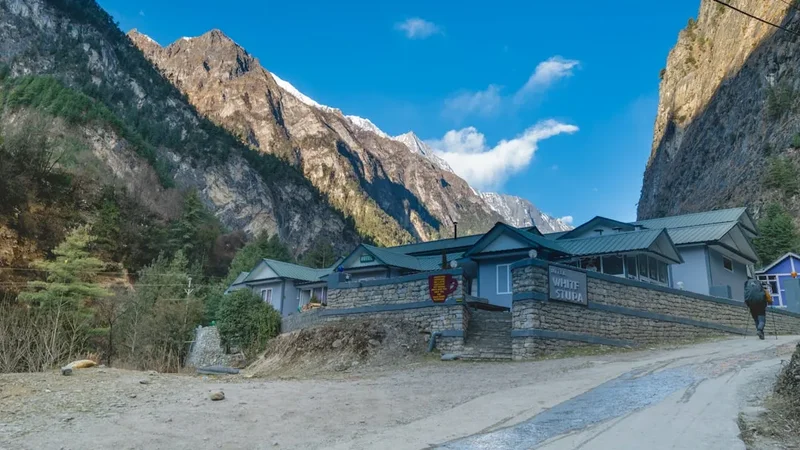
10-Day Annapurna Base Camp Itinerary
Day 1: Pokhara to Nayapul and trek to Ulleri
- Distance: 12 km
- Elevation gain: 900 m
- Time: 5–6 hours
- Drive from Pokhara to Nayapul (1.5 hours) to begin the trek
- Follow the Bhurungdi Khola river through small villages
- The final section involves a famous steep climb of 3,000+ stone steps to Ulleri
- Stay in Ulleri (1,960 m) with views of Annapurna South
Day 2: Ulleri to Ghorepani
- Distance: 8 km
- Elevation gain: 890 m
- Time: 4–5 hours
- Ascend through dense rhododendron and oak forests
- Listen for the sound of hidden waterfalls and birdlife
- Arrive at the large village of Ghorepani (2,850 m)
- Ghorepani offers excellent views and is a major junction for various trails
Day 3: Ghorepani to Tadapani (via Poon Hill)
- Distance: 11 km
- Elevation: 360 m gain (Poon Hill), then descent and undulating trail
- Time: 6–7 hours
- Pre-dawn hike to Poon Hill (3,210 m) for a spectacular sunrise over the Dhaulagiri and Annapurna ranges
- Return to Ghorepani for breakfast, then trek toward Tadapani
- The trail follows a ridgeline with constant mountain views before dropping into deep forest
- Stay in Tadapani (2,630 m), perfectly positioned for sunrise views of Machhapuchhre
Day 4: Tadapani to Chhomrong
- Distance: 10 km
- Elevation: 500 m descent, 400 m gain
- Time: 5 hours
- Descend steeply through the forest to the Kimrong Khola river
- Cross a suspension bridge and begin the climb to Chhomrong
- Chhomrong (2,170 m) is the largest Gurung village in the area and the "gateway" to the Sanctuary
- Enjoy the view of Annapurna South towering directly above the village
Day 5: Chhomrong to Dovan
- Distance: 11 km
- Elevation: 400 m descent, 800 m gain
- Time: 6 hours
- Descend the "2,500 steps" of Chhomrong to the river
- Climb up the other side to Sinuwa, then enter the upper Modi Khola valley
- The forest becomes thicker and more temperate (bamboo and ferns)
- Stay in Dovan (2,600 m), a small cluster of lodges in the forest
Day 6: Dovan to Deurali
- Distance: 8 km
- Elevation gain: 600 m
- Time: 4–5 hours
- Steady ascent through the "Hinku Cave" area
- The valley narrows significantly, and the vegetation begins to thin
- Cross several small streams and avalanche chutes (exercise caution)
- Stay in Deurali (3,200 m) to allow for further acclimatisation
Day 7: Deurali to Annapurna Base Camp (via MBC)
- Distance: 9 km
- Elevation gain: 930 m
- Time: 5–6 hours
- The trail opens up as you enter the Annapurna Sanctuary
- Pass through Machhapuchhre Base Camp (3,700 m) for lunch
- Final gentle ascent over glacial moraine to Annapurna Base Camp (4,130 m)
- Surrounded by a 360-degree wall of 7,000 m and 8,000 m peaks
Day 8: Annapurna Base Camp to Bamboo
- Distance: 15 km
- Elevation loss: 1,800 m
- Time: 7–8 hours
- Watch the sunrise over the Annapurna massif—an unforgettable experience
- Begin the long descent back down the valley
- Retrace your steps through Deurali and Dovan
- Stay in Bamboo (2,310 m), enjoying the thicker air and warmer temperatures
Day 9: Bamboo to Jhinu Danda
- Distance: 10 km
- Elevation: 400 m gain, 1,000 m descent
- Time: 5–6 hours
- Climb back up to Sinuwa and descend to the Chhomrong Khola
- Ascend the steps to Chhomrong, then drop down a different path to Jhinu Danda
- Jhinu Danda (1,780 m) is famous for its natural riverside hot springs
- Soak tired muscles in the therapeutic warm waters
Day 10: Jhinu Danda to Nayapul and return to Pokhara
- Distance: 12 km
- Elevation loss: 700 m
- Time: 5 hours
- Follow the Modi Khola river downstream
- The trail is relatively flat and passes through sub-tropical forest and farmland
- Reach Nayapul, then take a private jeep or bus back to Pokhara
- Celebrate the completion of the trek with a meal by Phewa Lake
Important Notes:
- Itinerary can be shortened to 7 days by taking a jeep further into the valley or skipping the Ghorepani/Poon Hill loop
- Acclimatisation is key; do not rush the ascent above 3,000 m
- Tea houses provide blankets, but a good sleeping bag is essential for hygiene and warmth
- Water can be purchased or treated (filtering is better for the environment)
- Charging electronics and hot showers usually incur a small extra fee (200–500 NPR)
Planning and Bookings
Book Your Trip
Everything you need to plan your journey
Accommodation
Find places to stay near Pokhara
Flights
Search flights to Pokhara
Essential Preparation
The Annapurna Base Camp trek requires a combination of physical preparation and logistical coordination. While it is not a technical climb, the sheer volume of stone steps—both up and down—places significant strain on the quadriceps and knees. Training should focus on cardiovascular endurance (hiking, running, or cycling) and leg strength. If possible, practice hiking with a weighted pack to simulate trekking conditions. Mental preparation for basic living conditions is also important; while tea houses are comfortable, they are simple, and facilities become more basic as you gain altitude.
Pokhara is the essential base for this trek. It is a relaxed city with a wide range of gear shops, pharmacies, and grocery stores where you can purchase last-minute supplies. Most trekkers spend at least one or two days in Pokhara before starting to finalise permits and organise transport. You can reach Pokhara from Kathmandu via a 25-minute domestic flight or a 7–9 hour tourist bus journey. Booking your transport to the trailhead (Nayapul or Ghandruk) can be done easily through your hotel or a local travel agency in Pokhara.
Trail Accommodation
Accommodation on the ABC trek is provided by "tea houses"—small, family-run lodges that offer a bed and hot meals. These have evolved from very basic huts into well-organised establishments, though they remain rustic.
Hut Facilities:
- Twin-share rooms with two single beds and thin mattresses
- Communal dining hall, often heated by a central wood or yak-dung stove in the evenings
- Shared bathrooms (squat or Western-style toilets)
- Hot showers (usually gas or solar-powered, available for an extra fee)
- Extensive food menus featuring Nepali, Indian, and basic Western dishes
- Boiled or filtered water available for purchase
- Basic WiFi and electricity for charging (usually for a fee)
What Tea Houses Don't Provide:
- Towels, soap, or toiletries
- Consistent heating in bedrooms (rooms can be very cold at night)
- Reliable high-speed internet (signal is often weak or non-existent in deep valleys)
- Indoor plumbing in all rooms (most have shared facilities)
- Free charging for devices
Booking Requirements:
- During peak season (October/November), tea houses can fill up quickly
- If trekking with a guide, they will usually call ahead to secure rooms
- Independent trekkers should aim to arrive at their destination by early afternoon to ensure a bed
- In the Annapurna Sanctuary (Deurali to ABC), the number of lodges is strictly limited by ACAP; during busy times, you may be asked to share a room or sleep in the dining hall
- Costs: Rooms are very cheap (approx. 500–1,000 NPR) on the condition that you eat breakfast and dinner at the lodge
Required Gear
- Hiking boots - well broken-in, waterproof, with good ankle support for uneven stone steps
- Down jacket - essential for evenings and mornings at base camp (rated to -10°C)
- Sleeping bag - 4-season (comfort rating -10°C), as lodge blankets are often insufficient
- Trekking trousers - lightweight, quick-dry, and one pair of thermal leggings
- Base layers - merino wool or synthetic (avoid cotton as it retains moisture)
- Waterproof shell - high-quality jacket and trousers for wind and rain protection
- Trekking poles - highly recommended to save your knees on the thousands of stone steps
- Head torch - essential for early morning starts and navigating lodges at night
- Daypack - 30–40L if you have a porter, or 50–60L if carrying your own gear
What to Bring
- Water purification - a filter (like Sawyer Squeeze) or UV purifier (Steripen) to avoid buying plastic bottles
- First aid kit - including Diamox (for altitude), blister pads, rehydration salts, and broad-spectrum antibiotics
- Sun protection - SPF 50+ sunscreen, lip balm with SPF, and high-quality sunglasses (UV is intense at altitude)
- Cash - Nepalese Rupees (NPR) are essential; there are no ATMs on the trail, and cards are not accepted
- Snacks - energy bars, nuts, and chocolate (prices triple as you go higher)
- Toiletries - biodegradable soap, wet wipes, hand sanitiser, and plenty of toilet paper
- Power bank - to keep phone and camera charged when lodge power is unavailable
- Micro-spikes - useful if trekking in winter or early spring when paths may be icy
- Towel - lightweight microfibre travel towel
Permits
To trek in the Annapurna region, all foreign nationals are required to obtain two specific permits. These are checked at various checkpoints along the trail, and trekking without them can result in heavy fines or being turned back.
1. ACAP Permit (Annapurna Conservation Area Project):
- This permit funds the conservation and maintenance of the region
- Cost: 3,000 NPR (approx. 23 USD) for foreigners; 1,000 NPR for SAARC nationals
- Validity: Single entry, valid for the duration of your trek
- Where to get it: Nepal Tourism Board offices in Kathmandu or Pokhara
2. TIMS Card (Trekkers' Information Management System):
- This is a mandatory registration system to ensure the safety of trekkers
- As of 2023, the Nepal government has mandated that all trekkers must hire a licensed guide for most regions, including Annapurna. This means you generally cannot get a "Blue" (independent) TIMS card anymore; you will receive a "Green" card through your trekking agency
- Cost: 2,000 NPR (approx. 15 USD)
- Where to get it: Through a registered trekking agency in Kathmandu or Pokhara
Required Documents:
- A copy of your passport
- Four passport-sized photographs (two for ACAP, two for TIMS)
- Insurance details (must cover high-altitude trekking and helicopter evacuation)
- Emergency contact information
Important Note: Do not wait until you reach the trailhead to get your permits. While there is a small counter at the Nayapul entrance, it is much more expensive and sometimes closed. It is highly recommended to organise these in Pokhara the day before you start.
Other Activities in the Area
The Annapurna region and the nearby city of Pokhara offer a wealth of experiences beyond the main trek:
- Paragliding in Pokhara: One of the world's best locations for paragliding. Launch from Sarangkot and soar over Phewa Lake with the Annapurna range as your backdrop.
- Boating on Phewa Lake: Rent a colourful "doonga" (boat) and row out to the Tal Barahi Temple, located on a small island in the centre of the lake.
- World Peace Pagoda: A short hike or boat trip from Pokhara leads to this stunning white stupa, offering panoramic views of the city and the mountains.
- International Mountain Museum: Located in Pokhara, this museum provides fascinating insights into the history of Himalayan climbing, the culture of mountain people, and the geology of the range.
- Tibetan Refugee Camps: Visit the Tashiling or Tashi Palkhel settlements near Pokhara to learn about Tibetan culture, see traditional carpet weaving, and visit monasteries.
- Yoga and Meditation: Pokhara is a hub for wellness, with many centres offering multi-day retreats or drop-in classes to help you recover after your trek.
- Zip-lining: Experience one of the world's steepest and longest zip-lines, descending from Sarangkot toward the valley floor.
Safety and Conditions
Acute Mountain Sickness (AMS): This is the primary safety concern on the ABC trek. As you ascend above 3,000 m, the air becomes thinner, and your body needs time to adapt. Symptoms include headache, nausea, dizziness, and loss of appetite. To prevent AMS: ascend slowly (no more than 500 m of sleeping elevation gain per day above 3,000 m), drink 3–4 litres of water daily, avoid alcohol and tobacco, and consider taking Diamox (consult a doctor first). If symptoms persist or worsen, the only cure is to descend immediately.
Weather and Trail Conditions: The trail is generally well-maintained, but it is subject to the whims of nature. Landslides can occur during or after heavy rain, particularly in the section between Chhomrong and Dovan. In winter and early spring, the section between Deurali and Machhapuchhre Base Camp is a known avalanche risk zone. Always check with local lodge owners or your guide about current conditions before heading out in the morning. The weather can change in minutes; a sunny morning can turn into a snowstorm by afternoon, so always carry your waterproof layers in your daypack.
Water Safety: Never drink untreated tap or stream water. While it may look clear, it can contain parasites like Giardia. Use a high-quality filter, UV purifier, or chlorine/iodine tablets. Buying bottled water is possible but discouraged due to the massive plastic waste problem in the mountains. Most tea houses sell "safe" boiled water for a small fee.
Emergency Evacuation: In the event of a serious injury or severe AMS, helicopter evacuation is the only way out of the higher sections of the trek. Ensure your travel insurance specifically covers "trekking up to 4,500 m" and "emergency helicopter evacuation." Keep your insurance details and the contact number for the rescue coordination centre easily accessible.
Communication: Mobile signal (Ncell and Nepal Telecom) is available in many villages but becomes spotty or non-existent as you enter the Sanctuary. Most tea houses offer WiFi for a fee, but it is often slow and unreliable during bad weather. It is wise to inform family of your itinerary and let them know there will be periods where you are out of contact.
Side Trips and Points of Interest
Poon Hill (3,210 m): Often included as part of the ABC trek, this is one of Nepal's most famous viewpoints. A pre-dawn hike from Ghorepani brings you to the summit just as the sun begins to hit the peaks of Dhaulagiri I (8,167 m) and Annapurna I. The sight of the mountains turning from deep blue to glowing orange is a highlight for many trekkers. It adds 1–2 days to the trek but is highly recommended for the perspective it provides on the entire range.
Jhinu Danda Hot Springs: Located a 20-minute steep descent from the village of Jhinu Danda, these natural hot springs sit right on the banks of the rushing Modi Khola river. There are three well-maintained pools of varying temperatures. It is the perfect way to soothe aching muscles on the return journey. A small entrance fee is charged, which goes toward the maintenance of the pools and the local school.
Machhapuchhre Base Camp (MBC) (3,700 m): While not a "base camp" in the traditional sense (since the mountain is not climbed), this is a mandatory stop on the way to ABC. It offers a completely different perspective of the "Fishtail" mountain, looking up at its sheer vertical walls. The sunset from MBC, looking back down the valley you just climbed, is often as spectacular as the views from ABC itself.
Ghandruk Village: If your route takes you through Ghandruk, spend some time exploring this traditional Gurung settlement. It features a small cultural museum, beautifully carved stone houses, and some of the best-organised community tourism in Nepal. It is an excellent place to learn about the history of the Gurkha soldiers and the local way of life.
Leave No Trace
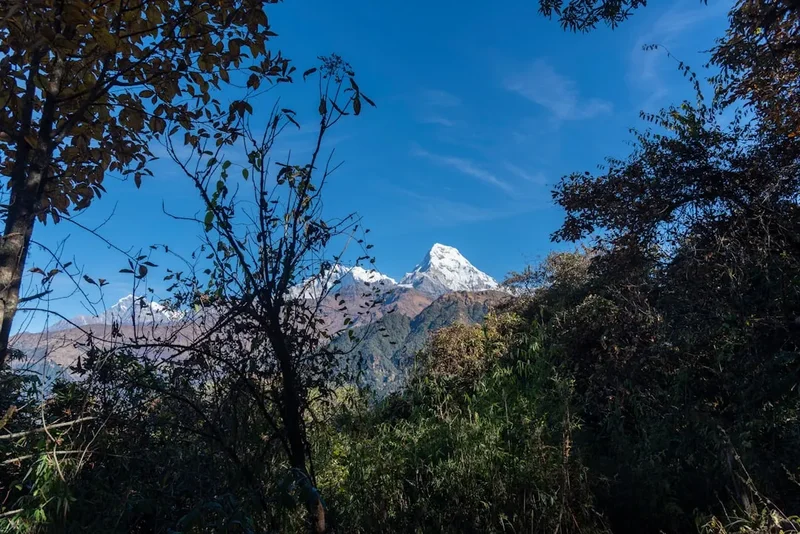
The Annapurna Conservation Area is a fragile ecosystem under significant pressure from tourism. As a trekker, you have a responsibility to minimise your impact and help preserve this landscape for future generations. The "Leave No Trace" principles are particularly relevant in the high Himalayas, where waste decomposition is slow and resources are scarce.
Your responsibility as a walker:
- Say No to Plastic: Avoid buying bottled water. Use a refillable bottle and treat your own water. Carry out all your own plastic waste, including snack wrappers and cigarette butts.
- Stay on the Path: The stone steps are there for a reason. Taking shortcuts on switchbacks causes significant soil erosion and destroys fragile alpine vegetation.
- Manage Your Waste: Use the toilets provided by the tea houses. If you must go on the trail, ensure you are at least 50 metres from water sources and bury your waste deep in a "cathole." Pack out your used toilet paper in a sealed bag.
- Respect Wildlife: The Annapurna region is home to langur monkeys, Himalayan tahr, and the rare red panda. Observe animals from a distance and never feed them, as this disrupts their natural foraging behaviour.
- Conserve Energy: Hot showers in the mountains often require burning wood or gas, both of which are precious resources. Limit your showers and use solar-powered options where available.
- Cultural Respect: Always walk to the left of mani walls and stupas (clockwise). Ask for permission before taking photos of local people, and dress modestly (cover shoulders and knees), especially when entering villages or temples.
The mountains are a place of peace and spiritual significance. By following these principles, you ensure that the Annapurna Sanctuary remains a sanctuary in every sense of the word.
 Nepal
Nepal