
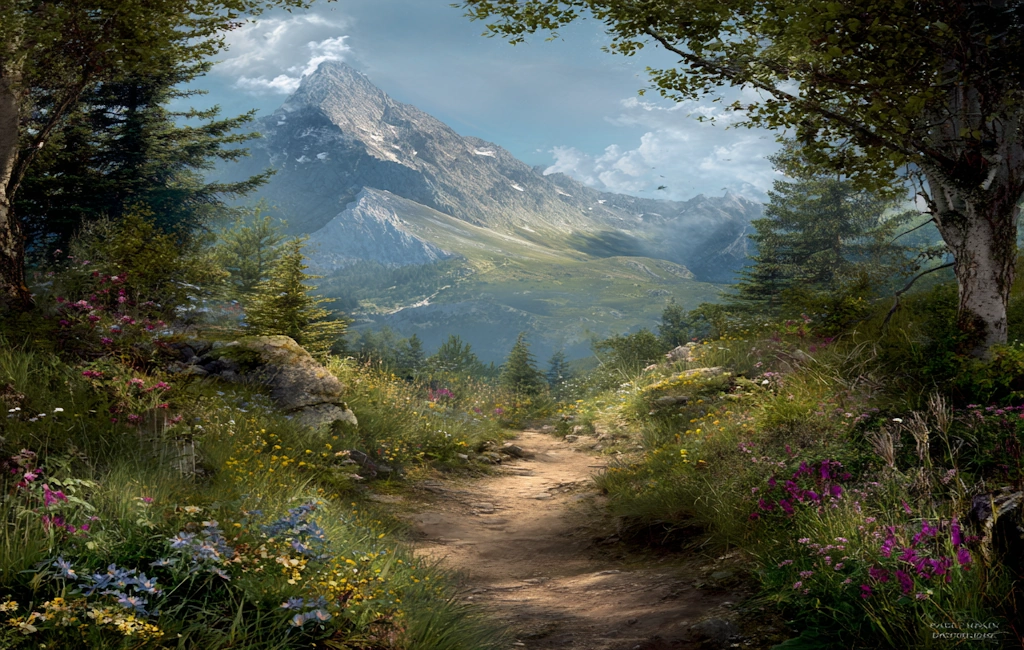
Altyn Arashan Trek - The Golden Spa of the Celestial Mountains
The Altyn Arashan trek is the quintessential Kyrgyz mountain experience, a journey that distils the raw, high-altitude drama of the Terskey Ala-Too Range into a manageable yet breathtaking multi-day adventure. Located in the northeastern corner of Kyrgyzstan, near the mountaineering hub of Karakol, this 45-kilometre route is far more than a simple walk to a valley; it is a traverse through the heart of the "Celestial Mountains." The trek typically culminates in the Altyn Arashan valley—translated as "Golden Spa"—famed for its natural geothermal hot springs and the iconic, pyramid-like silhouette of Palatka Peak (5,269 m) looming at the valley's head. Most trekkers combine the valley approach with a crossing of the formidable Ala-Kul Pass (3,915 m), offering views of a turquoise glacial lake that defies belief. This is a landscape of extreme contrasts: from the arid, dusty foothills of the Issyk-Kul basin to lush, ancient pine forests, and finally to the stark, unforgiving world of rock and ice at the mountain summits.
- Distance: 45.0 km (standard loop/traverse via Ala-Kul)
- Duration: 3–4 days
- Elevation Gain: 2,100 m total ascent
- Highest Point: Ala-Kul Pass (3,915 m)
- Difficulty: Moderate to Strenuous (due to altitude and steep scree)
- Best Time: July to September
- Accommodation: Yurts, mountain huts, and wild camping
Overview
The Altyn Arashan trek is widely considered the crown jewel of trekking in the Issyk-Kul region. While the Altyn Arashan valley itself can be reached via a rugged 4x4 track from the village of Ak-Suu, the true trekking experience involves a multi-day circuit that climbs through the Karakol Valley, ascends to the high-altitude Ala-Kul Lake, and crosses a high mountain pass before descending into the "Golden Spa." This route offers a masterclass in Central Asian geography. You begin in the deep, forested canyons where the Karakol River thunders with glacial meltwater, move upward into the alpine zone where marmots whistle from the rocks, and eventually stand on the edge of a jagged ridge looking down at the neon-blue waters of Ala-Kul, a lake trapped in a cirque of ice and granite.
The physical challenge of the trek is significant but rewarding. The ascent to the Ala-Kul Pass involves navigating steep, shifting scree slopes where every two steps forward often feel like one step back. At nearly 4,000 metres, the air is thin, and the weather is notoriously fickle. Even in the height of summer, a morning of brilliant sunshine can transform into a localized blizzard by mid-afternoon. However, the infrastructure of the trek provides a unique cultural layer that softens the hardship. The presence of seasonal yurt camps allows trekkers to experience the hospitality of Kyrgyz semi-nomadic shepherds, sharing bowls of kymyz (fermented mare's milk) or hot tea while sheltered from the mountain winds.
The finale of the trek in the Altyn Arashan valley provides a sense of luxury rarely found in such remote wilderness. The valley floor is a broad, emerald-green meadow bisected by the Arashan River. Scattered along the riverbanks are several small guesthouses and "sanatoriums" built around natural hot springs. Soaking tired muscles in 40°C mineral water while watching the sunset hit the glaciers of Palatka Peak is an experience that defines the magic of Kyrgyzstan. It is this combination of high-alpine rigour and valley-floor comfort that makes Altyn Arashan a bucket-list destination for hikers worldwide.
History and Cultural Context
The mountains surrounding Altyn Arashan have been the domain of Kyrgyz nomadic herders for centuries. The high summer pastures, known as jailoos, are essential to the traditional way of life, providing nutrient-rich grass for horses, sheep, and cattle during the brief mountain summer. The paths used by modern trekkers are often the same routes established by shepherds moving their livestock between the lowlands and the high valleys. This cultural heritage remains vibrant today; it is common to see young Kyrgyz horsemen galloping across the meadows or to encounter families living in yurts, maintaining a lifestyle that has changed little since the days of the Silk Road.
During the Soviet era, the region took on a new significance. The Soviet Union had a profound culture of mountaineering and "sanatorium science." Karakol (then known as Przhevalsk) became a major base for alpine expeditions into the Central Tian Shan. The hot springs at Altyn Arashan were developed into a small resort for workers and scientists, with basic concrete baths built to harness the medicinal properties of the radon-rich waters. Many of the older structures in the valley today date back to this period, lending the area a unique "Soviet-alpine" aesthetic. The mountains were also a training ground for some of the world's most elite high-altitude climbers, who used the 4,000 and 5,000-metre peaks of the Terskey Ala-Too to prepare for the giants of the Pamir and Karakoram ranges.
Since Kyrgyzstan's independence in 1991, the trek has become a symbol of the country's growing eco-tourism industry. While the shepherds still graze their flocks, the local community has pivoted to provide services for international visitors. The history of the trek is now a blend of ancient nomadic tradition, Soviet-era exploration, and modern adventure tourism. The land is respected as a source of life for the livestock and a source of pride for the nation, with the snow leopard (though rarely seen) serving as a silent guardian of these high-altitude corridors.
Want more background? Read extended notes on history and cultural context → Learn more
Seasonal Highlights and Weather Reality
The trekking season in the Terskey Ala-Too is remarkably short, dictated by the heavy snowpack that lingers on the high passes. For most hikers, the window of opportunity opens in late June and closes by late September. Outside of these months, the Ala-Kul Pass is typically choked with snow, requiring technical winter equipment and advanced mountaineering skills to traverse safely.
July and August are the peak months. During this time, the weather is at its most stable, though "stable" in the Tian Shan is a relative term. Daytime temperatures in the valleys can reach a pleasant 20°C to 25°C, but at the pass, temperatures can hover near freezing even at midday. This is the time when the jailoos are in full bloom, covered in wildflowers, and the yurt camps are fully operational. However, this is also the season of afternoon thunderstorms. It is common for clouds to build up over the peaks by 2:00 PM, leading to intense, short-lived bursts of rain or hail.
September offers a different kind of beauty. The crowds of mid-summer thin out, and the air becomes exceptionally clear, providing the best visibility for photography. The larch trees in the lower valleys begin to turn a brilliant gold, contrasting with the deep blue of the sky. However, the risk of early-season snow increases significantly, and night-time temperatures frequently drop well below zero. By late September, many yurt camps begin to pack up for the winter, meaning trekkers must be entirely self-sufficient.
The "Weather Reality" of Kyrgyzstan is that you must prepare for four seasons in a single day. The mountains create their own microclimates. It is not unusual to experience scorching sun, biting wind, and a snow flurry within a three-hour window. The Arashan and Karakol rivers also fluctuate based on temperature; on hot days, the increased glacial melt can make river crossings significantly more difficult in the late afternoon than they were in the morning.
Recommended Itinerary
3-Day Altyn Arashan & Ala-Kul Traverse
Day 1: Karakol Valley to Sirota Camp
- Distance: 14 km
- Elevation gain: 800 m
- Time: 5–6 hours
- Start at the Karakol National Park entrance (accessible by taxi from Karakol city)
- Follow the wide, gravel track alongside the thundering Karakol River
- Pass through dense forests of Tian Shan spruce (Picea schrenkiana)
- Cross the river via a sturdy wooden bridge and begin the steep ascent into the side valley
- The trail narrows and becomes more rugged as you climb towards the tree line
- Arrive at Sirota Camp, a popular wild camping spot featuring a small log cabin and several flat clearings
- Sirota is nestled in a beautiful forest glade, providing shelter from the wind before the high-altitude push the following day
Day 2: Sirota Camp to Altyn Arashan via Ala-Kul Pass
- Distance: 12 km
- Elevation: 1,100 m gain, 1,300 m descent
- Time: 8–10 hours
- The most challenging and spectacular day of the trek
- Climb steeply from Sirota through rocky terrain to reach the shores of Ala-Kul Lake (3,500 m)
- The first view of the turquoise lake against the backdrop of the glaciers is a highlight of the journey
- Follow the trail along the northern shore of the lake, ascending a steep, unstable scree slope to the Ala-Kul Pass (3,915 m)
- From the summit, enjoy 360-degree views of the Terskey Ala-Too range and the distant peaks of the Central Tian Shan
- Begin a long, knee-jarring descent into the Keldike Valley, passing through alpine meadows frequented by marmots
- Continue descending until the valley opens up into the broad Altyn Arashan meadows
- Arrive at the Altyn Arashan guesthouses and reward yourself with a soak in the hot springs
Day 3: Altyn Arashan to Ak-Suu Village
- Distance: 19 km
- Elevation: 100 m gain, 800 m descent
- Time: 4–5 hours
- A relatively easy, downhill walk to conclude the trek
- Follow the 4x4 track that hugs the Arashan River as it carves through a dramatic limestone canyon
- The scenery shifts from high-alpine meadows back to pine forests and eventually to the arid foothills
- Pass local shepherds and occasionally the rugged Soviet-era "UAZ" trucks ferrying supplies to the valley
- The trail ends at the village of Ak-Suu (Teploklyuchenka)
- From Ak-Suu, take a local marshrutka (minibus) or a pre-arranged taxi for the 20-minute drive back to Karakol
- Optional: If legs are tired, many trekkers hire a 4x4 in Altyn Arashan to drive this final section, though the road is notoriously bumpy
Important Notes:
- This itinerary is physically demanding; ensure you are acclimatised to the altitude in Karakol (1,700 m) for at least 24 hours before starting
- Water is plentiful along the route, but all water from streams must be treated due to livestock presence
- The ascent to Ala-Kul Pass is very steep; trekking poles are highly recommended for stability on the scree
- If weather turns bad at Ala-Kul Lake, do not attempt the pass; visibility can drop to zero, making the descent dangerous
Planning and Bookings
Book Your Trip
Everything you need to plan your journey
Accommodation
Find places to stay near Karakol
Flights
Search flights to Karakol
Essential Preparation
The Altyn Arashan trek requires a moderate level of physical fitness and, more importantly, a respect for high-altitude environments. Unlike the highly regulated Great Walks of New Zealand, this trek is largely self-managed. There is no central booking system for the trail itself, and no fees are required to walk, other than a small entrance fee for the Karakol National Park (usually around 250–500 KGS). Preparation should begin in the city of Karakol, which serves as the base for almost all expeditions in the region. Here, you can rent high-quality gear, purchase supplies, and hire guides or porters if needed.
Acclimatisation is the most critical part of your preparation. The jump from Karakol (1,700 m) to the Ala-Kul Pass (3,915 m) is significant. It is highly recommended to spend at least two days in Karakol or doing smaller day hikes (such as the Panorama viewpoint) before attempting the full traverse. Logistics are relatively simple: taxis and marshrutkas are readily available to take you to the trailhead in the Karakol Valley and pick you up in Ak-Suu. Ensure you have a reliable offline map (such as Maps.me or Gaia GPS), as the trail is not always clearly signposted, especially in the rocky sections above the lake.
Trail Accommodation
Accommodation on the Altyn Arashan trek is a mix of wild camping and rustic mountain stays. There are no "luxury" options, but the hospitality is warm and the settings are incomparable.
Yurt Camps and Guesthouses:
- Sirota Camp: Primarily a wild camping spot. There is a basic wooden hut, but it is often full or in poor condition; most trekkers bring their own tents.
- Ala-Kul Lake: During the peak season (July–August), a seasonal yurt camp often operates on the shores of the lake. These provide basic sleeping mats and blankets, and usually offer dinner and breakfast. Space is limited and cannot be booked in advance.
- Altyn Arashan Valley: This is the most developed area. Several guesthouses (such as Elza's, Ala-Kul Guesthouse, and VIP Travel) offer private rooms or dormitory-style beds in yurts or wooden cabins.
- Facilities: Expect "mountain luxury." Toilets are almost exclusively outdoor long-drops. Electricity is limited (often solar-powered) and may only be available for a few hours in the evening. Hot water is provided by the natural springs, not by modern plumbing.
- Costs: A night in a yurt including dinner and breakfast typically costs between 1,500 and 2,500 KGS (approx. £15–£25). Hot spring access is usually included for guests or costs around 200–400 KGS for day visitors.
Required Gear
- Trekking Boots: Sturdy, waterproof boots with good ankle support are essential for the scree slopes of the Ala-Kul Pass.
- Trekking Poles: Highly recommended. They are invaluable for the steep ascent to the pass and for saving your knees on the 1,300 m descent into Altyn Arashan.
- Layered Clothing: A moisture-wicking base layer, a warm fleece or down mid-layer, and a high-quality waterproof/windproof shell jacket.
- Sleeping Bag: If camping, a bag with a comfort rating of at least -5°C is necessary. Even if staying in yurts, a lightweight liner or a 3-season bag adds comfort and hygiene.
- Backpack: A 50–65L pack if carrying your own camping gear; a 30–40L pack is sufficient if staying in yurts and guesthouses.
- Navigation: A GPS device or a smartphone with offline maps and a power bank. A physical compass and map are good backups.
- Headlamp: Essential for the evenings in yurts and for early morning starts.
What to Bring
- Water Treatment: A filter (like a Sawyer Squeeze) or purification tablets. The valleys are full of livestock, making the water unsafe to drink untreated.
- Sun Protection: High-SPF sunscreen, lip balm with UV protection, and a wide-brimmed hat. The sun at 3,900 m is incredibly intense.
- First Aid Kit: Include blister plasters, antiseptic cream, rehydration salts, and Diamox (if you are prone to altitude sickness, after consulting a doctor).
- Food and Snacks: While yurts provide meals, you need to carry your own lunches and high-energy snacks (nuts, dried fruit, chocolate) for the trail.
- Cash: Kyrgyz Soms (KGS) are the only currency accepted on the trail. There are no ATMs in the mountains. Bring enough for accommodation, meals, hot springs, and emergency transport.
- Toiletries: Biodegradable soap, wet wipes, and toilet paper (which is rarely provided in the long-drops).
Permits
For the majority of international travellers, the Altyn Arashan trek is remarkably easy to access from a bureaucratic standpoint. Kyrgyzstan offers a visa-free regime for citizens of over 60 countries (including the UK, EU, USA, Canada, and Australia) for stays of up to 60 days. However, there are a few specific administrative details to keep in mind to ensure a smooth journey.
National Park Fees: The trek passes through the Karakol National Park. You will encounter a small ranger station at the entrance of the Karakol Valley. You must pay an entrance fee here, which is typically around 250 KGS per person and a small additional fee if you are bringing a vehicle or a tent. Keep your receipt, as rangers may occasionally ask to see it further up the valley.
Border Zone Permits: The Altyn Arashan trek itself does not currently require a border zone permit (known as a "propusk"), as it does not venture close enough to the Chinese border. However, if you plan to extend your trek towards the Inylchek Glacier or certain peaks in the south of the Terskey Ala-Too, you will need a permit. These take about 3–4 weeks to process and must be organised through a local travel agency in Bishkek or Karakol. For the standard Ala-Kul/Altyn Arashan loop, your passport is all you need.
Registration: Depending on your nationality and the length of your stay, you may need to register with the local authorities (OVIR) within 5 days of entering the country. Most visa-free travellers are exempt from this for the first 60 days, but it is essential to check the current regulations on the Kyrgyz Ministry of Foreign Affairs website before you travel, as rules can change frequently.
Insurance: While not a "permit" in the legal sense, mountain rescue insurance is effectively a requirement for responsible trekking. Ensure your policy specifically covers "trekking up to 4,000 metres" and includes helicopter evacuation. In the event of a serious injury or severe altitude sickness, a helicopter from Bishkek is the only way out, and it is prohibitively expensive without insurance.
Other Activities in the Area
Karakol and the surrounding Issyk-Kul region offer a wealth of cultural and natural attractions that complement the Altyn Arashan trek:
- Karakol Food Tour: Karakol is famous for its unique Dungan (Chinese Muslim) heritage. Don't miss Ashlan-Fu, a cold, spicy noodle soup that is the city's signature dish. Many local operators offer guided food walks.
- Dungan Mosque: A stunning wooden structure built in 1910 without a single metal nail. It resembles a Chinese pagoda and is one of the most significant architectural sites in the country.
- Holy Trinity Orthodox Cathedral: A beautiful, green-roofed wooden church that survived the Soviet era and remains a focal point for the local Russian Orthodox community.
- Jeti-Oguz (Seven Bulls): A short drive from Karakol, these dramatic red sandstone rock formations are steeped in local legend and offer excellent day-hiking opportunities.
- Animal Market: If you are in Karakol on a Sunday morning, the animal market is a chaotic, fascinating glimpse into Kyrgyz rural life, where farmers trade horses, sheep, and cattle.
- Issyk-Kul Lake: The second-largest alpine lake in the world. After your trek, head to the south shore (near Tamga or Tosor) for some relaxation on the "beaches" and a swim in the slightly salty, crystal-clear water.
- Eagle Hunting Demonstrations: In the nearby village of Bokonbayevo, you can witness the ancient art of hunting with golden eagles, a tradition that is being carefully preserved by local masters.
Safety and Conditions
Altitude Sickness (AMS): This is the primary safety concern on the Altyn Arashan trek. The Ala-Kul Pass sits at nearly 4,000 metres, an elevation where Acute Mountain Sickness can affect anyone, regardless of fitness. Symptoms include headaches, nausea, dizziness, and loss of appetite. The best prevention is gradual acclimatisation. If symptoms persist or worsen, the only cure is to descend immediately. Do not attempt to cross the pass if you are feeling unwell.
Weather Volatility: As mentioned, the weather in the Tian Shan can change in minutes. Hypothermia is a genuine risk, even in summer, if you are caught in rain or snow without proper gear. Always carry a waterproof shell and a warm layer, even if the morning starts clear. If a storm hits while you are on the pass, seek lower ground immediately. Lightning is a significant hazard on the exposed ridges.
Terrain and Scree: The descent from the Ala-Kul Pass towards Altyn Arashan is notoriously steep and consists of loose "shale" or scree. It is very easy to lose your footing. Take small, controlled steps and use trekking poles. In early summer (June/July), there may still be snow patches on the pass; these can be rock-hard in the morning and dangerously soft in the afternoon. An ice axe is generally not needed in mid-summer, but micro-spikes can provide extra confidence.
River Crossings: While most major crossings have bridges, smaller streams may require wading. Be aware that water levels rise significantly in the afternoon as the sun melts the glaciers above. If a crossing looks too deep or fast, wait until the following morning when the water level will be at its lowest.
Wildlife: You are unlikely to encounter dangerous predators. While wolves and bears exist in the Tian Shan, they are extremely shy and avoid humans. The most common "dangerous" animal is the shepherd's dog. These dogs are bred to protect livestock and can be aggressive. If you encounter a flock of sheep, give them a wide berth and wait for the shepherd to signal that it is safe to pass. Carrying a few stones to throw (near, not at, the dog) or using your trekking poles as a barrier is usually enough to deter them.
Side Trips and Points of Interest
Palatka Peak Base Camp: For those with an extra day in Altyn Arashan, a hike further up the valley towards the base of Palatka Peak (5,269 m) is highly recommended. The peak's name means "Tent" in Russian, referring to its broad, snowy summit. The trail follows the river through increasingly wild terrain, offering spectacular views of the hanging glaciers. It is a relatively flat walk compared to the pass and allows you to experience the true scale of the high mountains without the heavy pack.
The "Hidden" Hot Springs: While the guesthouses have their own concrete baths, there are several "wild" hot springs scattered along the riverbank. These are simple rock pools where the hot water bubbles directly out of the ground. Finding them requires a bit of exploration or asking a local shepherd, but soaking in a natural pool under the stars is the ultimate Altyn Arashan experience.
Ananeva Pass: A more challenging alternative or extension for experienced trekkers. This pass connects the Altyn Arashan valley with the next valley to the east. It is rarely visited and offers a much higher degree of solitude than the main Ala-Kul route, but it requires excellent navigation skills and self-sufficiency.
Lake Ala-Kul Shoreline: Many trekkers rush past the lake to get over the pass, but spending a few hours (or a night) on the shore is well worth it. The colour of the water changes throughout the day, from a milky turquoise in the morning to a deep, ink-blue in the afternoon. The silence of the high-altitude cirque, broken only by the occasional crack of shifting glacial ice, is profound.
Leave No Trace
The ecosystem of the Tian Shan is fragile and under increasing pressure from tourism. The high altitude means that decomposition happens very slowly, and the short growing season makes it difficult for vegetation to recover from damage. As a trekker, you have a responsibility to minimise your impact on this pristine environment.
Core Principles for Kyrgyzstan:
- Waste Management: Pack out absolutely everything you pack in. This includes fruit peels, nut shells, and cigarette butts. There is no waste collection in the mountains; anything you leave behind will stay there for years.
- Human Waste: Use the long-drop toilets at yurt camps whenever possible. If you must go on the trail, dig a "cathole" at least 15 cm deep and at least 60 metres away from any water source. Pack out your used toilet paper in a sealed bag.
- Water Protection: Do not use soap or detergent directly in the rivers or lakes. Even biodegradable soap can harm aquatic life. Carry water 60 metres away from the source for washing.
- Respect the Jailoos: Stay on existing trails to avoid trampling the delicate alpine flowers and grasses that the local livestock depend on.
- Fire Safety: Wood is scarce at high altitudes. Do not build campfires; use a lightweight camping stove for cooking. Fires can leave permanent scars on the ground and risk spreading to the dry pine forests.
- Wildlife and Livestock: Observe wildlife from a distance. Do not feed marmots or birds. When passing through yurt camps, respect the privacy of the families living there and always ask permission before taking photos of people.