
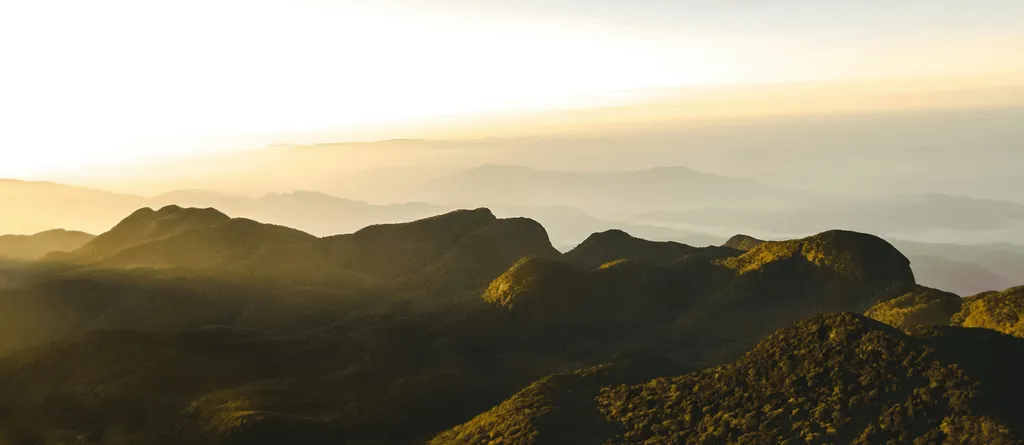
Adam's Peak (Sri Pada) - The Sacred Stairway of Sri Lanka
Rising like a jagged tooth from the lush, emerald canopy of Sri Lanka’s Central Highlands, Adam’s Peak—known locally as Sri Pada—is far more than a mere geological formation. It is a 2,243-metre-tall pinnacle of profound spiritual significance, serving as a rare point of convergence for four of the world’s major religions. For over a millennium, pilgrims have ascended its steep, crumbling staircases to pay homage to a sacred indentation in the rock at its summit. To Buddhists, this is the "Sri Pada" or sacred footprint of the Lord Buddha, left during his third visit to the island. To Hindus, it is the "Siva Padam," the footprint of Lord Shiva. To Muslims and Christians, it is the spot where Adam first set foot on Earth after being exiled from Eden, or alternatively, the footprint of St. Thomas the Apostle. This shared reverence creates a unique atmosphere of collective devotion that transcends sectarian boundaries.
The journey is a physical and mental marathon, consisting of approximately 5,500 to 6,000 uneven stone steps that wind through the Peak Wilderness Sanctuary. While the horizontal distance of the most popular route from Nallathanniya is a seemingly modest 5.5 kilometres, the vertical gain of 1,000 metres makes it a gruelling test of endurance. Most hikers begin their ascent in the dead of night, guided by a string of lights that appears like a glowing serpent draped over the mountainside. The goal is to reach the summit before dawn to witness the "Ira Sewaya"—the spectacular sunrise—and the mysterious triangular shadow of the peak that is cast perfectly across the misty plains below. It is a journey of sweat, chanting, and ancient tradition that remains the most iconic trekking experience in Sri Lanka.
- Distance: 5.5 km (one-way via Nallathanniya/Dalhousie route)
- Elevation Gain: 1,000 m
- Duration: 4–7 hours for ascent; 2–3 hours for descent
- Difficulty: Challenging (high physical demand on knees and cardiovascular system)
- Total Steps: Approximately 5,500
- Highest Point: 2,243 m
- Best Time: December to April (Pilgrimage Season)
- Location: Sabaragamuwa Province, Sri Lanka
Overview
The ascent of Adam’s Peak is a sensory experience unlike any other trail in South Asia. Unlike the solitary wilderness treks of the Himalayas or the Andes, Sri Pada is a communal odyssey. During the peak season, the trail is alive with the sound of "Sadhu, Sadhu" (a Buddhist exclamation of veneration) chanted by elderly pilgrims, the rhythmic ringing of the summit bell, and the smell of burning incense and oil lamps. The path is almost entirely composed of concrete and stone stairs, some dating back centuries, others recently reinforced with steel railings. This is not a "hike" in the traditional sense of navigating dirt paths; it is a vertical climb that demands repetitive, high-impact movement, making it notoriously difficult for those with pre-existing knee or joint issues.
The landscape surrounding the peak is part of the Peak Wilderness Sanctuary, one of the most biodiverse regions in Sri Lanka. As you climb, the vegetation transitions from the manicured tea estates of the lower slopes into dense, moss-covered cloud forests. This area is a critical catchment for the island’s major rivers and home to endemic species, including the elusive Sri Lankan leopard and various rare amphibians. However, for the night-time hiker, the focus remains on the illuminated path ahead and the cooling mountain air. The temperature drops significantly as elevation increases, often falling to 5–10 degrees Celsius at the summit, providing a sharp contrast to the tropical humidity of the lowlands.
Reaching the summit is a moment of intense catharsis. The top of the mountain is crowned by a small temple and a belfry. Tradition dictates that every pilgrim rings the bell once for every successful ascent they have made. The view from the top at dawn is legendary. As the sun breaks over the horizon, the surrounding peaks of the Knuckles Range and the Horton Plains emerge from the darkness. If the weather is clear, the peak’s shadow forms a perfect, dark triangle that stretches toward the western horizon, seemingly defying the irregular shape of the mountain itself. This optical phenomenon, combined with the spiritual energy of the site, makes the physical exhaustion of the 5,500 steps feel like a small price to pay.
History and Cultural Context
The history of Adam’s Peak is woven into the very fabric of Sri Lankan identity. The first recorded mentions of the mountain date back to the 4th-century Mahavamsa, the ancient chronicle of Sri Lankan kings. It is said that King Valagamba (1st century BC) discovered the peak while in exile, and subsequent monarchs, including Parakramabahu I and Nissanka Malla, made the arduous journey to the summit, commissioning the construction of rest houses and the carving of steps to aid future pilgrims. For centuries, the mountain was a beacon for international travellers. The famous Moroccan explorer Ibn Battuta climbed the peak in 1344, describing the "stairway of Alexander" and the chains installed to help climbers against the fierce winds. Marco Polo also noted the mountain’s significance in his 13th-century accounts, though he focused more on the religious relics associated with the site.
The cultural significance of the "Footprint" varies by faith but shares a common theme of origin and divinity. For Buddhists, the footprint is the "Sripada," left by Gautama Buddha during his third and final visit to Sri Lanka at the request of the local deity Saman. The mountain is often referred to as "Samanalakanda," or Butterfly Mountain, as it is believed that butterflies go there to die. In the Hindu tradition, the footprint is that of Lord Shiva, who performed his cosmic dance of creation and destruction on the summit. The Islamic and Christian traditions, which arrived later via traders and colonial powers, identified the peak as the site where Adam was placed on Earth to do penance, standing on one foot for a thousand years. This rich tapestry of legends has turned the mountain into a symbol of religious harmony, where people of different faiths climb the same stairs, share the same food, and respect the same sacred space.
The trail itself has evolved from a treacherous, jungle-choked scramble into a well-organised pilgrimage route. The installation of electric lights in 1950 transformed the experience, allowing for the night-time ascents that are now standard. Despite these modern additions, the mountain retains an aura of ancient mystery. The rituals performed by pilgrims—such as the tying of white threads along the path or the offering of coins at the "Indikatupana" (the place of the needle)—connect modern visitors to a lineage of devotion that has remained unbroken for over two thousand years.
Want more background? Read extended notes on history and cultural context → Learn more
Seasonal Highlights and Weather Reality
The experience of climbing Adam’s Peak is dictated entirely by the season. The official pilgrimage season begins on the Unduvap Poya (the full moon in December) and continues until the Vesak Poya (the full moon in May). During this window, the weather is generally dry, the trail is fully illuminated, and all the small tea shops (ambalamas) along the route are open. This is the best time for views, but it also brings massive crowds. On weekends and Poya days, the trail can become so congested that the ascent takes twice as long, with "traffic jams" of people standing stationary on the stairs for hours.
The "off-season" (May to November) coincides with the South-West Monsoon. During this time, the mountain is frequently lashed by heavy rain, high winds, and thick mist. The electric lights are turned off, the shops are boarded up, and the summit temple is often closed. Climbing during the off-season is only recommended for experienced hikers who are prepared for wet, slippery conditions and have their own navigation and lighting. The risk of leeches is significantly higher during these months, and the chance of seeing the sunrise is slim. However, the off-season offers a solitary, wilderness experience that is impossible to find during the pilgrimage months.
Temperature management is crucial regardless of the season. While the base of the mountain in Nallathanniya may be a balmy 25 degrees Celsius, the summit can be windy and cold, especially in the hours before dawn. Sudden rain showers are common even in the dry season, so a lightweight waterproof layer is always essential. The "Ira Sewaya" (sunrise) usually occurs between 5:30 AM and 6:15 AM, and the best weather for the shadow phenomenon is typically in February and March when the air is clearest.
Recommended Itinerary
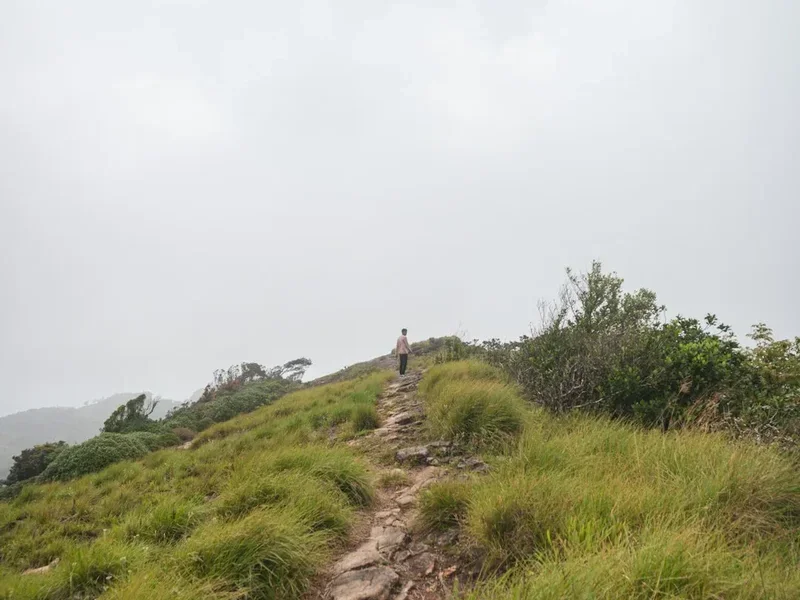
Standard Night Ascent (Nallathanniya Route)
11:00 PM – 12:00 AM: Departure from Nallathanniya
- Start at the trailhead in Nallathanniya (Dalhousie) village.
- Pass through the Makara Thorana (Dragon Arch), the formal entrance to the sacred site.
- The first kilometre is a gentle incline through shops and small shrines.
- Ensure your headlamp is ready, though the path is usually lit during the season.
12:00 AM – 02:00 AM: The Lower Slopes and Peace Pagoda
- Reach the Japanese Peace Pagoda, a large white stupa built by Japanese monks.
- The gradient begins to steepen significantly after this point.
- Pass through the "Indikatupana" area, where pilgrims traditionally thread needles and leave them as offerings.
- Take short breaks at the "ambalamas" (rest sheds) to hydrate and maintain a steady heart rate.
02:00 AM – 04:30 AM: The Final Ascent (Ahala Kanuwa)
- The stairs become narrower and much steeper, reaching gradients of nearly 45 degrees in some sections.
- This section is known as "Ahala Kanuwa," where the physical toll becomes most apparent.
- The air becomes noticeably thinner and colder.
- Expect the pace to slow down as crowds thicken near the summit.
04:30 AM – 06:30 AM: Summit and Sunrise
- Arrive at the summit platform (2,243 m).
- Find a spot on the eastern side to wait for the "Ira Sewaya" (sunrise).
- Observe the religious ceremonies at the footprint shrine (remove shoes before entering the inner sanctum).
- Watch for the triangular shadow of the peak cast to the west immediately after sunrise.
- Ring the bell to commemorate your climb.
06:30 AM – 09:30 AM: The Descent
- Begin the descent back down the same route.
- The descent is often harder on the knees than the ascent; take it slow.
- Enjoy the views of the Peak Wilderness Sanctuary and tea estates that were hidden by darkness during the climb.
- Arrive back in Nallathanniya for a well-earned breakfast.
Important Notes:
- Avoid climbing on Poya (full moon) days or public holidays if you want to avoid 5-8 hour delays.
- The Ratnapura (Palabaddala) route is an alternative 15 km trek for those seeking a much longer, more rugged experience.
- Respect the local customs: do not consume alcohol or meat before or during the climb.
- The summit can be extremely crowded; patience is a requirement.
Planning and Bookings
Book Your Trip
Everything you need to plan your journey
Accommodation
Find places to stay near Ratnapura
Flights
Search flights to Ratnapura
Essential Preparation
Preparation for Adam’s Peak focuses more on physical conditioning and logistical timing than on technical gear. The primary challenge is the sheer volume of steps. If you are not accustomed to stair climbing, it is highly recommended to engage in cardiovascular training and leg-strengthening exercises (squats, lunges) for at least two weeks prior to the hike. The "base camp" for the most popular route is the small village of Nallathanniya (often referred to as Dalhousie). This village is accessible via bus or taxi from Hatton, which is the nearest major railway station on the scenic Colombo-Kandy-Ella line.
Booking transport in advance is wise, especially during the pilgrimage season. If travelling by train, book your tickets to Hatton several weeks ahead, as the "Blue Train" route is incredibly popular. From Hatton, local buses run frequently to Nallathanniya (about a 90-minute journey). There is no need to book a guide for the Nallathanniya route, as the path is clearly marked and impossible to lose. However, if you plan to take the more difficult Ratnapura or Kuruwita routes, a local guide is recommended to navigate the jungle sections.
Trail Accommodation
There is no accommodation on the summit of Adam’s Peak, and sleeping on the summit platform is strictly prohibited. The strategy for most hikers is to stay in Nallathanniya for a few hours before starting the midnight climb, or to arrive in the evening, sleep until 11:00 PM, and then depart.
Nallathanniya Accommodation:
- Numerous guesthouses and "hotels" ranging from basic backpacker dorms to mid-range lodges.
- Facilities are generally simple: hot water is a luxury, and most rooms are designed for short stays.
- Prices increase significantly during the pilgrimage season and on weekends.
- Booking via major online platforms is recommended during peak months (January–March).
On-Trail Facilities:
- "Ambalamas" (rest sheds) are located at regular intervals. These provide a roof and concrete benches for resting but no bedding.
- Small tea shops and stalls are abundant during the season, selling hot tea, coffee, roti, and snacks.
- Public toilets are available at several points along the trail, though their cleanliness varies greatly depending on the crowd volume.
- There are no formal campsites on the Nallathanniya route.
Required Gear
- Footwear: Sturdy trainers or hiking shoes with good grip. Full-weight mountaineering boots are unnecessary and may be too heavy for the stairs.
- Clothing Layers: A moisture-wicking base layer, a warm fleece or mid-layer, and a lightweight windproof/waterproof jacket. The temperature difference between the base and the summit is significant.
- Headlamp: Essential for the night climb, even if the trail lights are on. It provides better depth perception on the uneven steps and is a safety requirement if the power fails.
- Knee Support: If you have sensitive knees, bring compression sleeves or trekking poles (though poles can be cumbersome on narrow, crowded stairs).
- Small Backpack: 15–25 litres to carry your layers, water, and snacks.
What to Bring
- Water: At least 1.5–2 litres per person. While water is sold on the trail, it is expensive and contributes to plastic waste.
- Snacks: High-energy foods like bananas, dates, nuts, or energy bars. Hot food is available at trail stalls but may not suit all stomachs.
- Cash: Small denominations of Sri Lankan Rupees (LKR) for tea, snacks, and donations at the shrines. Credit cards are not accepted on the mountain.
- Toiletries: Hand sanitiser and a small roll of toilet paper.
- Sun Protection: Sunscreen and a hat for the descent, as the tropical sun becomes intense after 8:00 AM.
- Offerings (Optional): If you wish to participate in the religious aspect, you can bring white flowers or small coins for the shrines.
- Personal Medications: Especially pain relief (paracetamol or ibuprofen) for the descent.
Permits
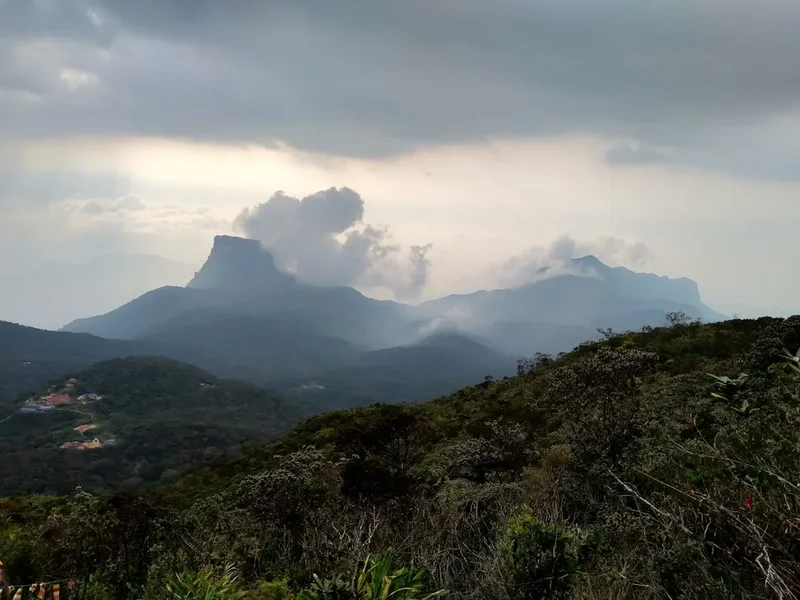
One of the most appealing aspects of Adam’s Peak is that no formal permits or entry fees are required for either local or international visitors. The mountain is a public place of worship, and the government maintains an "open access" policy to ensure that pilgrims of all economic backgrounds can make the journey. However, there are several logistical "costs" and voluntary contributions to be aware of.
Donations and Cultural Etiquette:
- At various points along the trail, particularly near the summit, you may encounter monks or temple volunteers asking for donations. These are voluntary, but contributing a small amount (e.g., 100–500 LKR) is considered respectful and goes toward the maintenance of the trail and the temple.
- You may be asked to sign a "pilgrim's register" at certain stations. This is often accompanied by a request for a donation. Again, this is not a mandatory fee.
- Photography: Photography is generally allowed on the trail, but it is strictly forbidden inside the inner sanctum where the sacred footprint is located. Always look for signs or ask a resident monk before taking photos of religious ceremonies.
Parking and Access Fees:
- If you are arriving in Nallathanniya via private vehicle or tuk-tuk, there is usually a small parking fee (approx. 200–500 LKR) charged by the local council or private landowners.
- During the peak season, the police may implement traffic control measures, requiring visitors to walk from further out in the village to reduce congestion at the trailhead.
Other Activities in the Area
The region surrounding Adam’s Peak is the heart of Sri Lanka’s hill country, offering numerous ways to recover or extend your adventure:
- Tea Factory Tours: Nallathanniya is surrounded by some of the world’s finest tea estates. Visit a local factory (such as those near Hatton) to learn about the "orthodox" tea-making process and sample fresh Ceylon tea.
- Laxapana and Aberdeen Falls: These two stunning waterfalls are located within a short drive of the trailhead. Laxapana is the eighth-highest waterfall in Sri Lanka and offers a powerful display of nature’s force.
- Castlereagh Reservoir: A beautiful, turquoise-water reservoir surrounded by tea bushes. It is a peaceful spot for a boat ride or a luxury lunch at one of the colonial-era bungalows overlooking the water.
- The Train to Ella: From Hatton station, you can catch the famous train toward Ella. This journey is widely considered one of the most beautiful train rides in the world, passing through tunnels, over viaducts, and along the edges of misty cliffs.
- Horton Plains National Park: Located about 2–3 hours away, this high-altitude plateau offers a different hiking experience, including the famous "World’s End" precipice.
- Peak Wilderness Sanctuary Trekking: For those who want more than just the stairs, there are several lower-altitude jungle trails within the sanctuary that offer excellent birdwatching and a chance to see endemic flora.
Safety and Conditions
Physical Strain and Injury: The primary safety risk on Adam’s Peak is physical exhaustion and joint injury. The 5,500 steps are uneven, often slippery, and vary in height. The descent is particularly punishing on the quadriceps and patellar tendons. To mitigate this, use the handrails where available, take frequent small steps rather than large lunges, and consider using a knee brace if you have a history of injury. If you feel dizzy or excessively fatigued, stop at the nearest rest shed; do not push through to the summit if your body is failing.
Weather Hazards: The weather at 2,243 metres can change in an instant. Hypothermia is a genuine risk for those who reach the summit sweaty and then stand still in the cold wind waiting for sunrise without adequate layers. Always carry a dry change of clothes or a warm jacket. During the off-season, lightning is a significant danger on the exposed summit; if a thunderstorm approaches, descend immediately.
Crowd Management: During peak pilgrimage times, the density of people can be overwhelming. Crushing is a rare but potential risk during major festivals. If you find yourself in a stationary crowd on a steep section of stairs, stay calm, keep a firm grip on the railing, and avoid pushing. If you suffer from agoraphobia or claustrophobia, avoid climbing on weekends or Poya days.
Wildlife: While the Peak Wilderness Sanctuary is home to leopards, they are extremely shy and avoid the noisy, lit-up trail. The more common concern is leeches, particularly on the lower, wetter sections of the trail or if you step off the concrete path. Salt or lemon juice can be used to remove them. Stray dogs are common on the trail; they are generally friendly and often "accompany" hikers for food, but avoid petting them as rabies is endemic in Sri Lanka.
Health and Hygiene: Only drink bottled or filtered water. The food at trail stalls is generally safe if it is served hot, but be cautious with unpeeled fruit or lukewarm snacks. Ensure you have travel insurance that covers medical evacuation, as the nearest high-quality hospitals are in Kandy or Colombo.
Side Trips and Points of Interest
The Ratnapura (Palabaddala) Route: For those who find the Nallathanniya route too "touristy," the classic pilgrimage route from Ratnapura offers a much more authentic and challenging experience. This 15-kilometre trek involves a vertical gain of over 2,000 metres and takes 7–10 hours. It passes through deep jungle and ancient stone-paved sections that have been used for centuries. It is the route traditionally taken by those seeking to earn the most "merit" from their pilgrimage.
The Shadow of the Peak: This is the mountain’s most famous "extra." At the moment of sunrise, if there is a slight mist in the air to the west, the mountain casts a perfectly symmetrical, triangular shadow onto the clouds or the plains below. What makes this extraordinary is that the mountain itself is not a perfect pyramid, yet the shadow is. Scientists attribute this to the "anti-crepuscular" effect, but for pilgrims, it is a divine sign. The shadow lasts for only about 20 minutes after sunrise.
The Japanese Peace Pagoda: Located about 20–30 minutes into the climb from Nallathanniya, this stupa was built by the famous Japanese monk Nichidatsu Fujii. It is a place of immense serenity and offers one of the best views of the peak itself from below. Many hikers stop here on the way down to meditate and reflect on their journey.
The Summit Bell: Don't forget to participate in the tradition of ringing the bell. Each ring signifies a successful ascent. You will hear the bell ringing almost constantly at dawn—some elderly pilgrims may ring it 20 or 30 times, a testament to a lifetime of devotion.
Leave No Trace
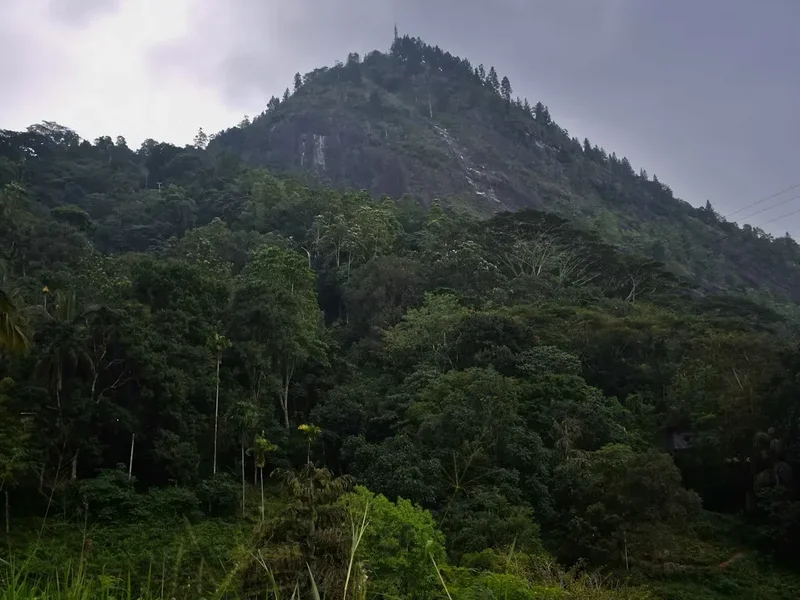
Adam’s Peak is located within a sensitive ecological zone and a sacred religious site. Unfortunately, the high volume of visitors has led to significant issues with plastic pollution and environmental degradation. As a visitor, you have a responsibility to minimise your impact on this fragile landscape.
Environmental Stewardship:
- Plastic-Free Zone: The mountain is officially a plastic-free zone. Avoid bringing single-use plastic bottles; instead, use a reusable hydration bladder or bottle. If you must bring plastic, ensure you carry it back down to Nallathanniya.
- Stay on the Path: The stairs are there to protect the soil from erosion. Stepping off the path to bypass crowds damages the root systems of the cloud forest trees and contributes to landslides.
- Waste Disposal: There are bins along the trail, but they are often overflowing. The best practice is to "pack it in, pack it out." Carry a small bag for your own trash, including organic waste like banana peels, which can take a long time to decompose in the cool mountain air.
Cultural Respect:
- Dress Code: While there is no strict "uniform," wearing modest clothing is appreciated. Many locals wear white, the colour of purity in Buddhism. Avoid excessively revealing clothing.
- Behaviour: Maintain a respectful volume. The climb is a meditative experience for many. Avoid loud music or shouting.
- Sobriety: Consumption of alcohol, tobacco, or drugs is strictly forbidden on the mountain and is considered a grave insult to the religious significance of the site.
 New Zealand